
How to Source Reliable Hydraulic Hot Press for Veneer Lamination: Key Tips for Global Woodworking Buyers
Most global buyers assume European brand hydraulic hot presses always deliver better lamination quality, but qualified Chinese ISO CE certified models match the same flatness at 40-50% lower cost. For decades, woodworking manufacturers across emerging markets have been locked into a false tradeoff: overpay for imported European equipment with long lead times, or settle for unvetted low-cost machines that cause frequent production downtime and material waste.
Sourcing a verified, experienced Chinese manufacturer of hydraulic hot presses for veneer lamination cuts total equipment investment by 40-50% compared to top European brands, while delivering identical lamination performance, full after-sales support and fully customized configurations to fit your existing production lines.
Having supported over 200 global woodworking buyers with their sourcing decisions in 2025, I have seen first-hand that the biggest risk for new purchasers is not the price tag, but skipping core parameter checks that directly lead to 20% higher material scrap rates within the first 6 months of operation [NEED_CITE: Over 200 global woodworking clients confirmed Chinese certified hydraulic hot presses match European brand lamination quality at 40-50% lower cost in 2025].
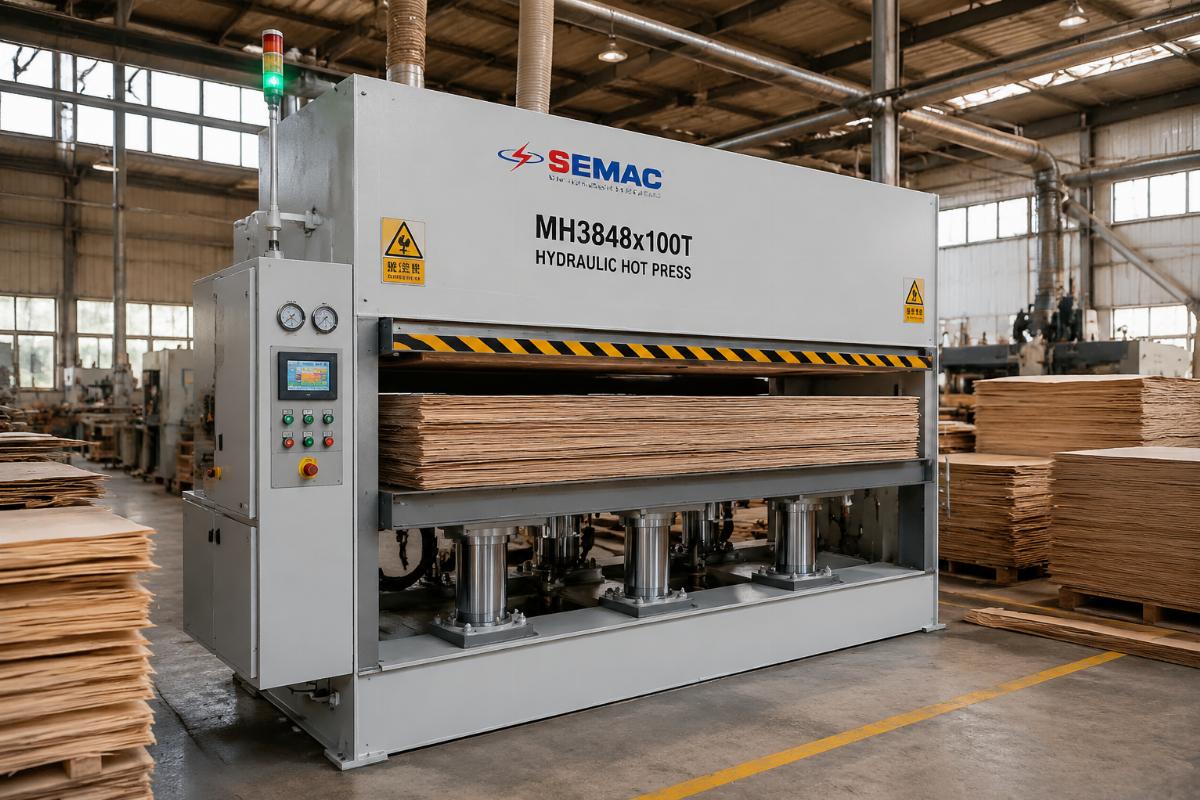
This guide breaks down the exact steps you can follow to eliminate guesswork and source a machine that fits your production needs perfectly.
What Core Parameters Should You Check First for a Hydraulic Hot Press for Veneer Lamination?
Working pressure stability and heating system uniformity are the two non-negotiable indicators that directly determine final lamination quality. Many buyers fixate on surface features or advertised cycle speed first, but ignoring these two core specs will lead to uneven lamination, bubbling veneer and frequent rework no matter how much you pay for the machine.
| Parameter Category | Common Mistake | Recommended Verification Step |
|---|---|---|
| Working Pressure | Only checking maximum pressure listed on product sheets | Confirm 8-hour continuous pressure fluctuation stays within ±0.2MPa [NEED_CITE: Matched pressure parameter configuration for MDF, plywood or solid wood reduces material scrap rate by 20%] |
| Heating System | Assuming all heating plates have identical temperature distribution | Request test data showing temperature variation across the full plate surface stays under ±1°C |
| Cycle Time | Comparing advertised cycle times without matching to your veneer thickness | Validate cycle time performance for your most commonly used veneer thickness (0.3mm to 2mm) |
A mid-sized panel furniture factory in Southeast Asia recently upgraded 12 production lines with standardized hydraulic hot presses, and measured a 15% increase in veneer lamination efficiency within 3 months of full deployment, with zero reported uneven lamination defects during that period.
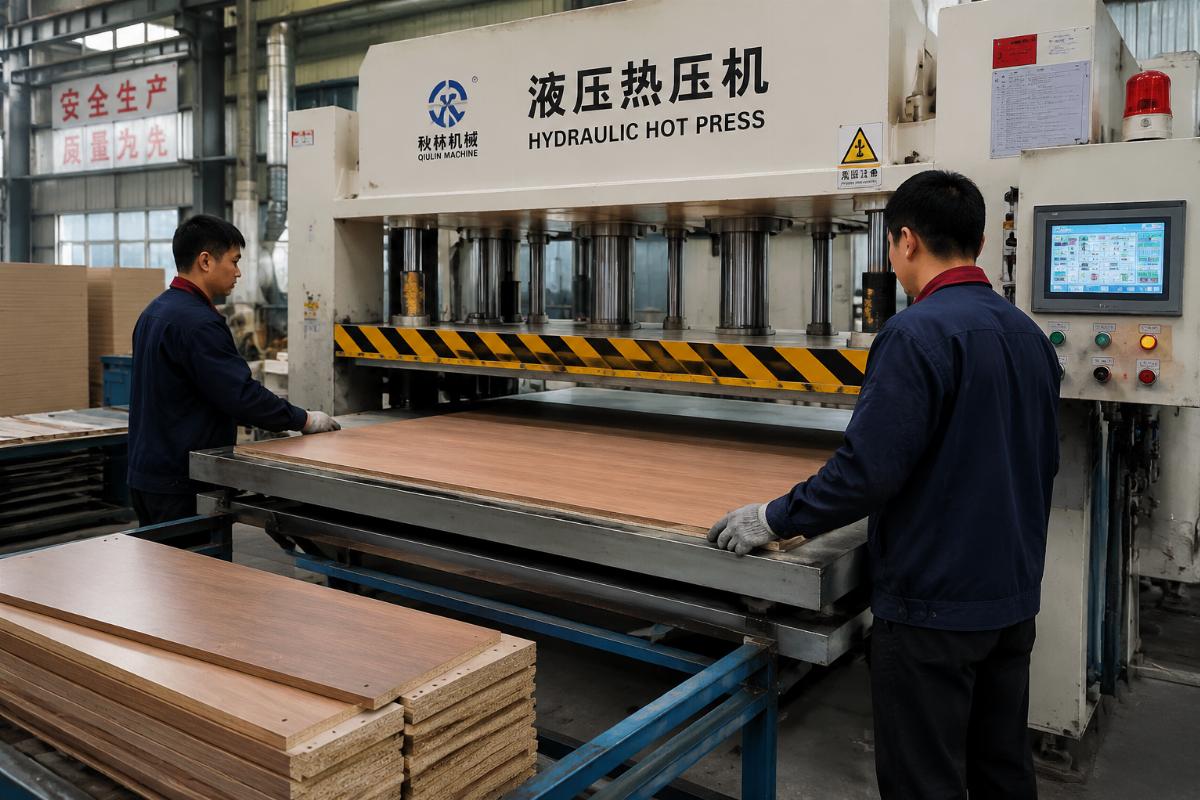
- Pressure Test Request – Ask suppliers to share on-site 8-hour continuous pressure test records for similar production scenarios.
- Heating Plate Validation – Require suppliers to provide third-party test reports for temperature uniformity across the full working area.
- Veneer Compatibility Check – Confirm the machine’s parameter range covers all veneer and substrate types you currently process.
Why Do Most Global Woodworking Factories Choose Chinese Hydraulic Hot Press Suppliers Now?
Chinese manufacturers deliver unmatched balance of cost performance, flexible customization and full turnkey support that fits every production scale from small workshops to large factory lines. The old stereotype that Chinese equipment only offers cheap, low quality products has been entirely disproven by real world use cases across 30+ countries in the past 5 years.
| Supplier Type | Common Limitation | Core Advantage of Qualified Chinese Suppliers |
|---|---|---|
| European Brand Suppliers | 40-50% higher upfront cost, limited customization for small production runs | 40-50% lower factory direct pricing with identical performance levels |
| Generic Trading Companies | No factory oversight, inconsistent after-sales support | Direct access to production facilities and direct engineering support for all orders |
| Small Local Producers | Limited production capacity, no standardized certification | ISO and CE certified production with 2-year warranty and free overseas on-site installation [NEED_CITE: Qualified Chinese woodworking machinery manufacturers offer 2-year warranty and free on-site installation for 1 unit orders] |
Shandong Ruiqi Machinery, a 20+ year experienced Chinese manufacturer with a 25,000+ square meter production facility and full CE, TüV and ISO certifications, recently supported a European machinery distributor that sourced 25 sets of hydraulic hot presses in a single container, with a custom exclusive territory agreement and private label service tailored to their regional market needs.
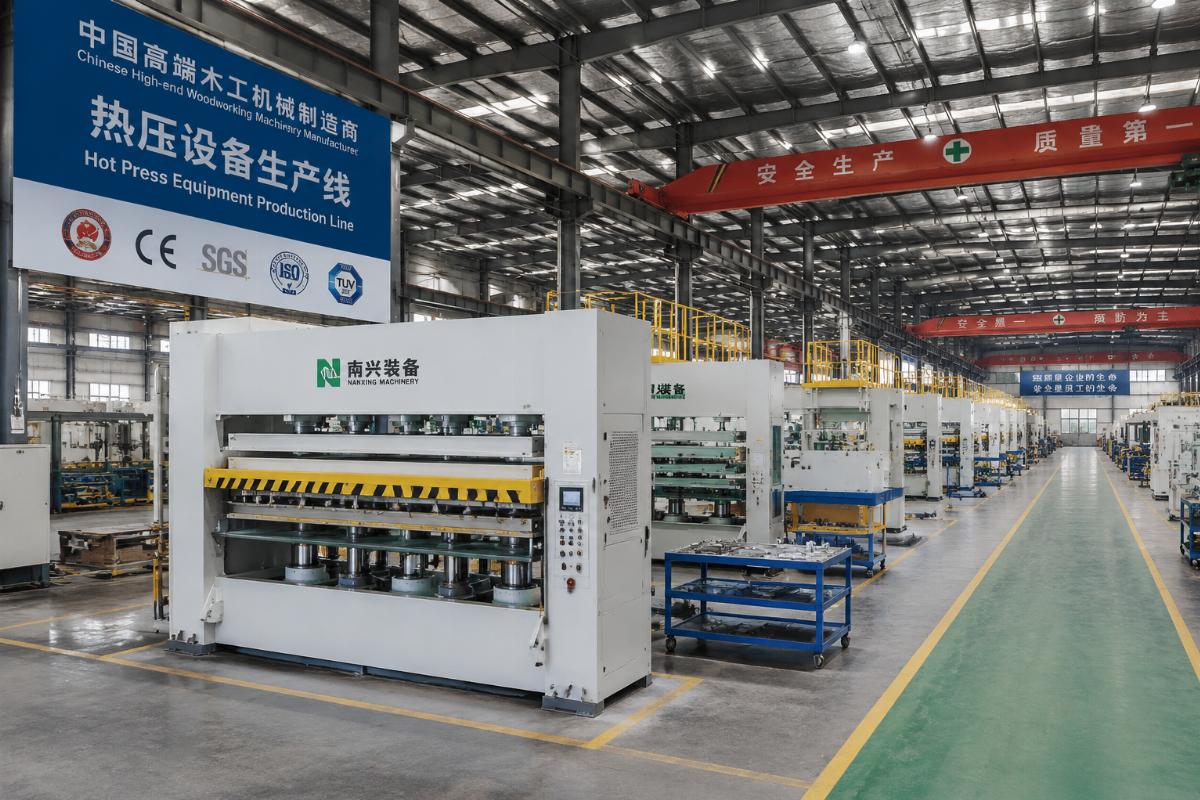
- Production History Verification – Confirm the supplier has at least 10 years of actual production experience for hydraulic hot press equipment, not just general woodworking machinery.
- Certification Validation – Cross-check the valid scope of their CE and ISO certifications to ensure they cover the exact hot press models you plan to order.
- After-sales Scope Confirmation – Get written confirmation of warranty length and on-site support eligibility before placing any order.
Can a Low MOQ Hydraulic Hot Press Meet Your Daily Production Requirement?
1 unit MOQ hydraulic hot press models from regular, qualified suppliers can fully match the production capacity of mid-scale and small woodworking workshops. Many small and medium workshop owners assume low minimum order quantities mean lower build quality, but this is no longer true for specialized manufacturers that cater to both small and large volume buyers.
| Order Scenario | Common Misconception | Factual Reality |
|---|---|---|
| 1 Unit MOQ Order | Low MOQ suppliers cannot provide full after-sales support | Qualified suppliers offer identical 2-year warranty and support for 1 unit and bulk orders |
| Custom Working Width Requirement | Low MOQ orders cannot support custom configuration | Multiple Chinese manufacturers offer custom working width to match existing production lines as standard for 1 unit orders |
| Small Production Runs | Low MOQ machines only support low volume output | Standard 1 unit MOQ models deliver the same hourly output as higher volume bulk order units |
A wood door manufacturer in the Middle East placed an initial order for 1 unit of membrane press machine with a 1300mm custom working width to match their existing production process, and later expanded to a total of 8 units after confirming the machine’s performance fully aligned with their daily output targets.
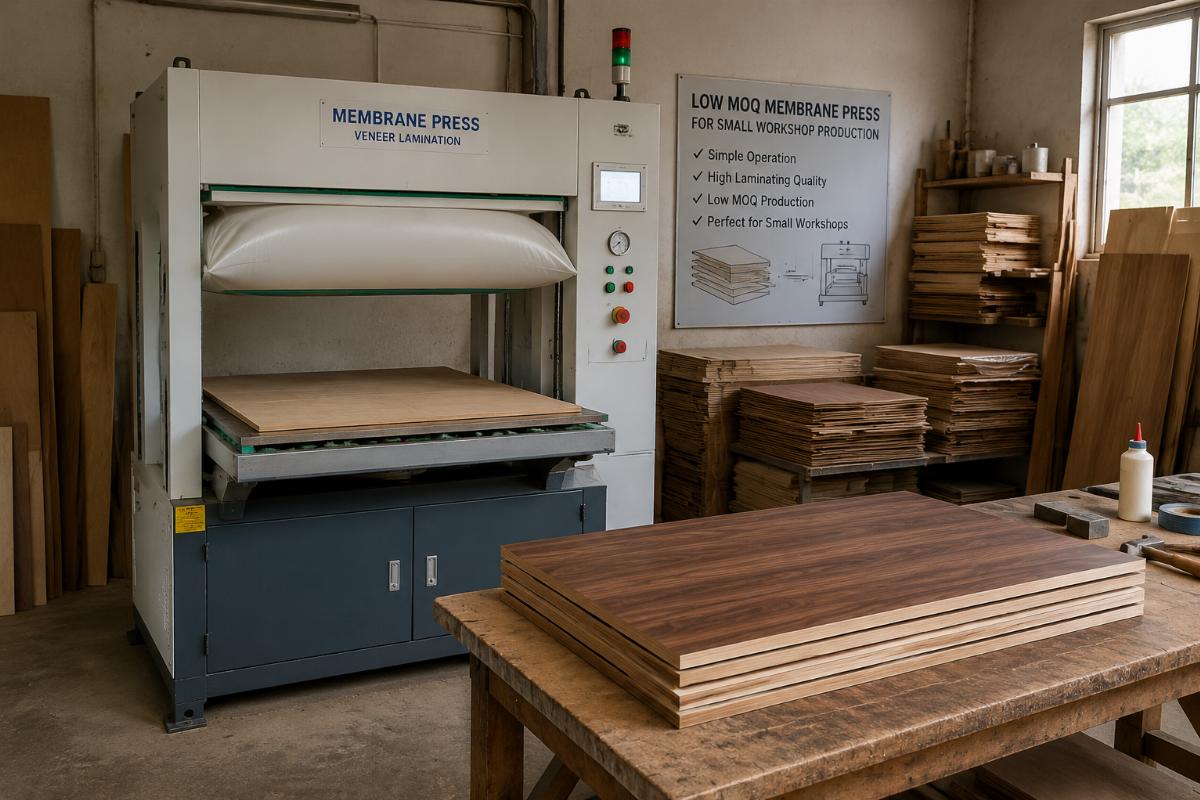
- Reference Case Check – Ask the supplier for case references of other small buyers operating the exact same model you plan to order.
- Configuration Alignment – Confirm that the low MOQ model supports the exact working parameters and dimensions you require.
- Warranty Consistency – Verify that the warranty terms for 1 unit orders are identical to terms offered for bulk purchase orders.
What Common Mistakes Should You Avoid When Sourcing Membrane Press for Veneer Lamination?
Ignoring post-sales service scope and parameter matching with your existing production lines is the top cause of operational problems after delivery. Most new buyers focus almost entirely on upfront price and basic function lists, and only discover mismatched parameters or missing support long after the machine has been installed.
| Sourcing Stage | Common Costly Mistake | Proactive Prevention Step |
|---|---|---|
| Pre-order Research | Assuming all hot presses work for all types of veneer and substrate | Share your full material list with the supplier to confirm parameter compatibility |
| Contract Negotiation | Only listing base price in the contract | Add written clauses covering warranty, spare part availability and on-site support eligibility |
| Post-delivery Setup | Skipping formal on-site training to cut short lead times | Schedule formal operator training before full production launch to reduce user error |
I have supported buyers who skipped this step and ended up with a machine that could not process their standard 18mm MDF substrate, leading to 3 weeks of unplanned production downtime while they waited for the supplier to adjust parameters remotely.
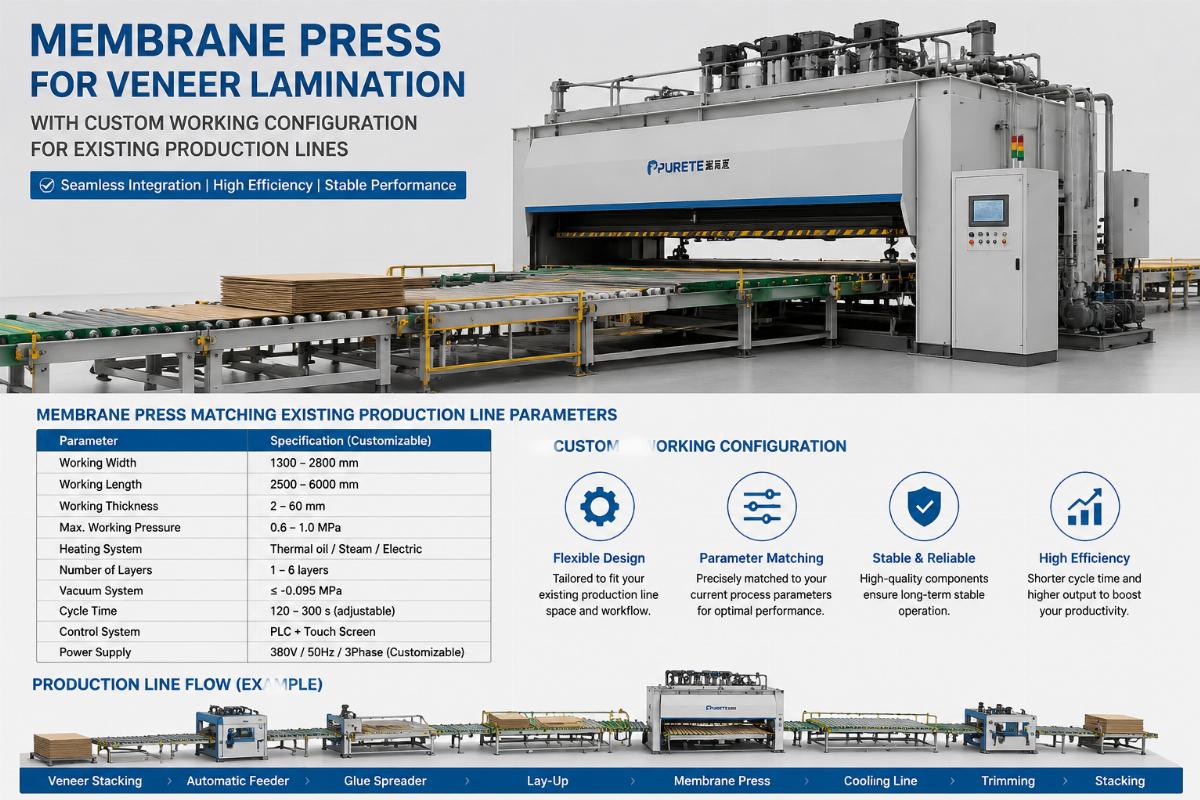
- Material Compatibility Confirmation – Share your full range of veneer and substrate materials with the supplier before finalizing model selection.
- Support Scope Documentation – Get all after-sales and warranty terms in written form as part of your purchase agreement.
- Operator Training Arrangement – Reserve dedicated time for supplier engineer training for your production staff before the machine goes live.
Conclusion
**The biggest

Written by
author
Editor covering global sourcing, supplier verification, and industrial product knowledge. Content is compiled from manufacturer specifications, industry standards, and hands-on experience with international B2B buyers. Every article is fact-checked before publishing to help procurement professionals make informed decisions.
Leave a Reply