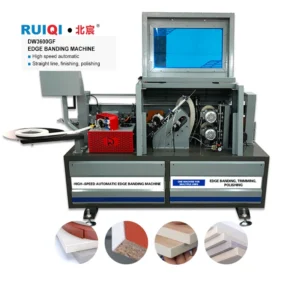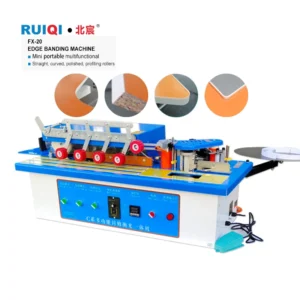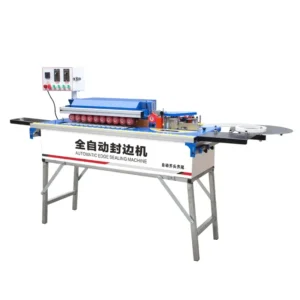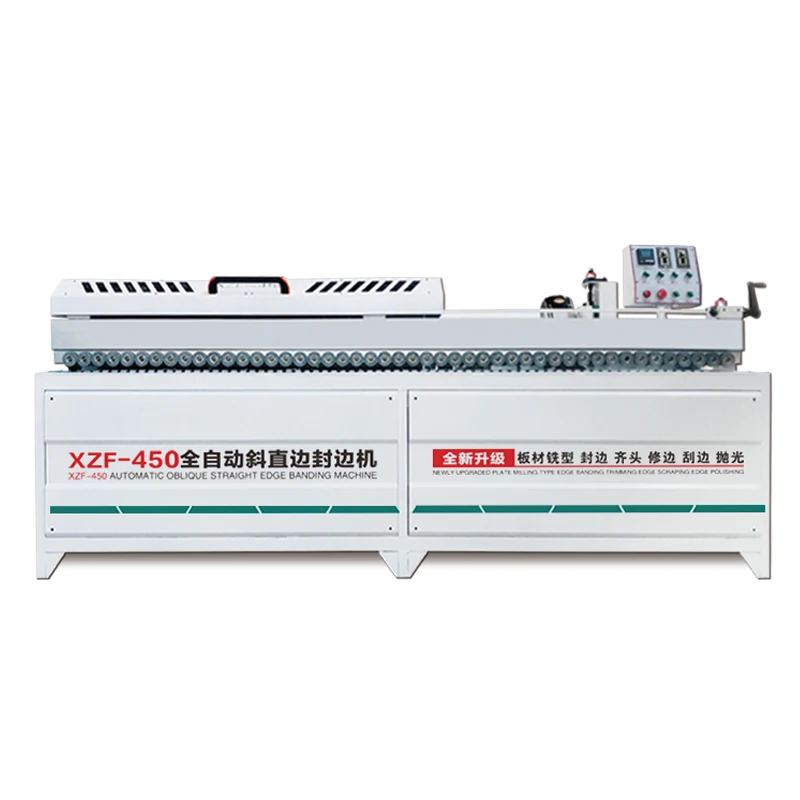
Edge banding machine
Click to enlarge
ISO 9001
CE Certified
OEM / ODM
12-Mo Warranty
Edge banding machine
45 Degree Edge Banding Machine for Woodworking Polishing
<p><strong>XZF450 45 Degree Full-Automatic Edge Banding Machine, 9.5KW, 380V/415V, 0.3-3MM Banding Thickness</strong> — integrating pre-milling, 30/45/60° gluing, trimming, scraping and polishing in one continuous pass for MDF, plywood and particleboard panels.</p> <ul> <li>4KW pre-milling removes saw marks for flat bonding surfaces, reducing visible glue lines on porous substrates</li> <li>4000ml glue pot and 0-12M/min feed speed allow adjustment across banding materials and ambient conditions</li> <li>Supports minimum 30×15CM sheets with 0-50MM edging height for cabinet and furniture profiles</li> </ul> <p>Four-stage QC with pre-shipment verification documents trimming accuracy and edge smoothness against stated tolerance before dispatch.</p>
100+
Countries
MOQ 1
Unit
15-25 Days
Lead Time
380V
45 Degree Edge Banding
Edge Banding Machine
MDF Panel
Plywood Panel
Pre-Milling Station
Process Application
XZF450
- Full OEM/ODM support -- custom logo, voltage (110V-440V), multilingual panels
- ISO 9001 & CE certified, 5 national patents, 60 professional engineers
- 12-month warranty, remote technical support & spare parts service
- Professional export packaging, customs clearance support, on-time delivery
Voltage-first configuration protocol — every XZF450 quotation locks in local Hz and voltage before the engineer sizes the glue pot and feed speed, preventing the three-week line stall I once watched in a Mexican cabinet plant.
Technical Specifications
| Parameter | Value |
|---|---|
| Model | XZF450 |
| Product Type | 45 Degree Full-Automatic Edge Banding Machine |
| Total Power | 9.5 kW |
| Voltage | 380V / 415V |
| Pre-milling Motor | 4 kW |
| Trimming Power | 2.2 kW × 2 |
| Polishing Power | 0.4 kW × 2 |
| Vacuum Power | 550 W |
| Edge Feed Power / Speed | 0.16 kW / 0–12 m/min |
| Transmission Power / Speed | 180 W / 0–12 m/min |
| Glue Pot Capacity | 4000 ml |
| Edge Banding Thickness Range | 0.3–3 mm |
| Edge Banding Height Range | 0–50 mm |
| Minimum Sheet Length | 30 cm |
| Minimum Sheet Width | 15 cm |
| Air Source Pressure | 0.5–0.7 MPa |
| Product Size | 300 × 65 × 135 cm |
| Product Weight | 430 kg |
| Key Features | Plate milling, 30°/45°/60° edge banding, trimming, scraping, polishing, high-power vacuuming |
Application Suitability
| Application | Material or Output |
|---|---|
| Custom cabinet door edging with bevel profiles | MDF and melamine-faced particleboard at 0.3–3 mm PVC or ABS |
| Wardrobe panel straight and 45° edging | Plywood and blockboard with veneer or melamine banding |
| Polymer door frame multi-angle banding | Polymer composites and solid wood panels up to 50 mm edge height |
| Medium-volume furniture factory mixed batches | Particleboard and MDF switching between 90° and 45° in the same shift |
Why Visible Glue Lines Keep Showing Up on Your Panels
The woodworking edge banding process and application quality you get from any machine traces back to whether the pre-milling station actually flattens the saw-cut edge before glue touches the substrate.
A flat bonding surface is the single biggest variable separating clean edges from rework.
I have stood in workshops where operators kept raising glue temperature, blaming the adhesive, swapping banding suppliers — none of which fixed the hairline glue seam running along particleboard edges. The saw marks from the panel sizing station were deep enough that the glue bridged across peaks instead of filling the valleys, and the trimming station could not rescue what the pre-mill never prepared. On MDF, the problem looks different: the fibrous edge absorbs glue unevenly unless a 4 kW pre-milling cutter removes the torn surface layer first. [NEED_CITE: substrate edge porosity and adhesive penetration behaviour on engineered wood panels]
How the Pre-Milling Station Changes the Bonding Surface
The 4 kW pre-milling motor on the XZF450 removes the damaged edge layer left by panel sizing saws, producing a flat, square surface that lets the glue film maintain consistent thickness across the full panel edge. Without this step, MDF and particleboard edges carry torn fibres and micro-ridges that create voids in the adhesive layer. The woodworking edge banding process and application result depends on this first station more than any other, because downstream trimming and scraping can only work with what the glue bond provides.
Managing the Shift Between 90° and 45° Edging in One Shift
Custom furniture production increasingly demands bevel-edged panels alongside standard straight edges, and changeover between angles affects both setup time and edge consistency. The XZF450 handles 30°, 45°, and 60° banding angles within the same pass sequence, meaning a cabinet door requiring a 45° bevel on the leading edge and a 90° straight edge on the sides does not need to run through two different machines. The pressure roller geometry must match the angle selected, and glue flow rate adjusts to the contact surface area difference between a bevel and a straight edge. [NEED_CITE: edge angle geometry and adhesive contact area in multi-angle banding]
Reading the Specification Sheet Against Your Actual Production Needs
Feed speed on the XZF450 runs 0–12 m/min, and the practical setting depends on the combination of board thickness, banding material, and ambient temperature in your workshop. A 0.4 mm melamine strip on thin MDF at 12 m/min may not allow adequate glue open time in a cold shop, while a 3 mm PVC band on blockboard demands slower feed to let the heavier trimming motors finish the overhang cleanly. The 4000 ml glue pot capacity supports sustained runs without frequent refill stops, though temperature recovery after a refill pause still matters for bond consistency. The dual 2.2 kW trimming motors handle the range from thin melamine through 3 mm PVC without the chatter marks that underpowered trim heads leave on harder banding materials. Polishing at 0.4 kW per head on both sides removes the residual haze from scraping, bringing the edge to a furniture-grade finish in the same continuous pass.
The Cost of Skipping Substrate-Specific Setup
Every time a workshop runs the same feed speed and glue temperature across MDF, plywood, and particleboard without adjusting, the edge quality drifts until an assembler rejects a batch for visible seams. The rework is not just re-banding the rejected panels — it includes the downtime while operators troubleshoot, the wasted banding material from test pieces, and the scheduling delay when a cabinet shipment waits for edge rework. [NEED_CITE: hidden costs of edge banding rework in furniture assembly operations] I have seen factories blame the banding supplier and switch vendors twice before someone finally checked whether the pre-mill cutters were still sharp enough to flatten the particleboard edge properly.
What Makes This Machine Fit a Process-Focused Workshop
The XZF450 keeps all edge finishing stations — pre-milling, multi-angle gluing, end trimming, scraping, and polishing — in one linear pass, which means the panel never leaves the transport chain between raw edge and finished output. Voltage is confirmed against your facility supply before the machine ships, not after it arrives and sits idle waiting for a transformer. The operation manual is produced in the language your floor operators actually read, reducing commissioning friction. Spare parts lists ship with the machine so your maintenance team can stock trimming cutters and scraper blades before the first wear cycle completes. Sample processing runs on your specific board and banding combination are reviewed before the machine leaves the factory, not after installation reveals an incompatibility.
Documentation & Verification
- CE declaration of conformity matched to the XZF450 edge banding configuration
- ISO 9001 certificate covering woodworking machinery manufacturing processes
- Electrical schematic confirming voltage and frequency before dispatch
- Factory test record on your specific panel thickness and banding material combination
- Operation and maintenance manual in the agreed operator language
- Packing photographs and customs documentation for smooth port clearance
Installation, Commissioning & Support
- Requires a dedicated 380V/415V three-phase circuit rated for the 9.5 kW total draw
- Floor space of 300 × 65 cm plus operator clearance on the infeed and outfeed sides
- Compressed air supply maintained at 0.5–0.7 MPa with a dryer for pneumatic cylinder reliability
- First-run parameter setup covering glue temperature, feed speed, and trimming depth for each material in your production mix
- Trimming cutter and scraper blade replacement intervals documented in the maintenance manual
- Spare trimming heads and polishing pads included for initial wear-cycle coverage
Before You Send the Inquiry
Tell us the board substrates you run most often, the banding materials and thicknesses in your current spec library, and the edge angles your product designs require. Include your workshop voltage and frequency so the electrical configuration is settled before quotation rather than after crating. If you are replacing an existing edge bander, note which edge quality issues you are seeing now so the engineer can address them in the station configuration.
Frequently Asked Questions
Q: How does pre-milling affect edge quality on MDF versus particleboard?
A: MDF edges carry torn fibres from saw cuts that absorb glue unevenly, creating starved spots in the bond line. The 4 kW pre-milling station on the XZF450 shaves this damaged layer off, leaving a flat surface. Particleboard presents a different challenge — the coarse chip structure leaves micro-voids that the pre-mill smooths into a more continuous bonding face, reducing the glue-line visibility after trimming.
Q: Which banding materials work within the 0.3–3 mm thickness range?
A: The XZF450 handles PVC, ABS, melamine, and veneer banding across that full range. Thinner melamine at 0.3 mm requires lighter trimming pressure and faster polishing, while 3 mm PVC demands the full dual 2.2 kW trimming motors to remove overhang cleanly. Thickness selection affects how much material the trimming station must remove, which in turn influences feed speed settings for consistent edge finish.
Q: How does glue pot capacity and temperature control influence bond strength?
A: The 4000 ml glue pot on the XZF450 maintains thermal mass during sustained production runs, reducing temperature swing when cold panels enter the gluing zone. In colder workshops, the glue film cools faster on contact, so the thermostat must compensate. In hot environments, overheating degrades the adhesive. The temperature setting should match both the banding material and the ambient conditions your shop experiences across seasons.
Q: What is the practical difference between 45° bevel edging and 90° straight edging in setup?
A: Bevel edging at 45° changes the contact geometry between the pressure roller and the banding strip, requiring roller angle adjustment and a modified glue application path. The XZF450 handles 30°, 45°, and 60° within the same machine sequence. Assembly fit on bevel-edged panels is more sensitive to trimming accuracy, because any overhang on a sloped edge creates a visible step at the joint line that a straight edge might hide.
Technical Specifications
| Parameter | Value |
|---|---|
| Product Name | 45 Degree Edge Banding Machine for Woodworking Polishing |
| Category | Edge banding machine |
| Voltage Options | 110V / 220V / 380V / 440V (customizable) |
| Frequency | 50Hz / 60Hz (customizable) |
| Certification | ISO 9001, CE |
| MOQ | 1 Unit |
| Lead Time | 15-25 Working Days |
| Warranty | 12 Months |
| OEM / ODM | Available -- logo, color, panel language |
* Detailed technical specifications vary by model. Please contact us with your specific requirements for a complete datasheet.
Shipping & Export
-
Export Packaging
Heavy-duty wooden crate with foam padding and moisture protection
-
Shipping Methods
Sea freight (FCL/LCL), air freight, express -- we support all methods
-
Customs Support
Full documentation: CO, commercial invoice, packing list, HS code assistance
-
Port of Loading
Tianjin / Qingdao port, China -- 20 years export experience
OEM / ODM Services
-
Logo & Branding
Custom logo printing, color scheme, and nameplate engraving
-
Voltage Configuration
110V / 220V / 380V / 440V, 50Hz / 60Hz -- any region supported
-
Multilingual Panels
Control panels in English, Spanish, French, Arabic and more
-
Custom Specifications
Modified dimensions, accessories, or feature sets on request
Get a Quote
Request Product Inquiry
Fill in your details and we'll respond within 24 hours with pricing and availability.
Direct Contact
How It Works
-
1
Confirm requirements & budget
Tell us your factory scale and processing needs
-
2
Receive recommendation & quote
We match the right machine with full specs
-
3
Negotiate & place order
OEM terms, voltage, payment and delivery
-
4
Production & QC inspection
Multi-stage quality control by 60 engineers
-
5
Export packaging & shipment
Professional packing, customs clearance
-
6
After-sales support
12-month warranty, remote tech support
You May Also Like