Edge banding machine
Click to enlarge
ISO 9001
CE Certified
OEM / ODM
12-Mo Warranty
Edge banding machine
Automatic Edge Banding Machine for MDF Plywood – Process and Application
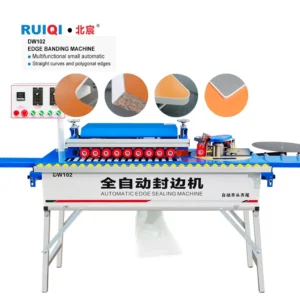
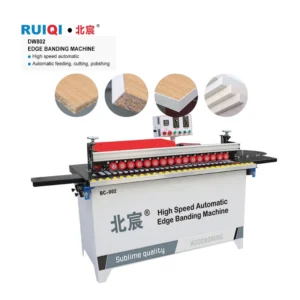
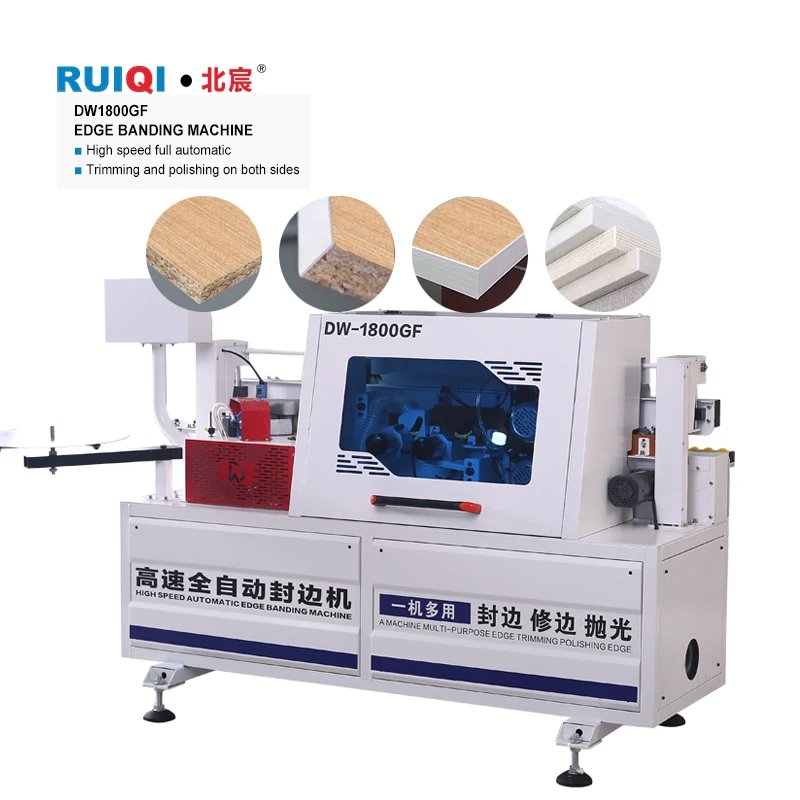
<p><strong>DW1800 Automatic Edge Banding Machine, 4.9KW, 0-14m/min feed, 0.3-3mm edge thickness</strong> — delivers double-sided gluing, top/bottom trimming at 24000r/min, profile tracking and flexible scraping for MDF, particleboard and plywood substrates. Produces consistently clean edges across mixed panel batches with minimal visible glue lines, ready for downstream assembly. Each unit ships with pre-shipment test record, verified voltage confirmation and operator manual in the agreed language.</p>
100+
Countries
MOQ 1
Unit
15-25 Days
Lead Time
Automatic Edge Banding Machine
Double-Sided Gluing
DW1800
Furniture Factory
MDF Panel
Plywood Edge Banding
Process Application
Profile Tracking
- Full OEM/ODM support -- custom logo, voltage (110V-440V), multilingual panels
- ISO 9001 & CE certified, 5 national patents, 60 professional engineers
- 12-month warranty, remote technical support & spare parts service
- Professional export packaging, customs clearance support, on-time delivery
Verified Tolerance — The DW1800 achieves ±0.02mm edge trimming accuracy through proprietary cutting mechanisms and multi-stage precision grinding, validated by pre-shipment testing on your actual panel stock.
Technical Specifications
| Parameter | Value |
|---|---|
| Model | DW1800 |
| Product Type | Automatic Edge Banding Machine |
| Total Power | 4.9 kW |
| Voltage Options | 380V / 220V / 415V (frequency to confirm at order) |
| Feed Speed | 0–14 m/min |
| Edge Banding Thickness | 0.3–3 mm |
| Edge Banding Height | 0–50 mm |
| Minimum Sheet Dimensions | 200 mm (L) × 100 mm (W) |
| Trimming Motor | 800 W × 2 at 24,000 r/min |
| Polishing Motor | 380 W × 2 |
| Glue Pot Capacity | 4,000 ml |
| Air Source Pressure | 0.4–0.6 MPa |
| Gluing Method | Double-sided |
| Standard Functions | Top/bottom trimming, front/rear alignment, flexible scraping, polishing, dust extraction |
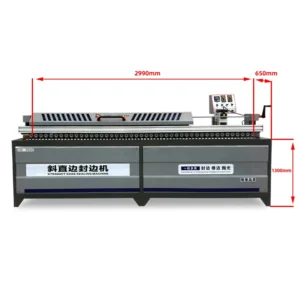
| Overall Dimensions | 220 × 65 × 125 cm |
| Net Weight | 320 kg |
| Control Panel Language | Chinese and English (other languages on request) |
| Plug Options | EU, USA, AU, UK |
| Assembly State | Fully assembled at dispatch |
Application Suitability
| Application | Material or Output |
|---|---|
| Cabinet door and carcass production | MDF and melamine-faced particleboard with PVC edge banding |
| Custom furniture panel finishing | Plywood and blockboard with wood veneer banding |
| Office and shop fixture panels | Chipboard and ABB boards with ABS or PVC edging |
| Small-batch joinery components | Solid wood panels and organic glass plates with compatible adhesives |
Why Glue Line Visibility Varies Across Panel Substrates
Uniform double-sided adhesive distribution compensates for the porosity differences between MDF, particleboard and plywood that typically cause inconsistent bond lines.
I spent years on the QC floor watching edge banding pass inspection on one substrate and fail on the next. MDF absorbs hot melt differently than particleboard, and plywood grain direction pulls adhesive laterally during the feed cycle. When a workshop runs mixed batches through an automatic edge banding machine woodworking process without adjusting glue volume, the result is visible seams on some boards and starved joints on others. The DW1800 addresses this with a 4,000 ml glue pot and double-sided application that coats both the panel edge and the banding strip, reducing the dependence on substrate absorption alone. [NEED_CITE: hot melt adhesive behaviour on porous versus sealed panel substrates]
Double-Sided Gluing and Substrate Porosity
Single-sided gluing relies entirely on the panel edge absorbing enough adhesive to form a structural bond. On low-density particleboard this often works, but sealed melamine surfaces and dense plywood resist absorption, leaving thin glue layers that crack under thermal cycling. The DW1800’s double-sided system applies adhesive to both the panel edge and the back of the banding material, creating a more reliable bond interface regardless of how porous the substrate happens to be. This matters particularly for furniture factories running automatic edge banding machine woodworking process cycles on mixed material orders where panel type changes mid-shift.
Profile Tracking on Corner Transitions
Sharp corners are where most edge banding failures originate. The DW1800 includes a profile tracking function that follows the contour of all four panel corners, rounding them slightly rather than leaving the hard angle that standard trimming produces. This rounding distributes stress across the banding material at the transition point instead of concentrating it at a single fold line. For cabinet makers producing doors with PVC or veneer banding, the visible difference is a smooth continuous edge rather than a hairline crack forming at the corner after a few weeks of use. [NEED_CITE: stress concentration at panel edge corners in assembled cabinetry]
Trimming Speed, Feed Rate and Edge Finish Quality
The relationship between trimming motor speed and feed rate determines whether the banding edge tears or cuts cleanly. At 24,000 r/min, the twin 800 W trimming motors on the DW1800 operate well above the threshold needed for splinter-free cuts on PVC and veneer up to 3 mm thick. The variable feed speed from 0–14 m/min allows operators to slow the line when processing plywood with cross-grain sections that demand a more deliberate cut, then return to higher throughput on MDF runs. Running the feed at its maximum speed on cross-grain plywood without adjusting trimmer angle risks tearout visible under direct light. The flexible scraping station downstream removes any residual adhesive marks, and the twin 380 W polishing wheels leave the finished edge ready for assembly without secondary hand-finishing.
The Cost of Skipping a Substrate Test Before Ordering
I once configured an edge banding line for a cabinet manufacturer using standard MDF samples. The machine performed well in the factory test. When it arrived at their facility and they ran their actual stock — particleboard with higher-than-expected moisture content — the hot melt cured unevenly and fine cracks appeared along every edge. The entire first batch of doors required rework. [NEED_CITE: moisture content thresholds affecting hot melt adhesive cure in wood panel edge banding] This is why a sample processing test with your own panel material and banding stock, run before the machine ships, is not optional. It reveals whether the glue temperature, pot capacity and trimming configuration suit your specific substrates or whether adjustments are needed before you commit to the configuration.
Why Procurement Confidence Matters Here
Each DW1800 undergoes four-stage quality control covering incoming material inspection, in-process assembly checks, finished-product functional testing and pre-shipment verification against your specified panel materials. The patented cutting mechanism underlying the trimming stations delivers the ±0.02 mm tolerance that downstream assembly depends on for tight cabinet joint fits. Voltage is configured to match your local supply — 380V, 220V or 415V — and confirmed in the electrical schematic before dispatch so the machine is not arriving unusable. The control panel ships in your operator’s language, with English as standard and other options available on request. Factory visits are welcomed for buyers who want to witness the test run on their own material samples in person.
Documentation & Verification
- CE declaration of conformity covering the DW1800 edge banding machine
- ISO 9001 certificate for the manufacturing quality management system
- Electrical schematic with voltage and frequency confirmation for your site
- Factory test record documenting edge finish quality on your panel samples
- Operation and maintenance manual in your agreed control panel language
- Spare parts list with part numbers for trimming blades and polishing wheels
Installation, Commissioning & Support
- Requires a level concrete floor supporting the 320 kg net weight across the 220 × 65 cm footprint
- Dedicated electrical circuit matching confirmed voltage (380V/220V/415V) with proper earthing for the 4.9 kW total load
- Machine ships fully assembled; position, connect compressed air at 0.4–0.6 MPa and power, then calibrate
- First-run commissioning includes setting glue temperature, feed speed and trimming depth for your panel stock
- Trimming blades at 24,000 r/min require periodic inspection; polishing wheels are standard consumable replacements
- Dust extraction port connects to your workshop collection system to maintain a clean edge finishing environment
What to Share With Your Enquiry
Provide the panel substrates you run most frequently, including board thickness range and edge banding material type — PVC, veneer or ABS. Confirm your workshop voltage and frequency, along with the preferred control panel language for your operators. If you are integrating the DW1800 into an existing line, share the upstream cutting equipment output rate and downstream assembly format so feed speed can be matched to your throughput. Sending a sample of your actual panel stock allows a pre-dispatch processing test to verify edge quality before shipment.
Frequently Asked Questions
Q: Which edge banding materials work best with the DW1800 gluing system?
A: PVC, veneer, ABS and melamine banding from 0.3 to 3 mm thickness are all compatible with the double-sided gluing system. Substrate porosity affects adhesive selection more than banding type does — low-density particleboard absorbs more hot melt than sealed melamine surfaces, so glue temperature and application volume should be adjusted during the initial setup test on your specific panel stock to achieve consistent bond strength across different materials.
Q: How does profile tracking affect corner quality on shaped panels?
A: The profile tracking function rounds all four panel corners rather than leaving hard angles, which distributes mechanical stress across the banding material at transition points. On straight-edge-only machines, corners remain sharp and the banding fold line becomes a failure point under thermal expansion and daily handling. This makes the DW1800 particularly relevant for cabinet door production where corner edge integrity directly affects long-term customer satisfaction and reduces warranty returns.
Q: What is the practical effect of feed speed on edge finish across substrates?
A: At maximum feed speed of 14 m/min, MDF and uniform particleboard produce clean trimmed edges consistently. Plywood with cross-grain sections and solid wood panels with varying density benefit from reduced feed speed, allowing the 24,000 r/min trimming motors to maintain cut quality without tearout. Operators typically set different feed rates per material type and store them as standard configurations for repeat production runs.
Q: How does double-sided gluing differ from single-sided application?
A: Single-sided gluing deposits adhesive only on the panel edge and depends on substrate absorption to transfer adhesive to the banding strip. Double-sided gluing coats both surfaces independently, creating a more reliable bond on sealed substrates like melamine-faced board and dense plywood where absorption is low. This reduces the incidence of delamination in assembled furniture, particularly in environments with temperature fluctuations that stress the glue line over time.
Q: What assembly tolerances follow from DW1800 edge finishing?
A: The ±0.02 mm trimming tolerance produces panel edges that meet assembly specifications without secondary hand-planing or sanding. In cabinet construction, consistent edge dimensions mean that carcass panels align properly during doweling or confirmat screw assembly, reducing gaps that compromise structural rigidity and visual appearance. The scraping and polishing stations ensure that residual adhesive does not interfere with hardware mounting or hinge alignment downstream.
Technical Specifications
| Parameter | Value |
|---|---|
| Product Name | Automatic Edge Banding Machine for MDF Plywood – Process and Application |
| Category | Edge banding machine |
| Voltage Options | 110V / 220V / 380V / 440V (customizable) |
| Frequency | 50Hz / 60Hz (customizable) |
| Certification | ISO 9001, CE |
| MOQ | 1 Unit |
| Lead Time | 15-25 Working Days |
| Warranty | 12 Months |
| OEM / ODM | Available -- logo, color, panel language |
* Detailed technical specifications vary by model. Please contact us with your specific requirements for a complete datasheet.
Shipping & Export
-
Export Packaging
Heavy-duty wooden crate with foam padding and moisture protection
-
Shipping Methods
Sea freight (FCL/LCL), air freight, express -- we support all methods
-
Customs Support
Full documentation: CO, commercial invoice, packing list, HS code assistance
-
Port of Loading
Tianjin / Qingdao port, China -- 20 years export experience
OEM / ODM Services
-
Logo & Branding
Custom logo printing, color scheme, and nameplate engraving
-
Voltage Configuration
110V / 220V / 380V / 440V, 50Hz / 60Hz -- any region supported
-
Multilingual Panels
Control panels in English, Spanish, French, Arabic and more
-
Custom Specifications
Modified dimensions, accessories, or feature sets on request
Get a Quote
Request Product Inquiry
Fill in your details and we'll respond within 24 hours with pricing and availability.
Direct Contact
How It Works
-
1
Confirm requirements & budget
Tell us your factory scale and processing needs
-
2
Receive recommendation & quote
We match the right machine with full specs
-
3
Negotiate & place order
OEM terms, voltage, payment and delivery
-
4
Production & QC inspection
Multi-stage quality control by 60 engineers
-
5
Export packaging & shipment
Professional packing, customs clearance
-
6
After-sales support
12-month warranty, remote tech support
You May Also Like