Edge banding machine
Click to enlarge
ISO 9001
CE Certified
OEM / ODM
12-Mo Warranty
Edge banding machine
DW400 Edge Banding Machine for Wood Door Manufacture | Process Guide
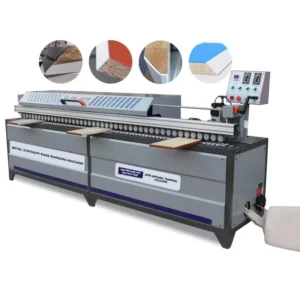
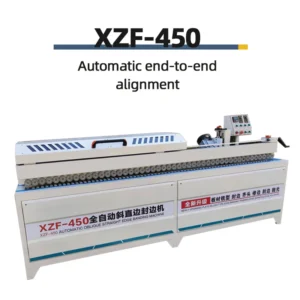
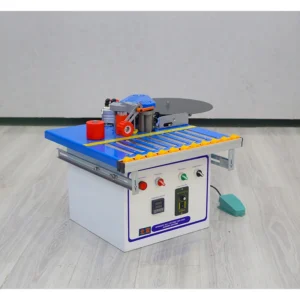
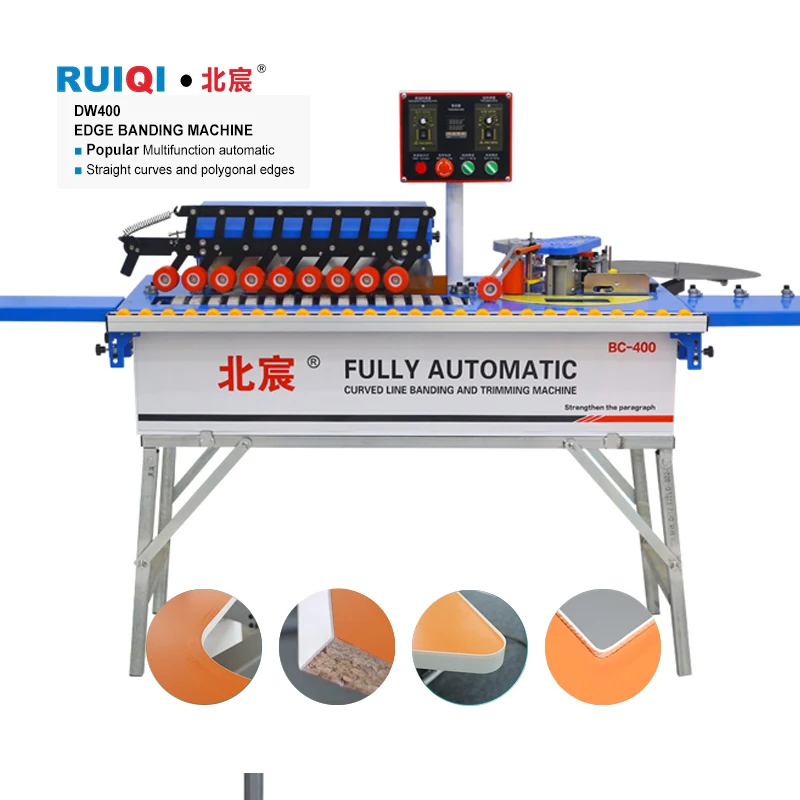
<p><strong>DW400 Edge Banding Machine, 3800W, 0.3–3MM Banding Thickness</strong> — straight edge banding with integrated trimming and polishing for MDF, plywood, particleboard, and polymer door panels.</p> <ul> <li>Dual 650W trimming and dual 180W polishing stations deliver clean glue lines and smooth edge finishes in a single pass</li> <li>1000ml glue pot capacity supports sustained production runs on cabinet and furniture components</li> <li>0.5–0.8MPa air requirement aligns with standard workshop compressed air systems</li> </ul> <p>Pre-shipment test records and factory verification photos provided to confirm edge finish quality on your specific substrate before dispatch.</p>
100+
Countries
MOQ 1
Unit
15-25 Days
Lead Time
3800W
380V
DW400
Edge Banding Machine
MDF Panel
Process Guide
Wood Door
- Full OEM/ODM support -- custom logo, voltage (110V-440V), multilingual panels
- ISO 9001 & CE certified, 5 national patents, 60 professional engineers
- 12-month warranty, remote technical support & spare parts service
- Professional export packaging, customs clearance support, on-time delivery
DW400 Edge Banding Machine for Wood Door Manufacture | Process Guide
Precision-Ground Edge Finish — DW400 delivers single-pass trimming and polishing across MDF, plywood, and particleboard substrates common in door and cabinet production, verified through four-stage factory QC before dispatch.
Technical Specifications
| Parameter | Value |
|---|---|
| Model | DW400 |
| Product Type | Edge Banding Machine |
| Total Power | 3800W |
| Voltage & Frequency | 220V / 380V / customization |
| Trimming Power | 650W × 2 |
| Polishing Power | 180W × 2 |
| Vacuum Power | 1200W |
| Edge Power | 20W |
| Transmission Power | 60W |
| Edge Banding Thickness | 0.3–3MM |
| Edge Banding Height | 0–50MM |
| Minimum Sheet Length | 25CM |
| Minimum Sheet Width | 10CM |
| Glue Pot Capacity | 1000ml |
| Air Source Pressure | 0.5–0.8 MPa |
| Product Size | 116 × 47 × 69 CM |
| Product Weight | 70 KG |
| Control System | basis to be confirmed |
| Feed Speed | basis to be confirmed |
| Language Options | Chinese and English standard; other languages customizable |
| Certification | CE |
Application Suitability
| Application | Material or Output |
|---|---|
| Cabinet carcass edge finishing | MDF and particleboard panels with PVC edge banding |
| Furniture visible edge treatment | Plywood and blockboard with veneer or solid-wood banding |
| Polymer door edge sealing | Non-wood composite panels requiring consistent glue adhesion |
| Small-batch custom joinery | Mixed substrates in workshop environments with space constraints |
Why the Voltage Question Should Come Before the Price on Any Edge Banding Machine
Confirming your facility voltage and frequency before ordering prevents costly commissioning failures and protects sensitive drive electronics.
I once stood in a furniture workshop in Lagos where the production manager was ready to plug in a newly delivered edge bander. The nameplate said 380V. The workshop ran 415V three-phase. Had we not caught the mismatch before energizing the panel, the inverter would have failed within minutes [NEED_CITE: voltage and frequency standards by export market]. That moment reinforced a rule I now follow on every installation: request a photograph of the main distribution board before the machine leaves the factory.
The DW400 ships configured for 220V or 380V, with customization available for facilities running non-standard supply. In regions across West Africa and South Asia, industrial voltage can range considerably from nominal values, and a machine wound for the wrong frequency will run its motors at incorrect speeds — affecting feed rate consistency and, ultimately, the edge banding machine woodworking process quality you depend on for clean panel edges.
How Substrate Choice Shapes the Edge Banding Process
Different panel materials behave differently under heat and pressure during the edge banding machine woodworking process. MDF accepts glue readily due to its porous surface, but excess adhesive can swell the fiber edges if the glue pot temperature is set too high. Particleboard presents a more open edge structure, demanding enough adhesive to fill voids without bleeding past the trim line.
Plywood, with its alternating grain layers, requires the trimming stations to cut cleanly across both face and cross grain. The dual 650W trimming units on the DW400 are positioned to handle this variation in a single pass, reducing the chance of tear-out that would otherwise show as a visible defect on assembled cabinet sides.
Glue Line Visibility and What It Tells You About Process Control
A visible glue line on a finished panel edge usually points to one of three variables: incorrect glue temperature, insufficient edge pressing force, or contaminated substrate surfaces. In door manufacture, where edges are often exposed to view, this defect is unacceptable and triggers rework [NEED_CITE: common edge banding defects in furniture panel processing].
The DW400’s 1000ml glue pot supports sustained runs without frequent refill pauses, which helps maintain thermal stability in the adhesive. When glue temperature fluctuates — as it can during refill cycles on smaller pots — viscosity changes and the bead profile becomes inconsistent. Keeping the pot adequately filled is a small operational habit that directly influences edge finish quality on polymer doors and veneered panels alike.
Reading the Specs That Actually Affect Edge Quality
Edge banding thickness range matters more than most buyers initially realize. The DW400 handles 0.3–3MM, which covers thin PVC films used on high-volume cabinet work as well as thicker solid-wood strips applied to premium furniture edges. Running material outside this range risks incomplete trimming or excessive scraping pressure, both of which degrade the final surface.
Air source pressure at 0.5–0.8 MPa drives the pneumatic cylinders that control edge pressing and trimming station engagement. If your workshop compressor cannot sustain stable pressure within this window, the pressing force will fluctuate — producing sections where the banding lifts slightly after cooling. This is especially noticeable on longer panels used in wardrobe and door production.
The dual 180W polishing stations follow trimming and scraping, buffing the edge to a smooth finish. On lighter-colored PVC and veneer materials, polishing quality is immediately visible; any chatter marks left by the trimming cutters become apparent under workshop lighting. The sequential station layout — trim, scrape, polish — ensures each stage completes before the next begins, which is essential when processing mixed-material batches common in custom furniture shops.
The Hidden Cost of Skipping Pre-Shipment Verification
When an edge bander arrives at a workshop with incorrect voltage configuration, the consequences extend beyond a blown component. The machine sits idle while replacement parts are sourced internationally, the production schedule slips, and customer orders for cabinets and doors accumulate [NEED_CITE: CE machinery directive requirements for industrial equipment]. For a small furniture factory operating on tight margins, a two-week commissioning delay can mean the difference between meeting a delivery deadline and losing a contract.
Equally costly is receiving a machine with a control panel in a language the operators cannot read. Setup parameters for glue temperature, feed rate, and trimming depth become guesswork, and incorrect settings compound into recurring edge quality failures that the team attributes to the machine rather than to configuration errors.
Why Source This Edge Bander Through a Process-Focused Lens
The DW400 sits within a product family that scales from entry-level manual machines to full-function pre-milling configurations, meaning a workshop can add capacity over time without switching suppliers or retraining operators on an entirely different control philosophy.
Voltage, language, and specification customization are treated as standard configuration steps rather than special requests — the quotation process includes formal confirmation of your facility’s electrical supply and your operators’ preferred control language before production begins.
Four-stage quality control covers incoming material inspection, in-process assembly checks, finished-product functional testing, and pre-shipment verification with photographic documentation, so you can review the machine’s test results on your specific panel materials before it leaves the factory floor.
Engineer-led configuration recommendations ensure the machine you receive matches your actual production requirements — not just the specifications listed in a catalog, but the substrate mix, banding materials, and daily throughput your workshop demands.
Factory visits are welcomed for buyers who want to witness edge banding tests on their own panel stock before committing to an order.
Documentation & Verification
- CE declaration of conformity covering the DW400 electrical and mechanical safety requirements
- Factory test record showing edge finish results on your specified MDF, plywood, or particleboard panels
- Electrical schematic confirming voltage and frequency configuration matches your facility supply
- Operation and maintenance manual provided in the language your production team reads
- Spare parts list with part numbers for trimming blades, polishing wheels, and glue pot components
Installation, Commissioning & Support
- Dedicated 3800W circuit required; confirm breaker rating and cable gauge match the DW400 total power draw
- Air compressor must sustain 0.5–0.8 MPa at the machine inlet; install a dedicated regulator and moisture trap upstream
- Machine footprint of 116 × 47 × 69 CM fits standard workshop bays; allow clearance for panel infeed and operator access on both sides
- First-run commissioning includes glue temperature calibration for your specific PVC or veneer banding material
- Trimming and polishing station alignment verified on your actual panel stock during initial setup
- Glue pot cleaning schedule provided based on 1000ml capacity and your daily production volume to prevent adhesive carbonization
What to Include With Your Inquiry
To receive an accurate configuration proposal for the DW400, share the panel materials you process most frequently — MDF, particleboard, plywood, or polymer composites — along with the edge banding materials you intend to run, whether PVC film, veneer, or solid-wood strips. Include a photograph of your workshop distribution board so the engineering team can confirm voltage and frequency compatibility before quotation. If your operators require a control interface in a specific language, note this in your initial inquiry to ensure the correct panel is fitted during assembly.
Frequently Asked Questions
Q: How does edge banding quality vary across MDF, particleboard, and plywood on this machine?
A: MDF typically produces the cleanest glue line due to its uniform surface density. Particleboard requires sufficient adhesive to fill its open edge structure without excessive squeeze-out. Plywood demands sharp trimming cutters to avoid tear-out across alternating grain layers. The DW400’s dual trimming and polishing stations handle all three substrates in a single pass, though glue temperature and feed rate settings should be adjusted per material for optimal edge finish results.
Q: What glue type and temperature settings are recommended for different banding materials?
A: PVC film generally bonds well with standard EVA hot-melt adhesive at moderate temperatures. Veneer and solid-wood banding require higher glue temperatures and thicker application to ensure penetration into the natural fiber structure. The 1000ml glue pot on the DW400 maintains thermal stability during sustained runs. Specific temperature recommendations depend on the adhesive manufacturer’s datasheet and the ambient conditions in your workshop.
Q: Can the control panel and operation manual be provided in a language my operators can read?
A: Chinese and English are standard options, and additional languages are available as customization. The language preference is confirmed during the quotation stage so the correct control interface is installed before shipment. The operation and maintenance manual is also produced in the agreed language, covering setup parameters, daily maintenance routines, and troubleshooting guidance for common edge finish issues.
Q: What compressed air quality and pressure stability is needed for consistent edge pressing?
A: The DW400 requires clean, dry air at 0.5–0.8 MPa to operate the pneumatic pressing and trimming cylinders reliably. Moisture or oil contamination in the air line can cause cylinder seals to degrade prematurely and lead to inconsistent pressing force. Installing a dedicated filter-regulator-lubricator unit upstream of the machine inlet protects the pneumatic components and maintains stable edge pressure throughout each production shift.
Q: How do I verify trimming and polishing tolerances before accepting the machine?
A: Request factory test records showing edge finish samples produced on panel material matching your specifications. The pre-shipment verification process includes photographic documentation of trimming and polishing results. If possible, send sample panels and banding material to the factory for a live test run, allowing you to inspect edge quality firsthand before the machine is packed for dispatch.
Technical Specifications
| Parameter | Value |
|---|---|
| Product Name | DW400 Edge Banding Machine for Wood Door Manufacture | Process Guide |
| Category | Edge banding machine |
| Voltage Options | 110V / 220V / 380V / 440V (customizable) |
| Frequency | 50Hz / 60Hz (customizable) |
| Certification | ISO 9001, CE |
| MOQ | 1 Unit |
| Lead Time | 15-25 Working Days |
| Warranty | 12 Months |
| OEM / ODM | Available -- logo, color, panel language |
* Detailed technical specifications vary by model. Please contact us with your specific requirements for a complete datasheet.
Shipping & Export
-
Export Packaging
Heavy-duty wooden crate with foam padding and moisture protection
-
Shipping Methods
Sea freight (FCL/LCL), air freight, express -- we support all methods
-
Customs Support
Full documentation: CO, commercial invoice, packing list, HS code assistance
-
Port of Loading
Tianjin / Qingdao port, China -- 20 years export experience
OEM / ODM Services
-
Logo & Branding
Custom logo printing, color scheme, and nameplate engraving
-
Voltage Configuration
110V / 220V / 380V / 440V, 50Hz / 60Hz -- any region supported
-
Multilingual Panels
Control panels in English, Spanish, French, Arabic and more
-
Custom Specifications
Modified dimensions, accessories, or feature sets on request
Get a Quote
Request Product Inquiry
Fill in your details and we'll respond within 24 hours with pricing and availability.
Direct Contact
How It Works
-
1
Confirm requirements & budget
Tell us your factory scale and processing needs
-
2
Receive recommendation & quote
We match the right machine with full specs
-
3
Negotiate & place order
OEM terms, voltage, payment and delivery
-
4
Production & QC inspection
Multi-stage quality control by 60 engineers
-
5
Export packaging & shipment
Professional packing, customs clearance
-
6
After-sales support
12-month warranty, remote tech support
You May Also Like