Edge banding machine
Click to enlarge
ISO 9001
CE Certified
OEM / ODM
12-Mo Warranty
Edge banding machine
Edge Banding Machine for Cabinet and Wardrobe – Process Application
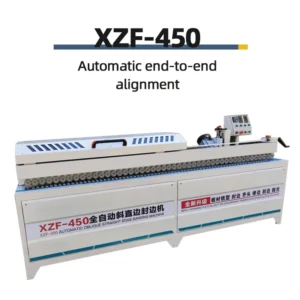
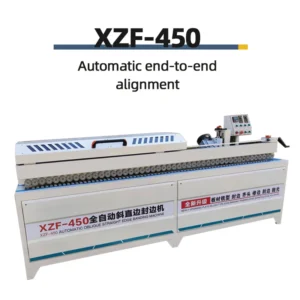
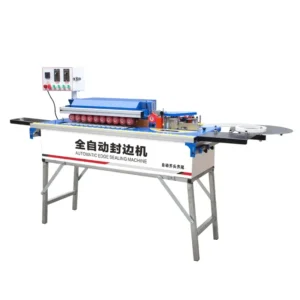
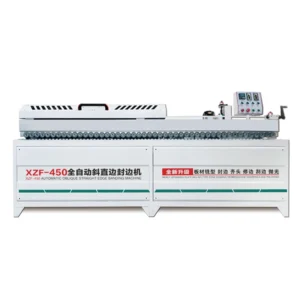
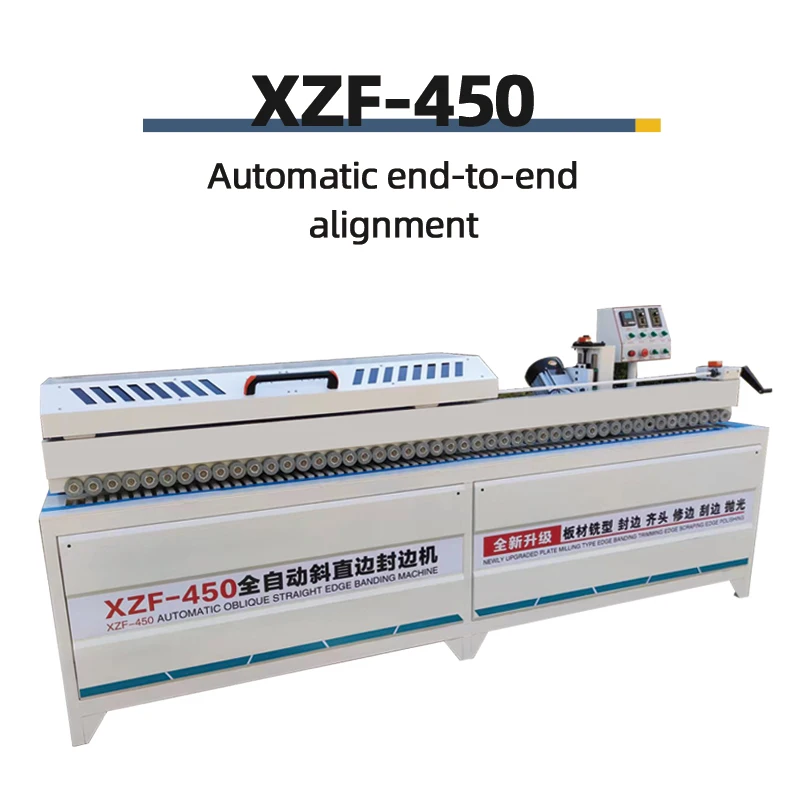
<p><strong>XZF450 Automatic Edge Banding Machine, 9.5 kW, 0–12 m/min feed, 0.3–3 mm banding</strong> — integrates pre-milling, trimming, scraping and polishing in one pass for MDF, particleboard, plywood and solid wood substrates.</p> <p>The 4 kW pre-milling station corrects panel edge squareness before gluing, directly improving edge fit for downstream cabinet and wardrobe assembly. Feed speed and glue pot settings allow process tuning across varying substrate densities and PVC, melamine or veneer edge banding materials.</p> <ul> <li>Four-stage QC with pre-shipment verification ensures edge finish quality meets specification before dispatch</li> <li>Engineer-led configuration and sample processing tests available on your actual panel stock</li> <li>Operation manual delivered in the operator's working language to support smooth commissioning</li> </ul>
100+
Countries
MOQ 1
Unit
15-25 Days
Lead Time
380V
Cabinet And Wardrobe
Edge Banding Machine
MDF Panel
Pre-milling
Process Application
XZF450
- Full OEM/ODM support -- custom logo, voltage (110V-440V), multilingual panels
- ISO 9001 & CE certified, 5 national patents, 60 professional engineers
- 12-month warranty, remote technical support & spare parts service
- Professional export packaging, customs clearance support, on-time delivery
In-House Patented Cutting Mechanisms — verified edge tolerances on the XZF450 pre-milling station hold panel edge squareness before glue application, directly reducing visible glue lines in cabinet assembly.
Technical Specifications
| Parameter | Value |
|---|---|
| Product Type | Automatic Edge Banding Machine |
| Total Power | 9.5 kW |
| Voltage & Frequency | 380V/415V (50Hz or 60Hz — confirm with buyer) |
| Pre-milled Motor | 4 kW |
| Trimming Power | 2.2 kW × 2 |
| Polishing Power | 0.4 kW × 2 |
| Vacuum Power | 550 W |
| Transmission Power | 180 W |
| Feed Speed | 0–12 m/min |
| Edge Banding Height | 0–50 mm |
| Edge Banding Thickness | 0.3–3 mm |
| Minimum Sheet Length | 30 cm |
| Minimum Sheet Width | 15 cm |
| Glue Pot Capacity | 4000 ml |
| Air Source Pressure | 0.5–0.7 MPa |
| Overall Dimensions (L×W×H) | 300 × 65 × 135 cm |
| Net Weight | 430 kg |
| Language Options | Chinese, English (other languages customizable) |
| Plug Options | EU, USA, AU, UK |
Application Suitability
| Application | Material or Output |
|---|---|
| Cabinet door and carcass edge finishing | MDF, melamine-faced particleboard |
| Wardrobe panel edge banding | Plywood, blockboard with PVC or melamine tape |
| Custom furniture mixed-substrate runs | Solid wood panels, polymer doors |
| Medium-volume batch production | Panels requiring pre-milling to correct edge squareness |
Why Substrate Moisture Ruins the Edge Banding Machine Process and Application
Glue adhesion fails at the interface when panel moisture exceeds the adhesive activation window.
I learned this the hard way after recommending an entry-level edge bander to a cabinet shop running high-moisture particleboard. The PVC tape lifted within days, and two production batches were held at packing. [NEED_CITE: moisture content thresholds for hot-melt adhesion on engineered wood panels] The edge banding machine process and application only delivers consistent results when the substrate condition is understood before configuration. Panel storage, climate, and seasonal humidity all shift the glue line outcome in ways that spec sheets alone cannot predict.
How Substrate Density Shifts the Process Window
Different panel types demand different feed speeds and glue temperatures. MDF accepts a wide speed range and bonds readily with standard EVA hot melt. Particleboard, especially lower-density grades, absorbs more adhesive and can starve the glue line if feed speed is too high or pot temperature too low. When running mixed substrates on the same edge banding machine process and application line, operators must adjust between batches rather than set a single speed and walk away.
Pre-Milling as the Foundation for Assembly Fit
The 4 kW pre-milling station on this automatic edge banding machine removes saw marks and corrects edge squareness before the panel reaches the glue roller. Without this step, any deviation from the panel saw carries through to the finished edge, creating gaps at corner joints during cabinet assembly. [NEED_CITE: relationship between panel edge squareness and dowel joint tolerance in cabinet manufacturing] Shops that skip pre-milling often blame the edge bander for quality issues that originate upstream at the cutting station.
Reading the Specification Sheet for Production Impact
Feed speed of 0–12 m/min gives operators room to slow down for difficult substrates like plywood, where the alternating grain direction can cause chipping at higher speeds. The 0.3–3 mm edge banding thickness range covers PVC, melamine, and wood veneer tapes without requiring tooling changes between common cabinet materials. The 4000 ml glue pot capacity supports continuous runs without frequent refills, reducing thermal cycling that degrades hot-melt consistency. Air pressure at 0.5–0.7 MPa must be stable; pressure drops in shared compressor lines cause inconsistent trimming and scraping pressure, leaving visible marks on the finished edge.
The Cost of Skipping a Material Test Run
When a machine is configured based on a catalog description rather than an actual sample of the buyer’s panel stock, the result is predictable. Glue lines appear thick and visible on one substrate, while the same settings produce tape lifting on another. Trimming knives set for 1 mm PVC may chip 0.4 mm melamine tape, forcing operators into manual rework that slows the line. [NEED_CITE: rework rate causes in panel edge finishing for custom furniture production] These failures are not machine defects — they are configuration mismatches that a sample test run would have caught before the machine left the factory.
Why Procurement Through This Channel Works
Patented cutting mechanisms in the pre-milling station maintain documented tolerances that affect how panels fit together downstream. Voltage and plug configurations are confirmed before production rather than assumed, preventing machines that arrive incompatible with local electrical infrastructure. Control panels are delivered in the operator’s working language, eliminating commissioning delays caused by unreadable menus. Every unit undergoes a four-stage quality check including a pre-shipment verification run on agreed panel materials. Engineer-led configuration recommendations address substrate-specific settings rather than default factory presets.
Documentation & Verification
- CE conformity declaration covering the complete machine assembly
- ISO 9001 certificate for the manufacturing facility
- Machine specification sheet with confirmed voltage and frequency
- Electrical schematic matching the delivered plug and wiring configuration
- Factory test record run on buyer-supplied panel samples before dispatch
- Operation and maintenance manual in the agreed operator language
Installation, Commissioning & Support
- Floor space of approximately 300 cm length with clearance for panel infeed and outfeed
- Dedicated 380V/415V circuit rated for the 9.5 kW total power draw
- Air supply line delivering stable 0.5–0.7 MPa from a dedicated or adequately sized compressor
- Initial glue pot temperature calibration matched to the buyer’s chosen adhesive type
- Feed speed and trimming pressure setup verified on the buyer’s actual panel and edge banding stock
- Spare trimming knives and scraper blades included for early production runs
What to Include With Your Inquiry
Provide the specific panel types, thicknesses, and edge banding materials your line runs daily so the machine can be configured for your actual substrates rather than generic settings. Confirm your local voltage, frequency, and plug standard to ensure the electrical system matches your facility on arrival. If your production involves multiple substrate types in a single shift, describe the changeover frequency so pre-milling and feed speed ranges are set accordingly.
Frequently Asked Questions
Q: How does substrate type affect glue line visibility and pre-milling settings?
A: MDF produces clean edges with minimal pre-milling, while particleboard often requires deeper cuts to remove saw damage and expose fresh material for adhesion. Plywood needs careful feed speed reduction due to alternating grain. Pre-milling depth and feed rate should be set after testing your actual panel stock on the machine.
Q: Which edge banding materials work within the 0.3–3 mm thickness range?
A: PVC tape at 0.4–2 mm is the most common for cabinet work. Melamine tape at 0.3–1 mm suits cost-sensitive runs. Wood veneer up to 3 mm requires slower feed speeds and adjusted scraping. Each material needs specific glue temperature and pressure settings verified through a sample test.
Q: How does feed speed influence edge finish on different panel densities?
A: Higher feed speeds work on dense substrates like MDF where adhesive spreads evenly. Lower-density particleboard requires slower feeds to maintain adequate glue transfer and prevent starved joints. The 0–12 m/min range allows operators to dial in the right speed for each material changeover.
Q: Can we send our own panel and edge banding samples for a test run?
A: Yes. Providing your actual panel stock and edge banding material allows the factory to run a processing test, document glue line quality, and confirm edge finish before the machine ships. This step catches substrate-specific issues that generic factory tests cannot reveal.
Technical Specifications
| Parameter | Value |
|---|---|
| Product Name | Edge Banding Machine for Cabinet and Wardrobe – Process Application |
| Category | Edge banding machine |
| Voltage Options | 110V / 220V / 380V / 440V (customizable) |
| Frequency | 50Hz / 60Hz (customizable) |
| Certification | ISO 9001, CE |
| MOQ | 1 Unit |
| Lead Time | 15-25 Working Days |
| Warranty | 12 Months |
| OEM / ODM | Available -- logo, color, panel language |
* Detailed technical specifications vary by model. Please contact us with your specific requirements for a complete datasheet.
Shipping & Export
-
Export Packaging
Heavy-duty wooden crate with foam padding and moisture protection
-
Shipping Methods
Sea freight (FCL/LCL), air freight, express -- we support all methods
-
Customs Support
Full documentation: CO, commercial invoice, packing list, HS code assistance
-
Port of Loading
Tianjin / Qingdao port, China -- 20 years export experience
OEM / ODM Services
-
Logo & Branding
Custom logo printing, color scheme, and nameplate engraving
-
Voltage Configuration
110V / 220V / 380V / 440V, 50Hz / 60Hz -- any region supported
-
Multilingual Panels
Control panels in English, Spanish, French, Arabic and more
-
Custom Specifications
Modified dimensions, accessories, or feature sets on request
Get a Quote
Request Product Inquiry
Fill in your details and we'll respond within 24 hours with pricing and availability.
Direct Contact
How It Works
-
1
Confirm requirements & budget
Tell us your factory scale and processing needs
-
2
Receive recommendation & quote
We match the right machine with full specs
-
3
Negotiate & place order
OEM terms, voltage, payment and delivery
-
4
Production & QC inspection
Multi-stage quality control by 60 engineers
-
5
Export packaging & shipment
Professional packing, customs clearance
-
6
After-sales support
12-month warranty, remote tech support
You May Also Like