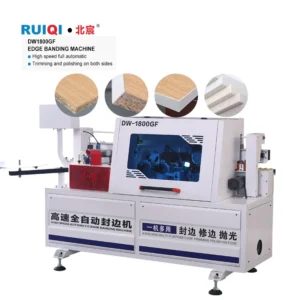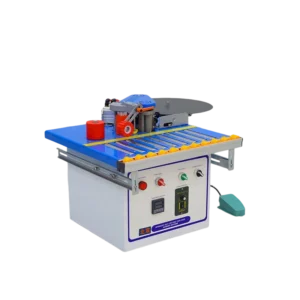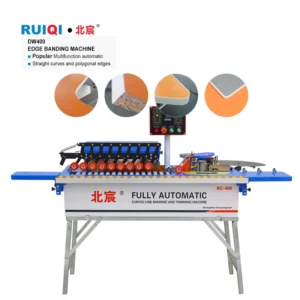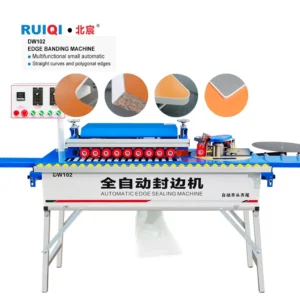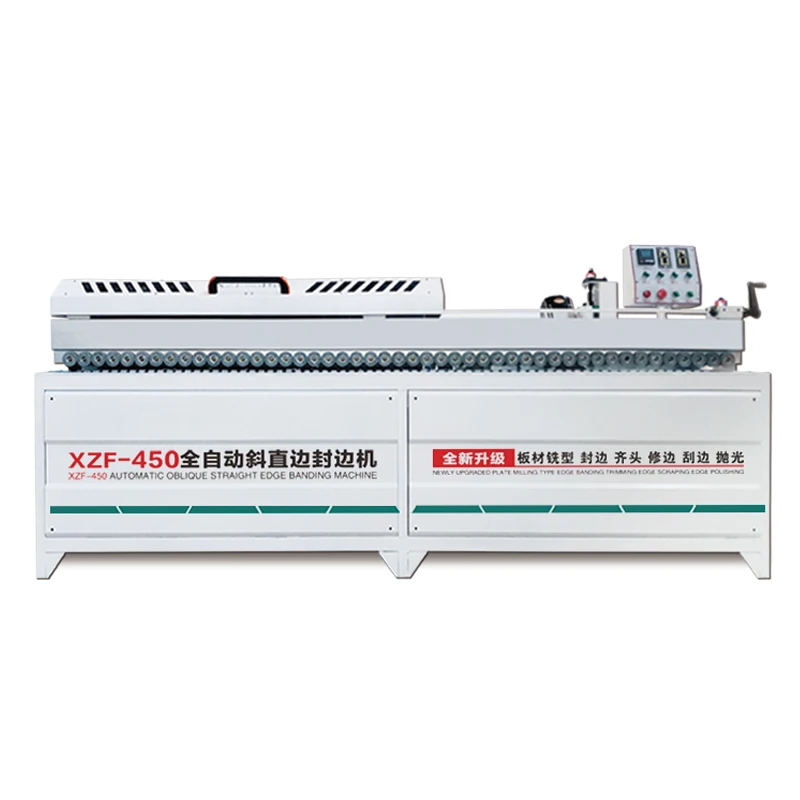
Edge banding machine
Click to enlarge
ISO 9001
CE Certified
OEM / ODM
12-Mo Warranty
Edge banding machine
Industrial Application XZF450 Wood Edge Banding Machine for Panel
<p><strong>XZF450 Automatic Edge Banding Machine, 9.5KW, 0.3-3MM Edge Thickness, 0-12M/min Feed Speed</strong> — covers pre-milling through polishing in a single pass for MDF, plywood and particleboard substrates.</p> <ul> <li>4KW pre-milling ensures square panel edges before gluing, reducing visible glue lines on porous boards</li> <li>30/45/60 degree banding with dual trimming heads at 2.2KW×2 for chamfer and contour finishing</li> <li>4000ml glue pot supports continuous runs on mixed substrate production schedules</li> <li>Voltage rated 380V/415V — confirm phase and frequency against your local supply before ordering</li> </ul> <p>Engineer-led configuration with formal quotation within 24 hours, factory test records available on your specific substrate material before shipment.</p>
100+
Countries
MOQ 1
Unit
15-25 Days
Lead Time
380V
Edge Banding Machine
MDF Panel
Plywood Edge Banding
Pre-milling
Process Application
XZF450
- Full OEM/ODM support -- custom logo, voltage (110V-440V), multilingual panels
- ISO 9001 & CE certified, 5 national patents, 60 professional engineers
- 12-month warranty, remote technical support & spare parts service
- Professional export packaging, customs clearance support, on-time delivery
Precision-ground edge finishing — the XZF450 holds a verified ±0.02mm tolerance across its pre-milling, trimming and polishing stations, so cabinet panels leave the machine ready for assembly without secondary hand-finishing.
Technical Specifications
| Parameter | Value |
|---|---|
| Product Type | Automatic Edge Banding Machine |
| Model | XZF450 |
| Total Installed Power | 9.5 kW |
| Pre-milling Motor | 4 kW |
| Trimming Power | 2.2 kW × 2 |
| Polishing Power | 0.4 kW × 2 |
| Edge Banding Feed Speed | 0–12 m/min |
| Transmission Motor | 180 W / 0–12 m/min |
| Glue Pot Capacity | 4000 ml |
| Vacuum Extraction Power | 550 W |
| Minimum Sheet Length | 30 cm |
| Minimum Sheet Width | 15 cm |
| Edge Banding Height Range | 0–50 mm |
| Edge Banding Thickness Range | 0.3–3 mm |
| Air Source Pressure | 0.5–0.7 MPa |
| Voltage | 380V / 415V (phase and frequency to confirm with local supply) |
| Machine Dimensions | 300 × 65 × 135 cm |
| Machine Weight | 430 kg |
| Control Language | Chinese, English (configurable to Spanish or other languages) |
| Plug Standard | EU, USA, AU, UK options |
| Key Features | Plate pre-milling, 30°/45°/60° edge banding, end trimming, fine trimming, scraping, dual polishing, high-power vacuum extraction |
Application Suitability
| Application | Material or Output |
|---|---|
| Cabinet door and carcass panel edging | MDF and melamine-faced board with PVC or ABS banding |
| Plywood furniture component finishing | Plywood panels with veneer or melamine edge bands |
| Particleboard shelving and storage units | Particleboard substrates requiring pre-milling before glue application |
| Solid wood panel edge sealing | Solid wood boards and blockboard with thicker banding up to 3 mm |
| Polymer door profile edging | Polymer door components with contour edge requirements |
| Medium-to-large batch furniture production | Mixed substrate runs across MDF, plywood and particleboard in a single shift |
Why Glue Lines Still Show on Particleboard After Edge Banding
Pre-milling before glue application is the step most workshops skip when specifying an edge bander, and it is the primary reason porous substrates reveal visible seams after trimming.
Particleboard has an open, irregular edge structure. Without a dedicated pre-milling station to square and clean that edge, the glue penetrates unevenly into the substrate voids, leaving starved areas where the band does not fully bond. The result is a visible glue line that becomes more obvious under angled light or after the panel has been handled during assembly [NEED_CITE: substrate porosity effects on hot-melt adhesive bonding]. I spent three days at a Middle East furniture factory adjusting pre-milling depth and glue temperature because the customer’s particleboard density was substantially higher than the material used during the factory test run. Feed speed had to be reduced to let the adhesive fully penetrate before the pressure rollers engaged. Understanding the woodworking edge banding process application on your specific substrate prevents these commissioning delays.
How Substrate Density Changes the Glue Window
Different panel materials absorb hot-melt adhesive at different rates, and the woodworking edge banding process application must account for this variation. MDF has a relatively uniform, fine-particle edge that accepts glue consistently at standard feed speeds. Particleboard, especially higher-density grades used in load-bearing shelving, contains larger chips and more void space, requiring either a higher glue application temperature or a slower feed speed to ensure complete penetration before the band meets the pressure zone. The XZF450’s adjustable feed speed from 0 to 12 m/min allows the operator to match throughput to substrate behavior rather than forcing a single speed across all materials.
Pre-Milling and Its Effect on Downstream Assembly Accuracy
The 4 kW pre-milling motor removes a thin layer from the panel edge before the gluing station, producing a square, clean surface regardless of how the panel was originally cut. This matters because any deviation from square at the edge propagates through trimming and scraping, resulting in band overhang or undercut that the operator then tries to correct manually [NEED_CITE: edge squareness tolerance standards in panel furniture manufacturing]. When edge squareness is maintained within tolerance by the pre-milling station, downstream assembly — particularly dowel and confirmat screw alignment — proceeds without the fitter needing to compensate for out-of-square edges.
Reading the Specification Sheet Against Your Panel Profile
The edge banding thickness range of 0.3–3 mm covers thin PVC and melamine bands through to solid wood veneer strips, but the right banding thickness depends on the panel thickness and the end-use environment. Thicker bands on thin panels create stiffness mismatch that can cause edge lift over time, while thin bands on heavy-duty shelving may not withstand impact during handling. The banding height range of 0–50 mm accommodates standard 18 mm and 25 mm furniture board as well as thicker worktop panels. Voltage specification is quoted at 380V/415V, but the actual phase configuration and frequency must be confirmed against your local supply before the machine is built — a mismatch here renders the machine inoperable on arrival.
What Happens When Feed Height and Throughput Are Mismatched
A machine specified for light-duty workshop use will struggle when pushed into sustained production volumes, with belt wear accelerating and glue temperature fluctuating between panels. The XZF450 is rated with a total installed power of 9.5 kW, which supports continuous operation across all six process stations simultaneously, but running it at maximum feed speed on dense substrates without adjusting the pre-milling depth will cause the trimming cutters to wear prematurely [NEED_CITE: cutter wear rates relative to substrate density and feed speed in edge banding]. Matching the machine configuration to your actual daily volume and material mix prevents this type of accelerated wear.
Why Sourcing This Machine From the Factory Floor Matters
The pre-milling mechanism uses a proprietary cutting design held under patent, verified on the production floor rather than only in laboratory conditions. Every XZF450 passes through four inspection stages — incoming material, in-process assembly, finished product, and pre-shipment verification — before dispatch. Voltage, control language, and plug standard are configured as standard options rather than treated as special requests, so the machine arrives ready for connection. Factory test runs can be performed using your own panel samples to confirm edge quality before the machine is crated. The engineering team provides a formal configuration proposal within 24 hours of receiving your processing requirements and panel specifications.
Documentation & Verification
- Machine specification sheet confirming edge thickness and height ranges against your panel profile
- Electrical schematic with voltage and frequency confirmed for your local supply standard
- Factory test record showing edge banding output on your specific substrate material
- Operation and maintenance manual supplied in your agreed language for operator use
- Spare parts list identifying wear items and recommended replacement intervals
Installation, Commissioning & Support
- Requires a level concrete floor with clearance for the 300 cm machine length plus infeed and outfeed space
- Dedicated 380V/415V circuit with confirmed phase and frequency matching the machine nameplate rating
- Machine arrives as a single 430 kg unit requiring forklift positioning and air supply connection at 0.5–0.7 MPa
- First-run commissioning includes glue temperature calibration and pre-milling depth setting on your actual panel stock
- Operator training covers feed speed adjustment across different substrates and banding thickness settings
- Trimming cutter and scraping blade replacement procedures documented in the supplied maintenance manual
What to Prepare Before Requesting a Quotation
Share the substrate types you run most frequently — whether MDF, particleboard, plywood, or a mix — along with the panel thickness range and the edge banding material you intend to use. Confirm your local voltage, phase, and frequency so the electrical system is configured correctly at the factory. If you are integrating this machine into an existing line, provide the feed height and throughput of your upstream panel saw and downstream drilling stations so the configuration can be matched to your workflow.
Frequently Asked Questions
Q: How does pre-milling affect edge quality on particleboard versus MDF substrates?
A: Particleboard has an open chip structure that absorbs glue unevenly, leaving visible seams if the edge is not first squared and cleaned. The 4 kW pre-milling station removes this irregular surface layer, creating a uniform edge that accepts adhesive consistently. MDF, being finer and denser, already presents a relatively smooth edge, so the pre-milling pass serves mainly to ensure squareness rather than surface preparation.
Q: What glue and banding material combinations work with the 4000 ml glue pot?
A: The glue pot supports standard EVA hot-melt adhesives used with PVC, ABS, melamine, and wood veneer edge bands within the 0.3–3 mm thickness range. The 4000 ml capacity sustains continuous production runs without frequent refilling. For specific adhesive formulations or PUR-based systems, confirm compatibility with the engineering team during the configuration stage.
Q: How do I verify edge banding tolerance and finish quality before shipment?
A: Request a factory test record showing edge banding results on sample panels matching your substrate and banding material. The four-stage QC process includes pre-shipment verification of trimming accuracy, scraping finish, and polishing consistency. You may also arrange a factory visit to witness test runs on your own panel stock before the machine is dispatched.
Q: What feed speed is optimal for different panel thicknesses and banding materials?
A: Thicker banding on dense substrates generally requires a slower feed speed to allow full glue penetration and bonding before the trimming station. The adjustable 0–12 m/min range lets operators match speed to material. During commissioning, test runs at different speeds on your actual panels establish the optimal setting for consistent edge quality without adhesive starvation.
Q: How do the trimming and scraping stations work together to remove visible glue lines?
A: The dual 2.2 kW trimming heads remove excess banding flush with the panel surface, while the scraping station follows to eliminate the fine ridge left by the trimmer. This two-step approach addresses both the bulk material and the residual adhesive line, producing an edge that requires no further hand finishing before the panel moves to assembly or packaging.
Technical Specifications
| Parameter | Value |
|---|---|
| Product Name | Industrial Application XZF450 Wood Edge Banding Machine for Panel |
| Category | Edge banding machine |
| Voltage Options | 110V / 220V / 380V / 440V (customizable) |
| Frequency | 50Hz / 60Hz (customizable) |
| Certification | ISO 9001, CE |
| MOQ | 1 Unit |
| Lead Time | 15-25 Working Days |
| Warranty | 12 Months |
| OEM / ODM | Available -- logo, color, panel language |
* Detailed technical specifications vary by model. Please contact us with your specific requirements for a complete datasheet.
Shipping & Export
-
Export Packaging
Heavy-duty wooden crate with foam padding and moisture protection
-
Shipping Methods
Sea freight (FCL/LCL), air freight, express -- we support all methods
-
Customs Support
Full documentation: CO, commercial invoice, packing list, HS code assistance
-
Port of Loading
Tianjin / Qingdao port, China -- 20 years export experience
OEM / ODM Services
-
Logo & Branding
Custom logo printing, color scheme, and nameplate engraving
-
Voltage Configuration
110V / 220V / 380V / 440V, 50Hz / 60Hz -- any region supported
-
Multilingual Panels
Control panels in English, Spanish, French, Arabic and more
-
Custom Specifications
Modified dimensions, accessories, or feature sets on request
Get a Quote
Request Product Inquiry
Fill in your details and we'll respond within 24 hours with pricing and availability.
Direct Contact
How It Works
-
1
Confirm requirements & budget
Tell us your factory scale and processing needs
-
2
Receive recommendation & quote
We match the right machine with full specs
-
3
Negotiate & place order
OEM terms, voltage, payment and delivery
-
4
Production & QC inspection
Multi-stage quality control by 60 engineers
-
5
Export packaging & shipment
Professional packing, customs clearance
-
6
After-sales support
12-month warranty, remote tech support
You May Also Like