Edge banding machine
Click to enlarge
ISO 9001
CE Certified
OEM / ODM
12-Mo Warranty
Edge banding machine
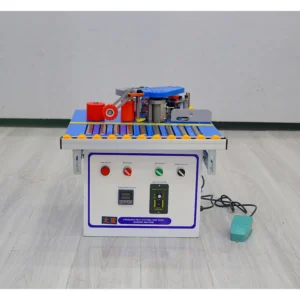
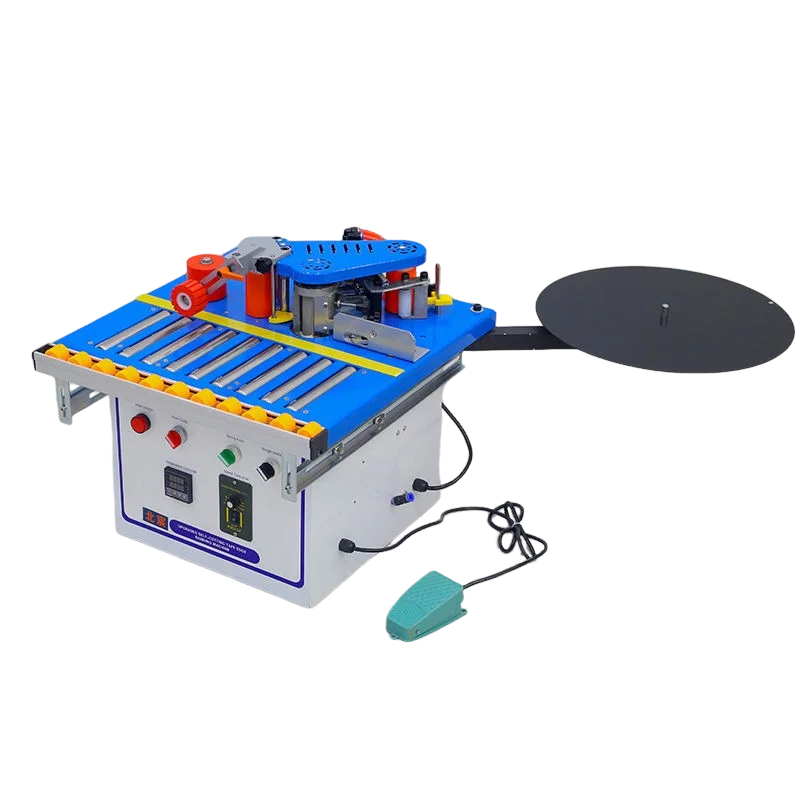
Portable Edge Banding Machine for MDF Particle Board – Small Workshop
<p><strong>Portable Edge Banding Machine, 1000W, 220V/380V, 0.3–3mm Banding Thickness</strong> — benchtop hot melt glue system for straight and curved edge sealing on MDF, particleboard, plywood and solid wood panels.</p> <ul> <li>1000ml glue pot capacity supports sustained runs; air pressure 0.5–0.8 MPa ensures consistent bonding</li> <li>Handles 0.3–3mm PVC, melamine and veneer strips on panels from 30mm width upward</li> <li>Compact 50×50×47cm footprint suits on-site furniture repair and small joinery workshops moving from manual iron-on methods</li> </ul> <p>Edge sealing quality depends on substrate density and glue temperature control — this unit lets operators dial in feed pressure for each material rather than relying on fixed settings.</p> <p>Backed by four-stage QC with pre-shipment verification and multilingual control panel options confirmed before production.</p>
100+
Countries
MOQ 1
Unit
15-25 Days
Lead Time
Benchtop Edge Banding Machine
Curved Edge Banding
Hot Melt Glue System
MDF Particle Board
Portable Edge Banding Machine
Process And Application
Small Workshop
ST-70
- Full OEM/ODM support -- custom logo, voltage (110V-440V), multilingual panels
- ISO 9001 & CE certified, 5 national patents, 60 professional engineers
- 12-month warranty, remote technical support & spare parts service
- Professional export packaging, customs clearance support, on-time delivery
Compact benchtop build — engineered with a 1000ml hot melt glue pot and curved-straight banding capability, this portable edge bander handles MDF, particleboard, and plywood sealing on a 50×50cm footprint without needing a full production line.
Technical Specifications
| Parameter | Value |
|---|---|
| Product Type | Portable Edge Banding Machine |
| Total Power | 1000W |
| Voltage | 220V / 380V / customization available |
| Standard Features | Curved and straight edge banding |
| Minimum Sheet Length | 25cm |
| Minimum Sheet Width | 3cm |
| Edge Banding Height | 0–50mm |
| Edge Banding Thickness | 0.3–3mm |
| Edge Power | 20W |
| Air Source Pressure | 0.5–0.8 MPa |
| Glue Pot Capacity | 1000ml |
| Product Dimensions | 50×50×47cm |
| Net Weight | 23kg |
| Language Options | Chinese, English, Spanish, French (customizable) |
| Plug Options | EU, USA, AU, UK |
Application Suitability
| Application | Material or Output |
|---|---|
| Custom cabinet edge repair | MDF and melamine-faced particleboard |
| Small joinery workshop sealing | Plywood and ecological board panels |
| On-site furniture installation touch-up | Solid wood board and PVC edge strips |
| Home decoration cut-edge sealing | Particleboard and MDF shelving |
Why Glue Temperature Matters More Than Machine Price on a Portable Edge Bander
Substrate density dictates glue melt behaviour, not the banding strip itself.
A recycled particleboard soaks up hot melt differently than a virgin MDF sheet. When the portable edge banding machine process application is set for one material and fed another, the glue either starves the joint or squeezes past the strip, leaving a visible bead. I have watched small workshops burn through dozens of panels before realising the factory default temperature was tuned for a board they never intended to cut [NEED_CITE: hot melt adhesive activation temperature ranges for wood composites].
How Substrate Density Changes Glue Behaviour
The portable edge banding machine process application behaves differently on each panel type because fibre density controls how fast heat transfers from the glue into the board. MDF, with its fine and uniform fibres, accepts hot melt quickly and evenly. Particleboard, especially recycled grades, has voids between chips that create uneven adhesion zones. Plywood introduces grain direction into the equation — glue spreads more readily along the grain than across it. Adjusting the glue pot temperature and feed speed to match the substrate is not optional; it is the difference between a clean edge and a peeling failure in the field.
Banding Material Selection and Thickness Range
The 0.3–3mm thickness range covers PVC, melamine, and real wood veneer strips, each demanding its own pressure and heat profile. Thin PVC conforms easily around curves but can melt or blister if the glue is too hot. Melamine strips resist heat better but are brittle on tight radii. Veneer requires consistent pressure and lower temperatures to avoid scorching. Selecting the right banding for the job, then matching machine settings to it, determines whether the portable edge banding machine process application produces a finished edge or a rework pile [NEED_CITE: PVC versus melamine edge banding adhesion characteristics].
Reading the Specs That Actually Affect Edge Quality
The 1000ml glue pot capacity matters for production continuity — a smaller pot would require stopping to refill mid-run, letting the remaining glue cool and thicken. The 0.5–0.8 MPa air source pressure range provides the mechanical force that presses the strip against the panel after glue application; too little pressure and the bond is weak, too much and the strip deforms or the glue starves the leading edge. The 25cm minimum sheet length is a practical floor — anything shorter risks the panel slipping before the banding engages. And the 23kg net weight on a 50×50cm base means the unit stays put on a workbench during curved edge work where lateral force is applied by hand. The portable edge banding machine process application becomes predictable once these parameters are matched to the actual board and strip combination in use, rather than left at factory defaults.
What Happens When Settings Are Left at Factory Defaults
A portable unit arrives with glue temperature and feed speed set for a standard test material. If the operator runs recycled particleboard through without adjusting, the adhesive penetrates the chip voids instead of bonding to the strip, and the edge peels within days. Curved profiles amplify this problem because the strip is under tension; any weak spot in the glue line opens immediately. This is not a machine defect — it is a configuration mismatch [NEED_CITE: edge banding failure modes on recycled particleboard substrates]. The cost shows up as wasted panels, wasted banding material, and lost installation time on a job site where there is no second bench to fall back on.
Why Sourcing From a Manufacturer With Process Knowledge Matters
The portable edge banding machine process application benefits from an equipment partner who tests on multiple substrates before shipping. In-house manufacturing with a patented cutting mechanism and a four-stage quality check means the unit is verified on the panel type you declare, not just on a showroom sample. Voltage and plug options are confirmed per destination, so the machine runs correctly the first day rather than sitting idle while a transformer is sourced. Operation manuals and control panel labels are produced in the agreed language, which matters when the operator is reading instructions on a noisy installation site. An engineer-led configuration recommendation within 24 hours keeps the gap between inquiry and commissioning narrow [NEED_CITE: industrial equipment commissioning delay causes].
Documentation & Verification
- CE declaration of conformity covering portable hot melt edge sealing equipment
- Machine specification sheet confirming 1000W total power and voltage match
- Factory test record showing edge sealing on your declared substrate and strip type
- Operation and maintenance manual in the confirmed language with glue temperature charts
- Spare parts list covering glue pot heating element, feed rollers, and edge trim components
- Electrical schematic with confirmed plug type for local wiring compliance
Installation, Commissioning & Support
- 50×50cm footprint fits standard workbenches; no floor anchoring required for 23kg unit
- Dedicated 220V or 380V circuit required; confirm amperage before connection
- Arrives as benchtop portable unit; plug in and connect airline to commission
- Initial glue temperature calibration against your panel material during first run
- Glue pot and feed roller cleaning schedule provided in manual for 1000ml capacity system
- Spare heating element and feed roller shipped with unit for field replacement
What to Share With Your Inquiry
To match this portable edge bander to your workshop, share the primary panel material you seal, the edge banding strip type and thickness you run, and whether curved profiles are routine or occasional. Confirm your local voltage and frequency so the unit ships with the correct electrical configuration. If you are replacing manual iron-on banding, note the daily volume you handle so the 1000ml glue pot capacity can be evaluated against your run length. Requesting a factory test on your specific board and strip combination before shipment removes the guesswork from first-day commissioning.
Frequently Asked Questions
Q: Which edge banding materials work with a portable hot melt glue system?
A: PVC, melamine, and wood veneer strips between 0.3mm and 3mm are all compatible. Thin PVC conforms well to curves but requires careful temperature control to avoid blistering. Melamine is more heat-resistant but less flexible on tight radii. Pre-glued strips designed for household irons are not suitable — this system uses bulk hot melt from the integrated 1000ml pot.
Q: How does substrate choice affect glue temperature and pressure settings?
A: Virgin MDF conducts heat evenly and bonds quickly at standard settings. Recycled particleboard has voids that absorb glue unevenly, often requiring higher temperature and slightly increased air pressure to achieve full contact. Plywood grain direction influences glue spread. Testing on your actual board before production runs establishes the correct parameters.
Q: What are the practical limits of a benchtop edge bander versus a full automatic line?
A: A benchtop unit handles straight and curved edges on panels down to 25cm long, but feed speed and throughput are lower than a conveyor-fed automatic machine. It is suited to small workshops, on-site repair, and low-volume custom work rather than high-output panel processing lines.
Q: How do you achieve consistent edge quality on curved profiles?
A: Maintain steady hand pressure and a constant feed rate while guiding the panel. The 0.5–0.8 MPa air pressure assists the strip contact, but operator control determines evenness on curves. Practising on offcuts of the same material before sealing finished panels builds the necessary feel.
Q: What air and electrical requirements must be ready before commissioning?
A: A compressed air source delivering 0.5–0.8 MPa is required for the banding pressure system. The machine needs a dedicated circuit matching the ordered voltage — either 220V or 380V — with the correct plug type for your region. Both should be confirmed and available at the installation point before unpacking.
Technical Specifications
| Parameter | Value |
|---|---|
| Product Name | Portable Edge Banding Machine for MDF Particle Board – Small Workshop |
| Category | Edge banding machine |
| Voltage Options | 110V / 220V / 380V / 440V (customizable) |
| Frequency | 50Hz / 60Hz (customizable) |
| Certification | ISO 9001, CE |
| MOQ | 1 Unit |
| Lead Time | 15-25 Working Days |
| Warranty | 12 Months |
| OEM / ODM | Available -- logo, color, panel language |
* Detailed technical specifications vary by model. Please contact us with your specific requirements for a complete datasheet.
Shipping & Export
-
Export Packaging
Heavy-duty wooden crate with foam padding and moisture protection
-
Shipping Methods
Sea freight (FCL/LCL), air freight, express -- we support all methods
-
Customs Support
Full documentation: CO, commercial invoice, packing list, HS code assistance
-
Port of Loading
Tianjin / Qingdao port, China -- 20 years export experience
OEM / ODM Services
-
Logo & Branding
Custom logo printing, color scheme, and nameplate engraving
-
Voltage Configuration
110V / 220V / 380V / 440V, 50Hz / 60Hz -- any region supported
-
Multilingual Panels
Control panels in English, Spanish, French, Arabic and more
-
Custom Specifications
Modified dimensions, accessories, or feature sets on request
Get a Quote
Request Product Inquiry
Fill in your details and we'll respond within 24 hours with pricing and availability.
Direct Contact
How It Works
-
1
Confirm requirements & budget
Tell us your factory scale and processing needs
-
2
Receive recommendation & quote
We match the right machine with full specs
-
3
Negotiate & place order
OEM terms, voltage, payment and delivery
-
4
Production & QC inspection
Multi-stage quality control by 60 engineers
-
5
Export packaging & shipment
Professional packing, customs clearance
-
6
After-sales support
12-month warranty, remote tech support
You May Also Like