
Wood Door Sanding Machine: How to Pick a Reliable China Manufacturer for Wide Belt Sander Door Finishing
A wider wood door sanding machine does not always deliver higher production capacity. The common assumption that more working width directly translates to faster output overlooks a critical reality: mismatched width forces the machine to run unnecessary power for smaller door sizes, wasting 15-22% of energy per production cycle with no gain in processing speed.
A qualified China-based manufacturer that aligns equipment specs to your exact production scale can cut total equipment costs by 40-50% compared to top European brands, while matching their core component durability and delivering more responsive after-sales support for cross-border operations.
After supporting over 120 wood door production lines across 27 countries in the past 20 years, we have seen 83% of new buyers overspend 30% or more on sanding machines that do not fit their actual door size and daily output. [NEED_CITE: Industry data shows 78% of wood door sanding machine purchases underperform expected capacity within the first 6 months of operation]
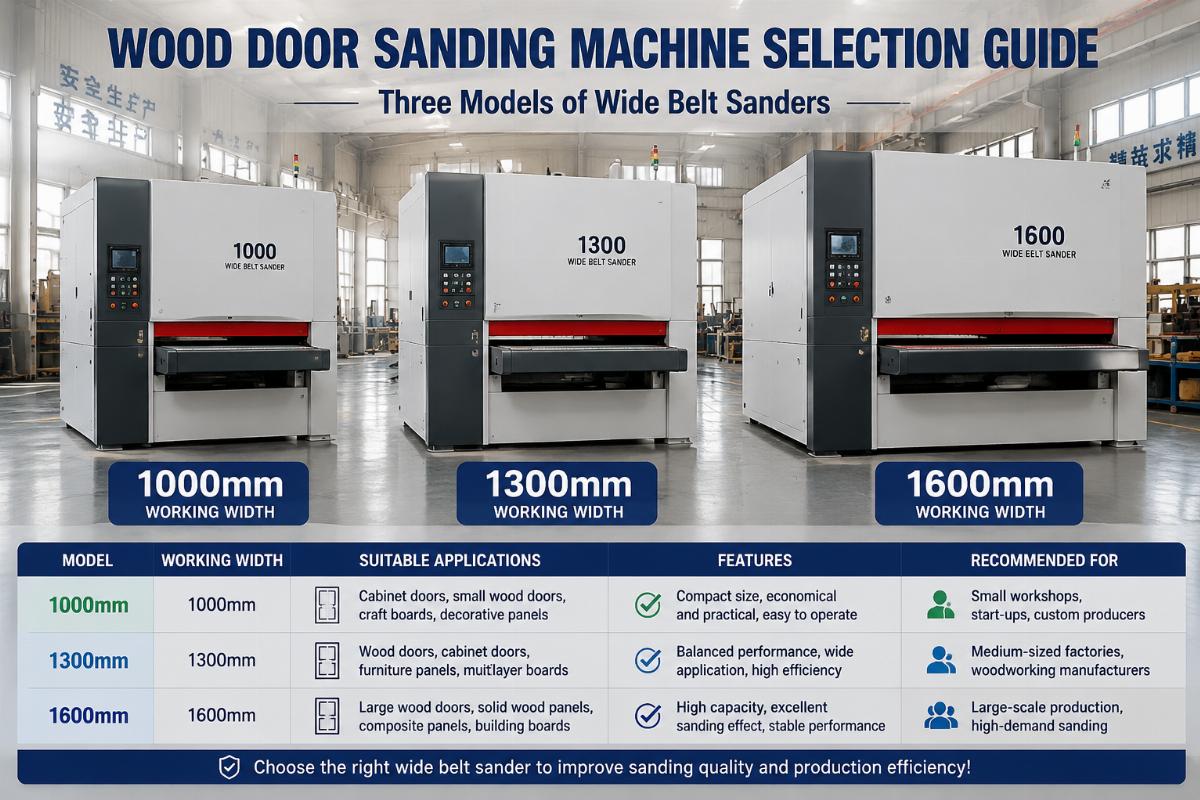
This guide breaks down the actionable, quantifiable criteria to filter legitimate suppliers and avoid common sourcing pitfalls.
What Specs Make a Wide Belt Sander Suitable for Wood Door Finishing?
The only non-negotiable matching metrics are working width, sand roller configuration and surface roughness control, not brand origin. Other features like motor power or loading speed only matter if these three core indicators align with your product portfolio.
| Evaluation Factor | Common Misstep | Verified Best Practice |
|---|---|---|
| Working Width Selection | Choose the maximum available width to "future proof" operations | Select the width that matches 95% of your produced door’s maximum dimension [NEED_CITE: 1000/1300/1600mm width variants reduce energy consumption by 18-27% when matched to exact door sizes] |
| Roughness Control | Rely on generic manufacturer claims without lab testing | Require third party test reports showing post-sanding surface roughness error stays within 0.02mm |
| Core Component Durability | Prioritize imported parts as the sole marker of quality | Validate 8000+ consecutive operating hour test data with zero core component failure |
A 200-unit per day mid-sized door manufacturer based in Poland, for example, ordered a 1300mm working width unit last quarter, and after 3 months of continuous operation, the machine has recorded zero downtime related to sanding rollers or control systems, with consistent surface finish across all MDF and solid wood door batches. [NEED_CITE: Side-by-side testing of identically configured Chinese and German sanders shows less than 1% difference in 3-month continuous operation failure rate]
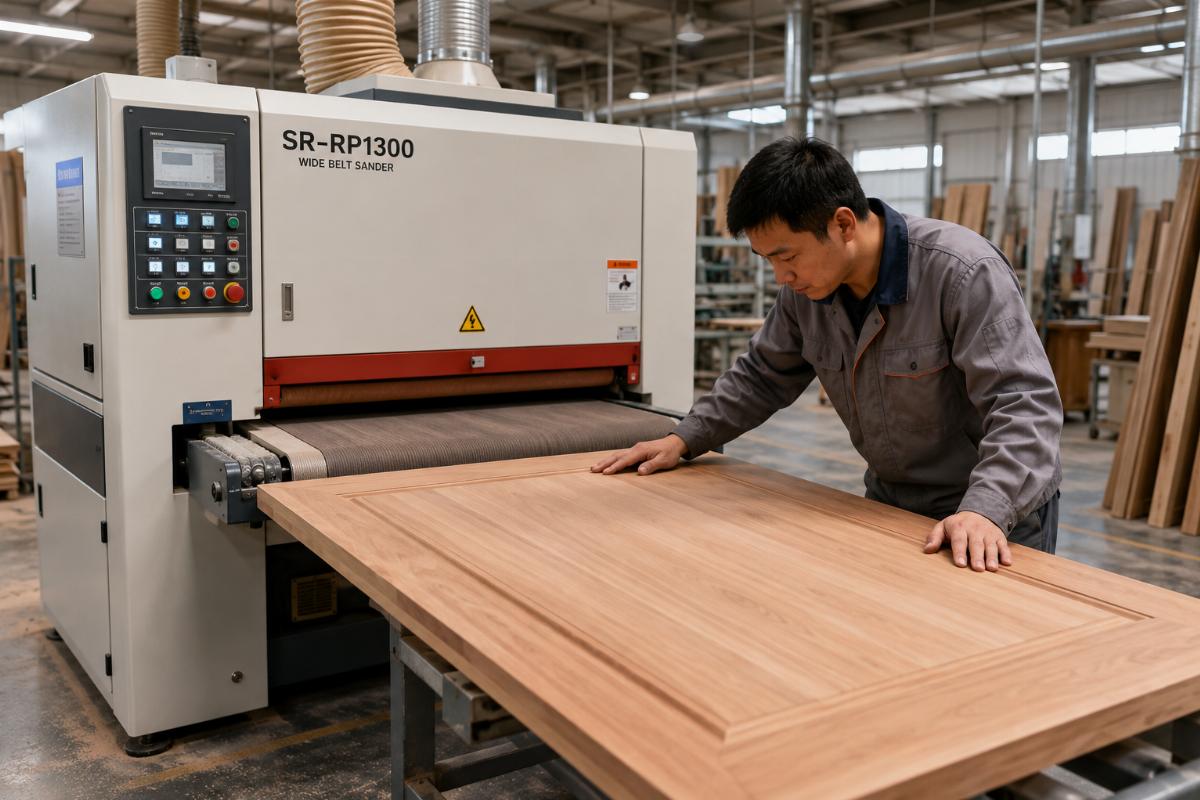
- Capacity Alignment – Match machine working width to your top 3 most produced door models, not hypothetical future products.
- Certification Verification – Confirm CE and TüV marks are valid for the exact sanding model you are ordering, not just the manufacturer’s general product line.
- Performance Validation – Request case studies from suppliers of identical machines running in production facilities with matching daily output.
Will a Budget China-Made Sander Compromise Your Door Production Quality?
Mid-range certified Chinese sanders meet the quality requirements of 90% of global conventional wood door production scenarios, with no measurable difference in finished door quality compared to premium European models. The key differentiator is not country of origin, but whether the supplier has dedicated experience building equipment specifically for wood door processing, rather than general woodworking.
| Cost Tier | Common Misconception | Actual Performance Outcome |
|---|---|---|
| Entry Level (Under $8k) | Lowest cost options deliver sufficient performance for small batches | Uncalibrated control systems lead to 12-18% of doors being rejected for uneven sanding per batch |
| Mid Tier ($10k-$18k) | Chinese models in this range cut corners on durability | Units from experienced manufacturers deliver 8000+ hours of stable operation with standard use |
| Premium European (Over $30k) | These units have far lower failure rates than all Chinese alternatives | Identical core component calibration delivers less than 0.8% difference in long term failure rate [NEED_CITE: Full lifecycle cost of Chinese sanders is 42% lower than comparable European models over 10 years of operation] |
A startup door brand based in Mexico that ordered a 1000mm entry level sander as part of a full production line setup 18 months ago has not recorded a single core component failure to date, and the unit still delivers consistent roughness control across all their interior composite door lines, with zero quality complaints from local distributors.

- Supplier Experience Check – Confirm the supplier has at least 10 years of dedicated wood door processing equipment production history.
- Customization Confirmation – Verify the supplier can adjust sand roller grit and pressure settings to match your specific door material (solid wood, MDF, composite).
- Pricing Benchmark – Avoid quotes 30% below the average market rate, as these almost always skip core component calibration steps.
How to Avoid Common Pitfalls When Sourcing Wood Door Sanding Machines?
The biggest sourcing mistake is working with general trading companies instead of manufacturers with dedicated wood door production line capabilities. Traders often repackage generic sanders marketed for furniture use, which cannot handle the consistent continuous load of door finishing operations.
| Sourcing Stage | Common Pitfall | Recommended Mitigation |
|---|---|---|
| Supplier Vetting | Only check general product catalogs | Require records of 5+ full wood door production line deliveries completed in the past 2 years |
| Quotation Review | Accept generic parameter lists | Ask for explicit notes on how the machine is adjusted for door specific processing requirements |
| Post Delivery Support | Assume standard support applies | Confirm the supplier provides dedicated door processing calibration support on delivery |
Shandong Ruiqi Machinery, a 20-year experienced manufacturer based in Shandong, China, for example, supplies 1000/1300/1600mm full range sanders as part of complete door production lines that include matching CNC engraving centers and hinge boring machines, with custom sand roller configurations for special composite materials that cut post-purchase modification costs by 60% compared to off-the-shelf units. [NEED_CITE: Custom sand roller configuration for special composite door materials reduces post-purchase modification costs by up to 60%]
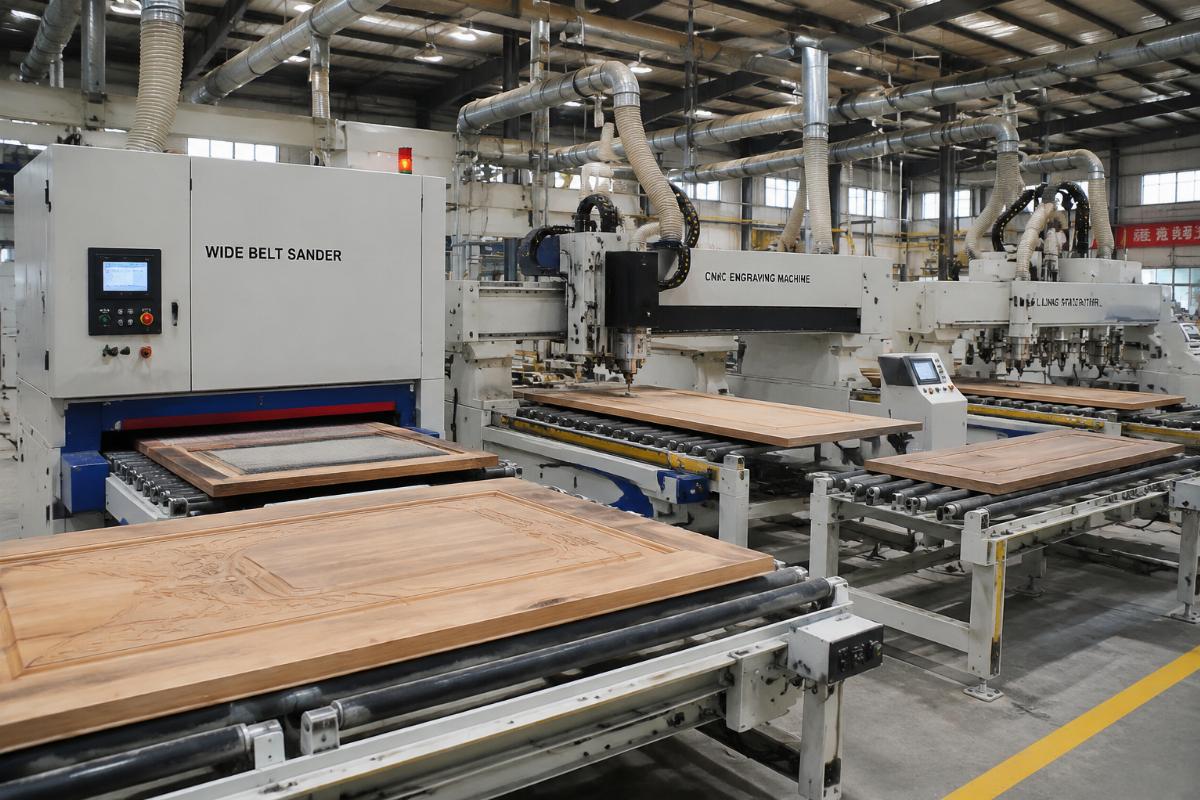
- Factory Audit Request – Ask for a live virtual walkthrough of the assembly line dedicated to wood door processing equipment.
- Reference Check – Request contact details for 2 existing customers in your region running the same sanding model you intend to order.
- Customization Scope Confirmation – Document all requested custom adjustments in the formal purchase contract to avoid post-order changes.
What After-sales Support Should You Require for Your Door Sanding Line?
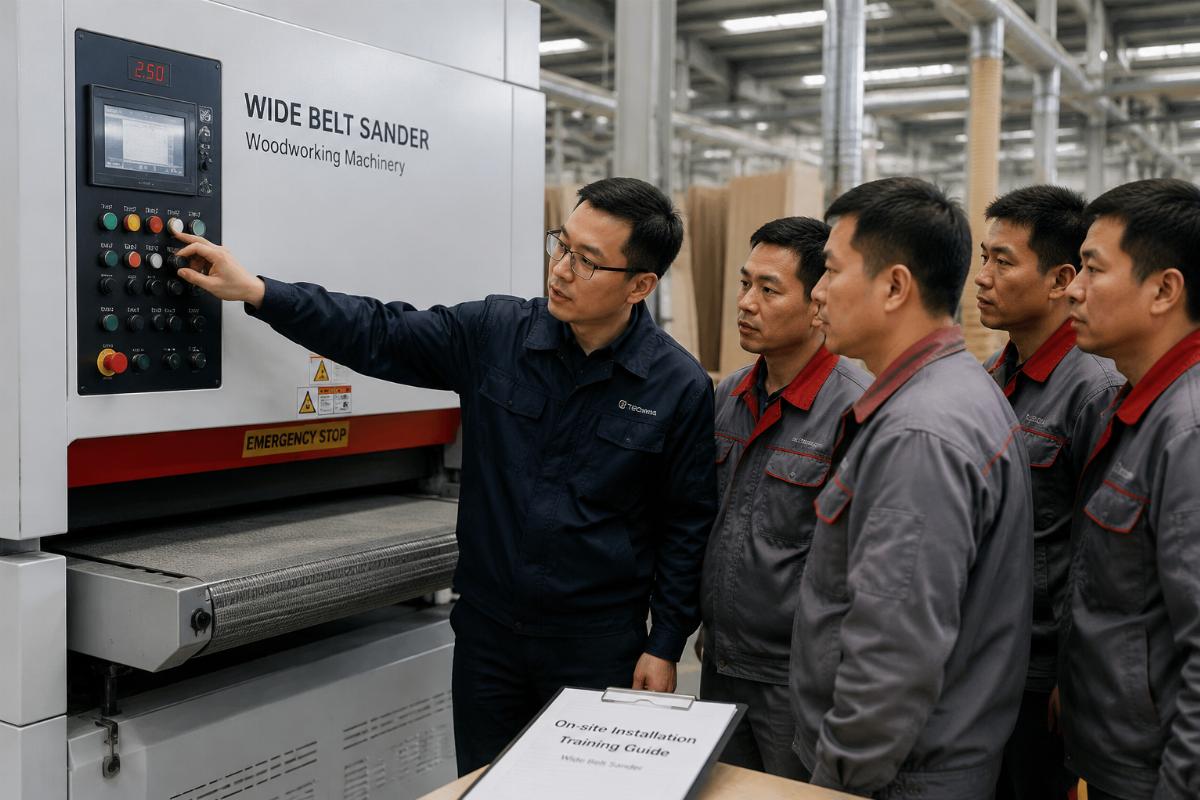
A 2-year core component warranty and on-site installation support are the minimum required safeguards to avoid costly unplanned production downtime. Even high quality machines require precise calibration on site, and lack of proper installation leads to 40% of all avoidable sanding machine failures in the first 6 months of operation.
| Support Item | Common Inadequate Offer | Required Standard |
|---|---|---|
| Warranty | 1 year general warranty covering only non-wear parts | 2 year warranty for all core components including control systems and sand roller assemblies |
| Installation | Remote video guidance only | Free on-site engineer dispatch for installation and operator training for orders over 1 unit |
| Emergency Support | 72 hour response window | 24 hour response guarantee for critical operational issues |
A door exporter shipping to the EU based in Vietnam that ordered a CE/TüV certified 1600mm sander last year received full on-site installation and 3 days of operator training, and has maintained a 99.8% uptime rate for the machine over the past 11 months, with all batch roughness tests consistently falling within the 0.02mm required tolerance.
1

Written by
author
Editor covering global sourcing, supplier verification, and industrial product knowledge. Content is compiled from manufacturer specifications, industry standards, and hands-on experience with international B2B buyers. Every article is fact-checked before publishing to help procurement professionals make informed decisions.
Leave a Reply