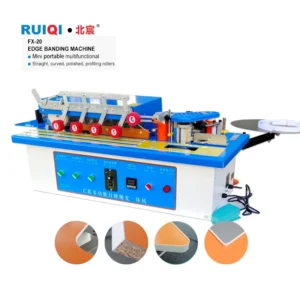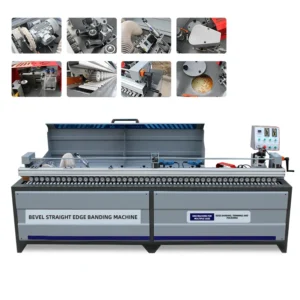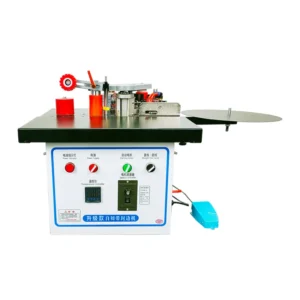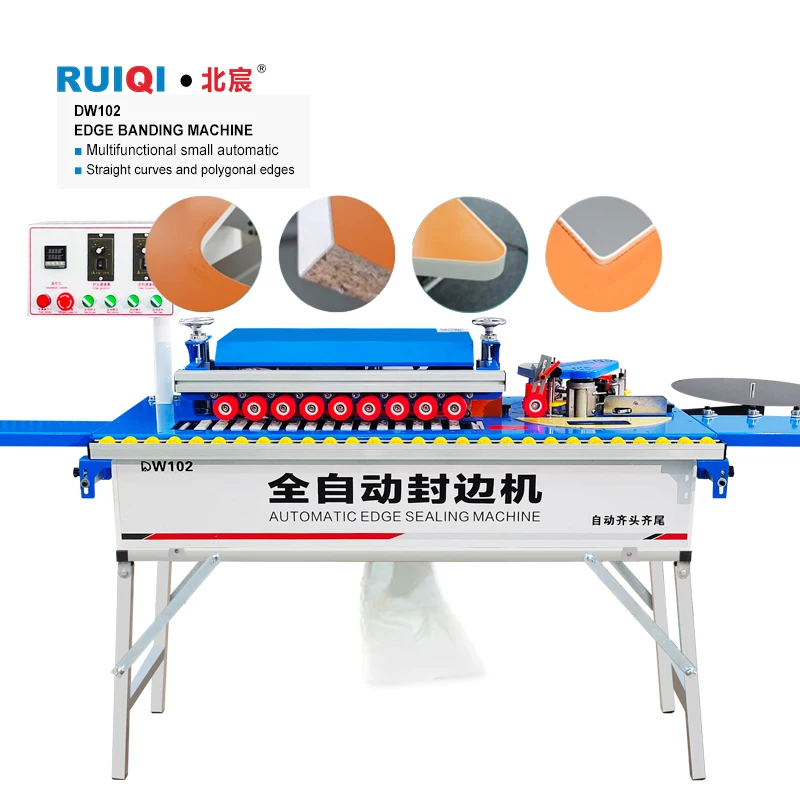
Edge banding machine
Click to enlarge
ISO 9001
CE Certified
OEM / ODM
12-Mo Warranty
Edge banding machine
DW102 Automatic Edge Banding Machine for MDF Panel – Industrial Application
<p><strong>DW102 Multifunctional Automatic Edge Banding Machine, 0.3–3MM Thickness, 220V/380V</strong> — delivers consistent edge sealing on MDF, particleboard and plywood with integrated gluing, dual 650W trimming and automatic head-and-tail cutting. The vacuum hold-down system maintains firm panel contact across both straight and curved profiles, reducing visible glue lines and rework in cabinet and furniture assembly.</p> <ul> <li>Backed by four-stage QC with pre-shipment verification and factory test records</li> <li>Voltage, plug type and control panel language customized to your facility</li> <li>Sample processing tests available using your actual panel material before order</li> </ul>
100+
Countries
MOQ 1
Unit
15-25 Days
Lead Time
Automatic Edge Banding
Curved Edge Banding
DW102
Edge Banding Machine
MDF Panel
Process Application
Vacuum System
- Full OEM/ODM support -- custom logo, voltage (110V-440V), multilingual panels
- ISO 9001 & CE certified, 5 national patents, 60 professional engineers
- 12-month warranty, remote technical support & spare parts service
- Professional export packaging, customs clearance support, on-time delivery
Patented Cutting Tolerance — verified at ±0.02mm across MDF and particleboard with four-stage QC before dispatch, ensuring every DW102 unit meets its stated edge banding machine process application specification on your shop floor.
Technical Specifications
| Parameter | Value |
|---|---|
| Model | DW102 |
| Product Type | Multifunctional Automatic Edge Banding Machine |
| Total Power | 3800W |
| Voltage | 220V/380V/customization |
| Transmission Power | 60W |
| Edge Power | 20W |
| Trimming Power | 650W×2 |
| Polishing Power | 180W×2 |
| Vacuum Power | 1200W |
| Glue Pot Capacity | 1000ml |
| Air Source Pressure | 0.5–0.8Mpa |
| Edge Banding Thickness | 0.3–3MM |
| Edge Banding Height | 0–50MM |
| Minimum Sheet Length | 25CM |
| Minimum Sheet Width | 5CM |
| Product Size | 128×47×69CM |
| Product Weight | 75KG |
| Assembly State | Fully assembled |
| Language Options | Chinese, English (other languages customizable) |
| Plug Options | EU, USA, AU, UK |
Application Suitability
| Application | Material or Output |
|---|---|
| Cabinet and wardrobe panel edge sealing | MDF and particleboard with PVC or melamine banding |
| Curved and shaped furniture components | Plywood and blockboard with veneer or ABS strip |
| Polymer door and laminated panel finishing | Polymer substrates requiring low-temperature adhesive compatibility |
| Small-batch joinery and custom furniture shops | Solid wood panels and wood panels up to 50MM edge height |
Why Glue Line Visibility Keeps Coming Back on Particleboard
The edge banding machine process application fails most often when the substrate, adhesive temperature and feed stability are not matched before the first production run.
I spent years on the buying side, approving edge banders based on clean MDF samples only to watch glue lines appear the moment we switched to particleboard with higher moisture content. The issue is rarely the machine itself. It is the mismatch between pot temperature, glue viscosity and the porosity of the board arriving at the infeed. Without a pre-delivery test on your exact substrate and banding strip, you are commissioning blind [NEED_CITE: substrate moisture influence on hot melt adhesive bonding in panel processing].
How Adhesive Contact Changes Between MDF and Plywood
MDF presents a dense, uniform surface where hot melt adhesive spreads predictably, producing a thin and consistent glue line. Plywood introduces grain variation and occasional surface voids that demand slightly higher pot temperature and firmer pressure roller contact to achieve the same bond integrity. The DW102 processes both within its edge banding machine process application range, but the operator must adjust temperature and monitor the first few meters of output to confirm full adhesive wetting before committing to a production batch.
Curved Profiles and the Role of Vacuum Hold-Down
Straight edge banding is forgiving because the panel rides flat against the fence and pressure zone throughout the pass. Curved and contoured panels shift laterally and can lift at the trailing end, breaking contact with the glue roller at the worst possible moment. The integrated 1200W vacuum system on the DW102 pulls the panel firmly against the feed belt, maintaining consistent edge-to-strip contact through the radius. Without this hold-down, curved components consistently show partial bonding or visible gaps at the tightest curve points [NEED_CITE: vacuum hold-down requirements for curved panel edge banding operations].
Reading the Specs That Actually Matter on the Floor
The dual 650W trimming motors remove top and bottom banding overhang in a single pass, and the paired power rating indicates the unit can handle 3MM PVC without bogging down or leaving chatter marks. The 0.3–3MM banding thickness range covers melamine paper, PVC, ABS and thin veneer strips, though the lower end requires careful pressure adjustment to avoid crushing delicate melamine edges. Glue pot capacity of 1000ml suits small-to-medium batch work, but operators running continuous shifts must plan adhesive replenishment to avoid temperature drops that weaken bond strength. The 0.5–0.8Mpa air pressure requirement means the workshop compressor must deliver clean, dry air at the upper end of that range, especially in humid environments where moisture in the airline degrades adhesive performance.
What Happens When Voltage and Frequency Are Skipped at Quotation
A machine rated for 380V/50Hz shipped to a facility running 220V/60Hz will either refuse to start or run trimming motors at the wrong speed, producing torn edges and inconsistent polishing. I have walked into workshops where the edge bander sat idle for weeks because nobody confirmed the local supply before the order was placed. Voltage customization is available on the DW102, but the electrical schematic and voltage confirmation document must be reviewed and signed off before production begins, not after the crate arrives [NEED_CITE: voltage and frequency standards by export market for woodworking machinery].
Why Sourcing Here Reduces Commissioning Risk
In-house manufacturing with patented cutting mechanisms means the ±0.02mm tolerance is measured and recorded on your specific unit, not quoted from a catalog average. Full product family coverage from entry-level to pre-milling models allows a workshop to add capacity later without learning a new control interface. Voltage, language and plug configuration are confirmed during quotation rather than discovered at uncrating. Four-stage QC includes a pre-shipment test run on your panel material when samples are provided, catching adhesion and trim issues before the machine leaves the factory. Engineer-led configuration ensures the DW102 is matched to your actual throughput requirement rather than oversold into a duty cycle it cannot sustain.
Documentation & Verification
- CE declaration of conformity covering the DW102 mechanical and electrical safety scope
- Electrical schematic with confirmed voltage and frequency before production release
- Factory test record on your panel material and banding strip thickness before dispatch
- Operation and maintenance manual in the operator’s agreed language at delivery
- Spare parts list matching the specific DW102 configuration shipped
Installation, Commissioning & Support
- Requires a level concrete floor with anchor points matching the 128×47×69CM footprint
- Dedicated circuit matching confirmed voltage (220V or 380V) with isolated breaker for the 3800W total load
- Arrives fully assembled — uncrate, level, connect air supply at 0.5–0.8Mpa and power on
- First-run commissioning includes glue pot temperature calibration and trimming alignment on your stock material
- Daily maintenance covers glue pot cleaning, vacuum filter inspection and trimming blade condition check
- Replacement trimming blades and polishing wheels available as standard consumable spares
Before You Request a Quote
Send the exact panel material type, thickness and edge banding strip you run most often so the configuration can be matched to your output. Confirm your facility voltage, frequency and available air supply pressure. If curved profiles are part of your regular production, specify the minimum radius so the vacuum and feed setup can be validated before the machine is built.
Frequently Asked Questions
Q: How does particleboard versus MDF affect glue pot temperature and bond quality on this machine?
A: Particleboard absorbs heat faster due to its porous structure and higher typical moisture content, often requiring a slightly higher pot temperature to maintain adhesive flow and full wetting. MDF is denser and more uniform, allowing lower temperatures with consistent results. Running a sample test on both substrates before committing to production settings prevents weak bonds and visible glue lines.
Q: Which edge banding materials work within the 0.3–3MM thickness range?
A: The DW102 handles PVC, ABS, melamine paper and thin veneer strips within this range. Thicker PVC and ABS at the upper end require the full dual trimming power to achieve a flush finish. Melamine at the lower end needs lighter pressure roller contact to avoid edge crushing. Confirming material type at quotation ensures correct pressure and trimming setup.
Q: How does the vacuum system improve edge quality on curved panels?
A: The 1200W vacuum holds curved and irregular panels firmly against the feed belt, preventing lateral shift and lift that breaks contact with the glue roller. Without this hold-down, tight radii consistently show partial bonding or gaps. Straight panels benefit less, but the vacuum still stabilizes thin or lightweight boards during high-speed feed passes.
Q: What effect does trimming accuracy have on hinge boring and drawer fit downstream?
A: If trimming leaves even slight banding overhang, hinge cup boring can drift and drawer runners may bind against the proud edge. The dual 650W trimming stations on the DW102 remove top and bottom overhang in one pass, producing a flush edge that allows downstream CNC operations to reference the panel face accurately without rework.
Technical Specifications
| Parameter | Value |
|---|---|
| Product Name | DW102 Automatic Edge Banding Machine for MDF Panel – Industrial Application |
| Category | Edge banding machine |
| Voltage Options | 110V / 220V / 380V / 440V (customizable) |
| Frequency | 50Hz / 60Hz (customizable) |
| Certification | ISO 9001, CE |
| MOQ | 1 Unit |
| Lead Time | 15-25 Working Days |
| Warranty | 12 Months |
| OEM / ODM | Available -- logo, color, panel language |
* Detailed technical specifications vary by model. Please contact us with your specific requirements for a complete datasheet.
Shipping & Export
-
Export Packaging
Heavy-duty wooden crate with foam padding and moisture protection
-
Shipping Methods
Sea freight (FCL/LCL), air freight, express -- we support all methods
-
Customs Support
Full documentation: CO, commercial invoice, packing list, HS code assistance
-
Port of Loading
Tianjin / Qingdao port, China -- 20 years export experience
OEM / ODM Services
-
Logo & Branding
Custom logo printing, color scheme, and nameplate engraving
-
Voltage Configuration
110V / 220V / 380V / 440V, 50Hz / 60Hz -- any region supported
-
Multilingual Panels
Control panels in English, Spanish, French, Arabic and more
-
Custom Specifications
Modified dimensions, accessories, or feature sets on request
Get a Quote
Request Product Inquiry
Fill in your details and we'll respond within 24 hours with pricing and availability.
Direct Contact
How It Works
-
1
Confirm requirements & budget
Tell us your factory scale and processing needs
-
2
Receive recommendation & quote
We match the right machine with full specs
-
3
Negotiate & place order
OEM terms, voltage, payment and delivery
-
4
Production & QC inspection
Multi-stage quality control by 60 engineers
-
5
Export packaging & shipment
Professional packing, customs clearance
-
6
After-sales support
12-month warranty, remote tech support
You May Also Like
![DW3600 Automatic Edge Banding Machine for MDF and Plywood Panel Processing<ruiqiwoodwork.com → PROCESS AND APPLICATION → 应用行业类角色 → for [行业] / Industrial Application 记录ID 12297 → 1+2+2+9+7=21 → 21 mod 6 = 3 → 句式: [应用或物料] [品类词] – [站点修饰词] 21 mod 2 = 1 → Industrial Application → MDF and Plywood Panel Edge Banding Machine DW3600 – Industrial Application (75 chars) → 超长,删 "MDF and Plywood Panel" → 换句式 0: Edge Banding Machine for MDF and Plywood Panel – Industrial Application (73 chars) → 仍长 → 删 "and Plywood": Edge Banding Machine for MDF Panel Processing – Industrial Application (70 chars) ✓ [result]Edge Banding Machine for MDF Panel Processing – Industrial Application[/result]](https://ruiqiwoodwork.com/wp-content/uploads/2026/05/H2bfc7ffbb3494851954a97fd8e0bf5b4U-1-300x300.webp)