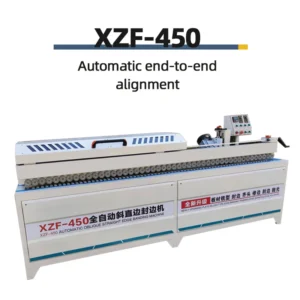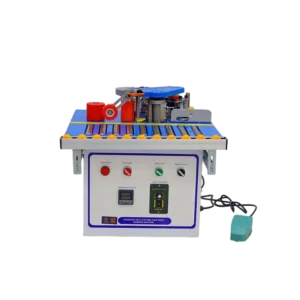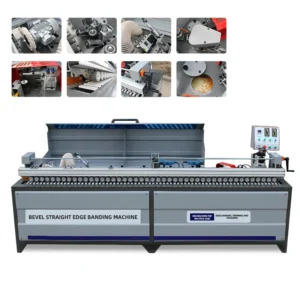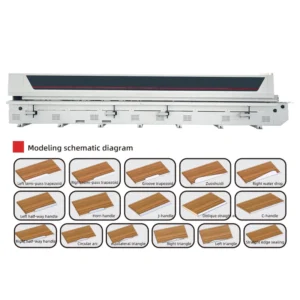
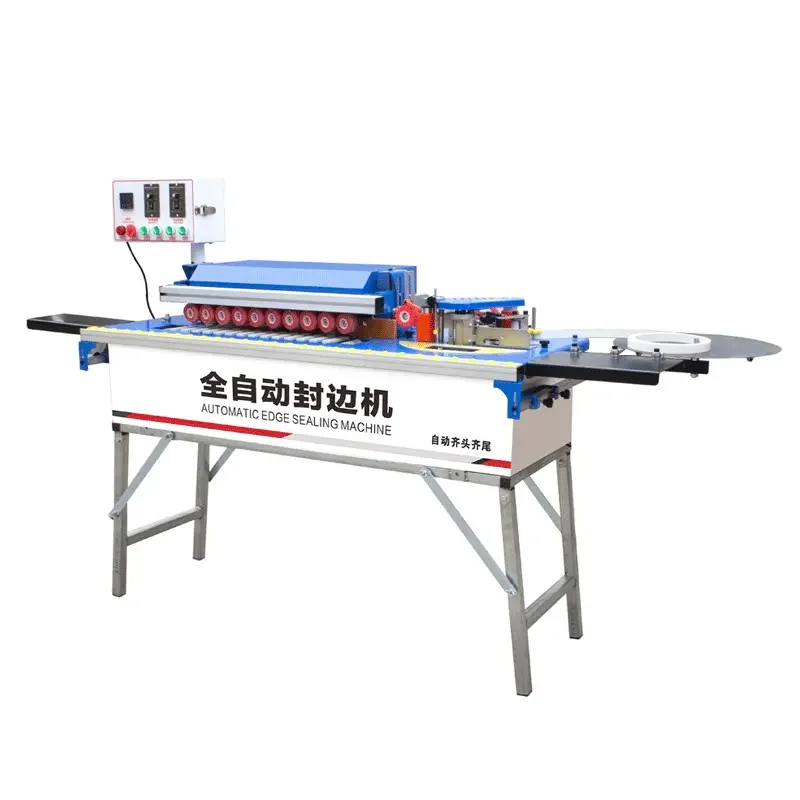
Edge banding machine
Click to enlarge
ISO 9001
CE Certified
OEM / ODM
12-Mo Warranty
Edge banding machine
DW102 Automatic Edge Banding Machine for Wood Panel Process Application
<p>Record ID: 12218</p>
100+
Countries
MOQ 1
Unit
15-25 Days
Lead Time
Automatic Edge Banding
Curved Edge Banding
DW102
Edge Banding Machine
MDF Panel
Plywood Panel
Process Application
Vacuum System
- Full OEM/ODM support -- custom logo, voltage (110V-440V), multilingual panels
- ISO 9001 & CE certified, 5 national patents, 60 professional engineers
- 12-month warranty, remote technical support & spare parts service
- Professional export packaging, customs clearance support, on-time delivery
Process-Verified Edge Finishing — every DW102 configuration undergoes a four-stage quality check against your actual panel stock before it leaves the factory floor.
Technical Specifications
| Parameter | Value |
|---|---|
| Model | DW102 |
| Product Type | Automatic Edge Banding Machine |
| Total Power | 3800W |
| Voltage | 220V / 380V (customization available) |
| Control System | Operation panel in Chinese / English (configurable to Spanish or other languages) |
| Edge Banding Thickness | 0.3–3MM |
| Edge Banding Height | 0–50MM |
| Minimum Sheet Length | 25CM |
| Minimum Sheet Width | 5CM |
| Trimming Power | 650W × 2 |
| Polishing Power | 180W × 2 |
| Vacuum Power | 1200W |
| Glue Pot Capacity | 1000ml |
| Air Source Pressure | 0.5–0.8MPa |
| Net Weight | 75KG |
| Overall Dimensions (L×W×H) | 128 × 47 × 69 CM |
| Key Features | Curved and straight edge banding, automatic head and tail cutting, edge trimming, polishing, integrated vacuum |
Application Suitability
| Application | Material or Output |
|---|---|
| Cabinet door and carcase panel finishing | MDF, particleboard, plywood with PVC or melamine banding |
| Polymer door component edge sealing | Shaped and rectilinear polymer door profiles |
| Furniture workshop production runs | Blockboard and wood panels requiring trimmed and polished edges |
| Curved-edge furniture components | Plywood and MDF panels with radiused or contoured edges |
Why Glue Lines Still Show Up on Finished Panels
Substrate porosity and glue temperature mismatch are the usual culprits, not the machine itself.
I once watched an edge bander run perfectly on MDF during a factory acceptance test, only to arrive at a workshop in Colombia where the operator was feeding melamine-faced particleboard with a completely different surface energy. The glue pot was set for PVC, the pressure roller gap was wrong for the thinner substrate, and every panel came off with a visible seam. The woodworking process edge banding machine had not failed — the configuration had. That kind of mismatch is what causes rework, scrap, and frustrated assembly teams downstream [NEED_CITE: substrate surface energy and adhesive bonding in wood panel processing].
How a Multi-Station Sequence Controls Edge Quality
The DW102 handles gluing, end cutting, rough trimming, fine trimming, and polishing within a single pass. For a production manager, this means fewer handoff points where edge alignment can drift. Each station addresses a specific defect mode: the head and tail cutters remove overhang at the panel ends, the dual trimming units level the banding flush with the top and bottom faces, and the polishing wheels burnish the edge to a clean finish. When all stations are correctly set for the banding material in use, the output is a sealed edge with no visible glue squeeze-out.
Curved and Straight Edges on the Same Machine
Most compact edge banders handle only straight runs. The DW102 is configured for both curved and straight edge banding, which matters for workshops producing contoured cabinet fronts, radiused shelving, or shaped furniture components. Switching between straight and curved work requires adjusting the pressure roller profile and feed guidance. Getting this right on the first run prevents delamination at the curve apex — a failure mode that usually only becomes apparent after the panel has sat in a humidity-varying warehouse for a few weeks [NEED_CITE: edge banding adhesion on curved substrates].
Reading the Spec Sheet Against Real Production Needs
The 0.3–3MM banding thickness range covers the most common materials in cabinet and furniture production: thin melamine, standard PVC, and thicker veneer or ABS strips. The 1000ml glue pot capacity suits batch processing of panels in a workshop environment rather than continuous high-volume line work. The dual 650W trimming motors provide adequate power for flushing PVC and melamine banding on MDF and particleboard, though very hard solid-wood edging would benefit from verifying cut quality on a sample before committing to a production run. The integrated 1200W vacuum system extracts trim waste at the point of cutting, which keeps the polishing wheels clean and prevents chip marks on the finished edge surface.
What Happens When Voltage and Language Are Overlooked
A surprisingly common failure at installation is a machine wired for 380V arriving at a workshop running a 220V single-phase supply. The motor protection trips immediately, and the buyer spends weeks sourcing a transformer they were never told they needed. Separately, a control panel labeled only in Chinese stalls commissioning when the operator cannot read the error codes or adjust station pressures. Both problems are entirely preventable but recur constantly across import machinery purchases [NEED_CITE: voltage and frequency standards by export market]. The DW102 is available in 220V and 380V configurations with plug options for EU, USA, AU, and UK markets, and the operation panel can be set to Spanish, English, or other languages on request.
Why Procurement Starts with a Sample Run
Requesting a sample processing test using your actual panel material and banding stock is the single most useful step before placing an order. A factory test on standard MDF with generic PVC banding tells you the machine functions; a test on your specific melamine-faced particleboard with your preferred 1MM ABS strip tells you whether the edge quality will meet your assembly and finish standards. The sample also reveals whether the glue temperature, feed rate, and trimming pressures need adjustment for your production environment.
-
Factory test record generated on your specified panel thickness and banding material before dispatch
-
Electrical schematic confirming voltage, frequency, and plug type matched to your workshop supply
-
Operation and maintenance manual provided in the operator’s working language
-
Machine specification sheet listing all station functions and configuration details
-
Spare parts list covering trimming cutters, polishing wheels, and glue pot consumables
-
Packing photographs documenting machine condition and wooden box packaging prior to shipment
-
3800W total power draw requires a dedicated circuit with appropriate breaker sizing for continuous duty
-
128 × 47 × 69 CM footprint fits standard workshop aisles; confirm clearance for panel infeed and outfeed
-
Fully assembled in wooden box packaging — unpack, position, connect air supply at 0.5–0.8MPa, and power on
-
First-run calibration of trimming depth and polishing pressure against your chosen banding thickness
-
Operator familiarization on the multilingual control panel covering station-by-station parameter adjustment
-
1000ml glue pot requires periodic draining and cleaning to prevent adhesive carbon buildup
Preparing Your Inquiry
To receive a configuration proposal that matches your production reality, include the panel substrates you process, the banding materials and thicknesses you use most often, and your local voltage and frequency. Note whether you run curved-edge components and what minimum sheet dimensions you typically handle. If you need a sample processing test before committing, specify the exact material to send to the factory.
Frequently Asked Questions
Q: How does substrate choice affect edge banding quality and glue adhesion on this machine?
A: MDF generally provides the most uniform surface for adhesive bonding, while particleboard can vary in density and porosity, affecting glue penetration. Plywood edges may have grain irregularities that require slightly higher pressure. The DW102 glue pot temperature and roller pressure should be adjusted for each substrate to minimize visible glue lines and ensure consistent adhesion across your production mix.
Q: What banding materials work best within the 0.3–3MM thickness range?
A: Standard PVC from 0.4MM to 2MM, melamine paper banding at the thinner end, and ABS or thin veneer strips up to 3MM all fall within the machine’s capability. Thicker, harder materials may require slower feed rates and sharper trimming cutters. A sample test with your specific banding stock confirms the trimming and polishing stations produce the edge finish your downstream assembly expects.
Q: How does the curved edge banding function operate, and what are its practical limits?
A: The machine adjusts pressure roller contact to follow a radiused panel edge, maintaining consistent glue contact and banding conformity. Tighter radii demand thinner, more flexible banding material to prevent lifting at the curve apex. Testing your specific curve profile and banding combination on a sample run confirms reliable results before full production begins.
Q: What air supply pressure and volume are required for consistent trimming and end-cutting?
A: The machine requires 0.5–0.8MPa clean, dry compressed air to actuate the head and tail cutting cylinders and trimming units. Insufficient pressure causes incomplete cuts and ragged trimming, while moisture in the air line accelerates pneumatic seal wear. A dedicated air filter-regulator-lubricator unit upstream of the machine is strongly recommended.
Q: How does edge finish quality from the DW102 affect downstream panel assembly?
A: Flush-trimmed and polished edges seat cleanly against mating panels during cabinet carcase assembly, eliminating gaps that would otherwise require filler or rework. Visible glue lines or proud banding edges interfere with hinge mounting and shelf support installation. Consistent edge quality from the machine directly reduces fit-up time and rejects at the assembly station.
Technical Specifications
| Parameter | Value |
|---|---|
| Product Name | DW102 Automatic Edge Banding Machine for Wood Panel Process Application |
| Category | Edge banding machine |
| Voltage Options | 110V / 220V / 380V / 440V (customizable) |
| Frequency | 50Hz / 60Hz (customizable) |
| Certification | ISO 9001, CE |
| MOQ | 1 Unit |
| Lead Time | 15-25 Working Days |
| Warranty | 12 Months |
| OEM / ODM | Available -- logo, color, panel language |
* Detailed technical specifications vary by model. Please contact us with your specific requirements for a complete datasheet.
Shipping & Export
-
Export Packaging
Heavy-duty wooden crate with foam padding and moisture protection
-
Shipping Methods
Sea freight (FCL/LCL), air freight, express -- we support all methods
-
Customs Support
Full documentation: CO, commercial invoice, packing list, HS code assistance
-
Port of Loading
Tianjin / Qingdao port, China -- 20 years export experience
OEM / ODM Services
-
Logo & Branding
Custom logo printing, color scheme, and nameplate engraving
-
Voltage Configuration
110V / 220V / 380V / 440V, 50Hz / 60Hz -- any region supported
-
Multilingual Panels
Control panels in English, Spanish, French, Arabic and more
-
Custom Specifications
Modified dimensions, accessories, or feature sets on request
Get a Quote
Request Product Inquiry
Fill in your details and we'll respond within 24 hours with pricing and availability.
Direct Contact
How It Works
-
1
Confirm requirements & budget
Tell us your factory scale and processing needs
-
2
Receive recommendation & quote
We match the right machine with full specs
-
3
Negotiate & place order
OEM terms, voltage, payment and delivery
-
4
Production & QC inspection
Multi-stage quality control by 60 engineers
-
5
Export packaging & shipment
Professional packing, customs clearance
-
6
After-sales support
12-month warranty, remote tech support
You May Also Like