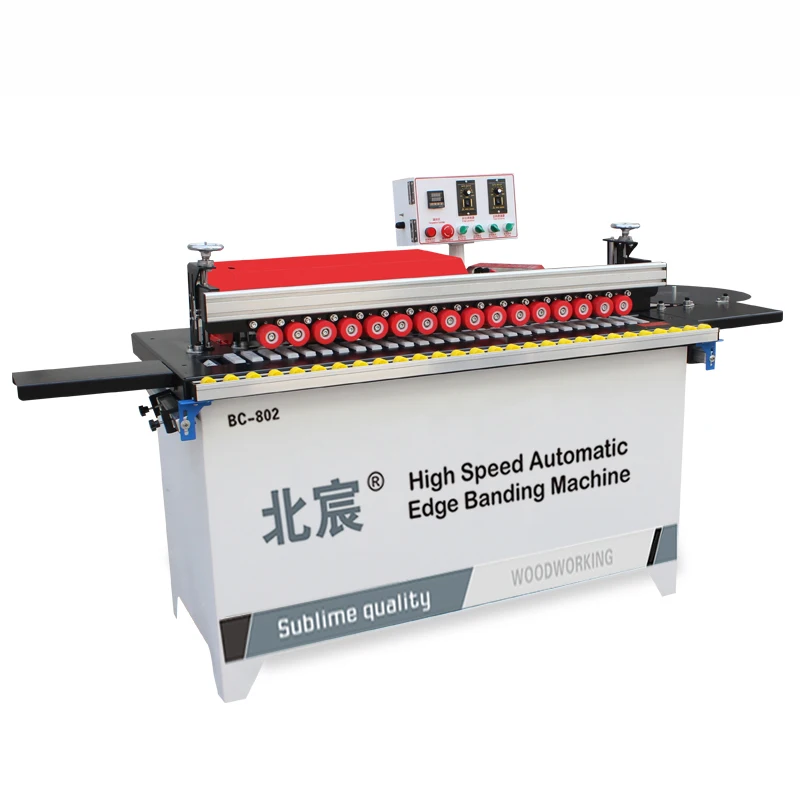
Edge banding machine
Click to enlarge
ISO 9001
CE Certified
OEM / ODM
12-Mo Warranty
Edge banding machine
Automatic Edge Banding Machine for MDF Panel – Process & Application
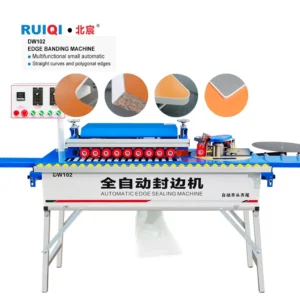
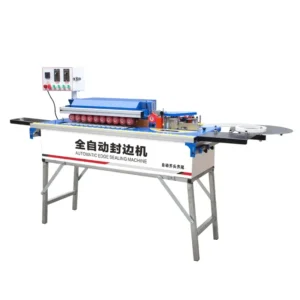
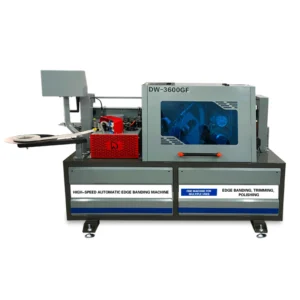
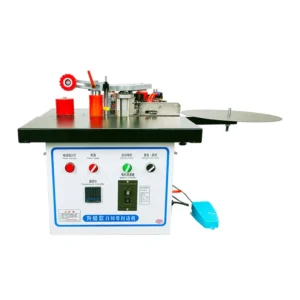
<p><strong>DW802 Automatic Edge Banding Machine, 220V/380V, 4200W, 0.3–3mm Edge Thickness</strong> — delivers integrated gluing, trimming, and polishing in one pass for MDF, particleboard, plywood, and solid wood panels.</p> <ul> <li>4000ml glue pot capacity supports continuous sealing runs without frequent refills</li> <li>Automatic head and tail cutting ensures uniform edge finish across varying panel lengths</li> <li>Air source pressure 0.4–0.8MPa compatible with standard workshop compressed air systems</li> </ul> <p>Pre-shipment factory test records with your actual substrate available to verify edge adhesion and trimming quality before order confirmation.</p>
100+
Countries
MOQ 1
Unit
15-25 Days
Lead Time
4000ml Glue Pot
Automatic Head And Tail Cutting
DW802
Edge Banding Machine
MDF Panel
Particleboard
Process And Application
- Full OEM/ODM support -- custom logo, voltage (110V-440V), multilingual panels
- ISO 9001 & CE certified, 5 national patents, 60 professional engineers
- 12-month warranty, remote technical support & spare parts service
- Professional export packaging, customs clearance support, on-time delivery
Integrated Process Control — Verified tolerance and multi-stage QC ensure the DW802 delivers consistent edge finishes across MDF, particleboard, and plywood substrates in continuous production runs.
Technical Specifications
| Parameter | Value |
|---|---|
| Model | DW802 |
| Product Type | Automatic Edge Banding Machine |
| Total Power | 4200W |
| Voltage & Frequency | 220V / 380V / customizable (frequency basis to be confirmed) |
| Control System | PLC & Gearbox Components (PLC brand basis to be confirmed) |
| Overall Dimensions (L×W×H) | 130 × 60 × 95 cm |
| Net Weight | 135 kg |
| Standard Features | Edge banding, trimming, polishing, automatic head and tail cutting, vacuum system |
| Minimum Sheet Length | 25 cm |
| Minimum Sheet Width | 10 cm |
| Edge Banding Height | 0–50 mm |
| Edge Banding Thickness | 0.3–3 mm |
| Edge Feed Power | 140W |
| Transmission Power | 140W |
| Trimming Power | 800W × 2 |
| Polishing Power | 180W × 2 |
| Vacuum Power | 1200W |
| Air Source Pressure | 0.4–0.8 MPa |
| Glue Pot Capacity | 4000 ml |
| Feed Speed | Basis to be confirmed |
| Panel Thickness Range | Basis to be confirmed |
| Tolerance | Basis to be confirmed |
| Language Options | Chinese and English standard; Spanish and other languages customizable |
| Plug Options | EU, USA, AU, UK |
| Assembly State | Fully assembled in wooden box |
Application Suitability
| Application | Material or Output |
|---|---|
| Cabinet door and carcass edge sealing | MDF and particleboard with PVC or melamine banding |
| Custom wardrobe panel finishing | Ecological board and plywood with 0.3–3 mm edge material |
| Small-batch furniture component edging | Solid wood panels with veneer banding |
| Home decoration joinery production | Laminated boards requiring clean trimmed edges |
| Workshop transition from manual to automated edging | Mixed substrate batches in custom furniture environments |
What "Clean Edge" Really Means When the Substrate Changes
Glue line visibility depends less on the banding material and more on how the machine manages pressure, temperature, and feed consistency across different substrates.
I have watched operators spend an entire morning chasing a visible glue seam that only appeared when the panel switched from MDF to particleboard. The core density changes, the surface porosity changes, and suddenly the same temperature and feed settings that produced invisible seams on MDF leave a thick bead on the particleboard edge. An edge banding machine woodworking process that ignores substrate variation will always produce inconsistent results. The DW802 addresses this with an integrated pressure beam and silica gel conveyor belt that stabilizes the panel through the gluing and trimming zones, reducing the scratch marks and adhesion gaps that appear when lighter panels shift during feed [NEED_CITE: substrate density effect on hot-melt adhesive penetration].
How the Gluing Station Manages Substrate Variation
The edge banding machine woodworking process on the DW802 begins with a 4000 ml glue pot that maintains thermal stability across extended runs. When you are edging a batch of MDF cabinet doors followed by particleboard shelving, the larger glue volume prevents the temperature drops that cause uneven application on thinner substrates. The automatic head and tail cutting unit trims the banding flush before the panel reaches the trimming station, so the material does not drag or lift at the leading edge — a common source of glue squeeze-out on porous boards like particleboard.
Trimming and Polishing as a Single Continuous Sequence
After gluing, the panel passes through dual 800W trimming units that remove excess banding from the top and bottom edges in one pass. The 180W × 2 polishing wheels then smooth the trimmed edge to a uniform finish. This integrated sequence matters because any delay between trimming and polishing allows the adhesive to cool unevenly, which can leave ridges that the polishing wheels cannot fully remove. On veneer banding, where the material is thin and heat-sensitive, maintaining this continuous flow prevents the scorching that appears when trimming and polishing are handled as separate manual operations [NEED_CITE: thermal behavior of PVC versus wood veneer under hot-melt adhesive].
Reading the Specs That Actually Affect Your Output
The 0.3–3 mm edge banding thickness range covers the three materials most workshops handle daily: thin PVC for cabinet carcasses, melamine for shelving, and veneer for visible furniture faces. Each material demands different glue pot temperatures and feed rates, and the customizable PLC control system allows operators to store settings for each combination. The 0.4–0.8 MPa air source pressure requirement sits within the standard range of most workshop compressors, meaning the pneumatic systems that drive the pressure beam and trimming cylinders will operate without requiring a dedicated air supply upgrade. The 1200W vacuum system captures trimming debris at the source, keeping the polishing wheels clean and preventing dust particles from embedding in the freshly trimmed edge — a detail that matters when you are running light-colored PVC on white melamine board. The minimum sheet dimensions of 25 cm length and 10 cm width define the smallest offcut the machine can process, which affects how much waste material you can re-edge in a custom furniture operation.
The Hidden Cost of Skipping the Sample Panel Test
Sending a sample panel in your actual substrate with your preferred banding material before committing to a production run reveals problems that spec sheets cannot show. I have seen workshops receive machines that performed well on the factory test boards, only to discover that their local ecological board had a surface coating that prevented proper adhesive bonding. Without that pre-purchase sample test, the first production batch becomes the test — and ruined panels cost more than a round-trip sample shipment [NEED_CITE: adhesive compatibility testing for coated panel substrates].
Why Sourcing From a Process-Focused Manufacturer Matters
The DW802 is built on a platform where edge banding machines share a common product family, so a workshop can start with this configuration and scale to higher-throughput models without changing suppliers or retraining operators on a different control interface. Voltage customization from 220V to 380V is confirmed before production begins, not discovered at the dock when the machine arrives with the wrong motor. The four-stage QC process includes a pre-shipment test on panels that match your specified material, so the factory test record documents actual performance on your substrate rather than generic MDF samples. Operation manuals are available in the language your operators read, covering glue temperature management and trimming station adjustment — the two settings that determine whether your edge quality holds across a full production day. Engineer-led configuration means the quotation addresses your panel thickness range and banding material before the order is placed, reducing the back-and-forth that delays commissioning.
Documentation & Verification
- CE declaration of conformity covering the DW802 electrical and mechanical safety systems
- Factory test record processed on your specified panel material and edge banding type
- Electrical schematic confirming voltage, frequency, and plug type for your local supply
- Operation manual in your operator’s language with glue temperature and trimming adjustment procedures
- Spare parts list identifying trimming blades, polishing wheels, and glue pot consumables with part numbers
Installation, Commissioning & Support
- Requires a dedicated circuit matching the confirmed voltage and the 4200W total power draw
- Fully assembled in wooden box — position on level floor, connect power and 0.4–0.8 MPa air supply
- Silica gel conveyor belt inspection and pressure beam calibration during first-day commissioning
- Glue pot temperature profiling for each banding material in your production mix during setup
- Trimming blade and polishing wheel replacement schedule based on your daily run volume
- Vacuum system connection to existing dust extraction or standalone 1200W collection unit
What to Include in Your Technical Inquiry
Provide the specific panel materials you process, including substrate type and thickness range, along with the edge banding materials and thicknesses you run most frequently. Confirm your local voltage and frequency so the motor and control system are configured correctly before production. If you are integrating the DW802 into an existing line, share the upstream and downstream equipment models so the feed height and throughput can be matched [NEED_CITE: production line integration standards for panel processing equipment].
Frequently Asked Questions
Q: What edge banding materials work best with this machine, and how does substrate choice affect glue line visibility?
A: The DW802 handles PVC, melamine, and veneer banding from 0.3 to 3 mm thick. Glue line visibility depends heavily on substrate density — particleboard’s porous edge absorbs more adhesive than MDF, which can leave a visible seam if the glue temperature and feed rate are not adjusted for that specific material combination.
Q: How do I set the glue pot temperature for different panel materials like MDF versus plywood?
A: MDF generally requires a lower glue temperature due to its uniform density, while plywood’s layered structure and varying grain direction need higher temperatures for proper penetration. The customizable PLC allows you to store separate profiles for each substrate so operators can switch settings between batches without manual recalibration.
Q: What is the minimum panel size this machine can handle without affecting edge quality?
A: The minimum sheet dimensions are 25 cm in length and 10 cm in width. Panels near these minimums require careful attention to the pressure beam setting, as lighter offcuts can shift during the trimming pass if the hold-down pressure is not adjusted for the reduced panel mass.
Q: Can I send sample panels for a pre-test before committing to a production order?
A: Yes. Send panels in your actual substrate with your preferred edge banding material, and the factory will run them through the DW802 and return the finished samples along with a test record documenting the glue temperature, feed parameters, and trimming results achieved.
Q: What maintenance schedule keeps the trimming and polishing stations producing consistent edges?
A: Trimming blades should be inspected weekly for edge wear, particularly when processing abrasive melamine banding. Polishing wheels require cleaning every few production days to remove adhesive buildup. The vacuum system filter should be checked based on your daily dust volume to maintain extraction performance at the trimming zone.
Technical Specifications
| Parameter | Value |
|---|---|
| Product Name | Automatic Edge Banding Machine for MDF Panel – Process & Application |
| Category | Edge banding machine |
| Voltage Options | 110V / 220V / 380V / 440V (customizable) |
| Frequency | 50Hz / 60Hz (customizable) |
| Certification | ISO 9001, CE |
| MOQ | 1 Unit |
| Lead Time | 15-25 Working Days |
| Warranty | 12 Months |
| OEM / ODM | Available -- logo, color, panel language |
* Detailed technical specifications vary by model. Please contact us with your specific requirements for a complete datasheet.
Shipping & Export
-
Export Packaging
Heavy-duty wooden crate with foam padding and moisture protection
-
Shipping Methods
Sea freight (FCL/LCL), air freight, express -- we support all methods
-
Customs Support
Full documentation: CO, commercial invoice, packing list, HS code assistance
-
Port of Loading
Tianjin / Qingdao port, China -- 20 years export experience
OEM / ODM Services
-
Logo & Branding
Custom logo printing, color scheme, and nameplate engraving
-
Voltage Configuration
110V / 220V / 380V / 440V, 50Hz / 60Hz -- any region supported
-
Multilingual Panels
Control panels in English, Spanish, French, Arabic and more
-
Custom Specifications
Modified dimensions, accessories, or feature sets on request
Get a Quote
Request Product Inquiry
Fill in your details and we'll respond within 24 hours with pricing and availability.
Direct Contact
How It Works
-
1
Confirm requirements & budget
Tell us your factory scale and processing needs
-
2
Receive recommendation & quote
We match the right machine with full specs
-
3
Negotiate & place order
OEM terms, voltage, payment and delivery
-
4
Production & QC inspection
Multi-stage quality control by 60 engineers
-
5
Export packaging & shipment
Professional packing, customs clearance
-
6
After-sales support
12-month warranty, remote tech support
You May Also Like