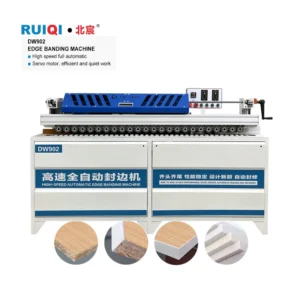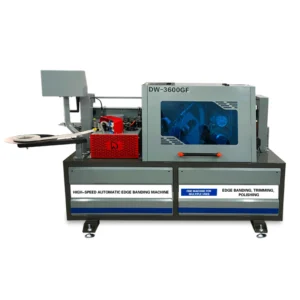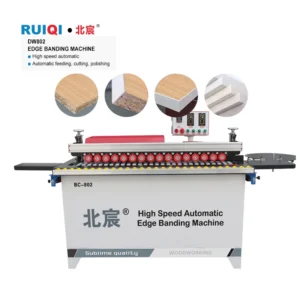
Edge banding machine
Click to enlarge
ISO 9001
CE Certified
OEM / ODM
12-Mo Warranty
Edge banding machine
Compact Edge Bander for MDF Plywood – Small Workshop
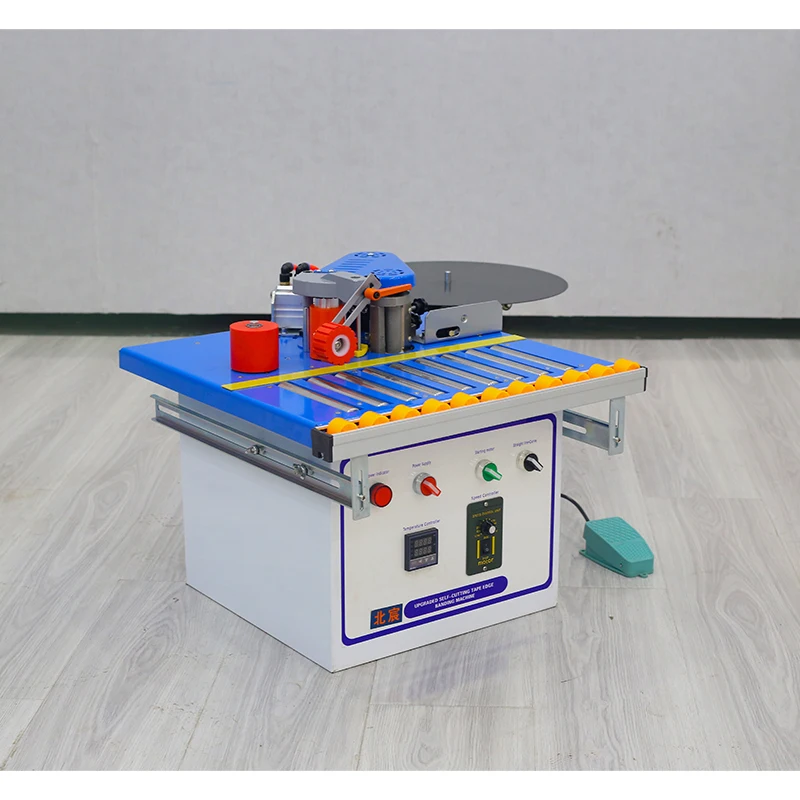
<p><strong>ST-70 Compact Edge Banding Machine, 1000W, 0.3–3mm Edge Thickness</strong> — handles both straight and curved edge sealing on MDF, plywood, and particleboard. The 1000ml hot melt glue pot maintains stable viscosity for consistent adhesion, while the 0.5–0.8 MPa air supply ensures smooth banding feed across varying substrate densities. Minimum sheet width of 3cm allows finishing on narrow offcuts that full-size machines cannot process.</p> <ul> <li>Backed by four-stage QC with pre-shipment verification and factory test records</li> <li>Voltage and control panel language customizable to your local requirements</li> <li>Engineer-led configuration support with formal quotation within 24 hours</li> </ul>
100+
Countries
MOQ 1
Unit
15-25 Days
Lead Time
220V
Curved Edge Banding
Edge Banding Machine
MDF Panel
Plywood
Portable Unit
Process And Application
ST-70
- Full OEM/ODM support -- custom logo, voltage (110V-440V), multilingual panels
- ISO 9001 & CE certified, 5 national patents, 60 professional engineers
- 12-month warranty, remote technical support & spare parts service
- Professional export packaging, customs clearance support, on-time delivery
Thermal consistency in a portable footprint — the 1000ml glue pot on the ST-70 maintains stable hot melt viscosity across continuous small-batch runs, verified through four-stage QC before dispatch.
Technical Specifications
| Parameter | Value |
|---|---|
| Model | ST-70 |
| Product Type | Compact Edge Banding Machine |
| Total Power | 1000W |
| Voltage & Frequency | 220V/380V/customization |
| Edge Banding Capability | Curved and straight edges |
| Minimum Sheet Length | 25 cm |
| Minimum Sheet Width | 3 cm |
| Edge Banding Height | 0–50 mm |
| Edge Banding Thickness | 0.3–3 mm |
| Edge Power | 20W |
| Air Source Pressure | 0.5–0.8 MPa |
| Product Size (L×W×H) | 50 × 50 × 47 cm |
| Product Weight | 23 kg |
| Glue Pot Capacity | 1000 ml |
| Language Options | Chinese, English; customizable |
| Key Features | Portable assembly, hot melt glue system, dual straight/curved operation |
| Standards | CE, ISO 9001 |
Application Suitability
| Application | Material or Output |
|---|---|
| Custom cabinet door edging | MDF and melamine-faced particleboard with PVC strip |
| Small joinery workshop production | Plywood and ecological board with 0.3–3 mm veneer or melamine |
| On-site furniture repair and finishing | Solid wood panels and offcuts down to 3 cm width |
| Prototype and one-off furniture pieces | Shaped panels requiring curved edge sealing |
| Home decoration component finishing | Narrow trim and shelving components with straight edges |
Why Visible Glue Lines Appear on MDF and Plywood Edges
Glue line visibility is a function of pot temperature stability, strip thickness, and substrate porosity — not operator error alone.
When a compact edge banding machine process and application runs on MDF, the porous surface absorbs hot melt adhesive unevenly if the glue pot lacks sufficient thermal mass. Plywood presents a different challenge: its layered grain structure creates micro-gaps that demand consistent pressure and temperature to fill. I once reviewed a batch of particleboard cabinet sides where the edge banding lifted within weeks — the root cause traced back to a glue pot too small to hold temperature across a twenty-piece run. The edge banding machine process and application on mixed substrates demands attention to these thermal dynamics before the first panel is fed [NEED_CITE: hot melt adhesive behavior on wood-based panel substrates].
Glue Pot Thermal Mass and Small-Batch Consistency
The 1000ml glue pot on the ST-70 provides enough thermal mass to sustain stable adhesive viscosity through continuous small-batch edge banding machine process and application cycles. Smaller pots lose heat rapidly when cold strip material enters the glue zone, causing viscosity spikes that produce starved glue lines. This unit’s capacity supports runs of narrow shelving components and cabinet parts without requiring pauses for temperature recovery, which matters when a workshop is processing twenty to thirty pieces in a single session.
Straight and Curved Edge Handling on Shaped Panels
Dual capability for straight and curved edge banding eliminates the need for a second dedicated machine when a custom furniture piece includes radius corners or contoured panels. The ST-70 processes both profiles within the same setup, accepting strip thickness from 0.3 mm melamine up to 3 mm PVC or veneer. Workshops handling one-off custom orders benefit from this flexibility, as switching between curved wardrobe panels and straight shelving does not require retooling or repositioning the unit [NEED_CITE: edge banding methods for curved panel profiles].
Minimum Sheet Dimensions and Offcut Processing
A minimum sheet width of 3 cm and minimum length of 25 cm allow the ST-70 to finish narrow offcuts and small components that full-size automatic edge banders simply cannot grip. This capability is relevant for joinery shops producing drawer fronts, narrow trim pieces, and prototype joinery samples. Full-size machines typically require panel widths exceeding 8 cm, forcing operators to hand-trim and manually glue smaller parts — introducing inconsistency that shows up during final assembly.
Substrate-Specific Glue Behavior Across Board Types
MDF, particleboard, and plywood each interact with hot melt adhesive differently. MDF’s uniform fiber structure absorbs glue predictably but demands adequate application volume. Particleboard’s coarse chip surface requires slightly higher temperature to achieve full wetting. Plywood’s cross-grain layers can create channels where adhesive pools unevenly. Understanding these substrate differences within the edge banding machine process and application workflow prevents the visible glue lines and edge lifting that trigger rework downstream [NEED_CITE: adhesive adhesion differences across engineered wood panels].
The Hidden Cost of Skipping Voltage and Language Confirmation
Shipping a compact edge bander without confirming local voltage and frequency is a recurring failure point in cross-border equipment procurement. A 220V 50Hz unit arriving at a workshop running 60Hz power will experience motor speed deviation that alters feed rate and glue application timing. I have seen commissioning stalled for days because the HMI displayed instructions in a language the operator could not read — the machine sat idle while the buyer arranged for re-flashing of the control panel. These oversights are entirely preventable with pre-shipment specification confirmation.
Why Procurement Through This Channel Works
Every ST-70 configuration ships with voltage and frequency matched to the destination workshop’s supply, confirmed in writing before production begins. The four-stage QC protocol includes a pre-shipment functional test using actual panel material when the buyer requests sample processing verification. Engineer-led configuration recommendations are delivered as formal quotations, not generic catalog quotes, ensuring the edge banding machine process and application matches your workshop’s specific substrate mix and production volume. Custom language panels are available beyond the standard Chinese and English options, addressing the operator-readiness gap that causes commissioning delays. The compact footprint and 23 kg weight mean the unit can be relocated within a workshop or transported to job sites without specialized rigging.
Documentation & Verification
- CE declaration of conformity covering portable woodworking machinery safety requirements
- Machine specification sheet confirming voltage, frequency, and air pressure matched to your workshop
- Factory test record on your specified panel material and edge strip before dispatch
- Operation and maintenance manual produced in your agreed language prior to shipment
- Electrical schematic detailing circuit layout for local electrician reference during installation
- Spare parts list identifying wear components and recommended replacement intervals
Installation, Commissioning & Support
- 50 × 50 cm footprint requires a stable bench surface rated for 23 kg plus operational vibration load
- 1000W total power draw operates on a standard single-phase dedicated circuit at confirmed voltage
- Portable assembly arrives fully built; operator connects air supply at 0.5–0.8 MPa and powers on
- First-run glue temperature calibration performed against your specific PVC, melamine, or veneer strip material
- Control panel configured in agreed language before crating to prevent commissioning delays
- Glue pot cleaning schedule provided based on your adhesive type and daily run volume
What to Include With Your Inquiry
Provide the panel materials you process most frequently — MDF, particleboard, plywood, or solid wood — along with the edge strip type and thickness range you intend to use. Confirm your workshop’s voltage and frequency so the ST-70 is configured correctly before production. Specify your preferred control panel language and whether you require a sample processing test on your own material before shipment to verify edge finish quality.
Frequently Asked Questions
Q: How does glue pot temperature affect edge adhesion on MDF versus plywood versus particleboard?
A: MDF’s uniform fiber density absorbs hot melt consistently at standard operating temperatures. Particleboard’s coarse chip structure requires slightly higher temperature for full adhesive wetting across its uneven surface. Plywood’s cross-grain layers can channel glue unevenly if temperature fluctuates during application. The ST-70’s 1000ml pot maintains thermal stability across these substrates during small-batch runs, reducing the temperature variance that causes adhesion failures.
Q: Which edge banding strip materials work within the 0.3–3mm thickness range?
A: The ST-70 handles PVC strips commonly used for cabinet and furniture edging, melamine paper strips for cost-effective panel finishing, and real wood veneer strips for visible-edge applications on custom joinery. Thickness from 0.3 mm suits melamine and thin veneer, while 2–3 mm PVC provides impact resistance on high-wear edges like worktops and shelving fronts. Confirm strip material with your supplier for glue compatibility.
Q: How is consistent edge quality achieved on curved panels without visible glue lines?
A: Curved edge banding demands uniform pressure between the strip and the panel contour throughout the feed path. The ST-70’s curved and straight capability applies hot melt adhesive while maintaining contact pressure around radius corners. Glue pot temperature stability prevents viscosity changes mid-curve, which is a common cause of starved glue lines on shaped panels. Operator feed rate consistency also contributes to uniform edge finish on curved profiles.
Q: What air supply setup is needed and how does pressure stability affect banding feed?
A: The ST-70 requires compressed air at 0.5–0.8 MPa to operate its pneumatic feed and pressure components. Pressure drops below this range cause inconsistent strip feeding and uneven bonding pressure against the panel edge. A dedicated air line with a regulator and moisture trap is recommended rather than sharing a compressor with high-demand tools. Verify your workshop compressor’s sustained output capacity before installation.
Q: How do I transition from this compact unit to a full-function pre-milling edge bander?
A: When production volume exceeds what a portable unit can sustain, a full-function pre-milling edge bander adds automated feeding, pre-milling for panel edge preparation, and multiple trimming stations for finish quality. The transition involves matching throughput to upstream sawing and boring stations so no single process bottlenecks the line. Your existing ST-70 can remain in service for offcuts and small-batch curved work alongside the larger machine.
Technical Specifications
| Parameter | Value |
|---|---|
| Product Name | Compact Edge Bander for MDF Plywood – Small Workshop |
| Category | Edge banding machine |
| Voltage Options | 110V / 220V / 380V / 440V (customizable) |
| Frequency | 50Hz / 60Hz (customizable) |
| Certification | ISO 9001, CE |
| MOQ | 1 Unit |
| Lead Time | 15-25 Working Days |
| Warranty | 12 Months |
| OEM / ODM | Available -- logo, color, panel language |
* Detailed technical specifications vary by model. Please contact us with your specific requirements for a complete datasheet.
Shipping & Export
-
Export Packaging
Heavy-duty wooden crate with foam padding and moisture protection
-
Shipping Methods
Sea freight (FCL/LCL), air freight, express -- we support all methods
-
Customs Support
Full documentation: CO, commercial invoice, packing list, HS code assistance
-
Port of Loading
Tianjin / Qingdao port, China -- 20 years export experience
OEM / ODM Services
-
Logo & Branding
Custom logo printing, color scheme, and nameplate engraving
-
Voltage Configuration
110V / 220V / 380V / 440V, 50Hz / 60Hz -- any region supported
-
Multilingual Panels
Control panels in English, Spanish, French, Arabic and more
-
Custom Specifications
Modified dimensions, accessories, or feature sets on request
Get a Quote
Request Product Inquiry
Fill in your details and we'll respond within 24 hours with pricing and availability.
Direct Contact
How It Works
-
1
Confirm requirements & budget
Tell us your factory scale and processing needs
-
2
Receive recommendation & quote
We match the right machine with full specs
-
3
Negotiate & place order
OEM terms, voltage, payment and delivery
-
4
Production & QC inspection
Multi-stage quality control by 60 engineers
-
5
Export packaging & shipment
Professional packing, customs clearance
-
6
After-sales support
12-month warranty, remote tech support
You May Also Like