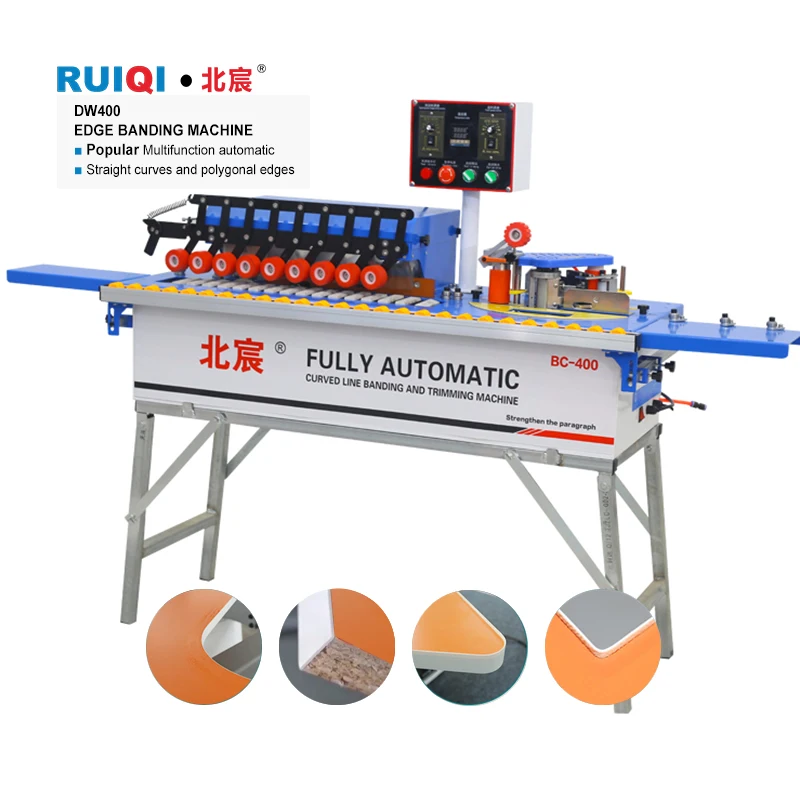
Edge banding machine
Click to enlarge
ISO 9001
CE Certified
OEM / ODM
12-Mo Warranty
Edge banding machine
Desktop PVC Automatic Edge Banding Machine for Wooden Panel – Process Guide
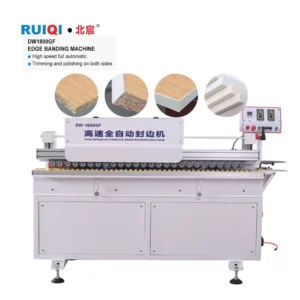
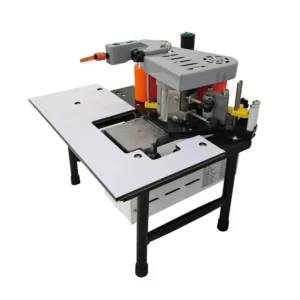
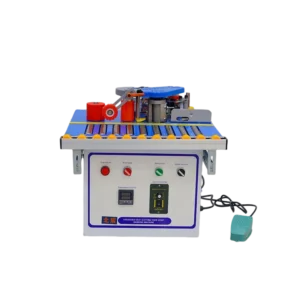
<p><strong>DW400 Desktop Automatic Edge Banding Machine, 3800W, 0.3–3mm Banding Thickness</strong> — designed for workshops handling MDF, plywood and particleboard with straight edge banding, trimming and polishing in one pass.</p> <ul> <li><strong>1000 ml glue pot</strong> supports extended continuous runs, while 0.5–0.8 MPa air pressure ensures consistent roller contact across varying substrate densities</li> <li>Dual 650W trimming and dual 180W polishing stations deliver clean edges on PVC and veneer tapes, minimizing visible glue lines that affect downstream assembly fit</li> <li>Compact 116×47×69 cm footprint suits joinery shops scaling from manual to machine production</li> </ul> <p>Four-stage QC with pre-shipment verification, engineer-led configuration within 24 hours, and operation manuals provided in the operator's language ensure reliable process setup from day one.</p>
100+
Countries
MOQ 1
Unit
15-25 Days
Lead Time
380V
DW400
Edge Banding Machine
MDF Panel
Process Quality
PVC Edge Banding
Wooden Panel
- Full OEM/ODM support -- custom logo, voltage (110V-440V), multilingual panels
- ISO 9001 & CE certified, 5 national patents, 60 professional engineers
- 12-month warranty, remote technical support & spare parts service
- Professional export packaging, customs clearance support, on-time delivery
Process-First Verification — every DW400 desktop unit undergoes a substrate-specific test run before dispatch, confirming glue behaviour on the buyer’s actual panel stock.
Technical Specifications
| Parameter | Value |
|---|---|
| Model | DW400 |
| Product Type | Desktop Automatic Edge Banding Machine |
| Total Power | 3800W |
| Voltage & Frequency | 220V / 380V / custom (50Hz or 60Hz to be confirmed) |
| Trimming Power | 650W × 2 |
| Polishing Power | 180W × 2 |
| Vacuum Power | 1200W |
| Edge Power | 20W |
| Transmission Power | 60W |
| Glue Pot Capacity | 1000 ml |
| Edge Banding Height | 0–50 mm |
| Edge Banding Thickness | 0.3–3 mm |
| Minimum Sheet Length | 25 cm |
| Minimum Sheet Width | 10 cm |
| Air Source Pressure | 0.5–0.8 MPa |
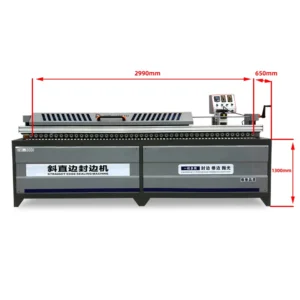
| Overall Dimensions (L×W×H) | 116 × 47 × 69 cm |
| Net Weight | 70 kg |
| Language Options | Chinese, English (French, Spanish and others available) |
| Assembly State | Fully assembled |
Application Suitability
| Application | Material or Output |
|---|---|
| Cabinet door edge finishing | MDF and particleboard with PVC banding |
| Small-batch custom furniture | Plywood panels with melamine or veneer tape |
| Workshop panel preparation | Blockboard and polymer door substrates |
| Prototype and sample runs | Mixed substrate lots with frequent material changeovers |
Why the Operator’s Language Must Be Set Before the Machine Leaves the Factory
An unreadable control interface turns a productive first week into a troubleshooting exercise.
I once walked into a Polish joinery shop where a perfectly capable edge banding machine sat silent for four days. The HMI was locked to German, and the local team could not navigate the glue temperature submenu to commission the unit. The machine itself was fine — the process gap was entirely in communication. For any edge banding machine for woodworking process integration, the interface language is not a cosmetic detail; it directly determines whether the operator sets correct parameters or guesses at them. Mis-set glue temperatures on porous substrates like particleboard lead to starved glue lines, while excessive heat on thin PVC can cause banding deformation before the pressure roller makes contact. [NEED_CITE: machinery directive requirements for operator interface comprehension]
Substrate Porosity and Glue Behaviour
Different panel materials absorb adhesive at different rates, and the DW400’s 1000 ml glue pot provides sufficient capacity for continuous runs without frequent refills. MDF, being denser and less porous than standard particleboard, requires less glue volume but benefits from slightly higher application temperatures to ensure proper wetting. Particleboard, particularly lower-density grades, can wick adhesive away from the bond line if the glue is too thin. The edge banding machine for woodworking process control depends on the operator recognising these substrate differences and adjusting accordingly — which is precisely why the HMI must be legible to the person making those calls.
Banding Material Thickness and Trim Sequence
The 0.3–3 mm banding thickness range covers the common spectrum from thin melamine tape through standard PVC up to thicker veneer and acrylic edges. Each material behaves differently when the trimming stations engage. Thin melamine at 0.3 mm can chip if the trimmer feeds too aggressively, while 3 mm PVC requires the dual 650W trimming motors to remove excess material cleanly in two sequential passes. The polishing stage, handled by two 180W units, then smooths the trimmed edge to remove any micro-burrs left behind. This sequence — trim, then polish — is what separates a visually clean edge from one that catches light and reveals the glue line under workshop fluorescent tubes. [NEED_CITE: edge banding material behaviour across thickness ranges]
Reading the Specification Sheet Against Your Production Reality
The air source pressure requirement of 0.5–0.8 MPa is more consequential than it first appears. Consistent pneumatic pressure ensures that the pressure rollers maintain uniform contact along the entire panel edge, which directly governs glue squeeze-out and bond integrity. If your workshop compressor operates at the lower end of this range, expect slightly less aggressive roller contact — workable for thin banding on flat substrates but potentially insufficient for thicker veneer on contoured edges. The minimum sheet dimensions of 25 cm length and 10 cm width define the practical lower boundary for this desktop configuration, making it appropriate for offcut processing and small component banding but not for very narrow strip work. Total power draw of 3800W across all stations means the unit can typically share a standard workshop circuit without requiring a dedicated supply, though confirming your local voltage and frequency before ordering avoids a machine that simply will not energise on arrival.
When Process Variables Are Ignored
The consequences of skipping substrate-specific process setup accumulate quietly. Panels that pass visual inspection at the edge bander may fail during assembly when the glue line, weakened by incorrect temperature or insufficient roller pressure, separates under clamping force. I have watched furniture workshops blame the adhesive supplier when the real issue was an operator who could not read the temperature setting on the display and defaulted to a mid-range value that suited neither the MDF nor the particleboard in that day’s batch. These failures rarely show up immediately — they emerge days later when a cabinet door delaminates in transit or a shelf edge lifts in a customer’s home. [NEED_CITE: common causes of edge banding delamination in panel assembly]
Why Sourcing Through This Channel Matters
In-house manufacturing with patented cutting mechanisms means the trimming action on the DW400 is engineered and verified under one roof, not assembled from mismatched third-party sub-components. The four-stage quality control process — incoming material, in-process, finished product, and pre-shipment verification — catches tolerance drift before the machine is crated. Voltage and language customisation is treated as standard configuration rather than a special request, so the machine that arrives speaks your operator’s language and matches your workshop’s electrical supply. Engineer-led configuration recommendations ensure the DW400 is proposed for applications it can actually handle, rather than being sold into production volumes beyond its desktop design envelope. Factory test records document performance on your specified substrate before the unit ships.
Documentation & Verification
- CE declaration of conformity covering the DW400 desktop edge bander
- Electrical schematic with confirmed voltage and frequency for your facility
- Factory test record demonstrating edge quality on your specified substrate and banding material
- Operation and maintenance manual produced in your operator’s working language
- Spare parts list with part numbers for trimming blades, polishing wheels, and glue pot components
Installation, Commissioning & Support
- 116 × 47 × 69 cm footprint fits standard workshop benches; verify bench load capacity for 70 kg net weight
- 3800W total draw may require a dedicated 220V or 380V circuit depending on local wiring standards
- Fully assembled on arrival — connect power, airline at 0.5–0.8 MPa, and load glue before first run
- Initial parameter setup covers glue temperature, feed rate, and trimmer depth per your banding thickness
- Trimming blades and polishing wheels are consumables; confirm spare stock before production begins
What to Share With Your Inquiry
To receive an accurate configuration for the DW400, specify the substrate types you process most frequently, the banding materials and thicknesses in your current inventory, and your local voltage and frequency. If you run short batches with frequent changeovers, mention how many material switches a typical shift involves. Requesting a sample processing test using your own panel stock and banding is the most reliable way to verify edge quality before committing to an order.
Frequently Asked Questions
Q: How does substrate porosity affect glue application and edge bond strength?
A: Denser substrates like MDF require less glue volume but benefit from higher application temperatures for proper wetting. Porous particleboard absorbs adhesive more aggressively, which can starve the bond line if the glue is applied too thin. The operator must adjust glue temperature and flow based on the substrate loaded, and this adjustment is only possible if the control interface is readable in the operator’s language.
Q: What banding materials and thicknesses work with this machine, and how does each trim?
A: The 0.3–3 mm range covers thin melamine, standard PVC, and thicker veneer or acrylic edges. Thin melamine chips easily if trimmer feed is too aggressive, while thick PVC requires both 650W trimming stations working sequentially for a clean removal. Polishing then eliminates micro-burrs, leaving a smooth edge profile regardless of the material processed.
Q: How do you verify edge quality before panels move downstream to assembly?
A: Request a factory test record showing edge banding output on at least two substrate types matching your production mix. Visual inspection for glue line visibility, a cross-cut adhesion test, and dimensional verification of the trimmed edge against your assembly tolerances are standard pre-assembly checks that catch bond or trim issues before they become costly rework.
Q: How should process parameters differ between short custom runs and repeated production panels?
A: Short runs with frequent banding changeovers require quick glue temperature adjustments and trimmer depth resets for each new material combination. Repeated production panels allow parameters to be locked in once verified. Documenting the validated settings for each substrate-banding pair reduces setup errors and keeps edge quality consistent across both scenarios.
Technical Specifications
| Parameter | Value |
|---|---|
| Product Name | Desktop PVC Automatic Edge Banding Machine for Wooden Panel – Process Guide |
| Category | Edge banding machine |
| Voltage Options | 110V / 220V / 380V / 440V (customizable) |
| Frequency | 50Hz / 60Hz (customizable) |
| Certification | ISO 9001, CE |
| MOQ | 1 Unit |
| Lead Time | 15-25 Working Days |
| Warranty | 12 Months |
| OEM / ODM | Available -- logo, color, panel language |
* Detailed technical specifications vary by model. Please contact us with your specific requirements for a complete datasheet.
Shipping & Export
-
Export Packaging
Heavy-duty wooden crate with foam padding and moisture protection
-
Shipping Methods
Sea freight (FCL/LCL), air freight, express -- we support all methods
-
Customs Support
Full documentation: CO, commercial invoice, packing list, HS code assistance
-
Port of Loading
Tianjin / Qingdao port, China -- 20 years export experience
OEM / ODM Services
-
Logo & Branding
Custom logo printing, color scheme, and nameplate engraving
-
Voltage Configuration
110V / 220V / 380V / 440V, 50Hz / 60Hz -- any region supported
-
Multilingual Panels
Control panels in English, Spanish, French, Arabic and more
-
Custom Specifications
Modified dimensions, accessories, or feature sets on request
Get a Quote
Request Product Inquiry
Fill in your details and we'll respond within 24 hours with pricing and availability.
Direct Contact
How It Works
-
1
Confirm requirements & budget
Tell us your factory scale and processing needs
-
2
Receive recommendation & quote
We match the right machine with full specs
-
3
Negotiate & place order
OEM terms, voltage, payment and delivery
-
4
Production & QC inspection
Multi-stage quality control by 60 engineers
-
5
Export packaging & shipment
Professional packing, customs clearance
-
6
After-sales support
12-month warranty, remote tech support
You May Also Like