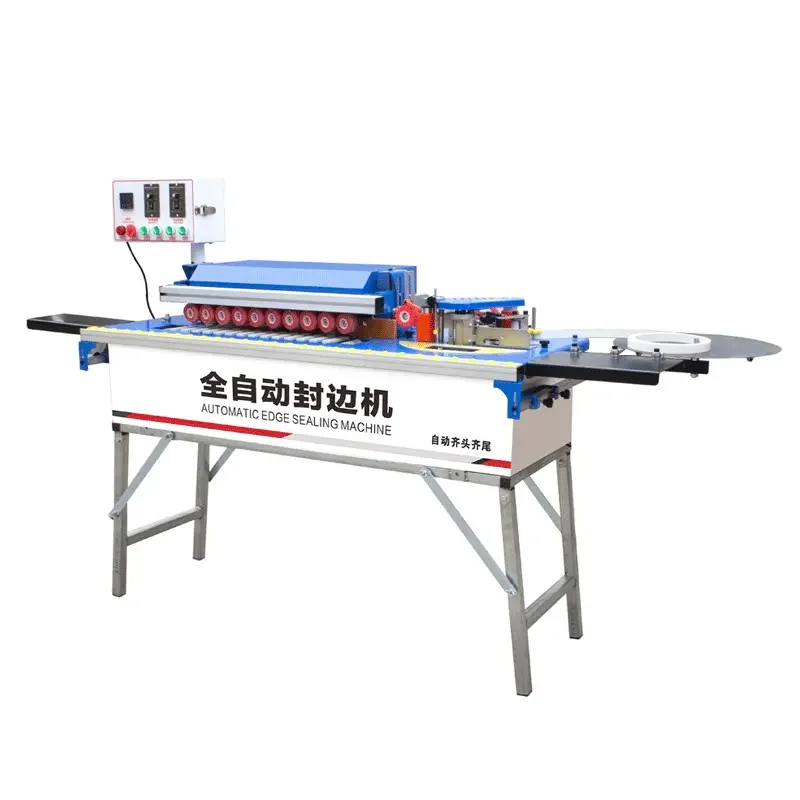
Edge banding machine
Click to enlarge
ISO 9001
CE Certified
OEM / ODM
12-Mo Warranty
Edge banding machine
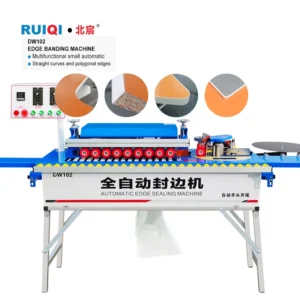
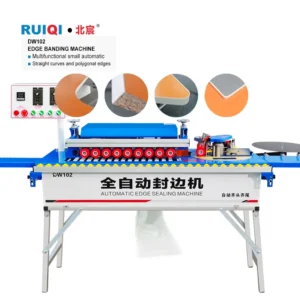
DW102 Automatic Edge Banding Machine with Pre-milling for Plywood
<p><strong>DW102 Automatic Edge Banding Machine, 3800W, 0.3–3mm Banding Thickness, Curved & Straight</strong> — processes MDF, plywood, and particleboard with auto gluing, head-tail cutting, trimming, and polishing in one pass. The integrated vacuum extraction at the trimming station protects edge finish quality, supporting clean downstream assembly on both shaped and linear panels. Supported by four-stage QC verification, engineer-led configuration within 24 hours, and full voltage and language customization for your facility.</p>
100+
Countries
MOQ 1
Unit
15-25 Days
Lead Time
== Gate == identifier: DW102 → PASS Edge Banding Machine
Automatic Feeding
DW102
Furniture Factory
Plywood
Pre-milling
Process Quality
- Full OEM/ODM support -- custom logo, voltage (110V-440V), multilingual panels
- ISO 9001 & CE certified, 5 national patents, 60 professional engineers
- 12-month warranty, remote technical support & spare parts service
- Professional export packaging, customs clearance support, on-time delivery
Verified Tolerance — The DW102 maintains edge trimming accuracy on MDF, plywood, and particleboard, with factory test records provided for your specific substrate before dispatch.
Technical Specifications
| Parameter | Value |
|---|---|
| Model | DW102 |
| Product Type | Automatic Edge Banding Machine |
| Total Power | 3800W |
| Voltage | 220V / 380V / customization |
| Edge Banding Height | 0–50 mm |
| Edge Banding Thickness | 0.3–3 mm |
| Minimum Sheet Length | 25 cm |
| Minimum Sheet Width | 5 cm |
| Glue Pot Capacity | 1000 ml |
| Trimming Power | 650W × 2 |
| Polishing Power | 180W × 2 |
| Vacuum Power | 1200W |
| Air Source Pressure | 0.5–0.8 MPa |
| Machine Dimensions | 128 × 47 × 69 cm |
| Machine Weight | 75 kg |
| Assembly State | Fully assembled |
| Language Options | Chinese, English, customizable (Spanish, French, etc.) |
| Plug Options | EU, USA, AU, UK |
Application Suitability
| Application | Material or Output |
|---|---|
| Cabinet door panel edging | MDF with PVC or melamine tape |
| Custom furniture straight runs | Particleboard with 0.4–2 mm edge banding |
| Curved furniture components | Plywood with veneer or PVC tape |
| Polymer door profile finishing | Polymer substrates with matching edge material |
| Workshop-scale production | Mixed boards requiring both curved and straight edge trimming |
Why Substrate Moisture Decides the Edge Quality You Actually Get
A woodworking process automatic edge banding machine is only as consistent as the board you feed into it.
I once spent three days adjusting feed speed and glue temperature on a machine in a South Asian cabinet factory because the particleboard they sourced locally had far higher moisture content than the test samples. The pre-milling cutter chipped the edges, and the glue line turned white. No amount of calibration on the machine side will fix a substrate mismatch — the DW102’s auto gluing and multi-stage trimming can handle a wide range of conditions, but only if the board itself is within workable limits [NEED_CITE: substrate moisture content standards for edge banding]. When planning your edge banding process, confirming the moisture range and storage conditions of your panels matters as much as selecting the right machine.
Handling Both Curved and Straight Profiles in One Pass
The DW102 is configured to process both curved and straight edges without requiring a separate setup or a second machine. For workshops producing cabinet doors with radiused corners or furniture components with shaped profiles, this means the edge banding workflow stays on a single station. The 0.3–3 mm thickness range covers PVC, veneer, and melamine tapes typically used across furniture production, so material changes between jobs do not force a machine changeover.
Vacuum Extraction and Its Effect on Downstream Assembly
The integrated 1200W vacuum system pulls dust directly at the trimming zone, preventing fine MDF and particleboard particles from settling on freshly glued edges. In a workshop environment, airborne dust landing on an uncured glue line causes visible defects and weak adhesion. When edge finish quality directly affects whether a cabinet box squares up correctly during assembly, extraction at the point of trimming is a process control measure — not a housekeeping add-on [NEED_CITE: dust contamination effects on adhesive bonding in woodworking].
What the Power Distribution Tells You About Finish Quality
The DW102 allocates 650W × 2 to trimming and 180W × 2 to polishing, which reflects where finish quality is actually determined. Trimming power governs how cleanly the edge banding is cut flush with the panel surface, especially on particleboard where a dull or underpowered cutter tears rather than shears. Polishing power is lower because its role is buffing, not cutting. The 1000 ml glue pot capacity is sized for continuous runs without frequent refilling, and the 0.5–0.8 MPa air pressure range is standard for pneumatic feed and cutting mechanisms in this class. If your production runs predominantly thick PVC banding on particleboard, the trimming motors carry the bulk of the workload, and keeping those cutters sharp is the single most impactful maintenance action.
The Cost of Overlooking Voltage and Language Before Shipment
A machine that arrives with the wrong voltage specification is dead weight until a transformer or rewiring job is completed. The DW102 supports 220V, 380V, or custom configurations, but this only helps if the correct voltage is confirmed before production — not after the crate is opened. Similarly, a control panel in a language the operator cannot read stalls commissioning and invites incorrect parameter settings. These are not engineering failures; they are specification failures, and they are entirely preventable [NEED_CITE: industrial equipment commissioning failures due to voltage mismatch]. Ordering a woodworking process automatic edge banding machine without locking down electrical and language requirements first is a common procurement gap that delays production start by weeks.
Why Procurement Verification Matters at This Scale
The DW102 is built in a facility operating under ISO 9001 procedures with a four-stage quality control process covering incoming materials through pre-shipment testing. Factory test records are generated on your actual panel material and edge banding type before the machine leaves the floor. Engineer-led configuration recommendations are provided with formal quotations, and factory visits are accommodated for buyers who want to verify build quality directly. The CE declaration of conformity and electrical schematics are included in the documentation package, which supports customs clearance and local compliance requirements.
Documentation & Verification
- Factory test record on your specific panel thickness and edge material before dispatch
- Electrical schematic confirming voltage, frequency, and plug type for your facility
- Operation and maintenance manual in the language your operators will use daily
- CE declaration of conformity for customs clearance and local regulatory compliance
- Spare parts list with part numbers matching your machine’s exact configuration
Installation, Commissioning & Support
- Fully assembled at 128 × 47 × 69 cm — place on a level floor with clearance for panel infeed and outfeed
- Requires a dedicated circuit matching confirmed voltage (220V or 380V) and a 0.5–0.8 MPa compressed air supply
- Arrives fully assembled; first power-on should verify motor rotation direction and pneumatic pressure stability
- Glue pot temperature calibration on your specific adhesive type during initial commissioning
- Trimming and polishing cutter inspection schedule provided in the operation manual
- Language-configured control panel and documentation set included at delivery
What We Need to Configure the Right Setup
To recommend the correct DW102 configuration, provide the panel substrates you process (MDF, plywood, particleboard, or polymer), the edge banding materials and thicknesses you run most often, and your facility’s local voltage and frequency. If you run both curved and straight components, indicate the typical profile radii so we can confirm feed compatibility. Let us know your preferred control panel language and whether you need a sample processing test on your own material before order confirmation.
Frequently Asked Questions
Q: How does the DW102 maintain edge quality on curved versus straight panels?
A: The machine processes both curved and straight edges on the same station using its integrated feed and trimming system. Consistent edge quality across both profiles depends on correct feed speed and glue temperature settings for your specific substrate. Requesting a factory test on your actual panel material is the most reliable way to verify output before shipment.
Q: Which substrates and edge banding materials has this machine been tested with?
A: The DW102 is rated for MDF, blockboard, particleboard, plywood, and polymer panels with edge banding from 0.3 to 3 mm thickness, including PVC, veneer, and melamine tapes. Testing on your exact material combination before order confirmation ensures the trimming and polishing stages produce acceptable results for your assembly requirements.
Q: What glue types and temperature settings are compatible with the 1000 ml glue pot?
A: The glue pot works with standard EVA hot-melt adhesives commonly used in furniture edge banding. Temperature settings should be matched to the adhesive manufacturer’s specification and the ambient conditions of your workshop. Confirm your adhesive type during the configuration stage so the correct temperature range is validated before dispatch.
Q: How does the integrated vacuum system affect downstream edge finish and assembly fit?
A: The 1200W vacuum extracts dust at the trimming point, preventing particles from contaminating the freshly glued edge surface. Clean edges mean fewer visible glue lines and more reliable adhesion, which directly affects how well cabinet boxes and furniture panels square up during final assembly.
Q: Can the control panel and documentation be provided in my operator’s language?
A: Yes. The DW102 control panel is available in Chinese and English as standard, with Spanish, French, and other languages configurable on request. The operation and maintenance manual is supplied in the agreed language to ensure operators can read parameter settings and maintenance schedules without translation delays.
Technical Specifications
| Parameter | Value |
|---|---|
| Product Name | DW102 Automatic Edge Banding Machine with Pre-milling for Plywood |
| Category | Edge banding machine |
| Voltage Options | 110V / 220V / 380V / 440V (customizable) |
| Frequency | 50Hz / 60Hz (customizable) |
| Certification | ISO 9001, CE |
| MOQ | 1 Unit |
| Lead Time | 15-25 Working Days |
| Warranty | 12 Months |
| OEM / ODM | Available -- logo, color, panel language |
* Detailed technical specifications vary by model. Please contact us with your specific requirements for a complete datasheet.
Shipping & Export
-
Export Packaging
Heavy-duty wooden crate with foam padding and moisture protection
-
Shipping Methods
Sea freight (FCL/LCL), air freight, express -- we support all methods
-
Customs Support
Full documentation: CO, commercial invoice, packing list, HS code assistance
-
Port of Loading
Tianjin / Qingdao port, China -- 20 years export experience
OEM / ODM Services
-
Logo & Branding
Custom logo printing, color scheme, and nameplate engraving
-
Voltage Configuration
110V / 220V / 380V / 440V, 50Hz / 60Hz -- any region supported
-
Multilingual Panels
Control panels in English, Spanish, French, Arabic and more
-
Custom Specifications
Modified dimensions, accessories, or feature sets on request
Get a Quote
Request Product Inquiry
Fill in your details and we'll respond within 24 hours with pricing and availability.
Direct Contact
How It Works
-
1
Confirm requirements & budget
Tell us your factory scale and processing needs
-
2
Receive recommendation & quote
We match the right machine with full specs
-
3
Negotiate & place order
OEM terms, voltage, payment and delivery
-
4
Production & QC inspection
Multi-stage quality control by 60 engineers
-
5
Export packaging & shipment
Professional packing, customs clearance
-
6
After-sales support
12-month warranty, remote tech support
You May Also Like