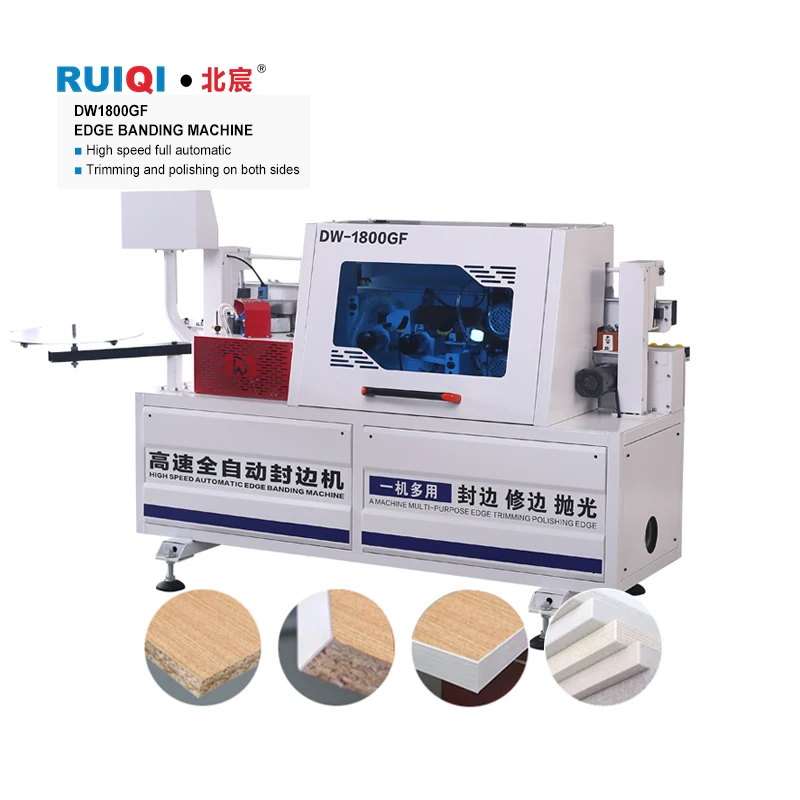
Edge banding machine
Click to enlarge
ISO 9001
CE Certified
OEM / ODM
12-Mo Warranty
Edge banding machine
DW1800 Automatic Edge Banding Machine for MDF Panel | Process Guide
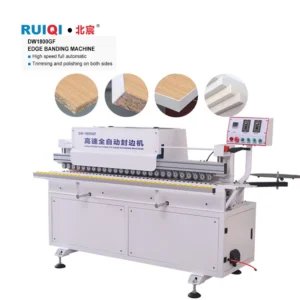
<p><strong>DW1800 Automatic Edge Banding Machine</strong> with double-sided gluing, 0–14 m/min feed speed and 0.3–3 mm banding thickness — configured for MDF, particleboard, plywood and PVC panel processing.</p> <ul> <li>Profile tracking rounds all four corners for cleaner edges and better downstream CNC drilling fit</li> <li>4,000 ml glue pot with adjustable temperature ensures uniform adhesion across varying substrates</li> <li>Flexible scraping and top-bottom polishing deliver consistent finish on PVC, veneer and melamine banding</li> </ul> <p>Engineer-led configuration recommendation with formal quotation within 24 hours; sample processing tests on your actual material welcomed before order.</p>
100+
Countries
MOQ 1
Unit
15-25 Days
Lead Time
Double-Sided Gluing
DW1800
Edge Banding Machine
MDF Panel
Plywood Edge Banding
Process Application
Profile Tracking
- Full OEM/ODM support -- custom logo, voltage (110V-440V), multilingual panels
- ISO 9001 & CE certified, 5 national patents, 60 professional engineers
- 12-month warranty, remote technical support & spare parts service
- Professional export packaging, customs clearance support, on-time delivery
Precision-ground components — the DW1800 edge banding machine uses a four-stage QC process covering incoming material through pre-shipment verification, ensuring each unit maintains tolerance before leaving the factory floor.
Technical Specifications
| Parameter | Value |
|---|---|
| Model | DW1800 |
| Product Type | Automatic Edge Banding Machine |
| Total Power | 4.9 kW |
| Voltage Options | 380V / 220V / 415V (frequency to be confirmed) |
| Feed Speed | 0–14 m/min |
| Edge Banding Thickness | 0.3–3 mm |
| Edge Banding Height | 0–50 mm |
| Minimum Sheet Length | 20 cm |
| Minimum Sheet Width | 10 cm |
| Glue Pot Capacity | 4,000 ml |
| Trimming Power / Speed | 800 W × 2 / 24,000 r/min |
| Polishing Power | 380 W × 2 |
| Transmission Power | 180 W |
| Edge Feeding Power | 160 W |
| Vacuum Power | 550 W |
| Air Source Pressure | 0.4–0.6 MPa |
| Overall Dimensions (L×W×H) | 220 × 65 × 125 cm |
| Net Weight | 320 kg |
| Standard Functions | Double-sided gluing, top and bottom trimming, top and bottom polishing, front and rear alignment, flexible edge scraping, dust extraction |
| Language Options | Chinese and English standard; Spanish and other languages customizable |
| Assembly State | Fully assembled |
Application Suitability
| Application | Material or Output |
|---|---|
| Cabinet door and carcass production | MDF and particleboard with PVC or melamine edge banding |
| Plywood furniture components | Plywood panels with veneer or ABS edge banding |
| Custom joinery and shelving | Solid wood panels and ABB boards |
| Mixed-substrate panel processing | PVC panels, organic glass plates, and similar hardness boards |
| Small-batch workshop output | Transitioning from manual to machine-assisted edge finishing |
Why Visible Glue Lines Appear on Some Substrates and How the DW1800 Addresses It
Double-sided gluing with a 4,000 ml glue pot stabilizes adhesive temperature and flow across varying panel densities.
I spent three days in a custom furniture workshop last year watching the same edge bander produce clean results on PVC banding one day, then visible glue lines on melamine paper the next. The problem was not the machine itself but the mismatch between glue temperature, feed speed, and substrate absorption rate. MDF soaks up adhesive differently than particleboard, and plywood end-grain edges behave unlike any engineered board [NEED_CITE: substrate absorption rates and adhesive bonding behaviour in wood panel processing]. When a production line runs mixed materials without adjusting parameters, the edge banding machine process and application knowledge becomes the real bottleneck — not the hardware.
How Glue Application Uniformity Determines Edge Quality Across Substrates
The DW1800 applies adhesive to both the panel edge and the banding material simultaneously. This matters because single-sided gluing often leaves starved joints on porous substrates like MDF, where the board absorbs glue before the banding makes contact. With a 4,000 ml glue pot, the thermal mass stays stable through longer production runs, preventing the temperature drop that causes thick, uneven glue lines on melamine-faced particleboard. The edge banding machine process and application outcome depends heavily on this thermal consistency.
Feed Speed Adjustment and Its Effect on Adhesive Bonding
Running feed speed at the upper range works for rigid PVC banding on flat particleboard edges. But the same speed on plywood or solid wood panels can cause the banding to skip before the adhesive sets, especially on curved or contoured edges. The DW1800’s variable feed from 0–14 m/min lets operators slow down for difficult substrates [NEED_CITE: feed speed and adhesive open time relationship in panel edge banding]. This control is essential when switching between cabinet carcass panels and custom joinery pieces in the same shift.
What the Trimming and Polishing Stations Actually Do for Downstream Assembly
The dual trimming motors at 24,000 r/min cut the banding flush with the panel surface on both top and bottom edges. Flush trimming is not just cosmetic — panels with proud edges will not stac*ulative assembly errors across a cabinet run. The flexible edge scraping station then removes the sharp arris left by trimming, followed by top and bottom polishing that blends any residual adhesive film. For production managers, this sequence means panels leave the machine ready for the next workstation without manual cleanup.
Matching Glue Temperature to Banding Material Thickness
The 0.3–3 mm banding thickness range covers most workshop materials, but each thickness demands different glue behaviour. Thin 0.4 mm melamine paper requires lower temperature and faster feed to prevent burn-through, while 2 mm PVC needs higher heat and slower feed for full adhesive penetration. The DW1800’s glue pot and adjustable feed speed give operators the range to handle both ends of this spectrum. Getting this wrong means either delamination on thick banding or visible scorch marks on thin veneers.
What Happens When Voltage and Air Supply Are Overlooked
A machine rated for 380V running on a 220V supply without a proper transformer will not trip immediately — it will run with reduced heater output and weaker trimming motor torque, producing edge quality that degrades gradually over a shift [NEED_CITE: effects of undervoltage on industrial motor and heater performance]. Similarly, air pressure below 0.4 MPa causes the scraping and dust extraction stations to underperform, leaving adhesive residue and trimming dust on finished panels. The DW1800 supports 380V, 220V, and 415V configurations, but frequency must be confirmed in writing before shipment to match local supply standards.
Why Buying a Single Machine Without Considering Line Compatibility Creates Problems Later
Workshops that purchase an edge bander based on price alone often discover feed height mismatches with their existing panel saw or CNC router. The DW1800’s 0–50 mm edge banding height and 20 cm minimum sheet length cover most standard cabinet and furniture panel sizes, but throughput must align with upstream cutting and downstream boring stations. If the edge bander becomes the bottleneck, operators will rush panels through at speeds the glue cannot support, creating the exact quality failures the machine was bought to eliminate.
Why Source This Machine Through a Process-Focused Channel
The DW1800 is configured based on your actual panel materials and banding stock, not sold as a generic catalogue item. Voltage, frequency, and control panel language are confirmed before production begins, preventing commissioning delays. Sample processing tests on your specific substrates are available before order commitment. The machine ships fully assembled with operation documentation in your preferred language. Engineer-led configuration ensures the trimming, scraping, and polishing stations match your edge quality requirements rather than a default setup.
Documentation & Verification
- Factory test record run on your specified panel thickness and banding material before dispatch
- Electrical schematic confirming voltage and frequency match your facility supply
- Operation and maintenance manual provided in the agreed language with illustrated adjustment procedures
- Spare parts list identifying wear items for trimming blades, scraping tools, and glue pot seals
- CE declaration of conformity and ISO 9001 certificate included with shipping documentation
- Packing photographs documenting machine condition and crate integrity before container loading
Installation, Commissioning & Support
- Requires a level concrete floor supporting 320 kg net weight with clearance for the 220 cm machine length
- Dedicated circuit matching confirmed voltage — 380V, 220V, or 415V — with appropriate breaker rating for 4.9 kW total draw
- Arrives fully assembled; connect compressed air at 0.4–0.6 MPa and dust extraction ducting to the 550 W vacuum port
- First-run parameter setup includes glue pot temperature calibration and feed speed adjustment for your panel material
- Trimming and polishing alignment verified on your actual banding stock during commissioning guidance
- Wear parts inventory recommended for high-frequency trimming blades and flexible scraping elements
What to Include in Your Inquiry
To receive an accurate configuration, provide your primary panel materials (MDF, particleboard, plywood, or solid wood), the banding types and thicknesses you run most frequently, and your facility voltage and frequency. If you process mixed substrates in the same production week, note the approximate volume split so the glue system can be tuned accordingly. Sharing your current workshop layout helps verify that the DW1800’s footprint and feed direction integrate with your existing panel saw and boring equipment.
Frequently Asked Questions
Q: How does double-sided gluing affect edge adhesion on MDF compared to particleboard?
A: MDF absorbs adhesive more aggressively than particleboard due to its finer fibre structure. Double-sided gluing applies adhesive to both the panel edge and the banding material, compensating for absorption differences. The DW1800’s 4,000 ml glue pot maintains thermal stability through extended runs, preventing the temperature fluctuations that cause weak bonds on porous substrates.
Q: Which banding materials work within the 0.3–3 mm range, and how does trimming differ between them?
A: PVC, ABS, melamine paper, and wood veneer all fall within this thickness range. Thin melamine requires lower trimming motor load and faster feed to avoid chipping, while 2–3 mm PVC demands full trimming power at slower feed speed. The DW1800’s dual 800 W trimming motors at 24,000 r/min handle both extremes with feed speed adjustment.
Q: Why does profile tracking matter for panels going to CNC drilling stations afterward?
A: Profile tracking rounds all four corners of the banded edge, removing the sharp arris that catches on conveyor guides and CNC clamping pads. Rounded corners also prevent operator injury during manual handling and reduce the risk of banding peel-back during assembly. This function directly affects downstream fit and finish quality.
Q: What air supply requirements must be met for consistent scraping and dust extraction?
A: The DW1800 requires 0.4–0.6 MPa air pressure with adequate volume to operate the scraping cylinders and dust extraction simultaneously. Pressure drops below this range cause incomplete scraping and reduced vacuum pickup, leaving adhesive residue on finished panels. A dedicated air line with a regulator at the machine inlet is recommended.
Q: How do I match feed speed and glue temperature to avoid delamination or visible glue lines?
A: Start with the manufacturer’s baseline settings for your banding material, then run test pieces at incrementally adjusted speeds. Thick PVC banding needs slower feed and higher glue temperature for full penetration. Thin veneer needs faster feed and lower temperature to prevent scorching. The 0–14 m/min range on the DW1800 gives sufficient adjustment latitude for this tuning process.
Technical Specifications
| Parameter | Value |
|---|---|
| Product Name | DW1800 Automatic Edge Banding Machine for MDF Panel | Process Guide |
| Category | Edge banding machine |
| Voltage Options | 110V / 220V / 380V / 440V (customizable) |
| Frequency | 50Hz / 60Hz (customizable) |
| Certification | ISO 9001, CE |
| MOQ | 1 Unit |
| Lead Time | 15-25 Working Days |
| Warranty | 12 Months |
| OEM / ODM | Available -- logo, color, panel language |
* Detailed technical specifications vary by model. Please contact us with your specific requirements for a complete datasheet.
Shipping & Export
-
Export Packaging
Heavy-duty wooden crate with foam padding and moisture protection
-
Shipping Methods
Sea freight (FCL/LCL), air freight, express -- we support all methods
-
Customs Support
Full documentation: CO, commercial invoice, packing list, HS code assistance
-
Port of Loading
Tianjin / Qingdao port, China -- 20 years export experience
OEM / ODM Services
-
Logo & Branding
Custom logo printing, color scheme, and nameplate engraving
-
Voltage Configuration
110V / 220V / 380V / 440V, 50Hz / 60Hz -- any region supported
-
Multilingual Panels
Control panels in English, Spanish, French, Arabic and more
-
Custom Specifications
Modified dimensions, accessories, or feature sets on request
Get a Quote
Request Product Inquiry
Fill in your details and we'll respond within 24 hours with pricing and availability.
Direct Contact
How It Works
-
1
Confirm requirements & budget
Tell us your factory scale and processing needs
-
2
Receive recommendation & quote
We match the right machine with full specs
-
3
Negotiate & place order
OEM terms, voltage, payment and delivery
-
4
Production & QC inspection
Multi-stage quality control by 60 engineers
-
5
Export packaging & shipment
Professional packing, customs clearance
-
6
After-sales support
12-month warranty, remote tech support
You May Also Like