Edge banding machine
Click to enlarge
ISO 9001
CE Certified
OEM / ODM
12-Mo Warranty
Edge banding machine
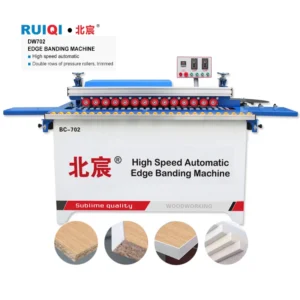
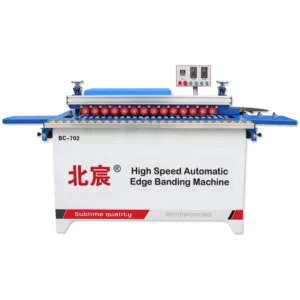
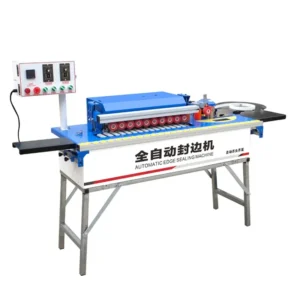
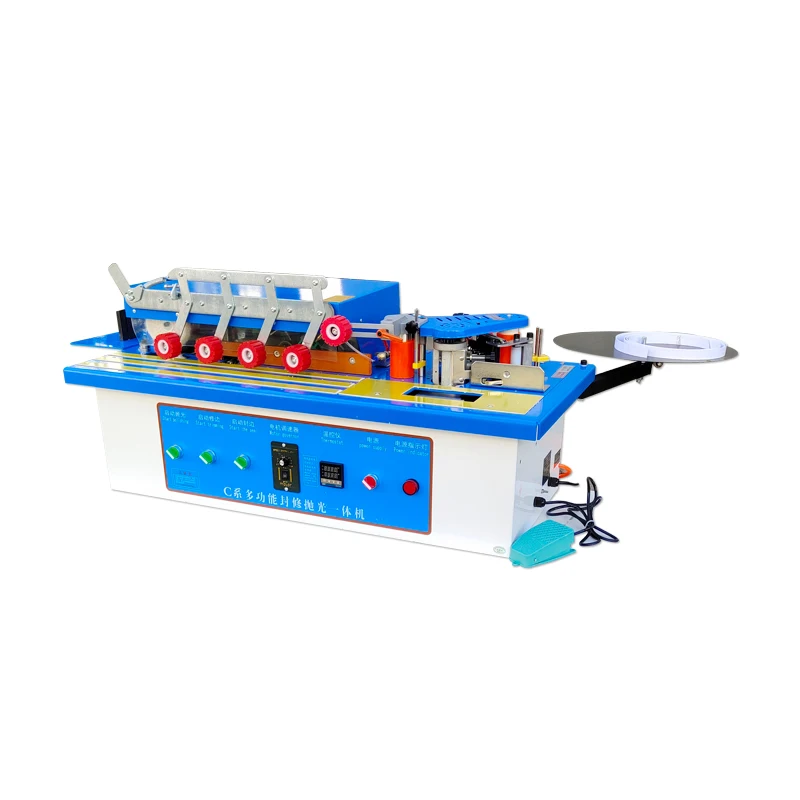
FX-20 Portable Edge Banding Machine for MDF Plywood – Small Workshop
<p><strong>FX-20 Portable Edge Banding Machine, 2500W, 0.3-3mm Banding Thickness, Curved & Straight</strong> — designed for small workshops processing MDF, plywood, and particleboard. Dual 650W trimming stations deliver flush edges across substrates, while the 1000ml glue pot maintains thermal stability for consistent adhesion on both PVC and veneer profiles. Manual push-plate feed handles curved radii and straight runs with repeatable edge quality for downstream assembly accuracy.</p> <ul> <li>Sample processing tests on your actual panel material verify edge quality before order</li> </ul>
100+
Countries
MOQ 1
Unit
15-25 Days
Lead Time
220V
Curved Edge Banding
Edge Banding Machine
FX-20
MDF Panel
Plywood Edge Sealing
Process And Application
- Full OEM/ODM support -- custom logo, voltage (110V-440V), multilingual panels
- ISO 9001 & CE certified, 5 national patents, 60 professional engineers
- 12-month warranty, remote technical support & spare parts service
- Professional export packaging, customs clearance support, on-time delivery
Thermal Stability Control — 1000 ml glue pot capacity maintains consistent temperature across extended batch runs, reducing glue viscosity drift on mixed-substrate jobs.
Technical Specifications
| Parameter | Value |
|---|---|
| Model | FX-20 |
| Product Type | Portable Edge Banding Machine |
| Total Power | 2500W |
| Voltage & Frequency | 220V/380V/customization |
| Edge Banding Thickness | 0.3–3 mm |
| Edge Banding Height | 0–50 mm |
| Minimum Sheet Length | 25 cm |
| Minimum Sheet Width | 10 cm |
| Trimming Power | 650W × 2 |
| Polishing Power | 180W × 2 |
| Edge Power | 20W |
| Glue Pot Capacity | 1000 ml |
| Air Source Pressure | 0.5–0.8 MPa |
| Product Dimensions (L×W×H) | 100 × 46 × 41 cm |
| Net Weight | 44 kg |
| Assembly State | Benchtop / portable unit |
| Key Features | Curved and straight edge banding, trimming, polishing, manual push plate |
| Language Options | Chinese and English (other languages customizable) |
| Plug Options | EU, USA, AU, UK |
Application Suitability
| Application | Material or Output |
|---|---|
| Custom cabinet door edge sealing | MDF and particleboard with 0.4–2 mm PVC banding |
| Onsite cut-to-size panel finishing | Plywood and ecological board with veneer or PVC strips |
| Small joinery workshop production | Solid wood panels up to 50 mm edge height |
| Home decoration fit-out operations | Mixed substrates requiring both curved and straight profiles |
Why Substrate Choice Dictates Your Edge Banding Machine Process Application Substrate Edge Quality
The board you feed determines the glue line you see — not the machine alone.
I spent a season troubleshooting edge banding jobs where the same PVC stock produced clean seams on standard particleboard but left visible glue squeeze-out on high-density MDF. The issue was never the trimming heads or the feed speed. It was glue temperature and open time interacting with substrate porosity. A machine configured for one material does not automatically transfer that setup to another, and operators often spend days chasing parameters that should have been established before the first panel was fed [NEED_CITE: substrate porosity and hot-melt adhesion behaviour in edge banding].
How Substrate Density Alters Glue Behaviour
When you switch from particleboard to MDF on a portable unit like the FX-20, the denser fibre structure absorbs less adhesive, leaving excess glue at the bond line. The 1000 ml glue pot provides enough thermal mass to hold a stable temperature through a batch, but the operator must still adjust the setpoint when moving between substrates. Particleboard typically runs at a lower temperature window, while MDF demands slightly higher heat to ensure penetration before the banding contacts the surface. The edge banding machine process application substrate edge quality outcome depends on this adjustment more than any mechanical setting.
Trimming Consistency Across Panel Types
The dual trimming stations at 650W × 2 handle flush trimming across MDF, particleboard, and plywood, but each material presents a different challenge. Plywood’s cross-grain layers can cause micro-chipping at the trim exit point if the cutter is not sharp, while MDF produces fine dust that packs into the trimming guide. Manual push-plate feed on curved profiles introduces a variable feed rate that the operator must control by feel. Straight runs are more forgiving, but on radii below a certain threshold, inconsistent hand speed creates uneven trimming contact. Understanding these interactions is what separates a clean edge from one that shows defects only after the panel reaches the assembly bench [NEED_CITE: trimming quality variables in manual-feed edge banding operations].
Reading the Spec Sheet Against Your Actual Production Need
The FX-20’s 0.3–3 mm banding thickness range covers both PVC and real wood veneer, but these materials behave differently under the polishing wheels at 180W × 2. PVC tolerates higher polishing speed without surface damage, while veneer requires lighter contact pressure to avoid burning through the finish. The 0–50 mm edge height range accommodates standard panel thicknesses found in cabinet and furniture work, but the 25 cm minimum sheet length means very small offcuts must be joined to a carrier board before processing. The 220V/380V voltage configurability with custom frequency options matters when the destination workshop runs on a local grid standard that differs from the factory default. Each of these parameters interacts with the edge banding machine process application substrate edge quality result on the shop floor.
What Happens When Configuration Is Skipped
Buying a portable edge bander without confirming the substrate-banding-glue combination leads to a familiar pattern. The machine arrives, the operator loads standard PVC onto particleboard, and the result looks acceptable. Then the shop switches to MDF for a different job, and glue lines appear on every panel. The trimming cutters are blamed first, then the glue, and sometimes the machine itself. What actually failed was the initial specification conversation — nobody asked what boards would be running through the machine on a typical week. This kind of mismatch does not show up in the factory test, because the factory tests on whatever material is on the bench that day [NEED_CITE: edge banding commissioning failures attributed to substrate mismatch].
Why This Sourcing Path Holds Up
In-house manufacturing with patented cutting mechanisms means the trimming geometry on the FX-20 is controlled at the design stage, not outsourced to a generic component vendor. Four-stage quality control with pre-shipment verification catches tolerance drift before the machine leaves the floor. Voltage, language, and specification customization are offered as standard rather than as a special request, which shortens the configuration cycle. The full product family — from entry-level portables to full-function pre-milling lines — means a workshop can add capacity later without changing supplier or retraining operators on a different control interface. Engineer-led configuration with a formal quotation within twenty-four hours ensures the substrate question gets answered before production begins.
Documentation & Verification
- CE declaration of conformity matching the FX-20 portable configuration
- Factory test record run on your specified panel thickness and banding material
- Electrical schematic confirming voltage and plug type for your local grid
- Operation and maintenance manual delivered in the operator’s working language
- Spare parts list with trimming cutter and polishing wheel part numbers
Installation, Commissioning & Support
- Benchtop placement on a stable surface rated for 44 kg minimum static load
- Dedicated circuit matching confirmed voltage — 220V or 380V as specified
- Air supply connection at 0.5–0.8 MPa with inline moisture filter
- First-run parameter setup covering glue temperature, feed speed, and trim depth for your primary substrate
- Trimming and polishing wheel inspection schedule based on daily operating hours
What We Need to Quote Accurately
Provide the substrate types and thicknesses you run most often, along with the banding material — PVC thickness or veneer species. Confirm your workshop voltage and frequency so the FX-20 ships configured for your grid. If your operation handles both curved and straight profiles, note the typical radius range so we can assess whether the manual push-plate feed covers your profile geometry.
Frequently Asked Questions
Q: Which substrate and banding combinations give the cleanest edge with the least visible glue line?
A: Standard particleboard with 0.4 mm PVC tends to produce the most forgiving result because the open pore structure absorbs excess adhesive. MDF requires tighter temperature control since its dense surface leaves more glue at the bond line. Veneer on plywood is the most demanding combination — the operator must manage polishing pressure carefully to avoid surface damage while maintaining full adhesion.
Q: How does the manual push-plate feed affect consistency on curves versus straight edges?
A: On straight runs, the operator can maintain a steady feed rate by using the table edge as a guide. Curved profiles depend entirely on hand control, and any hesitation creates a momentary pause in banding contact that the trimming station must then compensate for. Tight radii below approximately ten centimetres require slower, more deliberate feed to keep the banding seated against the substrate throughout the curve.
Q: What glue type and temperature range suit PVC versus veneer banding on this machine?
A: Standard EVA hot melt covers most PVC applications at typical operating temperatures. Veneer banding often benefits from a slightly lower setpoint to prevent heat transfer through the thin wood layer, which can cause discolouration. The 1000 ml glue pot holds temperature across a full batch, but operators switching between PVC and veneer in the same session should allow a brief stabilisation period after adjusting the thermostat.
Q: How does trimming output compare across MDF, particleboard, and plywood?
A: Particleboard trims cleanly with minimal cutter wear. MDF produces fine dust that can accumulate around the trimming guide, requiring more frequent cleaning to maintain flush accuracy. Plywood’s alternating grain layers occasionally cause micro-tearing at the trim exit edge, particularly when the cutter is not freshly sharpened. The dual 650W trimming stations provide adequate power across all three substrates when maintained on schedule.
Q: What downstream assembly problems trace back to edge banding accuracy?
A: Visible glue lines on finished cabinet doors are the most common complaint, but trimming inaccuracy also causes problems at the joinery stage. Panels that are not trimmed flush can create gaps in butt joints or prevent drawer fronts from seating square. On frameless cabinet construction, even a slight banding overhang interferes with hinge mounting plate alignment, forcing the assembler to hand-trim edges that should have been finished on the machine.
Technical Specifications
| Parameter | Value |
|---|---|
| Product Name | FX-20 Portable Edge Banding Machine for MDF Plywood – Small Workshop |
| Category | Edge banding machine |
| Voltage Options | 110V / 220V / 380V / 440V (customizable) |
| Frequency | 50Hz / 60Hz (customizable) |
| Certification | ISO 9001, CE |
| MOQ | 1 Unit |
| Lead Time | 15-25 Working Days |
| Warranty | 12 Months |
| OEM / ODM | Available -- logo, color, panel language |
* Detailed technical specifications vary by model. Please contact us with your specific requirements for a complete datasheet.
Shipping & Export
-
Export Packaging
Heavy-duty wooden crate with foam padding and moisture protection
-
Shipping Methods
Sea freight (FCL/LCL), air freight, express -- we support all methods
-
Customs Support
Full documentation: CO, commercial invoice, packing list, HS code assistance
-
Port of Loading
Tianjin / Qingdao port, China -- 20 years export experience
OEM / ODM Services
-
Logo & Branding
Custom logo printing, color scheme, and nameplate engraving
-
Voltage Configuration
110V / 220V / 380V / 440V, 50Hz / 60Hz -- any region supported
-
Multilingual Panels
Control panels in English, Spanish, French, Arabic and more
-
Custom Specifications
Modified dimensions, accessories, or feature sets on request
Get a Quote
Request Product Inquiry
Fill in your details and we'll respond within 24 hours with pricing and availability.
Direct Contact
How It Works
-
1
Confirm requirements & budget
Tell us your factory scale and processing needs
-
2
Receive recommendation & quote
We match the right machine with full specs
-
3
Negotiate & place order
OEM terms, voltage, payment and delivery
-
4
Production & QC inspection
Multi-stage quality control by 60 engineers
-
5
Export packaging & shipment
Professional packing, customs clearance
-
6
After-sales support
12-month warranty, remote tech support
You May Also Like