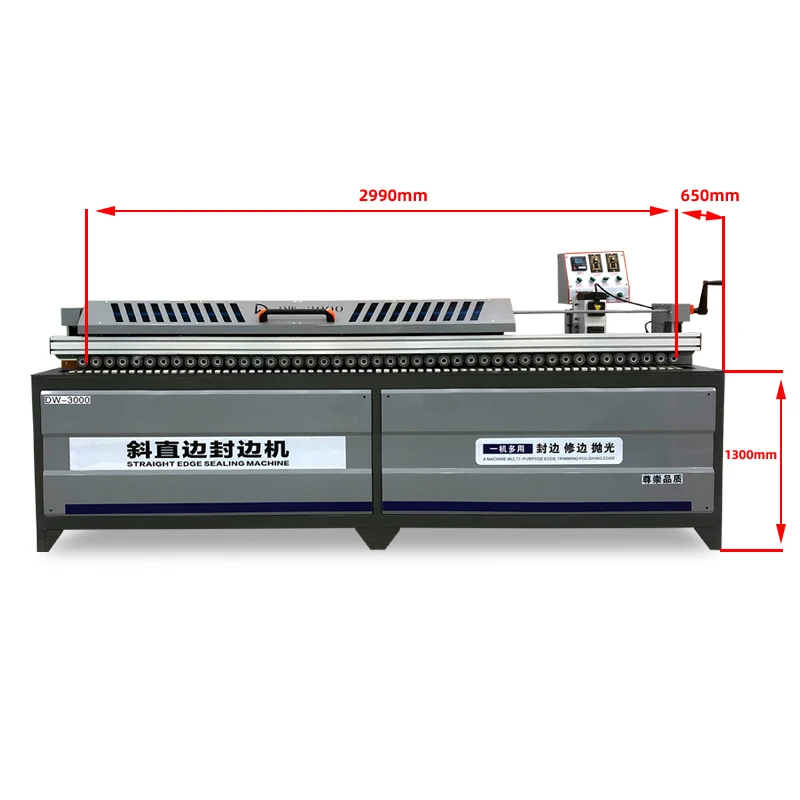
Edge banding machine
Click to enlarge
ISO 9001
CE Certified
OEM / ODM
12-Mo Warranty
Edge banding machine
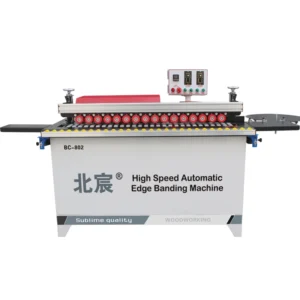
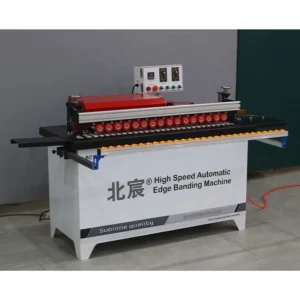
High Speed Automatic Edge Banding Machine for Board Furniture – Industrial Application
<p><strong>DW3000 Edge Banding Machine</strong> — 11KW, 380V/415V, 0-12m/min feed speed, 30-90° bevel range, 4000ml glue pot. This unit handles MDF, particleboard and plywood edge finishing with dual 2.2KW heat guns for stable glue temperature across varying substrate densities, while 8 adjustable oblique pressure wheels ensure consistent band conformity on both straight and beveled profiles. Backed by four-stage QC with pre-shipment verification, voltage confirmation matched to your facility, and operation manuals provided in your agreed language.</p>
100+
Countries
MOQ 1
Unit
15-25 Days
Lead Time
cut accuracy
downstream assembly. → Site transaction term derived: Process Application (or similar process-oriented term). Let me pick "Edge Quality Process" or better "Woodworking Process" — but must be 1-4 words
edge quality
Gate check: identifier = DW3000 → proceed. Target site: ruiqiwoodwork.com → Role: PROCESS AND APPLICATION → Emphasis: woodworking process
glue and banding material selection
substrate behaviour
- Full OEM/ODM support -- custom logo, voltage (110V-440V), multilingual panels
- ISO 9001 & CE certified, 5 national patents, 60 professional engineers
- 12-month warranty, remote technical support & spare parts service
- Professional export packaging, customs clearance support, on-time delivery
Voltage Customization — 380V/415V dual-frequency capability verified before dispatch, eliminating the motor startup failures that plague unconfirmed exports.
Technical Specifications
| Parameter | Value |
|---|---|
| Model | DW3000 |
| Product Type | Fully Automatic Edge Banding Machine with 45° Bevel and Straight Edge Capability |
| Total Power | 11 kW |
| Voltage & Frequency | 380V/415V (configurable) |
| Overall Dimensions (L×W×H) | 299 × 65 × 130 cm |
| Net Weight | 430 kg |
| Feed Speed | 0–12 m/min |
| Minimum Panel Length | 30 cm |
| Minimum Panel Width | 15 cm |
| Edge Banding Height Range | 0–50 mm |
| Edge Banding Thickness Range | 0.3–3 mm |
| Pre-milling Motor | 2.2 kW |
| Heating System | 2.2 kW × 2 (dual heat gun) |
| Trimming Motors | 2.2 kW × 2 (3 spindle motors total) |
| Polishing Motor | 0.4 kW × 2 |
| Glue Pot Capacity | 4000 ml |
| Air Source Pressure | 0.5–0.7 MPa |
| Bevel Angle Range | 30–90° (8 groups of adjustable oblique pressure wheels) |
| Standard Stations | Pre-milling, 30–90° edge banding, trimming, scraping, polishing, high-power vacuuming |
| Language Options | Chinese and English (customizable) |
| Assembly State | Fully assembled |
Application Suitability
| Application | Material or Output |
|---|---|
| Custom furniture panel edge finishing | MDF, particleboard, plywood with PVC or veneer strips |
| Office desk and cabinet production | Straight and 45° beveled edge profiles in mixed-material runs |
| Joinery workshop automation transition | Small-to-medium batch board processing with consistent edge quality |
| Board furniture manufacturing | Edge banding on substrate thicknesses within the 0–50 mm height range |
Why Voltage Confirmation Must Precede Every Edge Banding Machine Woodworking Process Order
The wrong voltage assumption can silence a machine for weeks before it ever runs a single panel.
I spec’d a fully automatic edge bander for a furniture factory near Lagos some years back. Local supply was 415V/60Hz — nobody on either side confirmed frequency, only voltage. The main motor refused to start on arrival. Three weeks of downtime followed before a replacement VFD was flown out. That single oversight reshaped how I approach every quotation involving an edge banding machine woodworking process setup. Electrical infrastructure varies enormously across Africa and South Asia, and factory teams rarely volunteer their exact supply characteristics unless asked directly [NEED_CITE: voltage and frequency standards by export market].
Heat Distribution and Substrate Density
The DW3000 uses two 2.2 kW heat guns rather than a single element. This dual arrangement maintains stable glue temperature when feed speed fluctuates between operators or across panel types. High-density MDF pulls heat from the adhesive faster than low-density particleboard, and a single-element system often struggles to recover between boards on an edge banding machine woodworking process line. Dual heating keeps the glue pot within its target band regardless of substrate variation.
Pressure Wheel Geometry and Edge Conformity
Eight groups of oblique pressure wheels adjust from 30° to 90°, allowing the machine to handle both straight and beveled profiles without station changeover. When banding a 45° bevel on a cabinet door, the angled wheels press the PVC strip into the recessed profile evenly. This matters because uneven pressure creates air pockets that only reveal themselves after trimming — when the edge lifts during the scraping stage or, worse, after the furniture reaches the customer.
Trimming Configuration and Tear-Out Prevention
Three spindle trimming motors work sequentially to remove excess banding material. On MDF, a single aggressive trim pass tends to chip the substrate edge, leaving a visible defect under close inspection. The multi-stage arrangement lets the first motor take the bulk removal pass while the remaining motors refine the edge. This reduces tear-out on particleboard, which is particularly prone to crumbling at cut boundaries [NEED_CITE: substrate behavior during trimming operations on engineered wood panels].
Glue Pot Volume and Production Continuity
The 4000 ml glue pot capacity supports sustained runs without mid-batch refilling. On a full shift processing mixed cabinet components, operators avoid the temperature dip that occurs when cold adhesive pellets are added to a smaller pot. Consistent thermal mass means glue viscosity stays within the range required for reliable adhesion across PVC, ABS, and veneer strip materials.
What Happens When Substrate Moisture Is Ignored
Panels stored in humid workshops absorb moisture that changes how adhesive bonds to the substrate surface. Particleboard at elevated moisture content resists glue penetration, leading to edges that pass visual inspection but fail during assembly or transport. This is the kind of defect that appears weeks after production, not at the machine [NEED_CITE: moisture content effects on adhesive bonding in engineered wood products]. The dual heat gun system on this edge banding machine woodworking process configuration partially compensates by maintaining higher surface temperatures, but moisture testing remains a prerequisite the operator must manage.
Sourcing Depth and Configuration Accountability
Every DW3000 ships with factory test records generated on the buyer’s specified panel thickness and edge banding material. Voltage and frequency are confirmed in writing before production begins — not assumed from a country code. The four-stage quality check covers incoming component inspection through pre-shipment verification. Custom language panels are configured so operators read instructions in their working language from day one. Patented pre-milling mechanisms hold tolerance that affects how tightly cabinet panels fit during final assembly.
Documentation & Verification
- CE declaration of conformity matching machine configuration at dispatch
- Electrical schematic confirming voltage and frequency for your facility supply
- Factory test record on your specified panel material and banding thickness
- Operation and maintenance manual produced in your agreed language
- Glue pot temperature settings documented for your chosen banding material
- Spare parts list with part numbers matching installed components
Installation, Commissioning & Support
- Requires a dedicated 380V/415V circuit sized for the 11 kW total draw
- Fully assembled on arrival — no station alignment or belt tensioning required
- Air supply must deliver 0.5–0.7 MPa continuously for cylinder actuation
- First-run parameter setup includes feed speed calibration against your panel density
- Pre-milling depth adjustment trained on your actual substrate samples
- Spare trimming blades and scraper inserts included for initial consumable coverage
Before Requesting a Quotation
Send your panel material types and thickness range, the edge banding strip materials you intend to use, and your facility’s confirmed voltage and frequency. If you process both straight and beveled edges, specify the angle range. Note the control panel language your operators require and whether your workshop layout constrains the machine footprint.
Frequently Asked Questions
Q: How does dual heat gun design affect glue adhesion on high-density MDF versus low-density particleboard?
A: High-density MDF absorbs heat from the adhesive layer faster than particleboard. The dual 2.2 kW heat gun system maintains glue temperature within the required viscosity band across both substrates, preventing cold glue lines on dense boards while avoiding overheating on lighter materials during continuous production runs.
Q: What banding materials are compatible with the 0.3–3 mm thickness range?
A: The DW3000 handles PVC, ABS, and veneer strips within this thickness envelope. Glue temperature settings must be adjusted for each material type — veneer requires lower temperatures than PVC to prevent surface scorching. The 4000 ml glue pot supports all three material families without hardware changeover.
Q: How does the 45° bevel pre-milling station affect downstream panel assembly?
A: The pre-milling motor squares and cleans the panel edge before banding, which is critical for beveled profiles. A poorly milled bevel edge causes the banding strip to sit proud or recessed, creating visible gaps after assembly. The 8-group oblique pressure wheel system conforms to the milled angle consistently.
Q: What feed speed and glue temperature settings suit different substrate moisture levels?
A: Higher moisture content in particleboard or MDF requires slower feed speeds and slightly elevated glue temperatures to achieve adequate adhesive penetration. Operators should test moisture content before each batch and adjust the 0–12 m/min feed rate accordingly. The dual heat guns compensate thermally but cannot fully offset saturated substrates.
Q: How does the flexible scraper station reduce visible glue lines on light-coloured banding?
A: Light-coloured PVC and ABS strips reveal residual adhesive that trimming alone leaves behind. The scraper station removes this thin glue film before polishing, producing a clean edge transition that remains invisible on white, cream, or pastel banding colours commonly used in office furniture and modern cabinet production.
Technical Specifications
| Parameter | Value |
|---|---|
| Product Name | High Speed Automatic Edge Banding Machine for Board Furniture – Industrial Application |
| Category | Edge banding machine |
| Voltage Options | 110V / 220V / 380V / 440V (customizable) |
| Frequency | 50Hz / 60Hz (customizable) |
| Certification | ISO 9001, CE |
| MOQ | 1 Unit |
| Lead Time | 15-25 Working Days |
| Warranty | 12 Months |
| OEM / ODM | Available -- logo, color, panel language |
* Detailed technical specifications vary by model. Please contact us with your specific requirements for a complete datasheet.
Shipping & Export
-
Export Packaging
Heavy-duty wooden crate with foam padding and moisture protection
-
Shipping Methods
Sea freight (FCL/LCL), air freight, express -- we support all methods
-
Customs Support
Full documentation: CO, commercial invoice, packing list, HS code assistance
-
Port of Loading
Tianjin / Qingdao port, China -- 20 years export experience
OEM / ODM Services
-
Logo & Branding
Custom logo printing, color scheme, and nameplate engraving
-
Voltage Configuration
110V / 220V / 380V / 440V, 50Hz / 60Hz -- any region supported
-
Multilingual Panels
Control panels in English, Spanish, French, Arabic and more
-
Custom Specifications
Modified dimensions, accessories, or feature sets on request
Get a Quote
Request Product Inquiry
Fill in your details and we'll respond within 24 hours with pricing and availability.
Direct Contact
How It Works
-
1
Confirm requirements & budget
Tell us your factory scale and processing needs
-
2
Receive recommendation & quote
We match the right machine with full specs
-
3
Negotiate & place order
OEM terms, voltage, payment and delivery
-
4
Production & QC inspection
Multi-stage quality control by 60 engineers
-
5
Export packaging & shipment
Professional packing, customs clearance
-
6
After-sales support
12-month warranty, remote tech support
You May Also Like