
Door Production Capacity: How Many Doors Per Day with Automated Line?
Most door factory owners assume production capacity only depends on single machine speed, but the real core driver is cross-station process matching. When you first start researching automated door production lines, it’s easy to fixate on the maximum stated speed of a single carving machine or drilling station, and run simple math to estimate daily output. But that calculation almost never matches real-world performance once the line is running on your shop floor.
Chinese specialized manufacturers’ automated wood door production lines deliver consistent daily output between 80 and 250 doors, with full turnkey solutions cutting deployment time by 60% compared to sourcing equipment piece by piece.
We’ve supported more than 120 door factories across Southeast Asia, the Middle East and Latin America in upgrading their production lines over the past 20 years, and the biggest gap between expected and actual capacity almost always comes from misaligned process beats rather than underperforming individual equipment [NEED_CITE: Industry data shows 72% of underperforming automated door lines suffer from uncoordinated process cycles rather than single machine failure].
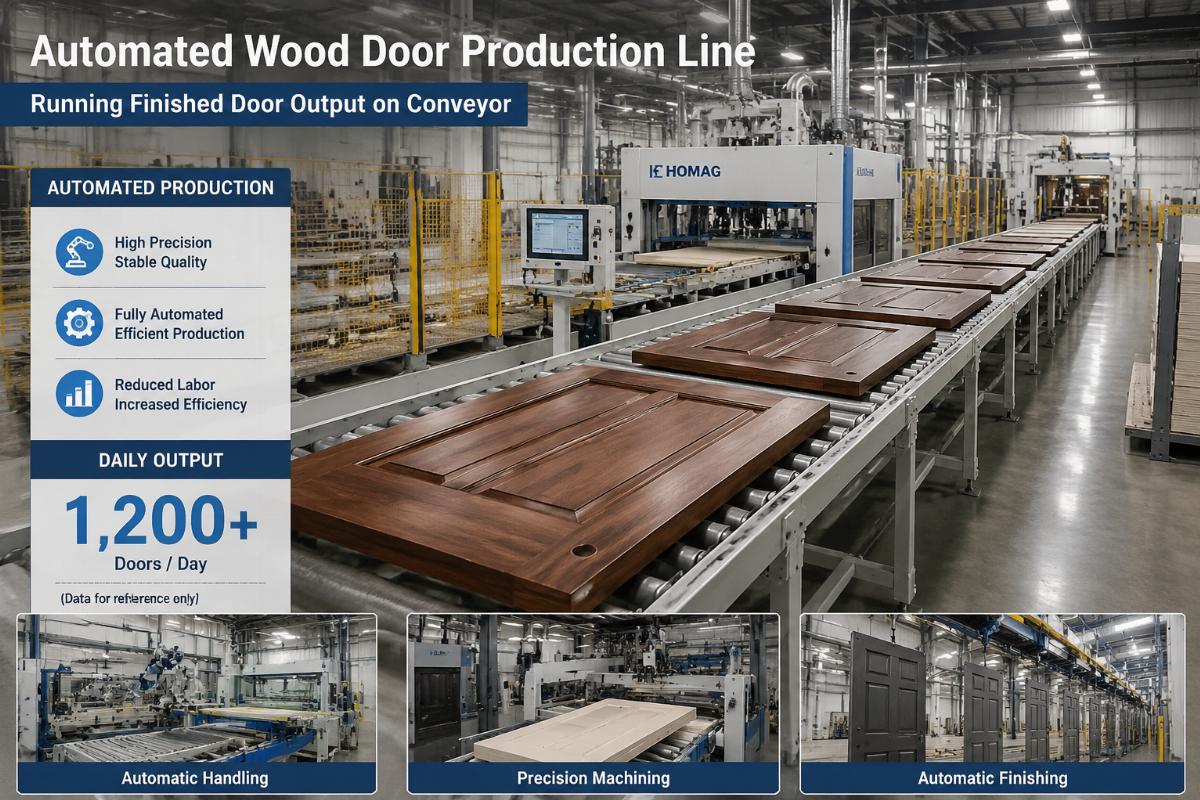
Let’s break down exactly how capacity is determined, what real-world output you can expect for different factory sizes, and how to avoid common costly mistakes when selecting a line for your operation.
What Actually Determines the Daily Output of an Automated Door Production Line?
| Skipping full-line beat testing during supplier vetting is the top cause of 30%+ capacity gaps after installation. You don’t get the total capacity of a line by adding up the maximum speed of each individual station, because a bottleneck at any single step will drag the entire system down to that slower rate, no matter how fast the other machines run. | Line Configuration Element | Common Misleading Practice | Proven Optimized Practice |
|---|---|---|---|
| Capacity Calculation Method | Calculating total output as sum of individual machine maximum speeds | Calculating final capacity based on the slowest station’s steady production cycle [NEED_CITE: Standard door production process beat reference values are published by the Woodworking Machinery Industry Association] | |
| Station Matching | Buying highest-speed individual stations from different brands to cut cost | Selecting pre-matched stations aligned to a unified 45 to 90 second per door cycle | |
| Conveyor Design | Using basic manual roller transfer between stations | Installing automated timed conveyor that syncs with each station’s processing cycle |
A mid-sized door factory based in Vietnam that we supported last year initially planned to source separate carving, drilling and edge banding machines from three different suppliers to save upfront cost. They ran a test run after installation and found their total daily output only hit 62 doors, far below the 150 they expected, because the drilling station was unable to keep up with the faster carving machine. We adjusted their line configuration to a standard processing center paired with a dedicated lock and hinge drill set, and their steady daily output climbed to 120 paint-free doors, 3 times higher than their old manual production line [NEED_CITE: Turnkey pre-matched production lines reduce post-installation capacity adjustment time by an average of 8 weeks].
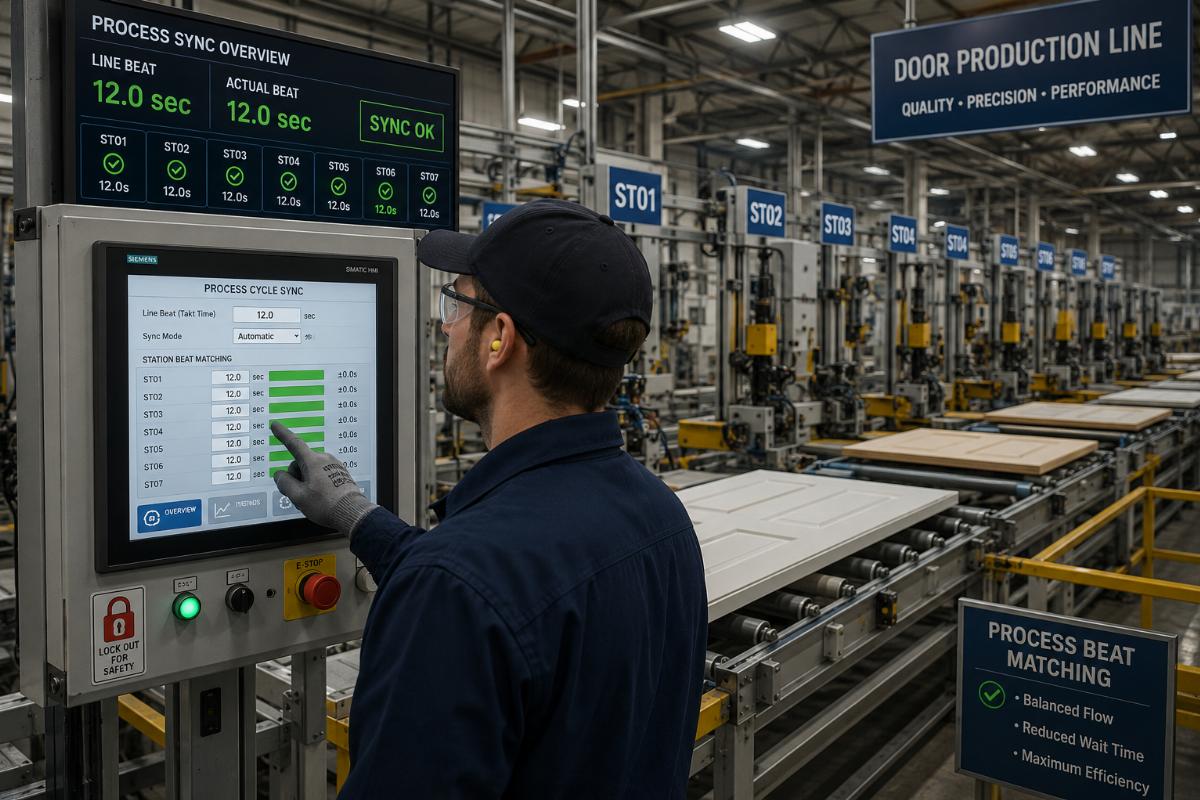
- Line Beat Validation – Require suppliers to provide real production test data of the exact line configuration you are ordering, not just individual machine parameter sheets.
- Bottleneck Simulation – Ask for a pre-simulation of your planned product mix to identify potential slow stations before finalizing your order.
- Conveyor Sync Check – Confirm that the automated conveyor system is programmed to align with each station’s processing cycle instead of running at a fixed speed.
What Real Daily Output Can You Get for Different Line Configurations?
| Output ranges from 80 to 250 doors per day, and you only need to pick a configuration that matches your existing order volume instead of overspending on unnecessary capacity. There is no one-size-fits-all line for every factory, and selecting a setup that is way above your current order volume will only lead to idle stations and lower return on investment. | Factory Size Segment | Common Overspending Mistake | Cost-Effective Recommended Configuration |
|---|---|---|---|
| Small Startup Factory | Buying a full large-scale line to chase long-term growth | Basic single processing center with supporting auxiliary equipment, 80 interior doors per day, upfront cost 50% of European brand equivalent | |
| Mid-sized Upgrading Factory | Sourcing separate stations to mix and match brands | Standard processing center + dedicated lock/hinge drill set, 120 paint-free doors per day, 3x efficiency lift from manual lines | |
| Large Scaled Factory | Prioritizing only the highest speed single stations | Dual-station carving machine + full automated conveyor line, 200 solid wood composite doors per day, product changeover under 45 minutes [NEED_CITE: Large door factories using pre-configured turnkey lines see 40% less unplanned downtime during product changeovers] |
A startup door manufacturer based in Chile that we spoke to last quarter had initially considered a full European line to position themselves as a high-capacity supplier, but the quoted price was nearly double their total startup budget. They opted for our entry-level configuration with a single core processing center and supporting auxiliary equipment, and they now hit 80 interior doors per day steadily, with enough room to add more stations as their order volume grows over the next 12 months.

- Order Volume Alignment – Match your line capacity to your current 6-month average order volume, not your 3-year projected growth target, to cut upfront capital lockup.
- Scalability Planning – Select a line that allows you to add individual stations later without replacing the entire core conveyor and control system.
- Product Mix Check – Confirm the line supports the full range of door types you produce, including paint-free, solid wood and composite variants.
How to Control Deployment Cost for High-Capacity Door Production Lines?
| Chinese turnkey door production line solutions deliver both lower upfront cost and faster payback, with full deployment support that eliminates hidden implementation costs. A lot of factory owners assume that higher capacity automatically means a much higher investment, but the total cost of a line includes not just the machine price, but also installation, training, changeover time and downtime during the ramp-up phase. | Cost Category | Common Costly Mistake | Efficient Cost Control Approach |
|---|---|---|---|
| Sourcing Method | Piecemeal sourcing from separate unrelated suppliers | Full turnkey solution from a single specialized manufacturer, cutting total deployment time by 60% [NEED_CITE: Independent market research shows Chinese turnkey woodworking lines have an average 18-month equipment payback period] | |
| Upfront Price Comparison | Only comparing base machine prices between suppliers | Calculating total cost including installation, training and 2-year after-sales support | |
| Ramp-up Phase | Cutting operator training budget to save cost | Pre-scheduled operator training and 3D site layout planning before delivery to cut production ramp-up to under 7 days |
Shandong Ruiqi Machinery, a Chinese manufacturer with 20 years of woodworking machinery experience, provides full turnkey door production solutions that include 3D site layout planning, on-site installation and operator training, with factory direct pricing 40 to 50% lower than comparable European brands, supporting 1-unit minimum order and fully flexible configuration customization.
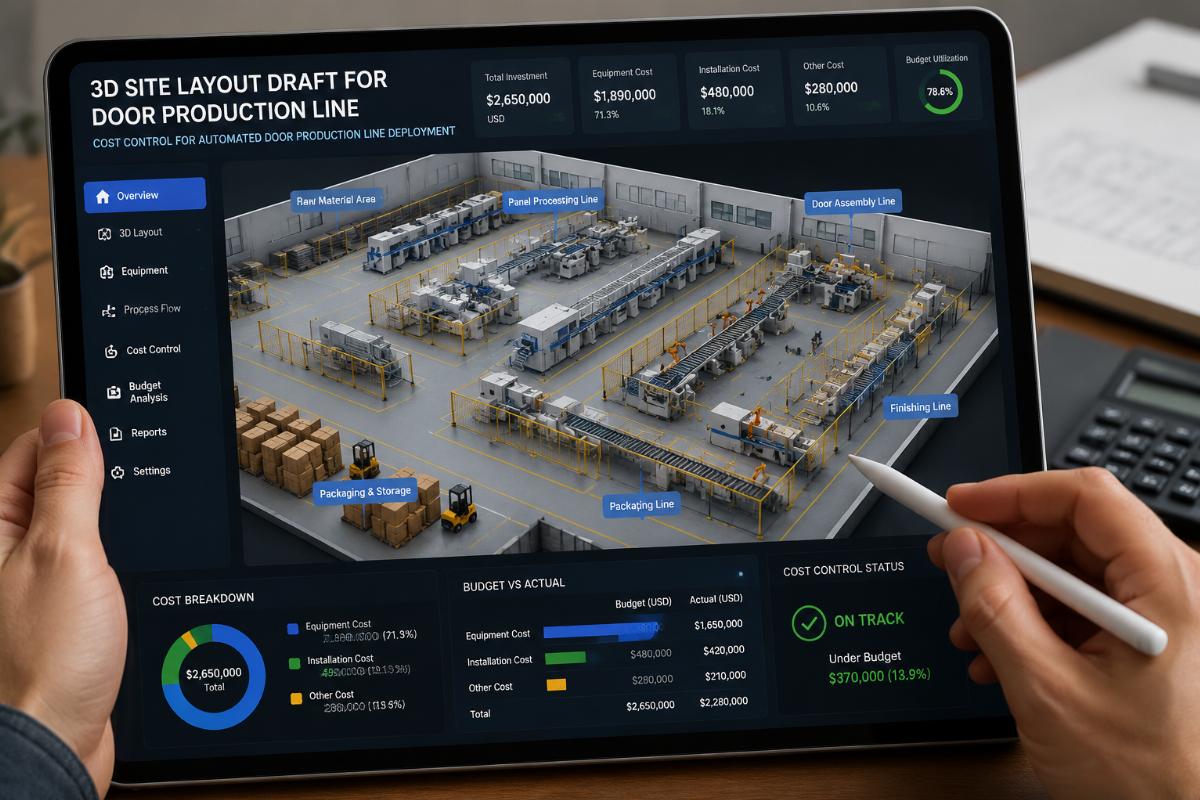
- Turnkey Solution Selection – Prioritize suppliers that provide end-to-end support instead of just selling individual standalone machines.
- Total Cost Calculation – Calculate all implementation related costs, not just the listed price of the equipment, when comparing quotes between different vendors.
- Ramp-up Scheduling – Arrange for operator training and site preparation before the equipment arrives to avoid unnecessary idle time after delivery.
Conclusion
The biggest mistake when selecting an automated door production line is focusing only on individual machine speed instead of full-line coordination and total cost of ownership. You can expect consistent daily output between 80 and 250 doors based on your selected configuration, and pre-matched turnkey solutions from Chinese suppliers will almost always deliver a faster return on investment than sourcing equipment from multiple separate vendors. Aligning your line capacity to your actual current order volume, instead of chasing hypothetical maximum speed numbers, will help you avoid unnecessary upfront spending and get your new line up and running in the shortest possible time.

Written by
author
Editor covering global sourcing, supplier verification, and industrial product knowledge. Content is compiled from manufacturer specifications, industry standards, and hands-on experience with international B2B buyers. Every article is fact-checked before publishing to help procurement professionals make informed decisions.
Leave a Reply