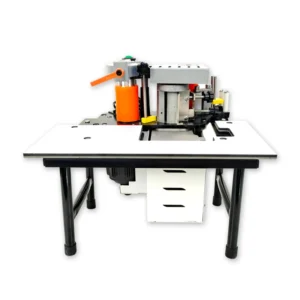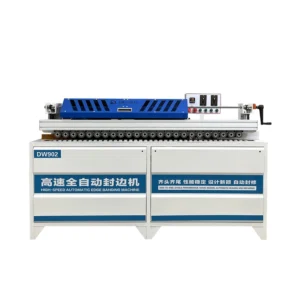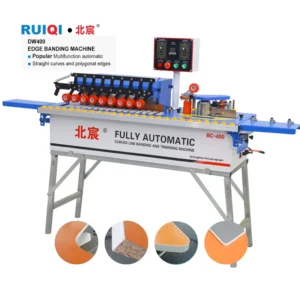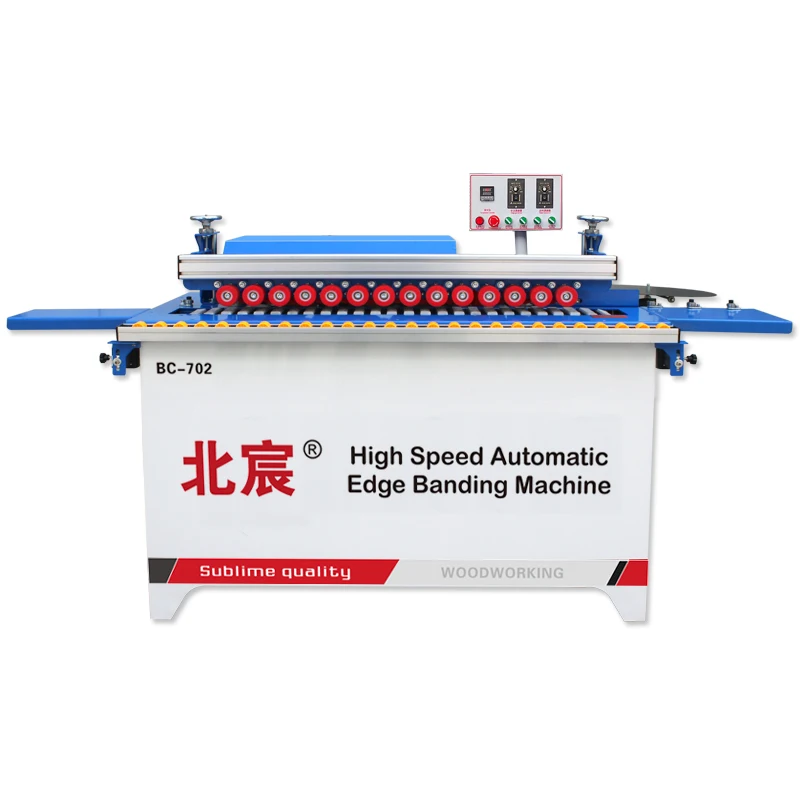
Edge banding machine
Click to enlarge
ISO 9001
CE Certified
OEM / ODM
12-Mo Warranty
Edge banding machine
Automatic Edge Banding Machine for MDF Panel – Industrial Application
<p>Engineer-led configuration ensures voltage, language, and control panel options match your facility before shipment.</p>
100+
Countries
MOQ 1
Unit
15-25 Days
Lead Time
3800W Total Power
Automatic Head And Tail
DW702
Edge Banding Machine
Furniture Factory
MDF Panel
Production Grade
- Full OEM/ODM support -- custom logo, voltage (110V-440V), multilingual panels
- ISO 9001 & CE certified, 5 national patents, 60 professional engineers
- 12-month warranty, remote technical support & spare parts service
- Professional export packaging, customs clearance support, on-time delivery
Precision-Matched Gluing & Finishing — the DW702 automatic edge banding machine process and application workflow integrates trimming and polishing in one pass to maintain consistent edge adhesion across MDF, particleboard, and plywood substrates.
Technical Specifications
| Parameter | Value |
|---|---|
| Model | DW702 |
| Product Type | Automatic Edge Banding Machine |
| Total Power | 3800W |
| Voltage | 220V / 380V / Customizable |
| Edge Banding Height Range | 0–50 mm |
| Edge Banding Thickness Range | 0.3–3 mm |
| Minimum Sheet Length | 25 cm |
| Minimum Sheet Width | 10 cm |
| Trimming Power | 800W × 2 |
| Polishing Power | 180W × 2 |
| Vacuum Power | 1200W |
| Glue Pot Capacity | 1000 ml |
| Air Source Pressure | 0.4–0.8 MPa |
| Product Size | 120 × 55 × 110 cm |
| Product Weight | 105 kg |
| Key Features | Automatic head and tail cutting, vacuum hold, edge banding, trimming, polishing |
| Plug Options | EU, USA, AU, UK |
| Language Options | Chinese and English standard; other languages customizable |
Application Suitability
| Application | Material or Output |
|---|---|
| Cabinet door and carcass panel edging | MDF and particleboard sheets |
| Custom furniture component finishing | Plywood and blockboard panels |
| Polymer door edge sealing | Polymer composite substrates |
| Mid-volume workshop panel edging | Wood panels with PVC or veneer banding |
Why Visible Glue Lines Keep Appearing on Panel Edges
The root cause is usually inconsistent hot melt application across substrates of different density, not the edge banding strip itself.
In furniture factories processing mixed batches of MDF and particleboard, the edge banding machine process and application quality often varies from panel to panel. The operator sets one glue temperature and feed rate, then watches as some boards come out with clean sealed edges while others show visible glue squeeze-out or, worse, partial delamination a few hours later. I have walked into workshops where half the morning’s output sat in the reject pile, and the crew could not identify which setting had drifted [NEED_CITE: substrate density variation and hot melt adhesion behavior]. The DW702 addresses this by pairing a 1000 ml glue pot — which holds thermal mass more steadily than smaller reservoirs — with a vacuum hold system that keeps the strip pressed uniformly against the panel edge through the trimming and polishing stations.
How Substrate Density Changes the Gluing Equation
MDF, particleboard, and plywood each absorb heat from hot melt adhesive at different rates. When a panel enters the glue station, the surface temperature of the substrate drops the adhesive viscosity locally, which determines how deeply the glue penetrates the board edge before setting. The edge banding machine process and application outcome depends on matching glue pot temperature and feed speed to this thermal behavior. Denser substrates like MDF pull heat faster, requiring a slightly higher pot temperature or slower feed to achieve the same bond strength you would get on lighter particleboard.
Single-Pass Finishing and What It Eliminates
The DW702 runs trimming at 800W × 2 and polishing at 180W × 2 immediately after the banding station, which means the edge is shaped and smoothed before the adhesive has fully cooled and hardened. This timing matters because trimming a partially set edge produces cleaner cuts with less chipping on brittle PVC strips. When workshops use separate machines for banding and trimming, the adhesive has already reached full rigidity by the time the panel reaches the trimmer, and the cutter must work against a harder glue line — often leaving micro-fractures visible under LED inspection lighting [NEED_CITE: hot melt curing timeline and edge trimming quality].
Reading the Specs That Actually Affect Edge Quality
The 0.3–3 mm edge banding thickness range tells you this machine handles everything from thin melamine strips to thick PVC and real wood veneer. Thicker banding requires more trimming power, which is why the dual 800W trimming motors matter — they maintain cutter speed under load instead of bogging down on 3 mm PVC. The 0–50 mm banding height range covers standard 18 mm furniture board as well as thicker shelving and worktop panels up to 50 mm. Air source pressure between 0.4 and 0.8 MPa drives the pneumatic cylinders that control head and tail cutting precision; running below 0.4 MPa risks incomplete cuts on the leading edge, while exceeding 0.8 MPa can cause the cylinder to slam the strip against the panel and crack brittle veneer materials. The 1200W vacuum system holds the strip against the panel edge during the critical first seconds of adhesion, which is especially important on curved or slightly warped boards where gravity alone will not maintain contact.
What Happens When Voltage and Language Get Ignored
I once arrived at a panel processing plant in Peru to find a brand-new edge bander sitting idle for two full days. The control panel was in English, the operators spoke only Spanish, and nobody was willing to touch parameters they could not read. That machine was not broken — it was simply unusable until the language was changed. Similarly, when a machine arrives configured for 380V/50Hz but the local supply runs at 220V/60Hz, the glue pot heater cannot reach operating temperature and the trimming motors run at the wrong speed. These are not rare edge cases [NEED_CITE: voltage and frequency mismatch in exported machinery]. They are among the most common reasons a newly installed edge bander underperforms, and they are entirely preventable with upfront specification confirmation.
Why Procurement Verification Matters at This Stage
Choosing the right configuration is only the first step. The factory must verify that the machine performs correctly on the exact substrates and edge banding materials you will run in production. A test on generic MDF tells you nothing about how the machine handles the specific particleboard brand your cabinet line uses, because resin content and surface porosity vary between manufacturers. Requesting a sample processing test on your own material before committing to the order is the single most reliable way to confirm edge quality will hold through downstream assembly and hardware installation.
What This Supply Chain Provides
Voltage and plug configuration are confirmed before production starts, not after the machine ships — the DW702 supports 220V and 380V with EU, USA, AU, and UK plug options so it arrives ready to connect. Multilingual control panels are available beyond the standard Chinese and English, preventing the operator comprehension problem I encountered in Peru. Every unit passes through four quality checkpoints covering incoming material, in-process assembly, finished product inspection, and pre-shipment verification. The in-house manufacturing process uses proprietary cutting mechanisms with precision-ground components, so the trimming and polishing stations on your machine are built to the same tolerance standard as every other unit leaving the factory. Engineer-led configuration recommendations come with a formal quotation, so the specification discussion happens before the order, not after a problem surfaces on the production floor.
Documentation & Verification
- CE declaration of conformity covering the DW702 edge banding and trimming assembly
- Electrical schematic with your confirmed voltage and frequency before dispatch
- Factory test record on your specific panel thickness and edge banding material
- Operation and maintenance manual written in your agreed operator language
- Spare parts list matching the exact trimming cutters and polishing pads on your unit
- Packing photographs documenting machine condition prior to container loading
Installation, Commissioning & Support
- 120 × 55 × 110 cm footprint requires a level concrete floor with at least 150 cm clearance on the feed side for panel handling
- 3800W total power draw requires a dedicated circuit with correct breaker rating matching your confirmed voltage configuration
- Machine ships assembled; connect the confirmed plug type, air supply at 0.4–0.8 MPa, and dust extraction before first run
- Glue pot first heat-up and temperature curve calibration performed during commissioning with your chosen adhesive
- Operator training covers language-specific control panel navigation, thickness adjustment for 0.3–3 mm banding, and daily glue pot cleaning
- Trimming cutter and polishing pad replacement intervals documented in the maintenance manual with part numbers from your spare parts list
Before You Request a Quote
Share the substrate types and panel thickness range your line runs most frequently, along with the edge banding materials — PVC, veneer, or melamine — and the thicknesses you use. Confirm your facility voltage, frequency, and the plug standard in use. Let us know what language your operators read, and whether you need a sample processing test on your own material before placing the order.
Frequently Asked Questions
Q: What substrates and edge banding materials work best with hot melt glue systems?
A: MDF, particleboard, and plywood all bond well with standard EVA hot melt adhesives, provided the glue pot temperature matches the substrate’s thermal absorption rate. PVC strips from 0.3 to 3 mm adhere reliably, while real wood veneer requires more careful temperature control to avoid scorching. The DW702 glue pot capacity of 1000 ml helps maintain stable temperature across consecutive panels.
Q: How does edge banding thickness affect downstream assembly and finishing quality?
A: Thicker banding, such as 2–3 mm PVC, provides more material for the trimming station to shape into a clean radius, which improves both tactile feel and visual continuity at the panel edge. Thinner 0.3 mm melamine strips leave almost no margin for trimming error and demand precise cutter alignment. Both fall within the DW702 thickness range, but the setup approach differs.
Q: What is the relationship between feed speed and edge adhesion on different panel densities?
A: Denser substrates like MDF absorb heat from the adhesive faster, which can cause the glue to set before full penetration if the feed speed is too high. Lighter particleboard tolerates faster feeding because less heat is drawn from the glue line. Operators adjust feed speed and pot temperature together to maintain consistent bond strength across mixed panel batches.
Q: How do you verify edge quality before panels move to boring and hardware installation?
A: Visual inspection under bright lighting reveals glue squeeze-out, gaps, or incomplete trimming immediately. A manual peel test on sample panels confirms adhesion strength meets production requirements. The factory test record provided with the DW702 documents edge quality results on your specified substrate and banding material before the machine ships.
Q: What maintenance schedule keeps glue application consistent over production runs?
A: Daily cleaning of the glue pot prevents charred adhesive buildup that disrupts flow uniformity. Weekly inspection of the vacuum hold pads ensures they maintain even pressure across the panel edge. Trimming cutters should be checked for dullness at intervals documented in the operation manual, as worn cutters produce rough edges that compromise the polishing finish.
Technical Specifications
| Parameter | Value |
|---|---|
| Product Name | Automatic Edge Banding Machine for MDF Panel – Industrial Application |
| Category | Edge banding machine |
| Voltage Options | 110V / 220V / 380V / 440V (customizable) |
| Frequency | 50Hz / 60Hz (customizable) |
| Certification | ISO 9001, CE |
| MOQ | 1 Unit |
| Lead Time | 15-25 Working Days |
| Warranty | 12 Months |
| OEM / ODM | Available -- logo, color, panel language |
* Detailed technical specifications vary by model. Please contact us with your specific requirements for a complete datasheet.
Shipping & Export
-
Export Packaging
Heavy-duty wooden crate with foam padding and moisture protection
-
Shipping Methods
Sea freight (FCL/LCL), air freight, express -- we support all methods
-
Customs Support
Full documentation: CO, commercial invoice, packing list, HS code assistance
-
Port of Loading
Tianjin / Qingdao port, China -- 20 years export experience
OEM / ODM Services
-
Logo & Branding
Custom logo printing, color scheme, and nameplate engraving
-
Voltage Configuration
110V / 220V / 380V / 440V, 50Hz / 60Hz -- any region supported
-
Multilingual Panels
Control panels in English, Spanish, French, Arabic and more
-
Custom Specifications
Modified dimensions, accessories, or feature sets on request
Get a Quote
Request Product Inquiry
Fill in your details and we'll respond within 24 hours with pricing and availability.
Direct Contact
How It Works
-
1
Confirm requirements & budget
Tell us your factory scale and processing needs
-
2
Receive recommendation & quote
We match the right machine with full specs
-
3
Negotiate & place order
OEM terms, voltage, payment and delivery
-
4
Production & QC inspection
Multi-stage quality control by 60 engineers
-
5
Export packaging & shipment
Professional packing, customs clearance
-
6
After-sales support
12-month warranty, remote tech support
You May Also Like