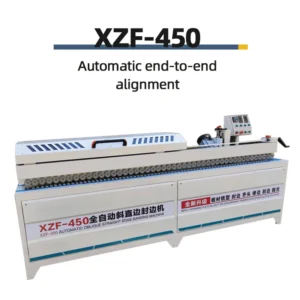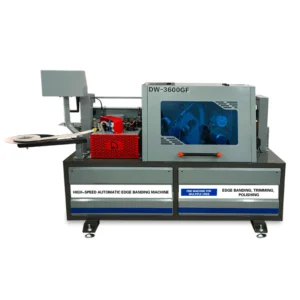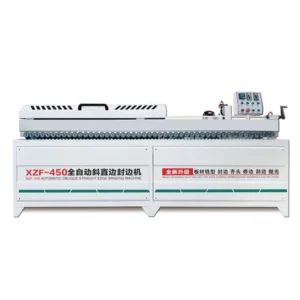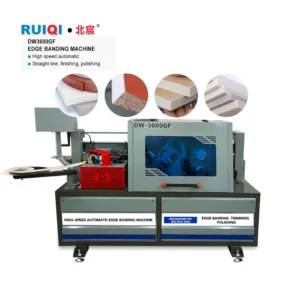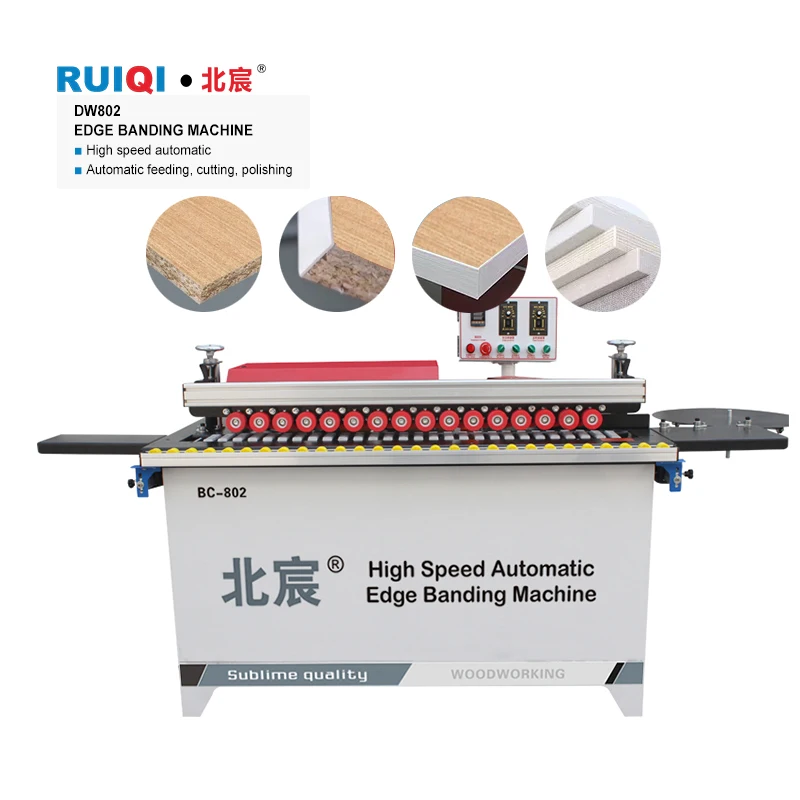
Edge banding machine
Click to enlarge
ISO 9001
CE Certified
OEM / ODM
12-Mo Warranty
Edge banding machine
Mdf Board Auto Edgebander Machine – Industrial Application
<p><strong>DW802 Automatic Edge Banding Machine, 220V/380V, 4000ml Glue Pot</strong> — designed for consistent straight-edge processing across MDF, particleboard and plywood substrates. This machine integrates gluing, automatic head-and-tail trimming with 800W×2 motors, and polishing in a single pass, handling edge banding thickness from 0.3–3mm to address glue-line visibility on panel furniture. Suitable for workshops transitioning from manual to mechanised edge banding with mixed material runs. - Four-stage quality control with pre-shipment test records available for your specific substrate and banding combination.</p>
100+
Countries
MOQ 1
Unit
15-25 Days
Lead Time
380V
Automatic Head And Tail Cutting
DW802
Edge Banding Machine
MDF Panel
Plywood Edge Sealing
Process And Application
- Full OEM/ODM support -- custom logo, voltage (110V-440V), multilingual panels
- ISO 9001 & CE certified, 5 national patents, 60 professional engineers
- 12-month warranty, remote technical support & spare parts service
- Professional export packaging, customs clearance support, on-time delivery
Integrated process verification — every DW802 unit undergoes substrate-specific glue adhesion and trim finish testing before dispatch, ensuring edge quality matches your panel material.
Technical Specifications
| Parameter | Value |
|---|---|
| Model | DW802 |
| Product Type | Automatic Edge Banding Machine |
| Total Power | 4200W |
| Voltage & Frequency | 220V / 380V / customization (frequency to be confirmed) |
| Edge Banding Height | 0–50mm |
| Edge Banding Thickness | 0.3–3mm |
| Minimum Sheet Length | 250mm |
| Minimum Sheet Width | 100mm |
| Glue Pot Capacity | 4000ml |
| Trimming Power | 800W × 2 |
| Polishing Power | 180W × 2 |
| Edge Power | 140W |
| Transmission Power | 140W |
| Vacuum Power | 1200W |
| Air Source Pressure | 0.4–0.8MPa |
| Overall Dimensions (L×W×H) | 1300 × 600 × 950mm |
| Net Weight | 135kg |
| Processing Type | Straight edge only |
| Suitable Materials | MDF, particleboard, solid wood board, ecological board, plywood |
| Edge Banding Materials | PVC and standard edge banding strips (0.3–3mm) |
| Key Features | Edge banding, trimming, polishing, automatic head and tail cutting, vacuum system, silica-gel conveyor belt |
| Language Options | Chinese and English standard; Spanish and other languages on request |
| Plug Options | EU, USA, AU, UK |
| Assembly State | Fully assembled |
| Feed Speed | Not stated in source — confirm m/min range |
| Panel Thickness Range | Not stated in source — confirm range |
| Tolerance | Not stated in source — confirm ±mm |
Application Suitability
| Application | Material or Output |
|---|---|
| Custom cabinet and wardrobe panel edging | MDF and particleboard with PVC banding |
| Small-to-medium workshop straight-edge sealing | Plywood and ecological board panels |
| Joinery shop transition from manual to mechanised | Solid wood board with veneer or PVC strips |
| Mixed-substrate batch production | MDF, particleboard, plywood on a single line |
Why Visible Glue Lines Keep Ruining Your Panels
The substrate surface and glue temperature together determine whether your edge banding bonds cleanly or shows a visible seam.
I have watched panels come off a line looking perfect on MDF, then the same machine switches to particleboard and the glue line becomes unmistakable. The issue is rarely the machine alone — it is how process parameters interact with board density and surface porosity. Particleboard absorbs heat from the glue faster than MDF, meaning the bond window shrinks. Plywood introduces surface irregularities from the veneer layup that demand consistent feed pressure. When an automatic edge banding machine woodworking process is not tuned to the actual substrate in the shop, the operator ends up adjusting by feel, and inconsistency follows [NEED_CITE: substrate density and thermal conductivity effects on hot-melt adhesive bonding].
How the Glue Pot Sustains Batch Consistency
The 4000ml glue pot on the DW802 holds enough adhesive to sustain multi-panel runs without frequent refills. This matters because each refill introduces a temperature dip that can affect glue viscosity and bond quality. When the adhesive stays within a stable thermal range across a batch, the edge adhesion on MDF and particleboard panels remains more uniform from the first piece to the last. For a small-to-medium workshop running cabinet components in sequence, that stability directly affects how many panels pass inspection without rework.
Trimming Motors and End-Cut Finish
The twin 800W trimming motors paired with automatic head-and-tail cutting address one of the most visible quality checkpoints in edge banding: the ends of the panel. Dull or underpowered trimming leaves torn PVC or frayed veneer that the operator must hand-finish. With adequate power and automatic sequencing, the DW802 targets clean end-cuts across the 0.3–3mm thickness range, reducing the manual touch-up that slows downstream assembly. The polishing stage then blends the trimmed edge with the panel face for a consistent visual result [NEED_CITE: edge trimming quality standards in panel furniture manufacturing].
Reading the Specs That Matter in Production
The 0.3–3mm edge banding thickness range covers thin PVC through thicker strips used on solid-wood applications, giving a workshop flexibility without needing separate machines for each profile. The silica-gel conveyor belt is specified to prevent surface scratching on melamine-faced MDF and ecological board — a detail that matters when scratched panels get rejected at the packing stage. The 1200W vacuum system holds the edge strip against the panel during transit through the glue and pressing stations, which is particularly relevant when running narrow strips that tend to drift. Feed speed and panel thickness range are not stated in source and should be confirmed before the machine is matched to a specific production volume, as these parameters define whether the DW802 fits a workshop’s daily panel count.
The Cost of Skipping Substrate Verification
I have seen workshops buy an edge bander based on price and power specs alone, only to discover that the glue line quality varies wildly between their MDF stock and the particleboard they switched to for cost reasons. The machine is not defective — it was simply never tested on the material combination the shop actually runs. Panels fail at the assembly stage when edge banding lifts under clamping pressure, and the rework cost compounds across an entire kitchen run. Requesting a factory test on your specific substrate and banding material before shipment eliminates this variable [NEED_CITE: common causes of edge banding adhesion failure in furniture production].
Why This Sourcing Approach Works for Your Workshop
The DW802 sits within a product family that scales from entry-level to full-function pre-milling models, meaning a workshop can add capacity later without switching suppliers. Voltage is configurable between 220V and 380V with custom options, so the machine can match your local supply rather than arriving with an incompatible motor. Control panels and operation manuals are available in English, Spanish, or other requested languages, which prevents the commissioning delay that happens when the operator cannot read the interface. Every unit goes through a four-stage QC process covering incoming material, in-process assembly, finished product, and pre-shipment verification — with factory test records available for your specific panel material. The silica-gel belt and 4000ml glue pot are not aftermarket additions; they are standard configuration on this model.
Documentation & Verification
- Machine specification sheet confirming feed speed and panel thickness range for your production volume
- Electrical schematic with voltage and frequency matched to your local power supply standard
- Factory test record showing edge banding results on your specific substrate and banding material
- Operation and maintenance manual provided in the agreed language for your operators
- Packing photographs and customs documentation support for international shipment
Installation, Commissioning & Support
- Footprint of 1300 × 600mm fits standard workshop bays; confirm floor levelness for stable feeding
- Dedicated circuit required for 4200W total draw; verify breaker rating before connection
- Arrives fully assembled; connect air supply at 0.4–0.8MPa and power before first run
- Glue pot temperature and feed speed calibration during commissioning based on your panel material
- Spare parts list provided covering trimming blades, polishing wheels, and conveyor belt segments
What to Include in Your Inquiry
To match the DW802 to your production, provide the substrate types you run most frequently, the edge banding material and thickness range, and your local voltage and frequency standard. If your operators need the control panel and manual in a specific language beyond Chinese or English, note that in your inquiry. Mention whether you are replacing a manual process or upgrading from an existing edge bander, as this affects the configuration recommendation.
Frequently Asked Questions
Q: What edge banding materials and thicknesses does the DW802 handle effectively?
A: The DW802 processes PVC and standard edge banding strips across a 0.3–3mm thickness range. This covers thin PVC used on cabinet carcasses through thicker strips for visible furniture edges. For veneer or ABS banding within that range, confirm compatibility through a factory test on your specific material combination before placing the order.
Q: How does substrate type affect glue adhesion and trimming quality?
A: MDF provides a dense, uniform surface that bonds predictably. Particleboard absorbs heat faster and may require adjusted glue temperature. Plywood introduces surface irregularities from veneer layup that demand consistent feed pressure. Testing your actual substrate on the machine before shipment reveals which parameters need adjustment for clean adhesion and trimming [NEED_CITE: thermal properties of wood-based panels affecting hot-melt adhesive performance].
Q: How do I verify voltage, frequency, and plug compatibility before ordering?
A: The DW802 supports 220V and 380V with custom voltage options available. Confirm your local supply voltage and frequency with the engineering team before production begins. Plug options include EU, USA, AU, and UK standards. The electrical schematic provided with your order documents the confirmed configuration for your market.
Q: Can the control panel and manual be supplied in English or Spanish?
A: Chinese and English are standard language options for the DW802 interface and documentation. Spanish and other languages are available on request. Specify your preferred language during the inquiry stage so the control panel labels, operation manual, and maintenance guide are all prepared in the language your operators read fluently.
Q: What should I confirm about feed speed and panel thickness range before ordering?
A: Feed speed and panel thickness range are not stated in source specifications and must be confirmed directly. Request these values in writing before finalising your order, as they determine whether the DW802 matches your daily panel volume and the thickness range of boards you process most often.
Technical Specifications
| Parameter | Value |
|---|---|
| Product Name | Mdf Board Auto Edgebander Machine – Industrial Application |
| Category | Edge banding machine |
| Voltage Options | 110V / 220V / 380V / 440V (customizable) |
| Frequency | 50Hz / 60Hz (customizable) |
| Certification | ISO 9001, CE |
| MOQ | 1 Unit |
| Lead Time | 15-25 Working Days |
| Warranty | 12 Months |
| OEM / ODM | Available -- logo, color, panel language |
* Detailed technical specifications vary by model. Please contact us with your specific requirements for a complete datasheet.
Shipping & Export
-
Export Packaging
Heavy-duty wooden crate with foam padding and moisture protection
-
Shipping Methods
Sea freight (FCL/LCL), air freight, express -- we support all methods
-
Customs Support
Full documentation: CO, commercial invoice, packing list, HS code assistance
-
Port of Loading
Tianjin / Qingdao port, China -- 20 years export experience
OEM / ODM Services
-
Logo & Branding
Custom logo printing, color scheme, and nameplate engraving
-
Voltage Configuration
110V / 220V / 380V / 440V, 50Hz / 60Hz -- any region supported
-
Multilingual Panels
Control panels in English, Spanish, French, Arabic and more
-
Custom Specifications
Modified dimensions, accessories, or feature sets on request
Get a Quote
Request Product Inquiry
Fill in your details and we'll respond within 24 hours with pricing and availability.
Direct Contact
How It Works
-
1
Confirm requirements & budget
Tell us your factory scale and processing needs
-
2
Receive recommendation & quote
We match the right machine with full specs
-
3
Negotiate & place order
OEM terms, voltage, payment and delivery
-
4
Production & QC inspection
Multi-stage quality control by 60 engineers
-
5
Export packaging & shipment
Professional packing, customs clearance
-
6
After-sales support
12-month warranty, remote tech support
You May Also Like