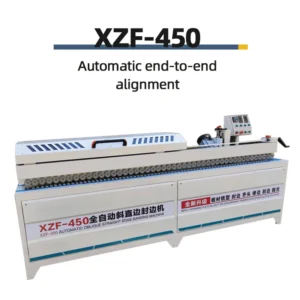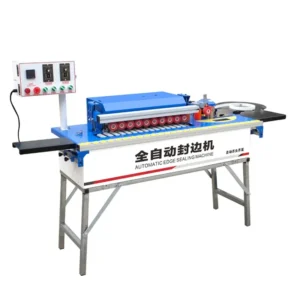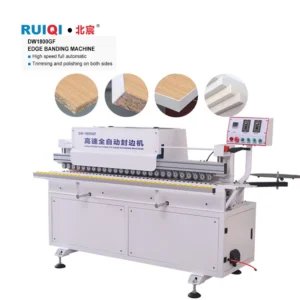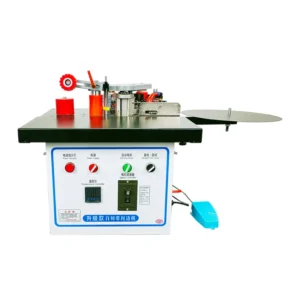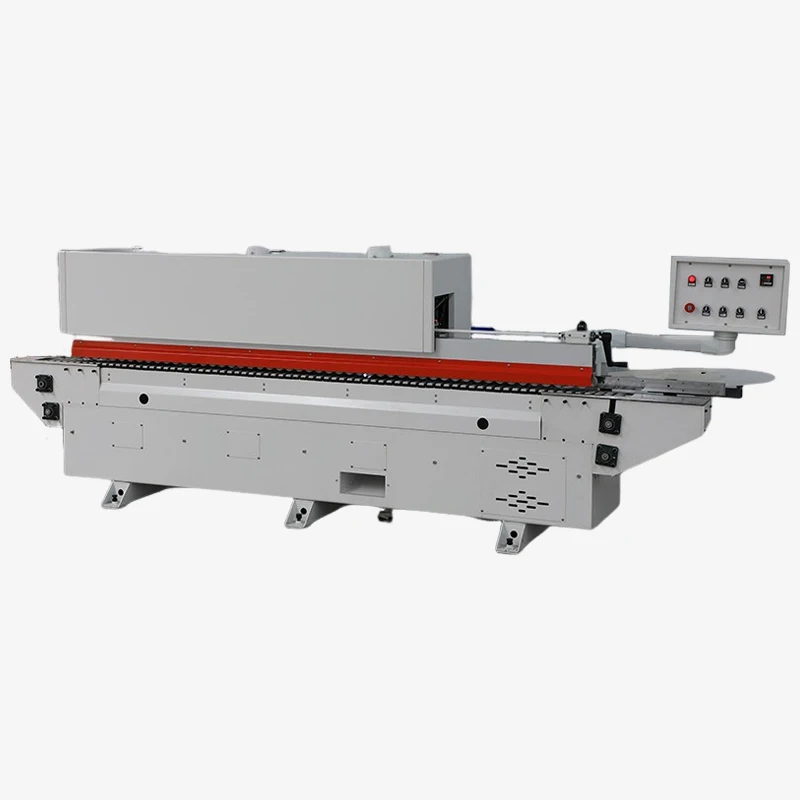
Edge banding machine
Click to enlarge
ISO 9001
CE Certified
OEM / ODM
12-Mo Warranty
Edge banding machine
Automatic Edge Banding Machine DW330 | PLC Control
<p><strong>DW330 Automatic Edge Banding Machine, 380V, 18m/min Feed Speed, 7-inch PLC Control</strong> — engineered for consistent edge finishing across MDF, particleboard and plywood substrates. The large-diameter single-sided gluing shaft delivers uniform adhesive coverage, while double-row pressure rollers and alloy contour trimming ensure clean profiles on panels as narrow as 120mm. Backed by four-stage QC with pre-shipment verification, engineer-led configuration support and multilingual documentation for fast commissioning.</p>
100+
Countries
MOQ 1
Unit
15-25 Days
Lead Time
380V
DW330
Edge Banding Machine
Furniture Factory
MDF Panel
PLC Control
Process Application
- Full OEM/ODM support -- custom logo, voltage (110V-440V), multilingual panels
- ISO 9001 & CE certified, 5 national patents, 60 professional engineers
- 12-month warranty, remote technical support & spare parts service
- Professional export packaging, customs clearance support, on-time delivery
Technical Specifications
| Parameter | Value |
|---|---|
| Model | DW-330 |
| Product Type | Automatic Edge Banding Machine |
| Total Installed Power | Approx. 5.5 kW (Conveying 1.5kW, Trimming 0.55kW×2, Gluing/End/Polishing 0.37kW×6) |
| Feed Speed | 18m/min |
| Panel Thickness Range | 9mm to 50mm |
| Minimum Panel Size (L×W) | 200mm × 100mm |
| Narrowest Sealing Plate Width | 120mm (basis not stated in source) |
| Edge Banding Thickness | Up to 3mm |
| Control Interface | 7-inch PLC with multilingual support |
| Pressure System | Double-row pressure rollers with aluminum profile beams |
| Heating Configuration | 380V 300W×4 Heating Rods |
| Overall Dimensions (L×W×H) | 350×71×122cm |
| Net Weight | 750KG |
Application Suitability
| Application | Material or Output |
|---|---|
| Custom Cabinet Production | MDF and Particleboard with PVC or Veneer Edge Banding |
| Furniture Panel Finishing | Plywood and Solid Wood Panels up to 50mm Thickness |
| Small to Mid-Scale Workshop Automation | Transitioning from Manual Edge Finishing to Automated Processing |
| Mixed Material Batch Processing | Switching between various substrates and banding materials within the same production run |
The Glue Line Visibility Problem in Mixed Substrate Batches
Inconsistent glue application across different panel materials often stems from inadequate temperature stability and uneven adhesive distribution rather than operator error.
When a workshop processes both MDF and particleboard in the same shift, visible glue lines frequently appear on one substrate while the other edges look clean. This edge banding quality inconsistency across panel materials creates rework bottlenecks and assembly fit issues downstream. The root cause typically traces back to glue pot capacity and temperature recovery rate — smaller pots struggle to maintain stable viscosity when running large boards continuously, leading to starved glue joints on some panels and excess squeeze-out on others [NEED_CITE: substrate porosity and adhesive penetration requirements].
Single-Sided Gluing and Temperature Stability for Consistent Adhesion
The DW330 addresses the core edge banding machine process application challenge through its enlarged glue pot capacity and large-diameter gluing shaft configuration. Single-sided board gluing via the oversized shaft delivers uniform adhesive coverage across the full 9mm to 50mm panel thickness range without requiring separate adjustment mechanisms when switching to thin edge banding materials. The four 300W heating rods maintain stable glue temperature during continuous production runs, preventing the viscosity fluctuations that cause visible glue lines on porous substrates like MDF.
Pressure System Design and Its Effect on Edge Contact Quality
Double-row pressure rollers mounted on aluminum profile pressure beams provide stable panel clamping throughout the edge banding process, maintaining consistent edge contact even on narrow panels down to 120mm width. This pressure configuration directly influences adhesive penetration and bond strength — insufficient or uneven pressure creates air gaps between the banding material and substrate edge, manifesting as delamination risks or visible seams after trimming. The contour trimming station with alloy knife and curved arc scraper then removes excess material while following the applied edge profile, ensuring smooth transitions at corners and shaped edges that affect joint fit in downstream assembly operations [NEED_CITE: edge banding adhesion standards for furniture manufacturing].
Interpreting Feed Speed, Trimming Configuration, and Tolerance Implications
The 18m/min feed speed specification must be evaluated alongside the trimming motor configuration and pressure system capacity. Two 0.55KW trimming motors working in sequence handle contour trimming tasks, but actual achievable throughput depends on panel thickness, edge banding material type, and required edge finish quality. The 7-inch PLC control system with multilingual support allows operators to adjust parameters for different material combinations, though the manual glue volume adjustment device means switching between PVC and veneer banding requires operator intervention rather than automated recipe recall. The digital display hand crank for beam height adjustment provides repeatable positioning for different panel thicknesses, but this manual operation adds changeover time compared to motorized systems. The ±0.02mm tolerance capability claimed in manufacturing specifications directly impacts whether edge-banded panels will assemble square in cabinet construction — accumulated tolerance errors across multiple panels compound into visible misalignment at joints and reveal lines.
What Happens When Voltage and Control Language Are Overlooked
Machines shipped without confirming local voltage and frequency arrive unusable, requiring transformer installation or motor replacement before commissioning can begin. Control panels displaying text in a language the operator cannot read stall the entire setup process — I have seen installations delayed by days because the PLC interface showed Chinese characters and no English documentation accompanied the shipment. The DW330’s configurable voltage options and multilingual control panel support address these failures, but only if the buyer specifies requirements during the quotation phase rather than discovering incompatibilities after the machine sits on the workshop floor [NEED_CITE: industrial equipment voltage standards by region].
Why Procurement Verification Matters for Process Consistency
Factory test records processed on your actual panel materials and edge banding specifications reveal whether the machine delivers acceptable edge quality before commitment. The manufacturer’s four-stage QC covering incoming material, in-process checks, finished product inspection, and pre-shipment verification provides documentation that the specific unit performed within tolerance on test samples. Engineer-led configuration recommendations based on your production volume and material mix prevent the mismatch of entry-level machines sold into production volumes they were never designed for. Voltage, language, and specification customization as standard means the machine arrives configured for your facility rather than requiring field modifications. The in-house manufacturing with patented cutting mechanisms and verified tolerance claims can be validated through factory visits or sample processing tests rather than relying solely on published specifications.
Documentation & Verification
- CE declaration of conformity for the DW330 edge banding machine
- Factory test record on your specific panel thickness range and edge banding material before dispatch
- Electrical schematic confirming heating rod and motor voltage configuration matches your facility supply
- Operation and maintenance manual provided in agreed language with troubleshooting procedures
- Spare parts list with part numbers for trimming knives, pressure rollers, and gluing shaft components
Installation, Commissioning & Support
- Dedicated 380V circuit with appropriate amperage for the 5.5kW total installed power requirement
- Floor space allocation of 350×71×122cm plus operator access clearance on all sides
- Machine arrives fully assembled in wooden box packaging — no on-site mechanical assembly required
- First-run parameter setup for glue temperature, feed speed, and pressure adjustment on your panel materials
- Operator training on PLC interface navigation, manual glue volume adjustment, and beam height changeover procedures
- Scheduled maintenance intervals for pressure roller inspection, trimming knife replacement, and glue pot cleaning
Requesting a Process-Focused Quotation
Provide your typical panel material types and thickness ranges along with the edge banding materials you process most frequently. Specify your local voltage and frequency standards plus the preferred control panel language for your operators. Indicate whether you need sample processing tests on your actual substrates to verify edge quality before placing an order.
Frequently Asked Questions
Q: How does glue pot capacity affect edge quality during continuous production?
A: The enlarged glue pot on the DW330 maintains more stable temperature when running large boards sequentially, preventing the viscosity drops that cause starved glue joints and visible seams on porous substrates like MDF.
Q: What edge banding materials work with the contour trimming stations?
A: The contour trimming with alloy knife and curved arc scraper handles PVC and veneer edge banding up to 3mm thickness, following both straight edges and shaped profiles for smooth transitions at corners.
Q: How does the double-row pressure system influence narrow panel processing?
A: The double-row pressure rollers with aluminum profile beams maintain consistent edge contact on panels as narrow as 120mm, preventing the air gaps and delamination risks that occur with inadequate clamping pressure.
Q: What adjustments are needed when switching between MDF and particleboard?
A: The manual glue volume adjustment device allows operators to modify adhesive application for different substrate porosity levels, while the PLC control system stores parameter settings for quick changeover between material types.
Technical Specifications
| Parameter | Value |
|---|---|
| Product Name | Automatic Edge Banding Machine DW330 | PLC Control |
| Category | Edge banding machine |
| Voltage Options | 110V / 220V / 380V / 440V (customizable) |
| Frequency | 50Hz / 60Hz (customizable) |
| Certification | ISO 9001, CE |
| MOQ | 1 Unit |
| Lead Time | 15-25 Working Days |
| Warranty | 12 Months |
| OEM / ODM | Available -- logo, color, panel language |
* Detailed technical specifications vary by model. Please contact us with your specific requirements for a complete datasheet.
Shipping & Export
-
Export Packaging
Heavy-duty wooden crate with foam padding and moisture protection
-
Shipping Methods
Sea freight (FCL/LCL), air freight, express -- we support all methods
-
Customs Support
Full documentation: CO, commercial invoice, packing list, HS code assistance
-
Port of Loading
Tianjin / Qingdao port, China -- 20 years export experience
OEM / ODM Services
-
Logo & Branding
Custom logo printing, color scheme, and nameplate engraving
-
Voltage Configuration
110V / 220V / 380V / 440V, 50Hz / 60Hz -- any region supported
-
Multilingual Panels
Control panels in English, Spanish, French, Arabic and more
-
Custom Specifications
Modified dimensions, accessories, or feature sets on request
Get a Quote
Request Product Inquiry
Fill in your details and we'll respond within 24 hours with pricing and availability.
Direct Contact
How It Works
-
1
Confirm requirements & budget
Tell us your factory scale and processing needs
-
2
Receive recommendation & quote
We match the right machine with full specs
-
3
Negotiate & place order
OEM terms, voltage, payment and delivery
-
4
Production & QC inspection
Multi-stage quality control by 60 engineers
-
5
Export packaging & shipment
Professional packing, customs clearance
-
6
After-sales support
12-month warranty, remote tech support
You May Also Like