Edge banding machine
Click to enlarge
ISO 9001
CE Certified
OEM / ODM
12-Mo Warranty
Edge banding machine
Automatic Edge Banding Machine for MDF Panel – Industrial Application
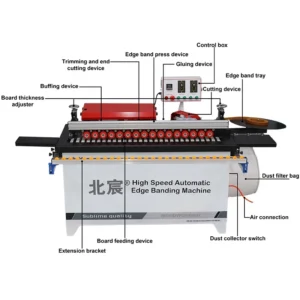
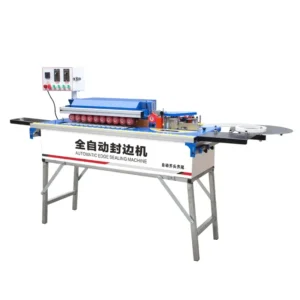
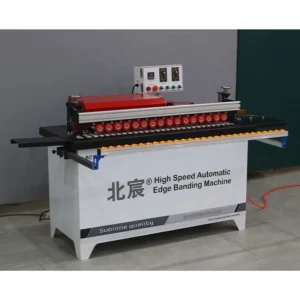
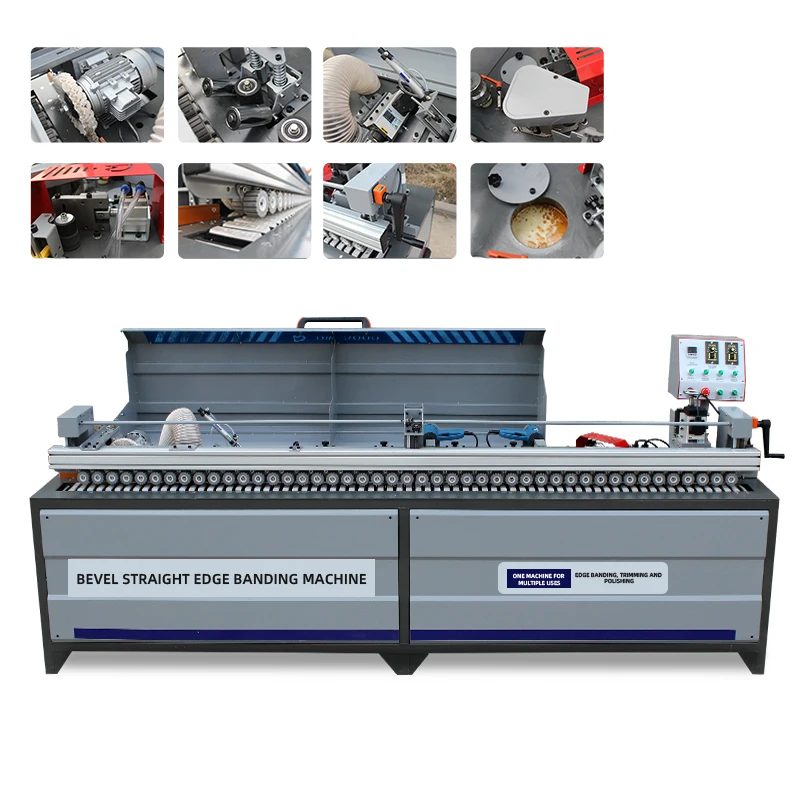
<p><strong>DW3000 Automatic Edge Banding Machine, 380V/415V, 0.3–3mm Edge Thickness, 0–12m/min Feed</strong> — engineered for MDF, particleboard, and plywood edge processing in custom furniture and cabinet production.</p> <ul> <li><strong>45-degree pre-milling (2.2KW)</strong> prepares panel edges to counter uneven glue absorption on MDF substrates, while the <strong>double heat gun system (2.2KW × 2)</strong> ensures PVC and veneer strips reach proper pliability before pressing. Eight adjustable pressure wheel groups (30°–90°) allow angle tuning for both straight and bevel profiles, and the flexible edge scraper delivers clean glue lines that pass visual inspection prior to downstream assembly.</li> <li><strong>Formal quotation with confirmed electrical schematic and voltage verification is provided within 24 hours of inquiry</strong>, backed by a four-stage QC process that includes pre-shipment testing of trimming accuracy and polishing finish against agreed tolerances.</li> </ul>
100+
Countries
MOQ 1
Unit
15-25 Days
Lead Time
11KW Motor
380V
DW3000
Edge Banding Machine
Furniture Factory
MDF Panel
Process And Application
- Full OEM/ODM support -- custom logo, voltage (110V-440V), multilingual panels
- ISO 9001 & CE certified, 5 national patents, 60 professional engineers
- 12-month warranty, remote technical support & spare parts service
- Professional export packaging, customs clearance support, on-time delivery
Verified Tolerance Control — the DW3000 achieves ±0.02mm edge trimming accuracy through proprietary cutting mechanisms and multi-stage factory inspection before dispatch.
Technical Specifications
| Parameter | Value |
|---|---|
| Model | DW3000 |
| Product Type | Automatic Edge Banding Machine |
| Total Power | 11 kW |
| Voltage | 380V / 415V |
| Feed Speed | 0–12 m/min |
| Minimum Sheet Length | 300 mm |
| Minimum Sheet Width | 150 mm |
| Edge Banding Height | 0–50 mm |
| Edge Banding Thickness | 0.3–3 mm |
| Pre-milled Motor | 2.2 kW |
| Heating Power | 2.2 kW × 2 (double heat gun) |
| Trimming Power | 2.2 kW × 2 (3 spindle motors) |
| Polishing Power | 0.4 kW × 2 |
| Vacuum Power | 550 W |
| Glue Pot Capacity | 4000 ml |
| Pressure Wheel Configuration | 8 groups, 30°–90° adjustable |
| Air Source Pressure | 0.5–0.7 MPa |
| Product Dimensions | 2990 × 650 × 1300 mm |
| Product Weight | 430 kg |
| Key Features | Plate milling, 30°–90° edge banding, trimming, scraping, polishing, high-power vacuuming |
Application Suitability
| Application | Material or Output |
|---|---|
| Straight edge banding for cabinet panels | MDF, particleboard, plywood substrates |
| 45° bevel edge profiling | PVC and veneer edge banding strips (0.3–3 mm) |
| Custom furniture panel finishing | Melamine-faced board with visible edge sealing |
| Mixed-substrate batch production | MDF and particleboard alternating on same line |
Why Glue Lines Keep Showing Up on Particleboard
Visible glue seams on porous substrates trace back to uneven pre-milling and insufficient heat penetration at the banding station.
On the production floor, MDF and particleboard absorb adhesive at different rates. When a single edge banding machine woodworking process runs both materials without adjusting pre-mill depth or heating output, the glue bonds inconsistently. I spent weeks in a São Paulo cabinet factory where operators blamed the adhesive brand, only to find the pre-mill station was leaving a rough edge profile on their locally sourced particleboard. Once we adjusted the 2.2 kW pre-milled motor depth and activated the double heat gun, the visible seam disappeared. The root cause was not the glue — it was the edge preparation and thermal delivery. [NEED_CITE: substrate porosity and hot-melt adhesive penetration behaviour]
Pre-Milling and Substrate Edge Preparation
Particleboard and MDF behave differently at the raw edge. Particleboard chips easily, leaving a porous surface that absorbs hot-melt adhesive unevenly, while MDF presents a denser, more uniform edge. The DW3000’s 2.2 kW pre-milling station removes a thin layer from the panel edge before the glue station, creating a flat, consistent surface. This edge banding machine woodworking process step matters most when running mixed substrates on the same shift, because it standardises the bonding surface before the adhesive is even applied.
Thermal Delivery Across Banding Materials
PVC edge banding at 2 mm thickness needs more heat to become pliable than 0.4 mm melamine strips. The double heat gun design on the DW3000 — delivering 2.2 kW × 2 — ensures the banding material softens adequately before reaching the pressure zone. I have seen single-heat-gun setups on comparable machines leave PVC rigid at the pressing point, especially in workshops running at the upper end of the 0–12 m/min feed speed range. With two heat sources, the thermal window widens enough to handle thicker veneer and PVC without slowing the feed. [NEED_CITE: PVC edge banding softening temperature and feed rate relationship]
Trimming and Finishing Tolerance Breakdown
The DW3000 runs three spindle trimming motors at 2.2 kW each, followed by a flexible edge scraper and dual 0.4 kW polishing units. This sequence matters because rough trimming leaves micro-ridges that the scraper must remove, and the polishing wheels then bring the edge to a visual-inspection-ready finish. On bevel cuts at 45°, the 8-group adjustable pressure wheels — configurable between 30° and 90° — hold the banding strip against the angled panel edge consistently. Without that adjustability, pressure distribution drops off at the bevel apex, leaving gaps that show up during assembly. The ±0.02 mm tolerance from the proprietary cutting mechanism holds across these stations, keeping panel edges within the fit tolerances that downstream CNC boring and dowel insertion require.
When Wrong Pressure Angle Settings Cost Assembly Time
A common failure I encounter in Latin American furniture plants is operators leaving the pressure wheels at a default angle, then switching from straight to bevel panels without resetting. The 8-group wheels on this machine adjust from 30° to 90°, but that adjustability only works if someone changes the setting between runs. When they don’t, the pressure on bevel edges becomes uneven — some sections bond fully while others show hairline gaps. These gaps pass the trimming station but fail at assembly when the edge catches light at an angle. [NEED_CITE: edge banding adhesion failure modes on bevel profiles] In a batch of cabinet doors, that means re-work on units that already have hardware installed, which is far more costly than resetting the pressure wheels between jobs.
What Separates This Machine in the Workshop
In-house manufacturing with patented cutting mechanisms means the ±0.02 mm tolerance is built into the spindle assemblies, not claimed from a third-party component. The full product family — from entry-level to full-function pre-milling — lets a workshop add capacity without switching suppliers or retraining operators on a different control interface. Voltage confirmation is signed off before production, so a 380V / 415V machine does not arrive in a region running 220V / 60Hz only to sit idle waiting for a transformer. The four-stage QC process covers incoming material through pre-shipment verification, with a factory test record produced against the buyer’s actual panel material. Engineer-led configuration means the machine spec is matched to production volume before the order is placed.
Documentation & Verification
- Electrical schematic confirming 380V/415V wiring and phase sequence before shipment
- Factory test record run on buyer’s specified MDF or particleboard thickness
- Operation manual translated to the agreed language for operator-level reading
- Spare parts list covering trimming motors, scraper blades, and pressure wheel assemblies
- Pre-shipment photographs of edge finish quality on sample panels
Installation, Commissioning & Support
- Requires a dedicated 11 kW circuit at 380V/415V with phase verification at connection
- Machine footprint of 2990 × 650 mm needs clear access on both sides for maintenance
- Air supply at 0.5–0.7 MPa must be filtered and dried to protect pneumatic pressure wheels
- First-run calibration covers glue pot temperature, feed speed ramp, and trimming depth
- Operator training includes pressure wheel angle changeover between straight and 45° bevel profiles
- Scheduled maintenance intervals for scraper blade replacement and polishing wheel dressing
What to Prepare Before Requesting a Quotation
Send the substrate types and panel thickness range you run most often, along with your local voltage and frequency. Specify whether your operators need the control panel in Spanish, Portuguese, or another language, and note if you process bevel profiles alongside straight edges on the same shift. If you want a sample panel test before shipment, include a few sheets of your actual board material so the factory test record reflects your production conditions.
Frequently Asked Questions
Q: How does substrate type affect edge banding quality and machine setup?
A: MDF edges are denser and absorb less adhesive than particleboard, which tends to chip and leave a porous surface. The DW3000’s pre-milling station removes a thin layer before gluing, creating a uniform bonding surface across both materials. Operators adjust pre-mill depth and glue temperature between substrate changes to maintain consistent edge adhesion.
Q: What edge banding materials work within the 0.3–3 mm thickness range?
A: The DW3000 handles PVC, wood veneer, and melamine strips within that thickness band. Thicker PVC at 2–3 mm requires the double heat gun to reach full softening before pressing, while 0.3–0.5 mm melamine needs less thermal input. Feed speed adjustment compensates for the different heat absorption rates across these materials.
Q: How does the double heat gun system influence adhesion on different substrates?
A: Two 2.2 kW heat sources ensure the banding material reaches pliable temperature regardless of feed speed setting. On porous substrates like particleboard, adequate heat allows the hot-melt adhesive to flow into the board surface evenly. On denser MDF, it prevents the banding from cooling too quickly before the pressure wheels make contact.
Q: What is the effect of pre-milling on downstream assembly accuracy?
A: Pre-milling creates a flat, true panel edge before banding is applied, which means the finished panel dimension stays within tolerance. When edge trimming then removes the overhang at ±0.02 mm accuracy, the panel fits precisely into dowel or confirmat screw joints during assembly, avoiding visible gaps at cabinet corners.
Q: How do I verify edge trimming tolerance before accepting shipment?
A: Request a pre-shipment factory test record showing sample panels processed in your substrate material, with photographs of the trimmed edge under angled light. The test should demonstrate clean glue-line removal by the flexible scraper and a smooth polish finish that passes visual inspection at the distance an assembled cabinet is typically viewed.
Technical Specifications
| Parameter | Value |
|---|---|
| Product Name | Automatic Edge Banding Machine for MDF Panel – Industrial Application |
| Category | Edge banding machine |
| Voltage Options | 110V / 220V / 380V / 440V (customizable) |
| Frequency | 50Hz / 60Hz (customizable) |
| Certification | ISO 9001, CE |
| MOQ | 1 Unit |
| Lead Time | 15-25 Working Days |
| Warranty | 12 Months |
| OEM / ODM | Available -- logo, color, panel language |
* Detailed technical specifications vary by model. Please contact us with your specific requirements for a complete datasheet.
Shipping & Export
-
Export Packaging
Heavy-duty wooden crate with foam padding and moisture protection
-
Shipping Methods
Sea freight (FCL/LCL), air freight, express -- we support all methods
-
Customs Support
Full documentation: CO, commercial invoice, packing list, HS code assistance
-
Port of Loading
Tianjin / Qingdao port, China -- 20 years export experience
OEM / ODM Services
-
Logo & Branding
Custom logo printing, color scheme, and nameplate engraving
-
Voltage Configuration
110V / 220V / 380V / 440V, 50Hz / 60Hz -- any region supported
-
Multilingual Panels
Control panels in English, Spanish, French, Arabic and more
-
Custom Specifications
Modified dimensions, accessories, or feature sets on request
Get a Quote
Request Product Inquiry
Fill in your details and we'll respond within 24 hours with pricing and availability.
Direct Contact
How It Works
-
1
Confirm requirements & budget
Tell us your factory scale and processing needs
-
2
Receive recommendation & quote
We match the right machine with full specs
-
3
Negotiate & place order
OEM terms, voltage, payment and delivery
-
4
Production & QC inspection
Multi-stage quality control by 60 engineers
-
5
Export packaging & shipment
Professional packing, customs clearance
-
6
After-sales support
12-month warranty, remote tech support
You May Also Like