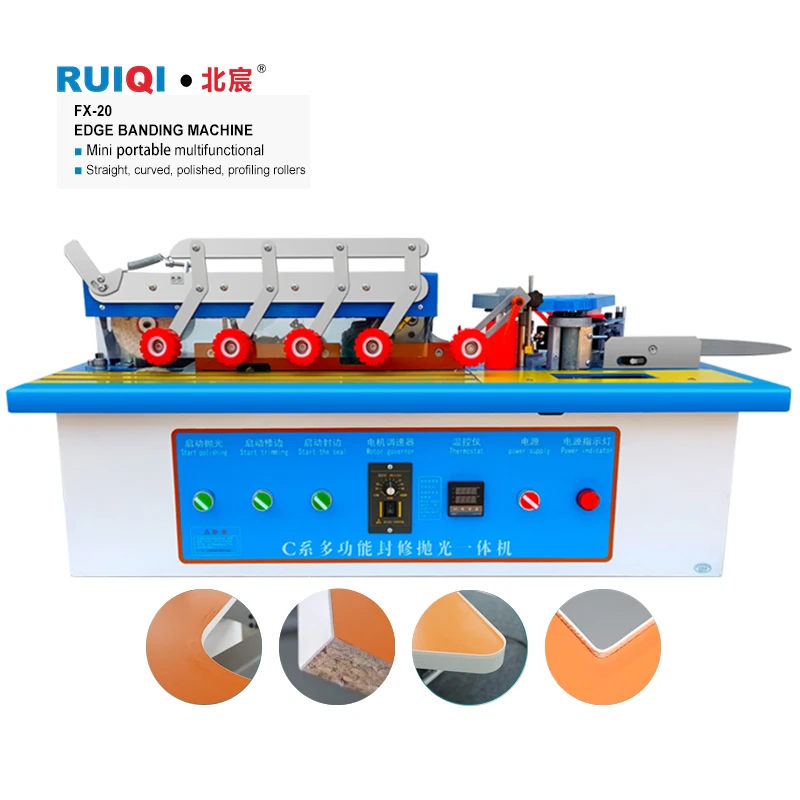
Edge banding machine
Click to enlarge
ISO 9001
CE Certified
OEM / ODM
12-Mo Warranty
Edge banding machine
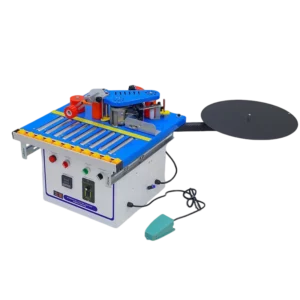
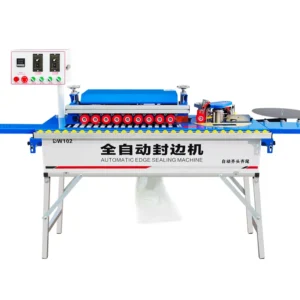
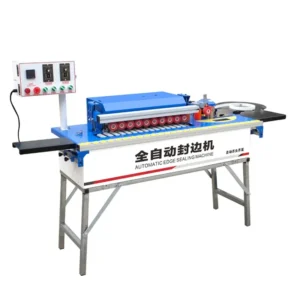
Compact Mini Edge Banding Machine for Small Workshop
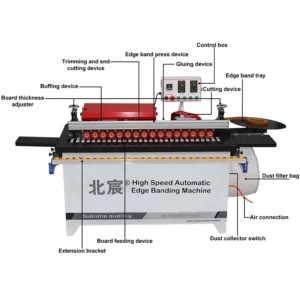
<p><strong>FX-20 Mini Edge Banding Machine, 2500W, 0.3–3mm Banding Thickness, Curved & Straight Edges</strong> — designed for small workshops handling MDF, particleboard, plywood, and solid wood panels.</p> <ul> <li>1000ml glue pot with thermal control ensures consistent adhesive flow across varying substrate densities</li> <li>Dual 650W trimming and dual 180W polishing stations deliver flush, clean edges that support tight downstream assembly tolerances</li> <li>Benchtop format with manual push plate suits low-to-medium volume custom cabinet and joinery production</li> </ul> <p>Backed by four-stage QC with pre-shipment verification, engineer-led configuration guidance, and voltage customization from 110V to 440V to match your local supply.</p>
100+
Countries
MOQ 1
Unit
15-25 Days
Lead Time
220V
Curved Edge Banding
Edge Banding Machine
FX-20
MDF Panel
Process Application
Small Workshop
- Full OEM/ODM support -- custom logo, voltage (110V-440V), multilingual panels
- ISO 9001 & CE certified, 5 national patents, 60 professional engineers
- 12-month warranty, remote technical support & spare parts service
- Professional export packaging, customs clearance support, on-time delivery
Voltage-configurable power delivery — the FX-20 Mini Edge Banding Machine ships with confirmed 220V/380V/custom electrical schematics so the unit runs correctly on your local supply from day one.
Technical Specifications
| Parameter | Value |
|---|---|
| Model | FX-20 |
| Product Type | Mini Edge Banding Machine |
| Total Power | 2500W |
| Voltage | 220V / 380V / customization |
| Trimming Power | 650W × 2 |
| Polishing Power | 180W × 2 |
| Glue Pot Capacity | 1000ml |
| Edge Banding Thickness | 0.3–3mm |
| Edge Banding Height | 0–50mm |
| Minimum Sheet Length | 25cm |
| Minimum Sheet Width | 10cm |
| Air Source Pressure | 0.5–0.8 MPa |
| Product Size | 100 × 46 × 41 cm |
| Net Weight | 44 kg |
| Banding Modes | Curved and straight edge |
| Key Features | Trimming, polishing, manual push plate |
| Language Options | Chinese, English standard; Spanish and others customizable |
| Plug Options | EU, USA, AU, UK |
| Certification | CE |
Application Suitability
| Application | Material or Output |
|---|---|
| Custom cabinet door and carcass edge sealing | MDF and particleboard with PVC or melamine banding |
| Joinery startup production runs | Plywood and ecological board with veneer or PVC edging |
| Home decoration workshop panel finishing | Solid wood board and blockboard with 0.3–3mm banding |
| Curved furniture component edge processing | Shaped MDF and plywood panels with flexible PVC strip |
| Small-batch office furniture edging | Particleboard shelving and desktop panels |
Why Glue Lines Fail on Mixed Substrates and How the FX-20 Addresses It
Consistent thermal management across the 1000ml glue pot keeps adhesive viscosity stable whether you are running MDF dust-heavy edges or dense plywood laminations.
Edge banding quality inconsistent across panel materials is one of the most common complaints I hear from small workshop owners. A machine that produces clean edges on melamine-faced particleboard one morning can leave visible glue squeeze-out or starved joints on raw MDF the next afternoon. The substrate porosity changes, the thermal mass of the panel changes, and the glue behaviour shifts accordingly. The edge banding machine woodworking process depends as much on thermal control and trimming precision as it does on feed technique. [NEED_CITE: substrate porosity effects on hot-melt adhesive bonding in panel processing]
Thermal Control Across the Glue Pot Cycle
A 1000ml glue pot on a benchtop-format machine means the adhesive volume is relatively small, so thermal recovery between panels matters. When you feed a cold plywood sheet, the pot temperature drops more noticeably than it would in a large industrial reservoir. The edge banding machine woodworking process on the FX-20 requires the operator to allow brief thermal recovery between consecutive panels, particularly when switching between dense solid wood and porous MDF substrates.
Trimming and Polishing Stage Sequence
The dual trimming stations at 650W each handle the bulk material removal immediately after the banding adheres, while the 180W polishing stations refine the transition between banding and panel face. This two-stage finishing sequence is what separates a visible step line from a flush edge that passes visual inspection at assembly. [NEED_CITE: trimming and polishing stage effects on edge banding visual quality standards]
Reading the Specifications for Your Production Reality
The 0.3–3mm banding thickness range covers the three materials most small workshops encounter: thin PVC for cost-sensitive cabinet work, veneer for visible furniture faces, and thicker PVC or ABS for impact-resistant edges on shelving and worktops. The 0–50mm edge banding height means standard 18mm board plus thicker stock up to roughly 40mm panels can be processed, which accommodates most custom furniture and joinery requirements. Air pressure at 0.5–0.8 MPa drives the pneumatic trimming and polishing actuators — running below this range causes incomplete trimming passes, while exceeding it risks chipping fragile veneer edges.
What Happens When Specifications Are Ignored
I have seen workshops purchase compact edge banders based on price alone, then discover that their local single-phase supply cannot sustain the combined 2500W draw when trimming motors engage simultaneously. The result is intermittent trimming that leaves ragged edges and forces hand-finishing on every panel. Others buy a unit without confirming the plug type or voltage, and the machine sits unpowered while electricians rewire the workshop circuit. These are avoidable delays that push back production start dates by weeks. [NEED_CITE: electrical supply compatibility issues in imported woodworking machinery]
Why Procurement Rigour Matters at This Scale
The FX-20 carries CE marking and ships with a confirmed electrical schematic and voltage specification matched to your facility before dispatch. The four-stage quality control process covers incoming material inspection through pre-shipment verification, so the machine you receive matches the tested configuration. Voltage and plug type are confirmed during the quotation stage rather than assumed. Operation manuals are produced in the agreed language — English, Spanish, or another specified option — so the operator can follow commissioning procedures without translation guesswork. Engineer-led configuration recommendations address your substrate mix and production volume before an order is placed, and factory visits are available for buyers who want to verify edge quality on their own sample panels.
Documentation & Verification
- CE declaration of conformity covering the FX-20 machinery safety requirements
- Machine specification sheet with confirmed glue pot temperature range for your banding materials
- Electrical schematic with voltage and frequency matched to your local supply standard
- Factory test record showing edge quality on your specific substrate before shipment
- Operation and maintenance manual produced in your agreed language
Installation, Commissioning & Support
- Benchtop placement requires a stable workbench rated for the 44 kg unit weight plus operator downward pressure during manual feeding
- Dedicated 220V or 380V circuit matching the confirmed voltage specification, with appropriate breaker rating for the 2500W total draw
- Pneumatic supply connection at 0.5–0.8 MPa with filtered air to protect trimming and polishing actuators
- First-run parameter setting for glue temperature matched to your specific banding material thickness between 0.3mm and 3mm
- Operator training on manual push-plate feed technique for both curved and straight edge profiles
- Spare parts list covering trimming cutters, polishing wheels, and glue pot consumables for ongoing maintenance
What to Prepare Before Requesting a Quotation
Send through the panel materials you run most frequently, the edge banding type and thickness you plan to use, and your local voltage and frequency. If you have specific edge quality requirements for downstream assembly or visible furniture faces, include sample dimensions so the configuration can be verified against your actual production mix.
Frequently Asked Questions
Q: How does substrate type affect glue temperature and banding adhesion on this machine?
A: MDF absorbs heat faster than plywood due to higher porosity, so the glue pot may need a slightly higher set point or longer recovery between panels when running MDF. The 1000ml pot on the FX-20 responds to these adjustments within a practical range, but operators should run test pieces when switching substrate types to confirm adhesion before committing to a full batch.
Q: What banding materials work within the 0.3–3mm thickness range?
A: PVC, ABS, melamine, and wood veneer are all compatible across this range. Thinner PVC around 0.3mm suits cost-sensitive cabinet interiors, while 2–3mm PVC or ABS provides impact protection on shelving and worktop edges. Veneer banding falls in the mid-range and requires careful trimming to avoid chipping the wood grain surface.
Q: How do curved and straight edge banding modes differ in operator technique?
A: Straight edges allow a consistent push-plate feed along the full panel length. Curved edges require the operator to rotate the panel gradually against the glue roller, maintaining steady pressure to prevent banding lift at the curve apex. Both modes use the same trimming and polishing stations but demand different manual control rhythms.
Q: What air supply specification is required and how does it affect performance?
A: The FX-20 requires 0.5–0.8 MPa filtered compressed air. Below 0.5 MPa, the pneumatic trimming cylinders may not complete full cutting strokes, leaving partial trim lines. Above 0.8 MPa, aggressive actuator movement can chip delicate veneer edges. A regulated compressor with moisture separation is recommended for consistent results.
Q: How does edge quality from this machine affect downstream assembly tolerances?
A: Flush trimming and polishing produce edges that sit within the panel thickness envelope, preventing interference when panels meet at cabinet corners or shelving joints. Visible glue lines or overhanging banding material force hand-trimming before assembly, adding labour and introducing inconsistency that affects joint fit across a production batch.
Technical Specifications
| Parameter | Value |
|---|---|
| Product Name | Compact Mini Edge Banding Machine for Small Workshop |
| Category | Edge banding machine |
| Voltage Options | 110V / 220V / 380V / 440V (customizable) |
| Frequency | 50Hz / 60Hz (customizable) |
| Certification | ISO 9001, CE |
| MOQ | 1 Unit |
| Lead Time | 15-25 Working Days |
| Warranty | 12 Months |
| OEM / ODM | Available -- logo, color, panel language |
* Detailed technical specifications vary by model. Please contact us with your specific requirements for a complete datasheet.
Shipping & Export
-
Export Packaging
Heavy-duty wooden crate with foam padding and moisture protection
-
Shipping Methods
Sea freight (FCL/LCL), air freight, express -- we support all methods
-
Customs Support
Full documentation: CO, commercial invoice, packing list, HS code assistance
-
Port of Loading
Tianjin / Qingdao port, China -- 20 years export experience
OEM / ODM Services
-
Logo & Branding
Custom logo printing, color scheme, and nameplate engraving
-
Voltage Configuration
110V / 220V / 380V / 440V, 50Hz / 60Hz -- any region supported
-
Multilingual Panels
Control panels in English, Spanish, French, Arabic and more
-
Custom Specifications
Modified dimensions, accessories, or feature sets on request
Get a Quote
Request Product Inquiry
Fill in your details and we'll respond within 24 hours with pricing and availability.
Direct Contact
How It Works
-
1
Confirm requirements & budget
Tell us your factory scale and processing needs
-
2
Receive recommendation & quote
We match the right machine with full specs
-
3
Negotiate & place order
OEM terms, voltage, payment and delivery
-
4
Production & QC inspection
Multi-stage quality control by 60 engineers
-
5
Export packaging & shipment
Professional packing, customs clearance
-
6
After-sales support
12-month warranty, remote tech support
You May Also Like