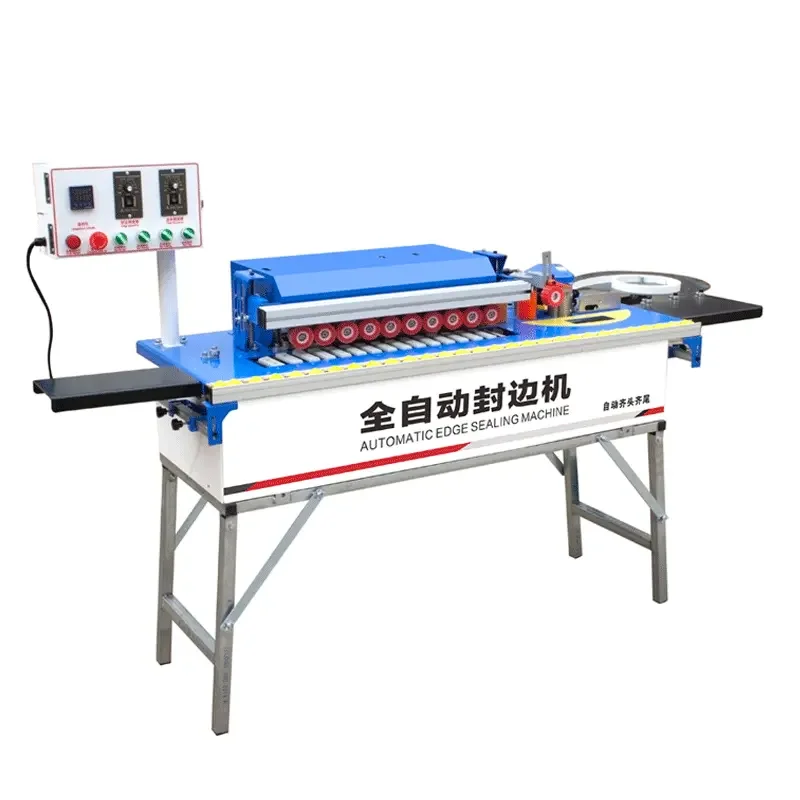
Edge banding machine
Click to enlarge
ISO 9001
CE Certified
OEM / ODM
12-Mo Warranty
Edge banding machine
DW102 Automatic Edge Banding Machine for MDF Plywood – Process Application
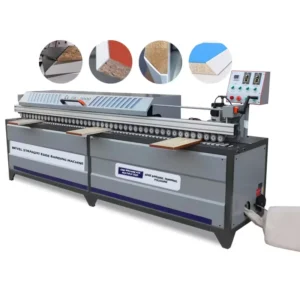
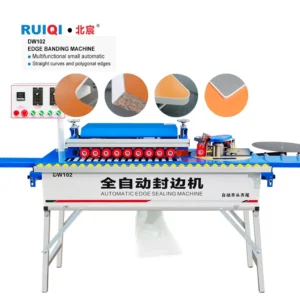
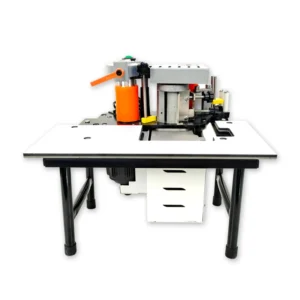
<p><strong>DW102 Automatic Edge Banding Machine, 220V/380V, 0.3-3mm Edge Thickness, Curved & Straight</strong> — handles MDF, plywood and particleboard with dual 650W trimming and dual 180W polishing stations for consistent edge finish in a single pass.</p> <ul> <li>1000ml glue pot with 1200W vacuum hold-down supports continuous small-to-medium panel runs</li> <li>Minimum sheet 25×5cm, edge banding height 0-50mm, air source 0.5-0.8MPa</li> <li>Benchtop configuration for workshops transitioning from manual to machine edge banding</li> </ul> <p>Substrate behaviour, glue application control and trim station setup determine final edge quality — the DW102 is configured so production managers can evaluate how each factor affects downstream assembly fit.</p> <p>Verified tolerance, engineer-led configuration and sample processing tests on your own substrate available before order commitment.</p>
100+
Countries
MOQ 1
Unit
15-25 Days
Lead Time
- Full OEM/ODM support -- custom logo, voltage (110V-440V), multilingual panels
- ISO 9001 & CE certified, 5 national patents, 60 professional engineers
- 12-month warranty, remote technical support & spare parts service
- Professional export packaging, customs clearance support, on-time delivery
Voltage-flexible edge banding — the DW102 runs on 220V or 380V with customizable control panel languages, letting workshops in different export markets commission the machine without a transformer or a translation delay.
Technical Specifications
| Parameter | Value |
|---|---|
| Product Type | Automatic Edge Banding Machine |
| Model | DW102 |
| Total Power | 3800W |
| Voltage | 220V / 380V / customization |
| Trimming Power | 650W × 2 |
| Polishing Power | 180W × 2 |
| Vacuum Power | 1200W |
| Edge Power | 20W |
| Transmission Power | 60W |
| Glue Pot Capacity | 1000ml |
| Edge Banding Height | 0–50mm |
| Edge Banding Thickness | 0.3–3mm |
| Minimum Sheet Length | 25cm |
| Minimum Sheet Width | 5cm |
| Air Source Pressure | 0.5–0.8 MPa |
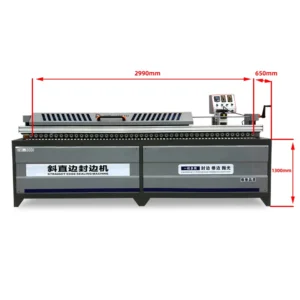
| Product Size | 128 × 47 × 69 cm |
| Product Weight | 75 kg |
| Assembly State | Benchtop / compact unit |
| Key Features | Curved and straight edge banding, edge trimming, polishing, automatic head-and-tail cutting, vacuum hold-down |
| Language Options | Chinese, English, customizable to Spanish or other languages |
Application Suitability
| Application | Material or Output |
|---|---|
| Cabinet door edge finishing | MDF and particleboard with PVC or veneer banding |
| Custom furniture panel edging | Plywood and blockboard with curved-edge components |
| Small-batch workshop production | Polymer door panels and solid wood substrates |
| Transition from manual trimming | Straight and curved edge profiles on sheet stock |
Why the Glue Line Tells You More Than the Brochure
Visible glue seams on finished panels almost always trace back to substrate porosity and glue pot temperature, not the trimming station.
I once configured an entry-level edge bander for a cabinet shop running high-density particleboard without asking what board they were actually feeding. The glue did not penetrate the substrate surface, the edge tape lifted within days, and the line sat idle until I drove out and reworked the temperature settings. With the DW102, the 1000ml glue pot and dual trimming stations handle MDF, plywood, and particleboard, but the operator still needs to match glue viscosity to the substrate before the first panel enters the infeed. That edge banding machine process application step is where most small shops lose time. [NEED_CITE: substrate density and adhesive penetration in panel edge banding]
Substrate Behaviour and Glue Line Control
Different panel materials absorb hot-melt adhesive at different rates. MDF, with its fine fibre structure, tends to soak glue quickly, demanding a slightly higher pot temperature to keep the adhesive fluid long enough for the pressure roller to seat the banding. Particleboard varies widely depending on resin content and surface density — some boards resist glue penetration entirely, leaving a bond that looks acceptable at the outfeed but fails under seasonal humidity changes. The DW102’s 1000ml glue pot holds enough adhesive for continuous runs on small-to-medium panels, reducing the refill interruptions that cause temperature fluctuations mid-batch.
Curved Versus Straight Edging in a Single Pass
Workshops that produce both flat cabinet sides and curved shelf fronts usually run two separate operations or accept compromise on one geometry. The DW102 integrates curved and straight edge banding with automatic head-and-tail cutting, so a single setup covers both profiles. The dual 650W trimming stations remove excess banding on both faces, and the 180W × 2 polishing stations follow immediately to blend the trimmed edge flush with the panel surface. For a small joinery shop moving away from hand-held trimmers, this consolidated woodworking edge quality workflow replaces three manual steps with one pass through the machine.
Reading the Spec Sheet Against Your Production Reality
The edge banding thickness range of 0.3–3mm covers most PVC and veneer tapes used in cabinet and furniture work, but the critical match is between banding thickness and the trimming station’s cutter geometry. Thicker banding at the upper 3mm end requires the trim cutters to take a deeper bite, which in turn demands steady vacuum hold-down — the 1200W vacuum system on the DW102 keeps the panel flat against the fence so the cutters engage consistently. The minimum sheet dimensions of 25cm length and 5cm width define the smallest offcut you can edge-band, which matters for custom cabinet shops cutting drawer fronts and narrow filler strips. Air source pressure at 0.5–0.8 MPa drives the pneumatic actuators for head-and-tail snipping and roller pressure; an undersized compressor on the shop floor will cause intermittent snip failures that operators often misdiagnose as a machine fault. [NEED_CITE: pneumatic pressure requirements for edge banding machine actuators]
The Hidden Cost of Skipping the Voltage Conversation
A 380V machine shipped to a workshop wired only for 220V single-phase does not run slower — it does not run at all, and the motor windings can sustain damage before anyone notices the mismatch. This happens more often than you would think, especially when orders pass through two or three intermediaries before the machine reaches the factory floor. The DW102 is configurable for 220V or 380V with custom options, but that configuration only works if someone confirms the local supply before the unit leaves the assembly bench. A panel that arrives with the wrong voltage spec sits crated while a transformer is sourced, and the production schedule slips. [NEED_CITE: voltage and frequency standards by export market]
Why Sourcing This Edge Bander Here Makes Sense
The DW102 is built on a platform with patented cutting mechanisms that hold verified tolerance, so trimming output stays consistent across long production runs rather than drifting as cutters wear. Voltage, control panel language, and banding specification are treated as standard configuration choices, not afterthought add-ons — the language option alone prevents commissioning delays when operators cannot read the interface. Every unit passes a four-stage QC sequence including pre-shipment verification, meaning the machine you receive matches the test record generated on your specified panel material. An engineer reviews your workshop’s substrate mix and production volume before issuing a formal quotation, which reduces the chance of a model mismatch like the one I saw early in my career. The benchtop form factor means the DW102 can be installed without floor anchoring, so a growing workshop can relocate it as the production line expands.
Documentation & Verification
- CE declaration of conformity covering the DW102 electrical and mechanical safety scope
- ISO 9001 certificate from the manufacturing facility
- Machine specification sheet with confirmed voltage and language configuration
- Electrical schematic matching the dispatched unit’s wiring diagram
- Factory test record on your specified panel thickness and banding material
- Operation and maintenance manual in the agreed operator language
Installation, Commissioning & Support
- Benchtop footprint of 128 × 47 × 69 cm requires a stable workbench rated for at least 100 kg
- Dedicated circuit matching confirmed voltage (220V or 380V) with appropriate breaker rating for 3800W total draw
- Pneumatic line at 0.5–0.8 MPa from shop compressor to the machine’s air inlet
- First-run calibration of glue pot temperature against your specific banding material and substrate
- Operator walk-through covering curved-versus-straight setup changeover and head-and-tail snip adjustment
- Spare parts list including trim cutters, polishing pads, and glue pot consumables for ongoing continuity
What to Share Before Requesting a Quote
Tell us the panel materials you run most often — MDF, particleboard, plywood, or a mix — along with the edge banding type and thickness you plan to use. Confirm your workshop’s local voltage and frequency so the machine ships configured for your supply. If you process curved-edge components, share the typical radius range so we can verify the DW102’s curved banding capability against your geometry before you commit to an order.
Frequently Asked Questions
Q: Which substrates and edge banding materials give the best finish on the DW102?
A: MDF and plywood with PVC or veneer banding in the 0.3–3mm thickness range produce the most consistent results. Particleboard works well but requires glue pot temperature adjustment based on surface density. Request a sample test on your actual board stock before committing to a production run.
Q: How does curved versus straight edge banding differ in setup and output quality?
A: Straight edging uses the full fence and vacuum hold-down for maximum panel stability. Curved edging relies on the operator guiding the panel against the pressure roller. Both paths use the same dual trimming and polishing stations, so edge finish quality remains comparable across geometries.
Q: What glue type and temperature range work with the 1000ml pot?
A: Standard EVA hot-melt adhesives used in furniture edge banding are compatible. The pot temperature must be matched to both the adhesive manufacturer’s specification and the porosity of the substrate being processed. Incorrect temperature is the leading cause of visible glue lines.
Q: How do I match this machine’s trim stations to my downstream assembly tolerance?
A: The dual 650W trimming stations remove excess banding flush with the panel face, and the polishing stations refine the edge. Verify the final edge profile against your assembly jig or CNC boring positions to confirm that banded panels seat correctly in dowel or confirmat joints.
Q: What air supply specification do I need on the shop floor?
A: A compressor delivering 0.5–0.8 MPa to the machine’s pneumatic inlet is required. The air drives the head-and-tail snipping cylinder and the pressure roller actuator. An undersized compressor causes intermittent snip misfires that are often mistaken for a machine fault.
Technical Specifications
| Parameter | Value |
|---|---|
| Product Name | DW102 Automatic Edge Banding Machine for MDF Plywood – Process Application |
| Category | Edge banding machine |
| Voltage Options | 110V / 220V / 380V / 440V (customizable) |
| Frequency | 50Hz / 60Hz (customizable) |
| Certification | ISO 9001, CE |
| MOQ | 1 Unit |
| Lead Time | 15-25 Working Days |
| Warranty | 12 Months |
| OEM / ODM | Available -- logo, color, panel language |
* Detailed technical specifications vary by model. Please contact us with your specific requirements for a complete datasheet.
Shipping & Export
-
Export Packaging
Heavy-duty wooden crate with foam padding and moisture protection
-
Shipping Methods
Sea freight (FCL/LCL), air freight, express -- we support all methods
-
Customs Support
Full documentation: CO, commercial invoice, packing list, HS code assistance
-
Port of Loading
Tianjin / Qingdao port, China -- 20 years export experience
OEM / ODM Services
-
Logo & Branding
Custom logo printing, color scheme, and nameplate engraving
-
Voltage Configuration
110V / 220V / 380V / 440V, 50Hz / 60Hz -- any region supported
-
Multilingual Panels
Control panels in English, Spanish, French, Arabic and more
-
Custom Specifications
Modified dimensions, accessories, or feature sets on request
Get a Quote
Request Product Inquiry
Fill in your details and we'll respond within 24 hours with pricing and availability.
Direct Contact
How It Works
-
1
Confirm requirements & budget
Tell us your factory scale and processing needs
-
2
Receive recommendation & quote
We match the right machine with full specs
-
3
Negotiate & place order
OEM terms, voltage, payment and delivery
-
4
Production & QC inspection
Multi-stage quality control by 60 engineers
-
5
Export packaging & shipment
Professional packing, customs clearance
-
6
After-sales support
12-month warranty, remote tech support
You May Also Like