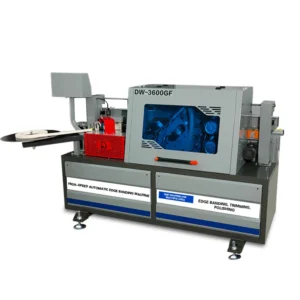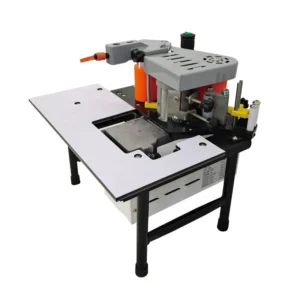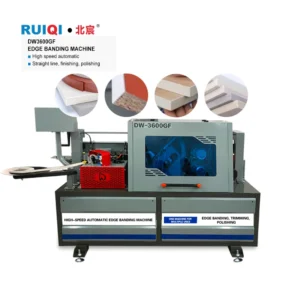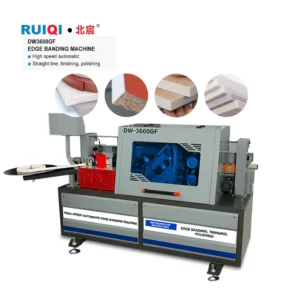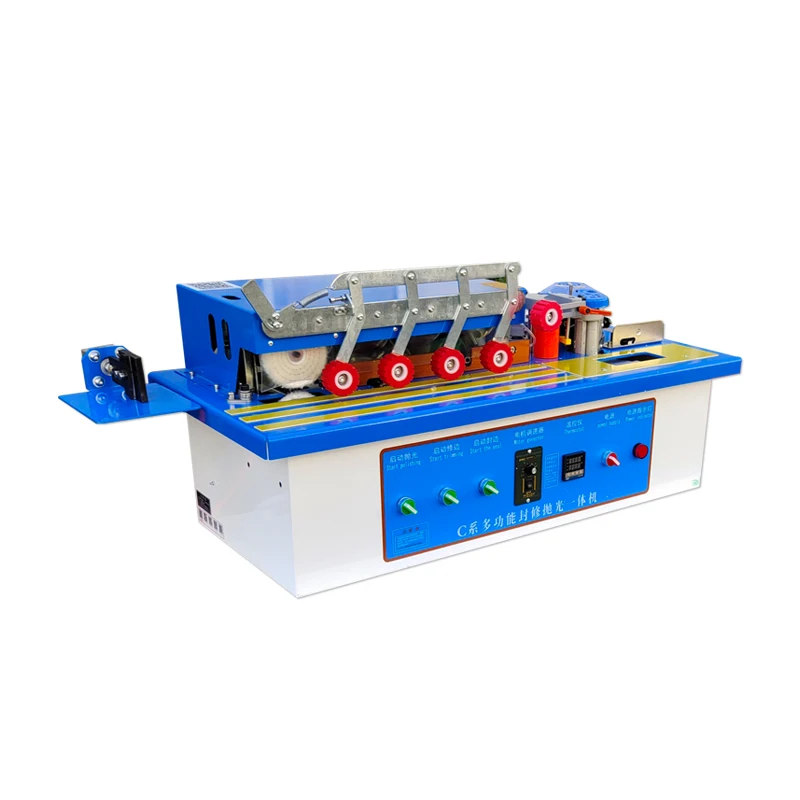
Edge banding machine
Click to enlarge
ISO 9001
CE Certified
OEM / ODM
12-Mo Warranty
Edge banding machine
Manual Portable Circular Edge Banding Machine for Woodworking | Compact
<p><strong>FX-20 Manual and Automatic Edge Banding Machine, 2500W, 0.3–3mm Banding Thickness, Curved & Straight Profiles</strong> — processes MDF, particleboard, plywood and solid wood panels with integrated trimming (650W×2) and polishing (180W×2) stations in one pass. The 1000ml glue pot supports sustained runs, while manual feed control allows precise edge finishing on irregular shapes alongside semi-automatic straight-line operation.</p> <ul> <li>Dual-mode operation for mixed panel shapes in small-batch custom furniture and on-site joinery</li> <li>Voltage (220V/380V/custom) and plug options (EU, USA, AU, UK) confirmed before shipment</li> </ul> <p>Pre-shipment factory test records with actual edge finish samples on your substrate available upon request</p>
100+
Countries
MOQ 1
Unit
15-25 Days
Lead Time
== Gate Check == identifier: FX-20 → 通过 == 标签生成 == Edge Banding Machine
220V
Curved Edge Banding
FX-20
MDF Panel
Plywood Edge Sealing
Portable Edge Banding
Process And Application
- Full OEM/ODM support -- custom logo, voltage (110V-440V), multilingual panels
- ISO 9001 & CE certified, 5 national patents, 60 professional engineers
- 12-month warranty, remote technical support & spare parts service
- Professional export packaging, customs clearance support, on-time delivery
Verified Edge Finish — The FX-20 portable edge banding machine handles both curved and straight profiles on MDF, plywood, and solid wood, giving small workshops direct control over glue-line quality without relying on external finishing services.
Technical Specifications
| Parameter | Value |
|---|---|
| Model | FX-20 |
| Product Type | Manual and Automatic Edge Banding Machine |
| Total Power | 2500W |
| Voltage & Frequency | 220V/380V/customization |
| Edge Banding Thickness | 0.3–3mm |
| Edge Banding Height | 0–50mm |
| Minimum Sheet Length | 25cm |
| Minimum Sheet Width | 10cm |
| Trimming Power | 650W × 2 |
| Polishing Power | 180W × 2 |
| Glue Pot Capacity | 1000ml |
| Air Source Pressure | 0.5–0.8MPa |
| Product Size | 100 × 46 × 41cm |
| Net Weight | 44kg |
| Assembly State | Benchtop / Portable |
| Language Options | Chinese, English, Spanish, French (customizable) |
| Plug Options | EU, USA, AU, UK |
Application Suitability
| Application | Material or Output |
|---|---|
| Custom furniture panel edge sealing | MDF and particleboard with PVC or melamine banding |
| Small-batch cabinet door finishing | Plywood panels with veneer edge band up to 3mm |
| Home decoration on-site edge work | Solid wood boards and ecological boards in curved or straight profiles |
| Joinery workshop scale-up from hand banding | Mixed substrate batches requiring trimming and polishing in one pass |
Why Glue-Line Visibility Varies Across Panel Materials
Substrate density and surface porosity determine how well molten adhesive bonds — and inconsistent glue lines usually trace back to material preparation, not machine failure.
When a workshop switches between MDF, particleboard, and plywood on the same edge banding machine woodworking process, the glue penetration behaviour shifts with each substrate. MDF absorbs adhesive differently than plywood face veneers, and particleboard edges tend to crumble under trimming pressure if feed rate is not adjusted [NEED_CITE: substrate density and edge adhesion behaviour in panel processing]. I have seen operators blame the machine for visible glue seams when the real issue was unsealed particleboard edges drawing moisture from the workshop air. The FX-20 addresses this with a 1000ml glue pot that maintains stable melt temperature across runs, paired with manual feed control that lets the operator slow down on difficult curved sections where adhesive contact time matters most.
Dual-Mode Feed Control for Mixed Panel Geometries
Most small workshops encounter a recurring problem: straight-edge panels run fine on any basic bander, but curved cabinet components force operators back to hand-held trimming tools. The FX-20 combines semi-automatic straight-line feed with manual curved-edge operation in a single benchtop unit, so a custom furniture maker can edge-band a wardrobe side panel and then move directly to a radiused shelf without switching machines. The edge banding thickness range of 0.3–3mm covers the PVC, melamine, and veneer materials these workshops typically stock.
Trimming and Polishing in a Single Compact Pass
The integrated dual trimming stations at 650W each and dual polishing stations at 180W each mean the operator completes edge finishing without moving the panel to a separate bench. For a joinery workshop producing custom pieces in small batches, this reduces handling damage and keeps the edge banding machine woodworking process contained within one workstation. The 0–50mm banding height range accommodates everything from thin shelving to thicker countertop profiles, and the benchtop footprint fits workshops where floor space is already committed to panel saws and boring equipment [NEED_CITE: workshop layout and machine footprint planning for small furniture operations].
How Core Parameters Shape Daily Output
The 2500W total power rating reflects the combined draw of the glue heater, trimming motors, polishing heads, and feed mechanism running simultaneously — important when sizing the dedicated circuit in a workshop running other equipment on the same supply. The 0.5–0.8MPa air source pressure requirement means the FX-20 needs a compressor connection, which is standard in furniture workshops but worth confirming before installation in a home-decoration or on-site environment. The 0.3–3mm edge banding thickness range directly governs material procurement: buying banding outside this range means the trimming cutters cannot achieve clean shears, leaving burrs that show on finished panels. Minimum sheet dimensions of 25cm length and 10cm width set the lower boundary for the manual push-plate feed system — smaller offcuts from nested CNC cutting may not pass through reliably. The customizable voltage and plug options ensure the machine matches local workshop supply, whether that is a 220V single-phase outlet or a 380V three-phase line, which I always confirm before any quotation goes out.
The Cost of Overlooking Configuration Before Shipment
Machines quoted without confirming local voltage and frequency arrive unusable — I once watched a full-automatic curved sealer sit dead on a Dubai workshop floor for weeks because the 415V/60Hz supply was never checked against the machine’s motor winding [NEED_CITE: electrical supply compatibility and motor rewind lead times for imported machinery]. Control panels delivered in a language the operator cannot read stall commissioning and lead to incorrect parameter settings that damage both panels and banding material. A portable unit like the FX-20 reduces these risks compared to a full-line machine, but only if voltage, plug type, and manual language are locked down before production. Workshops that skip pre-shipment sample testing often discover tolerance issues only when assembled panels show misaligned edges downstream.
What This Purchase Path Actually Delivers
The FX-20 sits within a product family that scales from entry-level benchtop units to full-function pre-milling edge banders, so a workshop can upgrade throughput later without changing supplier or retraining operators on a different control system. Voltage and language customization are handled as standard order parameters, not special requests — the plug configuration, control panel language, and operating manual all match the destination market before the crate leaves the factory. Every unit passes through four-stage quality control covering incoming component inspection, in-process assembly checks, finished-product functional testing, and pre-shipment verification with actual panel samples. Engineer-led configuration review happens within 24 hours of an inquiry, and factory visits are open for buyers who want to see trimming accuracy and glue-line quality on their own substrate before committing to an order.
Documentation & Verification
- CE declaration of conformity for the FX-20 portable edge banding unit
- ISO 9001 certificate covering the manufacturing quality management system
- Electrical schematic with confirmed voltage, frequency, and plug type
- Factory test record showing edge finish on your specified panel material
- Operation and maintenance manual in the agreed language
- Spare parts list with trimming cutter and polishing pad specifications
Installation, Commissioning & Support
- Requires a stable benchtop surface capable of supporting 44kg plus operator feed pressure
- Dedicated circuit matching confirmed voltage and plug type before connection
- Air compressor supply rated to 0.5–0.8MPa with clean, dry air filtration
- First-run parameter setting for glue temperature, feed speed, and trimming depth
- Trimming cutter and polishing pad replacement intervals documented in manual
- Spare parts availability for consumable edge banding machine woodworking process components
Before You Request a Quotation
Share your primary panel material, typical edge banding thickness, and whether your production involves curved profiles or strictly straight edges. Confirm your workshop voltage, frequency, and plug standard so the FX-20 arrives wired correctly for immediate commissioning. If you are evaluating this unit against an existing manual banding setup, note your current daily panel count and any recurring quality issues such as visible glue lines or trimming burrs. Sending sample panels for a pre-shipment edge banding test is available and often clarifies expectations faster than specification sheets alone.
Frequently Asked Questions
Q: What substrates and edge banding materials produce the best glue-line quality on this machine?
A: MDF and plywood with PVC or melamine banding in the 0.3–3mm range consistently deliver clean glue lines on the FX-20. Particleboard edges benefit from pre-sealing to prevent moisture absorption and crumbling during trimming. Veneer banding works within the thickness range but requires slower feed speeds on curved sections to maintain full adhesive contact. Sending sample panels for a factory test before shipment confirms compatibility with your specific substrate.
Q: How does curved versus straight edge banding feed differ in practice?
A: Straight-line operation on the FX-20 uses semi-automatic feed where the operator guides the panel along the fence, and the machine handles trimming and polishing automatically. Curved edge banding switches to manual push-plate feed, giving the operator direct control over contact speed and pressure around radii. The transition between modes is a physical adjustment at the workstation, not a software reconfiguration, which keeps changeover time minimal during mixed-batch production runs.
Q: What voltage and plug configurations are confirmed before shipment?
A: The FX-20 supports 220V, 380V, or custom voltage and frequency configurations matched to your workshop supply. Plug options include EU, USA, AU, and UK standards, with other regional plugs available on request. Voltage, frequency, and plug type are confirmed during the quotation stage and documented on the electrical schematic included with shipping papers. This eliminates the risk of a machine arriving with an incompatible motor winding or connector.
Q: Which trimming and polishing consumables are recommended, and what is the replacement interval?
A: The FX-20 uses standard trimming cutters paired with the dual 650W trimming stations and replaceable polishing pads on the dual 180W polishing heads. Replacement intervals depend on panel material abrasiveness and daily run volume — MDF and particleboard wear cutters faster than plywood or solid wood. The spare parts list provided with the machine specifies exact cutter and pad part numbers for reorder, and the maintenance manual includes wear-check guidelines for each consumable.
Q: Can I send sample panels for a pre-shipment edge banding test?
A: Yes, sending your actual panel material and preferred edge banding stock allows the factory to run a pre-shipment test on the FX-20 and document the results. The test record includes photographs of glue-line quality, trimming finish, and polishing result on your substrate. This step is particularly useful when processing ecological board or specialty veneers where adhesion behaviour may differ from standard MDF and PVC combinations.
Technical Specifications
| Parameter | Value |
|---|---|
| Product Name | Manual Portable Circular Edge Banding Machine for Woodworking | Compact |
| Category | Edge banding machine |
| Voltage Options | 110V / 220V / 380V / 440V (customizable) |
| Frequency | 50Hz / 60Hz (customizable) |
| Certification | ISO 9001, CE |
| MOQ | 1 Unit |
| Lead Time | 15-25 Working Days |
| Warranty | 12 Months |
| OEM / ODM | Available -- logo, color, panel language |
* Detailed technical specifications vary by model. Please contact us with your specific requirements for a complete datasheet.
Shipping & Export
-
Export Packaging
Heavy-duty wooden crate with foam padding and moisture protection
-
Shipping Methods
Sea freight (FCL/LCL), air freight, express -- we support all methods
-
Customs Support
Full documentation: CO, commercial invoice, packing list, HS code assistance
-
Port of Loading
Tianjin / Qingdao port, China -- 20 years export experience
OEM / ODM Services
-
Logo & Branding
Custom logo printing, color scheme, and nameplate engraving
-
Voltage Configuration
110V / 220V / 380V / 440V, 50Hz / 60Hz -- any region supported
-
Multilingual Panels
Control panels in English, Spanish, French, Arabic and more
-
Custom Specifications
Modified dimensions, accessories, or feature sets on request
Get a Quote
Request Product Inquiry
Fill in your details and we'll respond within 24 hours with pricing and availability.
Direct Contact
How It Works
-
1
Confirm requirements & budget
Tell us your factory scale and processing needs
-
2
Receive recommendation & quote
We match the right machine with full specs
-
3
Negotiate & place order
OEM terms, voltage, payment and delivery
-
4
Production & QC inspection
Multi-stage quality control by 60 engineers
-
5
Export packaging & shipment
Professional packing, customs clearance
-
6
After-sales support
12-month warranty, remote tech support
You May Also Like