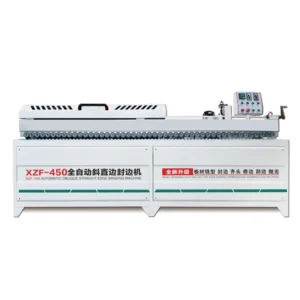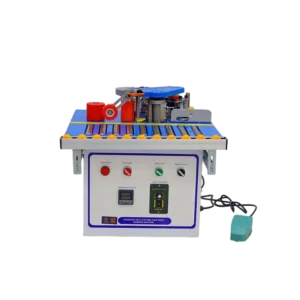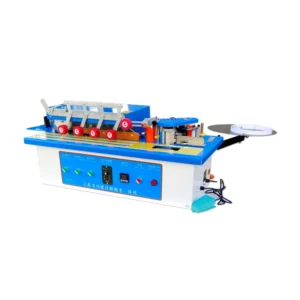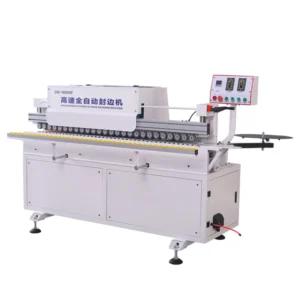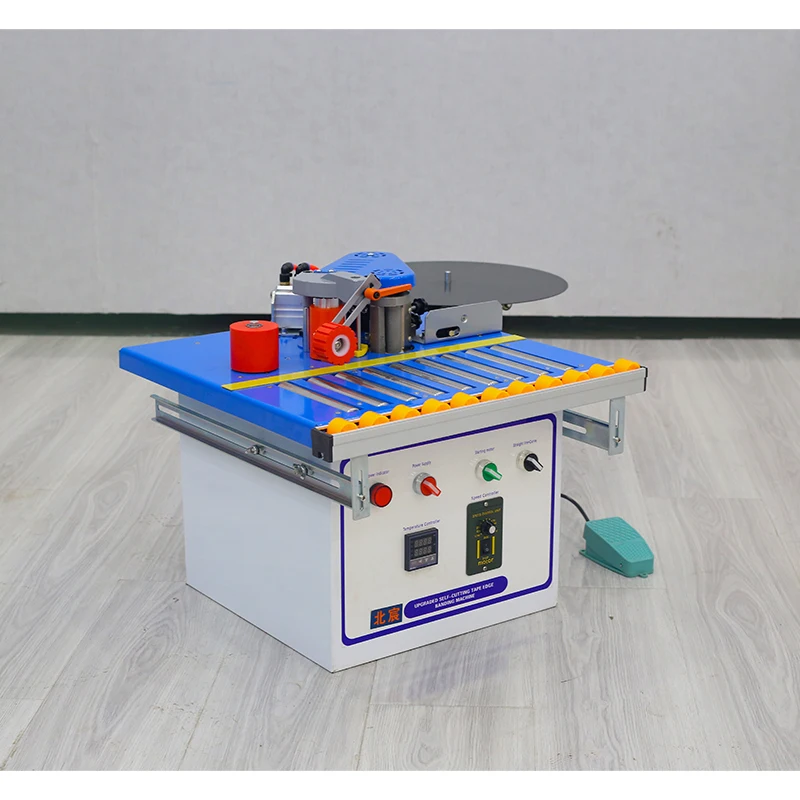
Edge banding machine
Click to enlarge
ISO 9001
CE Certified
OEM / ODM
12-Mo Warranty
Edge banding machine
MDF Plywood Straight Curved Edge Bander – Industrial Application
<p><strong>Portable Edge Banding Machine, 220V, 0.3–3mm Edge Thickness, 1000ml Glue Pot</strong> — applies hot-melt adhesive to straight and curved profiles on MDF, plywood and particleboard substrates. The 0–50mm banding height and 1000W total power support consistent seam quality across varying panel densities, reducing visible glue lines that compromise downstream assembly fit. Backed by four-stage QC with pre-shipment verification, engineer-led configuration within 24 hours, and voltage customization confirmed before dispatch162</p>
100+
Countries
MOQ 1
Unit
15-25 Days
Lead Time
220V Single Phase
Curved Edge Bander
Edge Banding Machine
Hot Melt Glue Pot
MDF Plywood Edge Sealing
Portable Edge Bander
Process Application
ST-70
- Full OEM/ODM support -- custom logo, voltage (110V-440V), multilingual panels
- ISO 9001 & CE certified, 5 national patents, 60 professional engineers
- 12-month warranty, remote technical support & spare parts service
- Professional export packaging, customs clearance support, on-time delivery
Verified Tolerance Mechanism — the ST-70 portable edge bander applies hot-melt adhesive to both straight and curved profiles with a 1000 ml glue pot, maintaining consistent seam quality across MDF and plywood substrates in small workshop environments.
Technical Specifications
| Parameter | Value |
|---|---|
| Product Type | Portable Edge Banding Machine |
| Total Power | 1000W |
| Voltage & Frequency | 220V / 380V / customization (50Hz/60Hz basis to be confirmed) |
| Edge Banding Function | Curved and straight edge banding |
| Minimum Sheet Length | 25 cm |
| Minimum Sheet Width | 3 cm |
| Edge Banding Height | 0–50 mm |
| Edge Banding Thickness | 0.3–3 mm |
| Edge Power | 20W |
| Air Source Pressure | 0.5–0.8 MPa |
| Product Size | 50 × 50 × 47 cm |
| Product Weight | 23 kg |
| Glue Pot Capacity | 1000 ml |
| Control Panel Language | Chinese / English default; Spanish and other languages customizable |
| Plug Options | EU / USA / AU / UK |
| Assembly State | Portable tabletop unit |
| Feed Speed | (basis not stated in source) |
Application Suitability
| Application | Material or Output |
|---|---|
| Cabinet panel edge sealing | MDF and particleboard with PVC or ABS edge banding |
| Custom furniture curved profiles | Plywood and ecological board with veneer or PVC strips |
| Small-batch joinery production | Solid wood panels requiring straight edge finishing |
| On-site furniture repair and re-edging | Pre-cut panels needing localized edge restoration |
| Workshop transition from manual banding | Mixed substrates at low-to-moderate daily volumes |
Why the Voltage Question Should Come Before the Price on Any Edge Banding Machine Process Application
Confirming your workshop’s available power supply before committing to a portable edge bander prevents costly delays and idle equipment on the shop floor.
I once spent weeks helping a custom cabinet shop commission a machine that arrived configured for a voltage they did not have. The transformer procurement alone stalled their production schedule significantly. With portable units like this one, the risk multiplies because these machines often serve small workshops where electrical infrastructure was never planned around industrial equipment. A single-phase 220V setup works in many regions, but three-phase 380V is required elsewhere, and frequency differences between markets can affect motor behavior and glue pot heating cycles [NEED_CITE: voltage and frequency standards by export market]. Getting this detail wrong means the edge banding machine process application you envisioned simply cannot begin until the electrical mismatch is resolved.
Glue Pot Management and Substrate Behaviour
The 1000 ml hot-melt glue pot on this unit sustains continuous batch runs on MDF and plywood panels without frequent refilling interruptions. MDF absorbs heat differently than plywood due to its density and fiber composition, which means glue temperature must be managed carefully to achieve proper adhesion without starved joints on porous surfaces or squeeze-out on sealed veneers. Operators working the edge banding machine process application across mixed materials should expect to adjust pot temperature between substrate types.
Curved Profile Handling on Benchtop Equipment
Processing curved edges on a tabletop unit requires the operator to guide the panel manually along the glue application and pressing zone. The 0–50 mm edge banding height range covers standard panel thicknesses used in cabinet and furniture production, while the 0.3–3 mm banding thickness accommodates PVC, ABS, and real wood veneer strips. Consistent pressure and feed speed along curved profiles determines whether the finished edge shows uniform adhesion or develops localized lifting at tighter radii [NEED_CITE: edge banding adhesion standards for curved wood profiles].
How Key Specifications Shape Daily Output
The 0.3–3 mm edge banding thickness range means this machine handles everything from thin veneer strips on decorative shelving to heavier PVC edges on worktop panels, but each material demands different glue pot temperatures and pressing pressures. Veneer at the lower end of that range requires careful heat management to prevent burn-through, while 3 mm PVC needs sufficient thermal energy to activate the adhesive fully. The 0.5–0.8 MPa air source pressure requirement indicates that pneumatic assistance supports the pressing mechanism, which is critical for achieving consistent contact between banding and substrate. The 25 cm minimum sheet length and 3 cm minimum width define the smallest workpiece this unit can process, which matters for workshops cutting small drawer components or narrow shelving brackets. The 1000W total power draw keeps the machine within standard single-phase circuit capacity in most markets.
The Hidden Cost of Skipping Configuration Verification
Ordering a portable edge bander without confirming voltage, plug type, and control panel language creates problems that only surface after the crate arrives. A machine wired for 380V three-phase in a workshop with only single-phase 220V becomes a heavy paperweight until an electrician resolves the mismatch. Control panels displaying only Chinese characters stall commissioning when the operator cannot navigate temperature settings or fault codes. These are not theoretical concerns — they represent the most common installation failures I have encountered with edge banding machines of this class across different export markets [NEED_CITE: CE machinery directive requirements for industrial equipment].
Why Procurement Through This Channel Matters
In-house manufacturing with patented cutting mechanisms means the glue application and pressing components are built and tested under one roof rather than assembled from unrelated third-party subassemblies. Voltage, plug configuration, and control panel language are confirmed as standard customization items before production begins, not treated as afterthoughts. The four-stage QC process includes pre-shipment verification where the machine runs actual edge banding material on your specified substrate before crating. Engineer-led configuration recommendation ensures the quotation addresses your workshop’s electrical infrastructure and material mix rather than shipping a default build. Factory visits are available for buyers who want to witness the edge banding machine process application on their own sample panels before committing.
Documentation & Verification
- CE declaration of conformity covering the portable edge bander unit
- Machine specification sheet listing confirmed voltage and plug configuration
- Electrical schematic with wiring diagram matching your workshop supply
- Factory test record showing edge banding results on your specified panel material and thickness
- Operation and maintenance manual delivered in your agreed operator language
- Spare parts list identifying consumable components and replacement intervals
Installation, Commissioning & Support
- Requires a dedicated circuit matching the confirmed 220V or 380V supply and plug type
- Benchtop placement on a stable work surface accommodating the 50 × 50 × 47 cm footprint
- Compressed air connection at 0.5–0.8 MPa for pneumatic pressing mechanism activation
- Initial glue pot temperature calibration based on your chosen adhesive type and substrate
- Operator training on manual feed technique for consistent curved profile results
- Spare glue pot elements and pressing rollers identified for routine replacement scheduling
Preparing Your Inquiry for Accurate Configuration
To ensure the quotation matches your workshop reality, share the panel substrates you process most frequently along with their typical thickness range. Confirm your available voltage and frequency at the point where the machine will be installed, including whether single-phase or three-phase supply is accessible. Specify the edge banding materials you intend to run — PVC, ABS, or veneer — and whether curved profiles are part of your regular production mix. If you need the control panel in a language beyond Chinese or English, state this upfront so it is configured before shipment.
Frequently Asked Questions
Q: Which hot-melt adhesive type works best with MDF versus plywood on this portable edge bander?
A: EVA adhesives suit most MDF applications due to good gap-filling on porous fiber surfaces, while PUR adhesives offer stronger moisture resistance for plywood used in humid environments. Glue pot temperature must match the adhesive manufacturer’s activation range. Running test pieces on your actual substrate before committing to a production batch confirms bond quality and helps avoid starved joints or excessive squeeze-out.
Q: How does edge banding on MDF differ from plywood in terms of surface preparation and adhesion?
A: MDF edges are more porous and absorb glue readily, which can starve the bond line if pot temperature is too low or feed speed too fast. Plywood edges expose alternating grain directions that require consistent pressing pressure to achieve uniform contact. Light sanding of plywood edges before banding removes loose fibers that would otherwise compromise adhesion on the finished edge banding machine process application.
Q: Can this unit handle veneer edge banding at 0.3 mm without causing burn-through or delamination?
A: Thin veneer at 0.3 mm requires lower glue pot temperatures and careful manual feed speed to prevent heat damage to the wood surface. The 20W edge power and adjustable temperature settings allow operators to dial in conditions suitable for delicate materials. Test runs on scrap veneer pieces help establish the correct temperature and pressure before processing finished components.
Q: How should this portable bander integrate with upstream panel sizing and downstream trimming?
A: Panels should be cut to final dimensions on a sliding table saw or panel saw before edge banding, as the 25 cm minimum sheet length defines the smallest workpiece this unit accepts. Downstream trimming of excess banding is typically done with a hand trimmer or dedicated trimming station, since this portable unit focuses on glue application and pressing rather than finishing operations.
Q: What feed method does the ST-70 use, and how does it affect edge consistency on curved profiles?
A: The feed method is manual, with the operator guiding the panel through the glue application and pressing zone. Consistent hand speed and steady pressure along curved profiles determine edge uniformity. Tighter radii require slower feed rates to maintain full adhesive contact, making operator skill a significant factor in output quality for curved edge banding applications.
Technical Specifications
| Parameter | Value |
|---|---|
| Product Name | MDF Plywood Straight Curved Edge Bander – Industrial Application |
| Category | Edge banding machine |
| Voltage Options | 110V / 220V / 380V / 440V (customizable) |
| Frequency | 50Hz / 60Hz (customizable) |
| Certification | ISO 9001, CE |
| MOQ | 1 Unit |
| Lead Time | 15-25 Working Days |
| Warranty | 12 Months |
| OEM / ODM | Available -- logo, color, panel language |
* Detailed technical specifications vary by model. Please contact us with your specific requirements for a complete datasheet.
Shipping & Export
-
Export Packaging
Heavy-duty wooden crate with foam padding and moisture protection
-
Shipping Methods
Sea freight (FCL/LCL), air freight, express -- we support all methods
-
Customs Support
Full documentation: CO, commercial invoice, packing list, HS code assistance
-
Port of Loading
Tianjin / Qingdao port, China -- 20 years export experience
OEM / ODM Services
-
Logo & Branding
Custom logo printing, color scheme, and nameplate engraving
-
Voltage Configuration
110V / 220V / 380V / 440V, 50Hz / 60Hz -- any region supported
-
Multilingual Panels
Control panels in English, Spanish, French, Arabic and more
-
Custom Specifications
Modified dimensions, accessories, or feature sets on request
Get a Quote
Request Product Inquiry
Fill in your details and we'll respond within 24 hours with pricing and availability.
Direct Contact
How It Works
-
1
Confirm requirements & budget
Tell us your factory scale and processing needs
-
2
Receive recommendation & quote
We match the right machine with full specs
-
3
Negotiate & place order
OEM terms, voltage, payment and delivery
-
4
Production & QC inspection
Multi-stage quality control by 60 engineers
-
5
Export packaging & shipment
Professional packing, customs clearance
-
6
After-sales support
12-month warranty, remote tech support
You May Also Like