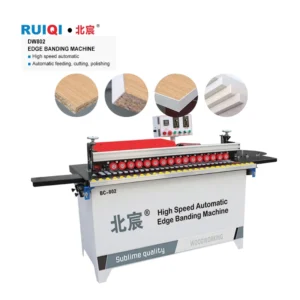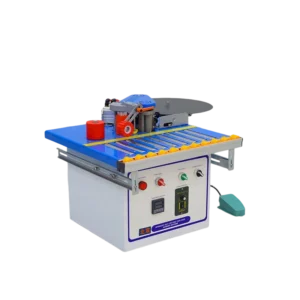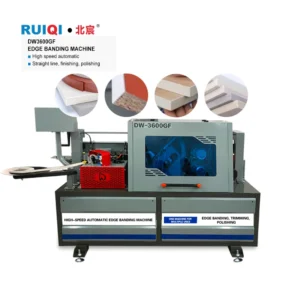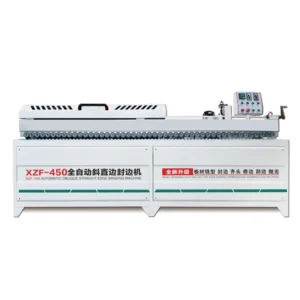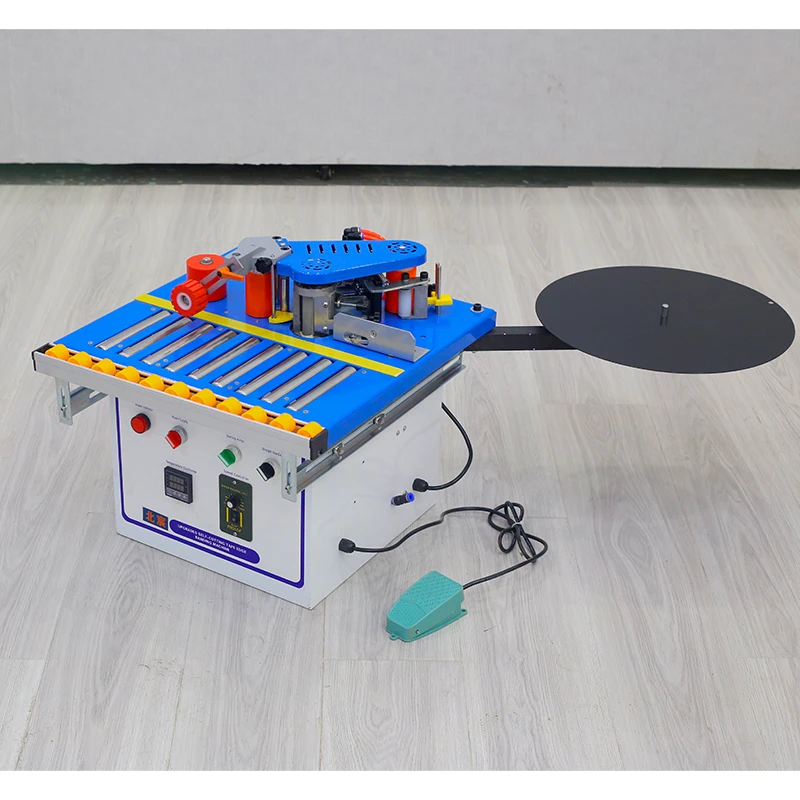
Edge banding machine
Click to enlarge
ISO 9001
CE Certified
OEM / ODM
12-Mo Warranty
Edge banding machine
Mini Portable Edge Banding Machine for MDF Plywood – Small Workshop
<p><strong>Mini Portable Edge Bander Machine</strong>, 1000W, 0.3–3mm Edge Banding Thickness, 0.5–0.8Mpa Air Pressure — engineered for consistent glue line control on MDF, plywood, and particleboard. Curved and straight edge banding in one compact unit, with 1000ml glue pot capacity and voltage customization (220V/380V) for workshop or on-site use. Manual available in English, Spanish, or your preferred language. Request factory test record on your substrate and tape material before purchase to verify bond quality and edge tolerance in real conditions.</p>
100+
Countries
MOQ 1
Unit
15-25 Days
Lead Time
220V 380V
Curved And Straight
Edge Banding Machine
Handheld Edge Bander
MDF Plywood
Mini Portable Bander
Process And Application
- Full OEM/ODM support -- custom logo, voltage (110V-440V), multilingual panels
- ISO 9001 & CE certified, 5 national patents, 60 professional engineers
- 12-month warranty, remote technical support & spare parts service
- Professional export packaging, customs clearance support, on-time delivery
Portable Precision Control — A handheld edge bander engineered for variable substrates, giving small workshops direct command over glue temperature and feed pressure on MDF, plywood, and particleboard without committing to a full automatic line.
Technical Specifications
| Parameter | Value |
|---|---|
| Product Type | Handheld Mini Edge Banding Machine |
| Total Power | 1000W |
| Voltage Options | 220V / 380V / Custom |
| Edge Banding Thickness | 0.3–3mm |
| Edge Banding Height | 0–50mm |
| Minimum Sheet Length | 25cm |
| Minimum Sheet Width | 3cm |
| Glue Pot Capacity | 1000ml |
| Air Source Pressure | 0.5–0.8 MPa |
| Product Size | 50 × 50 × 47 cm |
| Net Weight | 23kg |
| Standard Features | Curved and straight edge banding |
| Plug Options | EU, USA, AU, UK |
| Language Options | Chinese, English, Spanish, or customized |
Application Suitability
| Application | Material or Output |
|---|---|
| Small workshop cabinet door edging | MDF and melamine-faced particleboard with PVC tape |
| On-site home decoration carpentry | Plywood and ecological board cut to fit in the field |
| Furniture repair and re-banding | Solid wood panels and aged ABS edge strips |
| Custom one-off curved components | Shaped MDF or plywood templates with 0.3–3mm tape |
Why Substrate Variability Changes the Edge Banding Process
The edge banding machine process and application outcome depends more on what the panel is made of than on the machine itself.
Early in my field support work across Africa and South Asia, I watched a customer run a trial on clean MDF, sign off on the sample, and then push a batch of low-grade particleboard full of bark and resin pockets through the same settings. The result was black glue lines, chipped trim edges, and an entire run of cabinet doors pulled from the assembly bench. The machine did not fail — the substrate did. When you operate a handheld edge banding machine process and application workflow, you carry that risk directly to the workpiece, and controlling glue temperature, air pressure, and feed speed at the panel edge becomes the primary defense against costly rework. [NEED_CITE: effect of particleboard resin content on hot melt adhesion]
Substrate Behaviour Across MDF, Plywood and Particleboard
MDF absorbs heat evenly and bonds reliably with standard EVA hot melt at moderate temperatures, making it the most forgiving material in the edge banding machine process and application range. Plywood introduces veneer grain direction and occasional surface voids that require slightly higher glue temperature and deliberate feed pressure to maintain a continuous bond line. Particleboard is the most unpredictable; its porous, uneven surface can starve the glue joint or allow resin contamination to break adhesion entirely. Understanding these differences before setting up the handheld unit prevents the black glue lines and edge lift that only become visible after trimming.
Curved and Straight Edges in a Single Workflow
The ability to band both curved and straight profiles without switching machines matters for workshops that produce shaped cabinet fronts, rounded shelving, or templated components for site installation. When working a curved edge, the operator controls feed direction and pressure manually, which means glue coverage and tape conformity depend on consistent hand speed around the radius. [NEED_CITE: minimum radius recommendations for handheld PVC edge banding] Straight edges are more straightforward but still demand even pressure to avoid air pockets under thinner 0.3mm melamine tape. The edge banding machine process and application flexibility here replaces the compromise of carrying separate tools for each profile type.
Reading the Specifications Against Your Production Reality
The 1000W total power rating governs how quickly the glue pot reaches working temperature and how well it holds that temperature during continuous use — a lower wattage unit would struggle to maintain consistent viscosity across a batch of panels in a cold workshop. The 0.3–3mm edge banding thickness range covers the full spectrum from thin melamine tape for invisible joints on light cabinetry up to 3mm PVC or ABS for impact-resistant edges on workbench tops and retail fixtures. The 0.5–0.8 MPa air source pressure requirement means this unit needs a dedicated compressor line; insufficient pressure reduces roller contact force and produces the inconsistent glue lines that show up only after the trim pass. The 1000ml glue pot capacity sustains extended sessions without mid-batch refills, though operators should monitor pot level when switching between tape thicknesses to avoid running dry on longer panels.
The Cost of Skipping a Substrate Test Run
Running production panels without a documented test on your actual substrate batch is the single most common reason handheld edge banders return to the service bench with complaints of poor adhesion. The glue that bonds perfectly to the MDF sample shipped with the machine may fail entirely on particleboard with higher moisture content or resin contamination from a different supplier. Operators then compensate by raising glue temperature beyond the tape’s rated range, which degrades the PVC or ABS material and creates a brittle joint that cracks during transport. [NEED_CITE: hot melt glue temperature degradation on PVC edge banding] These failures rarely appear at the banding station — they surface in assembly, packing, or after the product reaches the customer.
Manufacturing Depth Behind a Compact Machine
Four-stage quality control covering incoming material, in-process checks, finished product inspection, and pre-shipment verification applies to this handheld unit with the same rigor used on full automatic lines, because tolerance drift on a small machine is harder to correct in the field. Patented cutting and trimming mechanisms adapted from the automatic range deliver edge finish quality that small workshop operators can verify visually without precision instruments. Voltage and plug customization — available in 220V and 380V with EU, USA, AU, and UK plug configurations — eliminates the situation where a machine arrives and cannot be powered without a transformer. Operation manuals are produced in the agreed language before dispatch, preventing the commissioning delays that happen when an operator cannot read the glue temperature scale. CE compliance documentation is prepared for each unit, supporting customs clearance and local safety inspections in regulated markets.
Documentation & Verification
- Factory test record showing edge banding quality on your specified substrate and tape type
- Electrical schematic confirming voltage, plug type, and frequency matched to your workshop supply
- Operation and maintenance manual in the agreed language with glue temperature reference tables
- Spare parts list covering glue pot, roller assembly, and heating element for long-term continuity
- CE declaration of conformity supporting import customs and local safety compliance
Installation, Commissioning & Support
- Requires a stable 220V or 380V circuit matching the ordered configuration, verified before first power-on
- Air compressor line must deliver 0.5–0.8 MPa consistently; undersized compressors cause glue line variation
- Unit weighs 23kg and fits a standard workbench; no floor anchoring or foundation preparation needed
- First run should use scrap panels of the actual production substrate to set glue temperature and feed speed
- Glue pot and roller assembly require periodic cleaning; schedule depends on daily tape thickness changes
- Spare heating element and glue pot replacements recommended in initial order to avoid production stops
How to Scope Your Enquiry
When requesting a quotation, include the substrate type you will run most often — MDF, plywood, particleboard, or a mix — along with the edge tape material and thickness range your products require. Specify your workshop voltage and frequency so the electrical configuration is built correctly before shipment, and note the operator language for the control panel and manual. If your production includes curved profiles, provide the minimum radius and panel thickness so the edge banding machine process and application can be validated against your component geometry.
Frequently Asked Questions
Q: What glue temperature and feed technique suit different substrates?
A: MDF generally bonds well at standard EVA hot melt temperatures with moderate feed speed. Plywood needs slightly higher temperature to compensate for grain voids, while particleboard requires careful temperature control to avoid resin contamination breaking the bond. Always run test pieces on your actual substrate batch before committing to production settings.
Q: How does hot melt glue selection affect edge quality on PVC vs ABS vs melamine tape?
A: Thinner melamine tape demands precise temperature control to avoid glue squeeze-out that creates visible lines. PVC and ABS tapes in the 1–3mm range tolerate a wider temperature window but require consistent feed pressure to ensure full roller contact. The glue type must match the tape backing chemistry for reliable long-term adhesion.
Q: Can this handheld bander handle curved panels, and what is the minimum radius?
A: The unit supports both curved and straight edge banding within the 0.3–3mm tape thickness and 0–50mm height range. Minimum practical radius depends on tape thickness and stiffness — thinner tape conforms to tighter curves. Request a sample test on your specific curved component profile before ordering.
Q: What air source pressure is needed, and does insufficient pressure affect quality?
A: The machine requires 0.5–0.8 MPa from a stable compressor supply. Pressure below this range reduces roller contact force against the panel edge, producing intermittent glue coverage and visible gaps in the bond line. A dedicated compressor line is recommended rather than sharing with other pneumatic tools.
Q: How do I verify edge banding quality before committing to production volume?
A: Request a factory test record produced on your actual substrate with your chosen tape material. Inspect the sample for continuous glue coverage, clean trim edges, and no visible glue lines. Conduct a peel test on the sample to confirm bond strength meets your assembly requirements before scaling to full production runs.
Technical Specifications
| Parameter | Value |
|---|---|
| Product Name | Mini Portable Edge Banding Machine for MDF Plywood – Small Workshop |
| Category | Edge banding machine |
| Voltage Options | 110V / 220V / 380V / 440V (customizable) |
| Frequency | 50Hz / 60Hz (customizable) |
| Certification | ISO 9001, CE |
| MOQ | 1 Unit |
| Lead Time | 15-25 Working Days |
| Warranty | 12 Months |
| OEM / ODM | Available -- logo, color, panel language |
* Detailed technical specifications vary by model. Please contact us with your specific requirements for a complete datasheet.
Shipping & Export
-
Export Packaging
Heavy-duty wooden crate with foam padding and moisture protection
-
Shipping Methods
Sea freight (FCL/LCL), air freight, express -- we support all methods
-
Customs Support
Full documentation: CO, commercial invoice, packing list, HS code assistance
-
Port of Loading
Tianjin / Qingdao port, China -- 20 years export experience
OEM / ODM Services
-
Logo & Branding
Custom logo printing, color scheme, and nameplate engraving
-
Voltage Configuration
110V / 220V / 380V / 440V, 50Hz / 60Hz -- any region supported
-
Multilingual Panels
Control panels in English, Spanish, French, Arabic and more
-
Custom Specifications
Modified dimensions, accessories, or feature sets on request
Get a Quote
Request Product Inquiry
Fill in your details and we'll respond within 24 hours with pricing and availability.
Direct Contact
How It Works
-
1
Confirm requirements & budget
Tell us your factory scale and processing needs
-
2
Receive recommendation & quote
We match the right machine with full specs
-
3
Negotiate & place order
OEM terms, voltage, payment and delivery
-
4
Production & QC inspection
Multi-stage quality control by 60 engineers
-
5
Export packaging & shipment
Professional packing, customs clearance
-
6
After-sales support
12-month warranty, remote tech support
You May Also Like