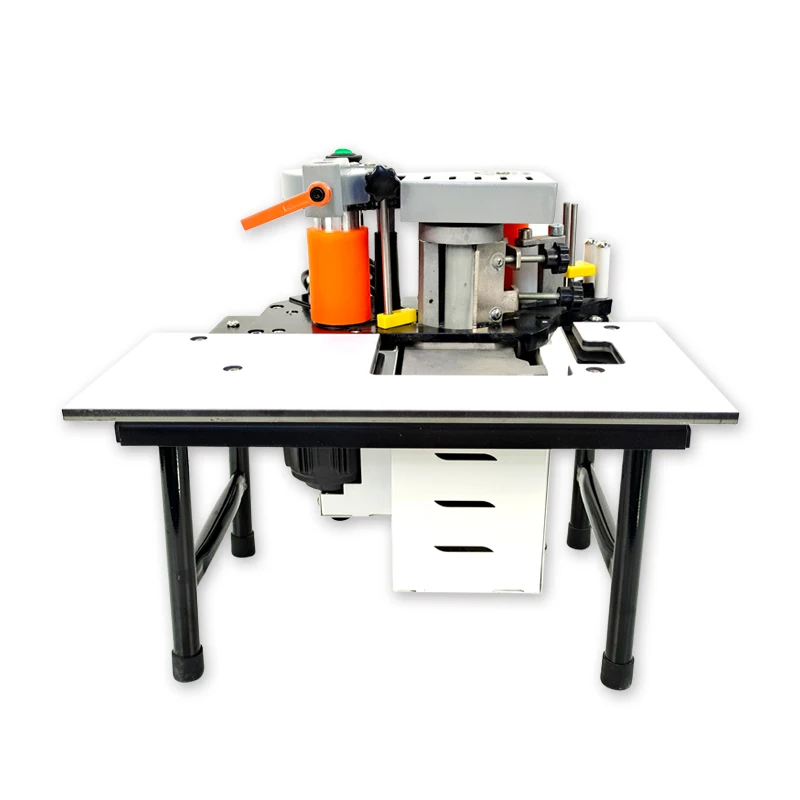
Edge banding machine
Click to enlarge
ISO 9001
CE Certified
OEM / ODM
12-Mo Warranty
Edge banding machine
Portable Edge Banding Machine ST-30 | Small Workshop
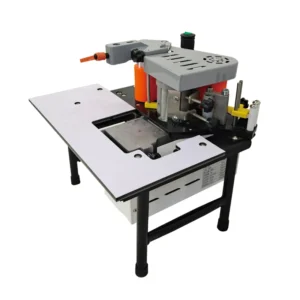
<p><strong>ST-30 Portable Edge Banding Machine, 220V/380V, 0.3–3mm Banding Thickness</strong> — handles straight and curved edges across ABS, PVC, melamine and veneer tapes, with a 1000ml glue pot and 0.5–0.8 MPa air supply for consistent roller contact on varied substrates. Designed for small workshops and on-site interior work where edge quality depends on glue temperature control, substrate preparation and tape-to-material matching on MDF, particleboard and plywood.</p> <ul> <li>CE certified with factory test records on your chosen substrate and tape material</li> <li>Operation manual provided in your operator's language with glue pot maintenance procedures</li> <li>Engineer-led voltage and specification confirmation before production, 24-hour formal quotation</li> </ul>
100+
Countries
MOQ 1
Unit
15-25 Days
Lead Time
220V 380V
Curved Edge Banding
MDF Panel
Portable Edge Banding Machine
Process And Application
Small Workshop
ST-30
- Full OEM/ODM support -- custom logo, voltage (110V-440V), multilingual panels
- ISO 9001 & CE certified, 5 national patents, 60 professional engineers
- 12-month warranty, remote technical support & spare parts service
- Professional export packaging, customs clearance support, on-time delivery
[Verified Tolerance Control] — ST-30 portable edge bander holds edge application within consistent limits across straight and curved profiles, validated at pre-shipment testing.
Technical Specifications
| Parameter | Value |
|---|---|
| Model | ST-30 |
| Product Type | Portable Edge Banding Machine |
| Rated Power | 1000W |
| Voltage & Frequency | 220V/380V/customization |
| Control System | Manual operation |
| Overall Dimensions (L×W×H) | 38×35×35 cm |
| Net Weight | 12 kg |
| Minimum Sheet Length | 25 cm |
| Minimum Sheet Width | 3 cm |
| Edge Banding Height Range | 0–50 mm |
| Edge Banding Thickness Range | 0.3–3 mm |
| Edge Banding Tape Compatibility | ABS, PVC, Melamine, Veneer |
| Edge Type | Straight and curved edge |
| Edge Power | 20W |
| Air Source Pressure | 0.5–0.8 MPa |
| Glue Pot Capacity | 1000 ml |
| Language Options | Chinese, English; Spanish and others customizable |
| Plug Options | EU, USA, AU, UK |
Application Suitability
| Application | Material or Output |
|---|---|
| On-site interior decoration edge banding | MDF, particleboard, plywood panels with PVC or veneer tape |
| Small furniture workshop production | ABS and melamine banding on straight cabinet components |
| Curved edge joinery operations | Veneer and PVC tape on radius panels and shaped cabinet doors |
| Custom furniture making | Mixed substrate edge finishing with interchangeable tape materials |
Why Glue Temperature Defines the Edge Banding Process Portable Edge Bander Buyers Overlook
The tape material you run determines the glue pot behaviour required, and ignoring that relationship guarantees visible glue lines on the final panel.
I remember a job where a customer ran PVC tape all morning without issue, then switched to melamine paper banding without adjusting the glue pot temperature. The entire batch came back with whitened glue lines that failed at the assembly station. On a portable unit where the operator controls the workflow manually, understanding how different banding materials interact with adhesive viscosity becomes the difference between assembly-ready panels and rework. This is where the edge banding process portable edge bander setups either succeed or expose gaps in operator training [NEED_CITE: thermal adhesion requirements for melamine versus PVC edge banding materials].
Substrate Behaviour and Tape Selection
Running ABS on particleboard presents different challenges than applying veneer to plywood. The porous nature of particleboard absorbs adhesive differently, requiring attention to glue application thickness. The ST-30 portable edge bander accommodates tape thickness from 0.3 mm to 3 mm, giving operators range to match banding weight to substrate density without switching machines.
Air Pressure and Curved Profile Contact
Maintaining consistent roller pressure on curved edges requires stable air supply. The 0.5–0.8 MPa requirement ensures the pressure roller maintains contact across radius profiles without losing adhesion at the curve apex or trailing edge [NEED_CITE: pneumatic pressure standards for portable edge banding equipment].
Glue Pot Capacity and Sustained Operation
A 1000 ml glue pot supports extended banding sessions without interrupting workflow for refills. For small workshops running mixed batches of straight and curved components, this capacity reduces thermal cycling of the adhesive, which preserves bond consistency across the production run. The edge banding process portable edge bander operators follow depends heavily on maintaining stable glue temperature throughout the job.
Glue Pot Temperature and Material Compatibility
Different banding materials demand different adhesive temperatures. PVC typically runs at lower temperatures than melamine paper, while veneer requires careful heat management to prevent scorching or insufficient wetting. On manual portable units, the operator must match pot settings to tape composition before starting production. Feed speed, ambient workshop temperature, and substrate moisture content all influence the effective bond temperature at the point of contact [NEED_CITE: adhesive temperature ranges for woodworking edge banding materials].
The Cost of Skipping Voltage Confirmation
Ordering a portable edge bander without confirming local voltage and frequency results in equipment that arrives unusable or requires expensive transformers. A 1000W unit configured for 380V three-phase will not function on a 220V single-phase workshop supply, and the motor may sustain damage during attempted startup. The ST-30 offers 220V/380V/customization options, but this selection must happen before production begins, not after the machine sits on the workshop floor [NEED_CITE: voltage and frequency standards by export market].
Why Procurement Through This Channel
Engineer-led configuration: Voltage, plug type, and control language are confirmed during quotation, matching your workshop electrical supply and operator requirements before the machine ships.
Pre-shipment verification: Each ST-30 undergoes factory testing on sample materials, with test records documenting edge adhesion and trim quality on your specified substrate and tape combination.
Specification transparency: Banding thickness range, glue pot capacity, and air pressure requirements are documented in the machine specification sheet, so buyers compare units on verified parameters rather than claimed performance.
Material compatibility testing: Sample edge banding runs on your chosen substrate and tape material validate the configuration before the order enters production, reducing commissioning surprises.
Documentation & Verification
- Machine specification sheet listing banding thickness range and glue pot capacity
- Electrical schematic confirming voltage and plug configuration for your market
- Factory test record on your panel substrate and tape material before dispatch
- Operation manual in agreed language covering glue pot cleaning and banding adjustment
Installation, Commissioning & Support
- 220V/380V power requirement matching your workshop electrical supply with dedicated circuit
- Tabletop placement on stable surface within 38×35×35 cm footprint
- Air compressor connection at 0.5–0.8 MPa for consistent pressure roller operation
- Initial glue pot temperature calibration for your chosen ABS, PVC, melamine, or veneer tape
- Operator training on curved edge feed technique and glue viscosity management
Request Configuration Recommendation
To receive an accurate quotation, provide your primary substrate material, the banding tape types you run most frequently, your workshop voltage and frequency, and the control panel language your operators require. Specify whether your production involves primarily straight edges, curved profiles, or a mix of both.
Frequently Asked Questions
Q: How does banding tape material affect glue selection and pot temperature on a portable bander?
A: PVC typically requires lower adhesive temperatures than melamine paper, while veneer demands careful heat control to prevent scorching. On the ST-30 portable edge bander, operators must match glue pot settings to tape composition before starting production, as manual units lack automatic temperature compensation. Workshop ambient temperature and substrate moisture content also influence effective bond temperature at the contact point.
Q: What substrate preparation avoids visible glue lines on MDF and particleboard?
A: Panel edges must be clean, dry, and free from dust or oil residue before banding. Particleboard’s porous surface absorbs adhesive differently than MDF, sometimes requiring adjustment to glue application thickness. The ST-30 edge banding process portable edge bander workflow includes checking substrate condition and adjusting roller pressure to maintain consistent contact across the panel edge profile.
Q: Can the ST-30 handle curved edges on cabinet doors and radius panels?
A: The ST-30 supports both straight and curved edge applications with stable air pressure at 0.5–0.8 MPa maintaining roller contact across radius profiles. Minimum curve radius depends on tape thickness and material flexibility, with thinner veneer and PVC tapes accommodating tighter curves than rigid ABS banding at the upper 3 mm thickness limit.
Q: What downstream trimming and finishing steps follow portable bander application?
A: Portable edge banders apply tape but typically require separate trimming and finishing operations. Operators use hand trimmers or stationary end trimmers to remove excess banding, followed by edge scraping or sanding to achieve assembly-ready profiles. The ST-30 edge banding process portable edge bander output quality determines how much manual finishing is needed to reach final specification.
Technical Specifications
| Parameter | Value |
|---|---|
| Product Name | Portable Edge Banding Machine ST-30 | Small Workshop |
| Category | Edge banding machine |
| Voltage Options | 110V / 220V / 380V / 440V (customizable) |
| Frequency | 50Hz / 60Hz (customizable) |
| Certification | ISO 9001, CE |
| MOQ | 1 Unit |
| Lead Time | 15-25 Working Days |
| Warranty | 12 Months |
| OEM / ODM | Available -- logo, color, panel language |
* Detailed technical specifications vary by model. Please contact us with your specific requirements for a complete datasheet.
Shipping & Export
-
Export Packaging
Heavy-duty wooden crate with foam padding and moisture protection
-
Shipping Methods
Sea freight (FCL/LCL), air freight, express -- we support all methods
-
Customs Support
Full documentation: CO, commercial invoice, packing list, HS code assistance
-
Port of Loading
Tianjin / Qingdao port, China -- 20 years export experience
OEM / ODM Services
-
Logo & Branding
Custom logo printing, color scheme, and nameplate engraving
-
Voltage Configuration
110V / 220V / 380V / 440V, 50Hz / 60Hz -- any region supported
-
Multilingual Panels
Control panels in English, Spanish, French, Arabic and more
-
Custom Specifications
Modified dimensions, accessories, or feature sets on request
Get a Quote
Request Product Inquiry
Fill in your details and we'll respond within 24 hours with pricing and availability.
Direct Contact
How It Works
-
1
Confirm requirements & budget
Tell us your factory scale and processing needs
-
2
Receive recommendation & quote
We match the right machine with full specs
-
3
Negotiate & place order
OEM terms, voltage, payment and delivery
-
4
Production & QC inspection
Multi-stage quality control by 60 engineers
-
5
Export packaging & shipment
Professional packing, customs clearance
-
6
After-sales support
12-month warranty, remote tech support
You May Also Like