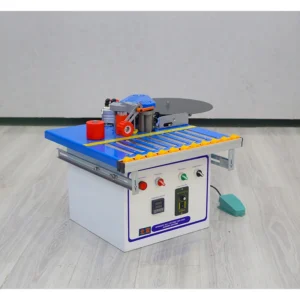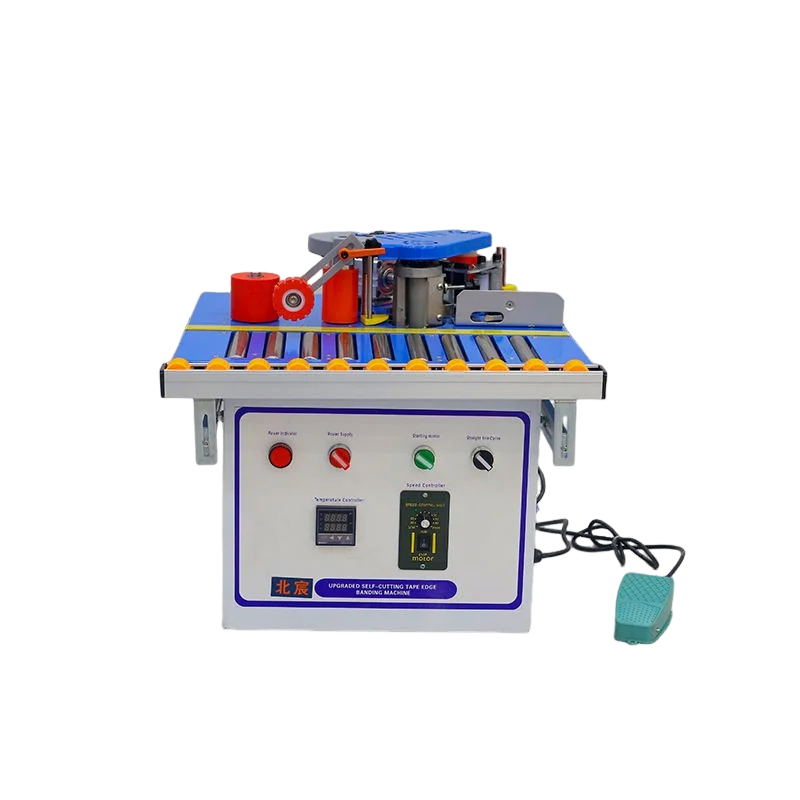
Edge banding machine
Click to enlarge
ISO 9001
CE Certified
OEM / ODM
12-Mo Warranty
Edge banding machine
PVC Veneer Melamine Portable Edge Bander – Industrial Application
<p><strong>Portable Edge Banding Machine, 220V/380V, 0.3–3mm Tape Thickness, Curved & Straight Edge</strong> — designed for on-site carpentry and small joinery workshops where full-size automated edge banders are impractical. Handles MDF, plywood, particleboard and solid wood with consistent glue application on both curved and straight profiles.</p> <ul> <li><strong>1000ml glue pot capacity</strong> supports continuous small-batch runs without frequent refills</li> <li>Multilingual control panel and voltage customization available to match local power supply and operator language</li> <li>Backed by four-stage QC with pre-shipment verification and engineer-led configuration support</li> </ul>
100+
Countries
MOQ 1
Unit
15-25 Days
Lead Time
220V 380V
Curved Edge Banding
Edge Banding Machine
MDF Panel
On-Site Carpentry
Portable Edge Bander
Process And Application
ST-70
- Full OEM/ODM support -- custom logo, voltage (110V-440V), multilingual panels
- ISO 9001 & CE certified, 5 national patents, 60 professional engineers
- 12-month warranty, remote technical support & spare parts service
- Professional export packaging, customs clearance support, on-time delivery
Precision Ground Components — verified tolerance holding across curved and straight edge profiles through a four-stage QC protocol covering incoming material, in-process assembly, finished product and pre-shipment testing.
Technical Specifications
| Parameter | Value |
|---|---|
| Product Type | Portable Edge Banding Machine |
| Total Power | 1000W |
| Voltage Options | 220V / 380V / customization available |
| Edge Banding Mode | Curved and straight edge banding |
| Minimum Sheet Length | 25 cm |
| Minimum Sheet Width | 3 cm |
| Edge Banding Height Range | 0–50 mm |
| Edge Banding Thickness Range | 0.3–3 mm |
| Glue Pot Capacity | 1000 ml |
| Air Source Pressure | 0.5–0.8 MPa |
| Product Dimensions | 50 × 50 × 47 cm |
| Product Weight | 23 kg |
| Control Panel Language | Chinese, English, Spanish, or customized |
| Certification | CE |
Application Suitability
| Application | Material or Output |
|---|---|
| Custom cabinet edge sealing in small workshops | MDF and particleboard panels with PVC or melamine tape |
| On-site home decoration carpentry | Plywood and ecological board requiring curved profile sealing |
| Furniture repair and rework stations | Solid wood board with veneer edge banding up to 3 mm |
| Small-batch joinery production | Mixed substrate runs switching between straight and curved edges |
Why the Glue Temperature Question Should Come Before the Order
Mismatched glue temperature and tape thickness is the most common reason portable edge banders underperform on site.
I worked with a custom cabinet maker who received a portable unit and ran 0.6 mm PVC tape through it without adjusting the glue pot. The edges peeled within hours because the thermal transfer was insufficient for that thickness on particleboard. After walking them through temperature and pressure roller calibration, adhesion held properly — but that downtime could have been avoided entirely if the material spec had been confirmed before dispatch [NEED_CITE: edge banding adhesion failure causes by substrate type]. This edge banding process portable machine requires the operator to understand their tape and substrate combination before the first run.
Dual-Mode Sealing in One Compact Footprint
Most small workshops cannot justify a full-size automated edge bander, yet manual iron-on tape produces inconsistent results across curved profiles. This portable unit handles both straight and curved edges in a single setup, which eliminates the need for separate tooling when a cabinet door meets a radiused panel. The 0.3–3 mm thickness range covers the PVC, veneer and melamine tapes that most joinery shops stock, and the edge banding process portable machine transitions between modes without mechanical reconfiguration.
Glue Delivery and Thermal Consistency
The 1000 ml glue pot supports continuous small-batch operation without frequent refills, which matters when a carpenter is sealing multiple panels in sequence on a job site. Maintaining stable glue temperature across a run prevents the adhesion drop-off that occurs when the pot runs low and the heating element cycles. Shops running thicker PVC or real wood veneer tape need to monitor pot levels more closely, since these materials demand higher thermal transfer and leave less margin for temperature fluctuation [NEED_CITE: glue pot thermal recovery rates in portable edge banders].
What the Thickness and Height Range Actually Means for Your Panels
The 0.3–3 mm tape thickness range and 0–50 mm panel height envelope define which jobs this machine can handle. Thin 0.3 mm melamine tape on a 12 mm MDF shelf sits at the lower boundary and requires careful pressure adjustment to avoid squeeze-out. At the upper end, 3 mm solid wood veneer on a 50 mm thick solid wood panel demands maximum glue pot temperature and slower feed speed to ensure full adhesive penetration. The 0.5–0.8 MPa air pressure range drives the pneumatic feed and pressure rollers; shops without a stable compressor supply will see inconsistent tape seating, particularly on curved profiles where roller contact angle shifts continuously.
The Cost of Skipping Voltage Confirmation
A 23 kg portable unit is easy to ship anywhere, which makes it tempting to order without double-checking the local power supply. Machines arrive with a 380V three-phase motor wired for a workshop that only has 220V single-phase, and the unit will not start — or worse, it starts and burns out the heating element within minutes [NEED_CITE: voltage and frequency standards by export market]. Confirming voltage, frequency and plug type before production avoids a return shipment that costs more than the machine itself.
Why Source This Portable Unit Through a Factory-Direct Channel
In-house manufacturing means the cutting and feed mechanisms are built and tested under one roof, not assembled from third-party sub-assemblies with unknown tolerances. Four-stage quality control runs from incoming material inspection through pre-shipment verification, so the glue pot heating curve and roller pressure are validated before crating. Voltage, plug configuration and control panel language are treated as standard customization points rather than special requests, which shortens the gap between order and commissioning. Engineer-led configuration recommendations match the glue pot setting and air pressure range to your actual tape and substrate, and factory visits are available to witness test runs on your materials.
Documentation & Verification
- CE declaration of conformity covering portable electrical equipment categories
- Electrical schematic with confirmed voltage and plug type for your facility
- Factory test record on your specified tape thickness and substrate before dispatch
- Operation and maintenance manual translated to the agreed operator language
- Spare parts list identifying glue pot elements, pressure rollers and feed components
Installation, Commissioning & Support
- Requires a dedicated circuit matching the confirmed voltage to protect the 1000W heating element
- 50 × 50 × 47 cm footprint allows benchtop placement in tight workshops or on-site vans
- Pneumatic connection needs a stable 0.5–0.8 MPa air supply with moisture filtration
- First-run calibration covers glue temperature, feed speed and roller pressure for your tape
- Multilingual control panel eliminates operator hesitation during commissioning
What We Need to Configure Your Machine Correctly
Tell us the tape material and thickness you run most often, the substrate types in your typical jobs, and your local voltage and frequency. If you work on curved profiles, share the minimum radius so we can verify feed geometry. We will return a configuration recommendation within 24 hours matched to your production reality.
Frequently Asked Questions
Q: Which edge banding materials and thicknesses are compatible with this portable unit?
A: The machine accepts PVC, melamine and veneer tapes from 0.3 mm to 3 mm thick. Thicker tapes like solid wood veneer require higher glue pot temperatures and slower feed speeds for proper adhesion. Confirming your exact tape specification before ordering ensures we preset the thermal profile and include the correct pressure roller configuration.
Q: How does substrate type affect glue temperature and feed technique?
A: Dense substrates like MDF absorb heat differently than porous particleboard or plywood. MDF typically requires a slightly higher glue temperature for equivalent adhesion, while plywood end-grain sections can absorb excess adhesive. Operators should adjust temperature and feed pace when switching substrates within the same production run.
Q: What voltage and plug configurations are available for my local market?
A: Standard options include 220V and 380V, with full customization for other voltages and frequencies. We confirm your local supply specifications before production and wire the motor and heating element accordingly, then fit the correct plug type so the machine is operational immediately upon arrival.
Q: Can the control panel be customized to my operator’s language?
A: Yes. The control panel is available in Chinese, English, Spanish or other languages on request. We confirm the preferred language during the quotation stage so the interface labels, error messages and parameter displays are all readable by your operator from the first day.
Technical Specifications
| Parameter | Value |
|---|---|
| Product Name | PVC Veneer Melamine Portable Edge Bander – Industrial Application |
| Category | Edge banding machine |
| Voltage Options | 110V / 220V / 380V / 440V (customizable) |
| Frequency | 50Hz / 60Hz (customizable) |
| Certification | ISO 9001, CE |
| MOQ | 1 Unit |
| Lead Time | 15-25 Working Days |
| Warranty | 12 Months |
| OEM / ODM | Available -- logo, color, panel language |
* Detailed technical specifications vary by model. Please contact us with your specific requirements for a complete datasheet.
Shipping & Export
-
Export Packaging
Heavy-duty wooden crate with foam padding and moisture protection
-
Shipping Methods
Sea freight (FCL/LCL), air freight, express -- we support all methods
-
Customs Support
Full documentation: CO, commercial invoice, packing list, HS code assistance
-
Port of Loading
Tianjin / Qingdao port, China -- 20 years export experience
OEM / ODM Services
-
Logo & Branding
Custom logo printing, color scheme, and nameplate engraving
-
Voltage Configuration
110V / 220V / 380V / 440V, 50Hz / 60Hz -- any region supported
-
Multilingual Panels
Control panels in English, Spanish, French, Arabic and more
-
Custom Specifications
Modified dimensions, accessories, or feature sets on request
Get a Quote
Request Product Inquiry
Fill in your details and we'll respond within 24 hours with pricing and availability.
Direct Contact
How It Works
-
1
Confirm requirements & budget
Tell us your factory scale and processing needs
-
2
Receive recommendation & quote
We match the right machine with full specs
-
3
Negotiate & place order
OEM terms, voltage, payment and delivery
-
4
Production & QC inspection
Multi-stage quality control by 60 engineers
-
5
Export packaging & shipment
Professional packing, customs clearance
-
6
After-sales support
12-month warranty, remote tech support
You May Also Like