Edge banding machine
Click to enlarge
ISO 9001
CE Certified
OEM / ODM
12-Mo Warranty
Edge banding machine
Small Edge Banding Machine with 1000W Glue – Industrial Application
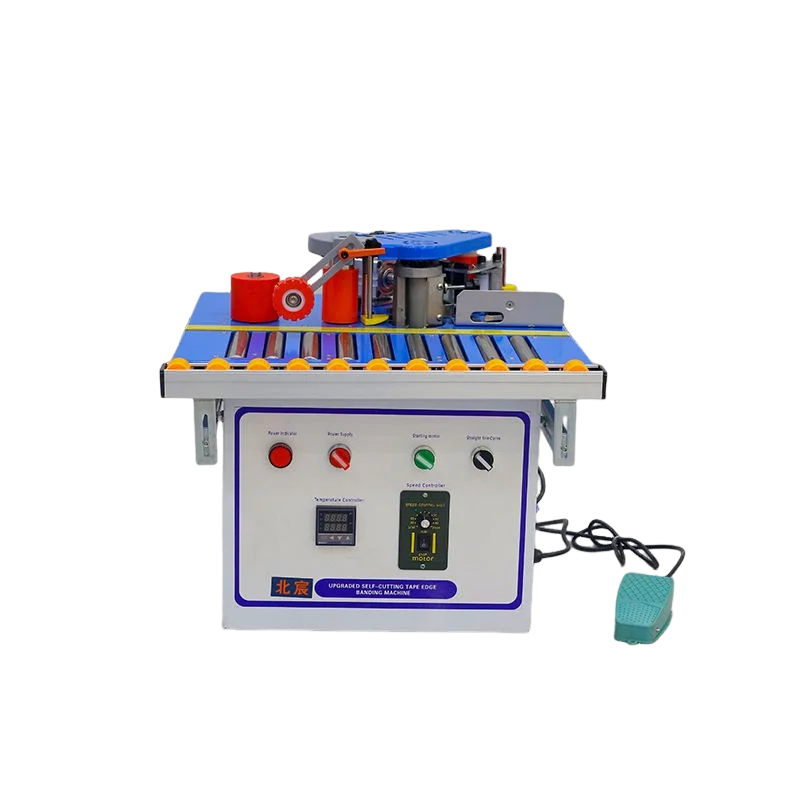
<p><strong>ST-70 Semi-Automatic Portable Edge Banding Machine, 1000W, 220V/380V</strong> — delivers consistent hot-melt glue application on both curved and straight edges for MDF, particleboard, plywood and solid wood panels. Edge thickness 0.3–3mm and height up to 50mm cover PVC, melamine and veneer banding, while 0.5–0.8 MPa pneumatic assist ensures stable adhesion across varying substrate densities. - Four-stage QC with pre-shipment test records on your specified substrate and banding material - Voltage confirmation sheet matched to local supply before dispatch - Operation manual and spare parts list provided in the operator's agreed language</p>
100+
Countries
MOQ 1
Unit
15-25 Days
Lead Time
== Gate == 【产品草稿】identifier: ST-70 → 通过 == 标签生成 == Edge Banding Machine
Curved Edge Banding
Hot Melt Glue
MDF Panel
Plywood Edge Sealing
Process And Application
Semi-Automatic Portable
ST-70
- Full OEM/ODM support -- custom logo, voltage (110V-440V), multilingual panels
- ISO 9001 & CE certified, 5 national patents, 60 professional engineers
- 12-month warranty, remote technical support & spare parts service
- Professional export packaging, customs clearance support, on-time delivery
Precision-ground glue paths — the ST-70 maintains consistent hot-melt flow across curved and straight profiles, verified on MDF, particleboard and plywood before dispatch.
Technical Specifications
| Parameter | Value |
|---|---|
| Model | ST-70 |
| Product Type | Semi-Automatic Portable Edge Banding Machine |
| Total Power | 1000W |
| Edge Banding Type | Curved and straight edge |
| Voltage | 220V / 380V / customizable |
| Minimum Sheet Length | 25 cm |
| Minimum Sheet Width | 3 cm |
| Edge Banding Height | 0–50 mm |
| Edge Banding Thickness | 0.3–3 mm |
| Edge Trimming Power | 20W |
| Air Source Pressure | 0.5–0.8 MPa |
| Product Dimensions (L×W×H) | 50×50×47 cm |
| Net Weight | 23 kg |
| Glue Pot Capacity | 1000 ml |
| Glue System | Hot melt |
| Language Options | Chinese, English standard; Spanish and other languages customizable |
| Plug Options | EU, USA, AU, UK |
| Assembly State | Benchtop / portable |
| Control Panel | Semi-automatic |
| Standards | CE, ISO 9001 |
Application Suitability
| Application | Material or Output |
|---|---|
| Shaped cabinet door edge sealing | MDF and plywood with PVC or veneer banding |
| Curved shelving profile finishing | Particleboard with melamine or thin veneer strips |
| On-site furniture repair and touch-up | Solid wood panels and ecological board |
| Small-batch custom joinery | Mixed substrates including MDF, plywood and blockboard |
| Workshop transition from manual iron-on | PVC, ABS and veneer banding 0.3–3 mm thick |
Why the Glue Line Shows Up After the Panel Leaves the Bench
Substrate density changes how hot melt behaves — and the operator needs direct control to compensate.
I spent a week in a client’s shop adjusting parameters after their edge banding machine process application on solid wood panels kept leaving visible seams. The glue was fine on MDF but starved on denser oak plywood. With feed-type automatic banders, you dial in one speed and hope the next batch matches. On the ST-70, the operator sets feed pace by hand, adjusting glue contact time per piece. That hands-on control is exactly what makes the edge banding machine process application reliable across mixed substrates in a small workshop [NEED_CITE: substrate density and hot melt adhesion behaviour].
Glue Temperature Stability Across a Shift
The 1000 ml hot-melt glue pot on the ST-70 holds enough adhesive for sustained benchtop work without constant refilling, which keeps temperature fluctuation minimal during a production run. Consistent glue viscosity matters when switching between porous MDF and denser plywood in the same batch. Operators can focus on feed technique rather than monitoring pot levels. This stability directly affects the edge banding machine process application outcome, especially when banding curved profiles where uneven glue leads to visible lift at the radius.
Curved and Straight Profiles on One Bench
Most automatic edge banders handle only straight panels fed through a conveyor chain. The ST-70 processes both curved and straight edges, which matters for workshops producing shaped cabinet doors, arched shelving or round tabletops. The operator guides the panel by hand, controlling contact pressure against the banding strip. Pneumatic assist at 0.5–0.8 MPa provides consistent downward force, so adhesion quality stays even whether the edge runs straight or curves through a 150 mm radius [NEED_CITE: pneumatic pressure range for portable edge banding equipment].
Reading the Specs That Actually Matter on the Shop Floor
The 0.3–3 mm banding thickness range covers PVC, melamine and real wood veneer — the three materials most small joinery shops stock. Thinner veneer at 0.3 mm demands lower glue temperature to prevent bleed-through, while 3 mm PVC needs full pot heat and firm pneumatic pressure for complete bonding. The 25 cm minimum sheet length means even narrow offcuts from a sliding table saw can be edged without waste. Edge trimming power at 20W is matched to flush-trimming light PVC and veneer rather than hogging off thick ABS, which keeps the finished edge clean without tear-out on delicate plywood faces.
What Happens When Banding Thickness Exceeds the Trimmer’s Reach
Shops that push 3 mm PVC through a benchtop trimmer designed for lighter duty often find chipped corners on the panel and ragged banding edges that require hand-sanding. The ST-70’s 20W trimming head clears thin to medium banding cleanly, but operators running thicker stock should plan for a secondary pass or a dedicated end-trimming step. Ignoring this limit leads to assemblies where panels do not sit flush in carcass joints — a problem that only shows up when the cabinet box goes together and one side stands proud by a millimetre [NEED_CITE: edge trimming tolerances in panel assembly].
What You Are Actually Getting with This Configuration
In-house manufacturing with patented cutting and trimming mechanisms means the ST-70 glue path and trimmer geometry are designed as one system, not bolted together from separate vendor modules. Voltage confirmation happens before production — a 220V unit ships wired for 220V, not rewired on arrival. The four-stage quality check covers incoming material through pre-shipment verification, so each benchtop unit runs a test panel on the buyer’s specified substrate before crating. Multilingual control panels and manuals arrive in the language the operator actually reads. Full OEM branding and private-label packaging are available for distributors placing repeat orders.
Documentation & Verification
- CE declaration of conformity covering portable woodworking machinery
- Machine specification sheet matching the ST-70 as configured and shipped
- Electrical schematic with confirmed voltage and plug type for the destination market
- Factory test record showing edge sealing results on your specified panel material
- Operation and maintenance manual in the agreed operator language
- Spare parts list covering glue pot heater, trimming blade and pneumatic seals
Installation, Commissioning & Support
- Benchtop footprint of 50×50 cm fits standard workbenches without floor anchoring
- 220V or 380V single-phase connection on a dedicated circuit matching local frequency
- Arrives fully assembled — plug in, fill the 1000 ml glue pot and run a test strip
- First-run parameter guidance for your panel thickness and banding material combination
- Trimming blade and glue pot heater element included in the initial spare parts kit
- Daily cleaning routine for the glue pot and feed path to prevent adhesive carbon buildup
Before You Request a Quote
Send us your primary panel substrates — MDF, particleboard, plywood or solid wood — along with the banding materials you run most often and their thickness range. Confirm your workshop voltage and frequency, and let us know which language the operator needs on the control panel and in the manual. If you produce curved components, include the typical radius and panel thickness so we can verify the edge banding machine process application on those profiles before the machine ships.
Frequently Asked Questions
Q: Which panel substrates and banding materials work best on the ST-70?
A: The ST-70 handles MDF, particleboard, plywood, solid wood and ecological board with PVC, melamine, ABS or veneer banding from 0.3 to 3 mm thick. Glue temperature and pneumatic pressure settings vary by substrate density — porous MDF requires lower heat while dense plywood needs full pot temperature for reliable adhesion. We provide a substrate-specific parameter guide with each machine.
Q: How does glue temperature affect bond quality on different substrates?
A: Low-density MDF absorbs hot melt quickly, so excessive temperature causes bleed-through on thin veneer. Denser plywood and blockboard need higher temperature for the adhesive to penetrate the substrate surface before cooling. The 1000 ml glue pot maintains stable temperature across a shift, reducing the variation that causes inconsistent bonds when switching between material types mid-run.
Q: What is the difference between curved and straight edge sealing on this benchtop model?
A: Straight edges are guided along the bench with consistent hand pressure, while curved profiles require the operator to rotate the panel through the glue and banding station. The pneumatic assist maintains even downward pressure on both geometries. Automatic feed-type banders cannot accept curved panels, making the ST-70 the practical choice for shaped doors and arched components.
Q: How should banding thickness and height be set for different board profiles?
A: Banding height must exceed panel thickness by a small margin to allow the trimmer to flush-cut both faces. For a standard 18 mm MDF panel, setting banding height around 22–25 mm gives the trimming head room to clean both edges. Thicker 3 mm PVC banding requires confirming the trimmer can reach the full height without deflection.
Q: What assembly problems result from poor edge sealing?
A: Visible glue lines and lifted banding edges prevent panels from sitting flush in carcass joints, causing misaligned doors and gaps in fitted furniture. Inconsistent banding thickness also affects hinge boring depth, leading to doors that bind or sit unevenly. Clean edge sealing on the ST-70 eliminates these downstream fitting issues at the source.
Technical Specifications
| Parameter | Value |
|---|---|
| Product Name | Small Edge Banding Machine with 1000W Glue – Industrial Application |
| Category | Edge banding machine |
| Voltage Options | 110V / 220V / 380V / 440V (customizable) |
| Frequency | 50Hz / 60Hz (customizable) |
| Certification | ISO 9001, CE |
| MOQ | 1 Unit |
| Lead Time | 15-25 Working Days |
| Warranty | 12 Months |
| OEM / ODM | Available -- logo, color, panel language |
* Detailed technical specifications vary by model. Please contact us with your specific requirements for a complete datasheet.
Shipping & Export
-
Export Packaging
Heavy-duty wooden crate with foam padding and moisture protection
-
Shipping Methods
Sea freight (FCL/LCL), air freight, express -- we support all methods
-
Customs Support
Full documentation: CO, commercial invoice, packing list, HS code assistance
-
Port of Loading
Tianjin / Qingdao port, China -- 20 years export experience
OEM / ODM Services
-
Logo & Branding
Custom logo printing, color scheme, and nameplate engraving
-
Voltage Configuration
110V / 220V / 380V / 440V, 50Hz / 60Hz -- any region supported
-
Multilingual Panels
Control panels in English, Spanish, French, Arabic and more
-
Custom Specifications
Modified dimensions, accessories, or feature sets on request
Get a Quote
Request Product Inquiry
Fill in your details and we'll respond within 24 hours with pricing and availability.
Direct Contact
How It Works
-
1
Confirm requirements & budget
Tell us your factory scale and processing needs
-
2
Receive recommendation & quote
We match the right machine with full specs
-
3
Negotiate & place order
OEM terms, voltage, payment and delivery
-
4
Production & QC inspection
Multi-stage quality control by 60 engineers
-
5
Export packaging & shipment
Professional packing, customs clearance
-
6
After-sales support
12-month warranty, remote tech support
You May Also Like