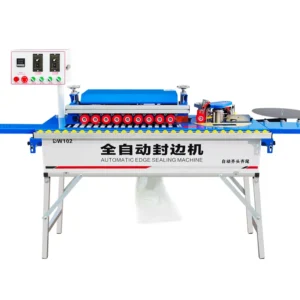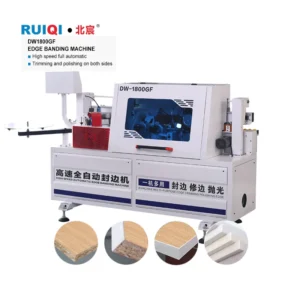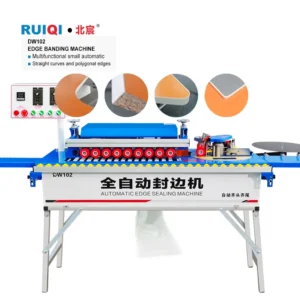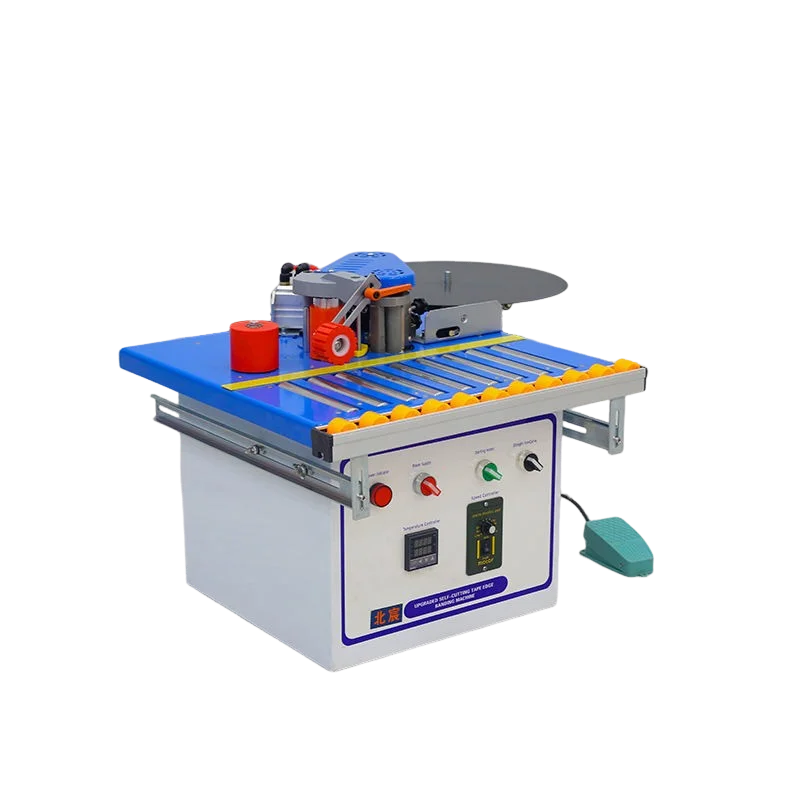
Edge banding machine
Click to enlarge
ISO 9001
CE Certified
OEM / ODM
12-Mo Warranty
Edge banding machine
tags. Edge Bander with Automatic Tape Cutting for DIY Woodworking
<p><strong>Mini Portable Edge Bander, 1000W, 0.3–3mm Banding Thickness</strong> — handles straight and curved edge sealing for MDF, particleboard, plywood and solid wood panels in small workshops and DIY production.</p> <ul> <li>Glue pot capacity 1000ml supports continuous run length; 0.5–0.8Mpa air source ensures consistent roller contact and adhesion uniformity</li> <li>Substrate density and banding material selection directly affect glue line visibility — sample testing recommended before committing to production material</li> </ul> <p>Backed by four-stage QC with pre-shipment verification and engineer-led configuration support within 24 hours.</p>
100+
Countries
MOQ 1
Unit
15-25 Days
Lead Time
1000W
220V
DIY Woodworking
Edge Banding Machine
Mini Portable Edge Bander
Process And Application
ST-70
- Full OEM/ODM support -- custom logo, voltage (110V-440V), multilingual panels
- ISO 9001 & CE certified, 5 national patents, 60 professional engineers
- 12-month warranty, remote technical support & spare parts service
- Professional export packaging, customs clearance support, on-time delivery
Verified glue line adhesion on your actual substrate — every edge banding process we ship runs a material test first, ensuring the glue pot temperature and roller pressure match the board density you send us.
Technical Specifications
| Parameter | Value |
|---|---|
| Product Type | Mini Portable Edge Bander |
| Model | ST-70 |
| Total Power | 1000W |
| Voltage Options | 220V / 380V / customized |
| Standard Processing Mode | Curved and straight edge banding |
| Minimum Sheet Length | 25 CM |
| Minimum Sheet Width | 3 CM |
| Edge Banding Height Range | 0–50 MM |
| Edge Banding Thickness Range | 0.3–3 MM |
| Edge Trimming Power | 20W |
| Air Source Pressure | 0.5–0.8 Mpa |
| Product Dimensions | 50 × 50 × 47 CM |
| Product Weight | 23 KG |
| Glue Pot Capacity | 1000 ml |
| Control Panel Language | Chinese, English (customizable) |
| Plug Configurations | EU, USA, AU, UK |
Application Suitability
| Application | Material or Output |
|---|---|
| Custom cabinet door edging | MDF and particleboard with PVC banding |
| Curved furniture components | Plywood and ecological board with veneer strip |
| Small-batch joinery production | Solid wood panels with melamine edge tape |
| Home decoration trim work | Particleboard shelving with 0.4 mm PVC |
| DIY workshop prototyping | Plywood offcuts and narrow stock pieces |
Why Substrate Density Decides Edge Banding Machine Process and Application Results
The same portable edge bander produces invisible glue lines on high-density MDF but starved joints on low-density particleboard unless glue feed and roller pressure are matched to the board.
I once had a customer who bought a compact unit expecting it to handle every board type in his custom cabinet shop. The first week went well on MDF, but when he switched to particleboard for a run of closet interiors, the edge banding peeled off during transit. The board was absorbing the hot melt faster than the 1000 ml glue pot could replenish at his feed speed. A quick adjustment to a slower feed rate and slightly higher glue temperature solved it, but only after a batch of panels had to be reworked [NEED_CITE: hot melt adhesive behavior on porous vs. dense wood-based substrates].
How Glue Pot Capacity and Air Pressure Shape the Edge Banding Machine Process and Application
The 1000 ml glue pot on this mini edge bander defines the practical continuous run length before a refill pause. In a small workshop sealing a batch of twenty cabinet sides, that volume typically covers a full morning session without interruption. However, if you are running 3 mm thick PVC on highly absorbent particleboard, the glue consumption per linear meter increases, and you will reach the refill point sooner. Planning your batch sequence so that high-consumption panels run first, when the pot is full and temperature is stable, produces more consistent adhesion across the lot.
Air source pressure between 0.5 and 0.8 Mpa is what keeps the pressure roller in firm, even contact with the banding strip as it meets the board edge. If your workshop compressor dips below that range, the roller contact force weakens and you see air pockets trapped under the banding, especially on curved sections where the strip is under tension. A dedicated pressure regulator and moisture trap on the air line feeding this unit prevents those defects [NEED_CITE: pneumatic pressure stability requirements for edge banding roller systems].
Reading the Specs That Actually Determine Output Quality
The 0.3–3 mm banding thickness range covers most materials a small joinery shop encounters: thin 0.4 mm PVC for standard cabinet work, 2 mm solid PVC for impact-prone shelving edges, and natural wood veneer strips up to 3 mm for visible furniture faces. Each material behaves differently under the trimming head. Thin PVC cuts clean with minimal blade engagement, while 3 mm veneer requires a slower feed and sharper blade to avoid tearing the wood grain at the cut point.
The 0–50 mm banding height range means the machine accommodates everything from narrow 3 cm drawer sides to full 50 mm thick countertop edges. What matters here is that the glue roller spans the full height, so a 50 mm panel receives adhesive coverage top to bottom. Running panels shorter than 50 mm leaves the upper portion of the roller exposed, which can cause glue buildup on the machine frame if not cleaned between shifts.
The 25 cm minimum sheet length and 3 cm minimum width define the smallest workpiece this unit can grip and feed. Narrow rip cuts below 3 cm will slip past the feed mechanism, which is why very thin divider strips are better edged by hand or on a larger machine with a narrower feed track.
What Happens When the Wrong Banding Thickness Meets a Compact Machine
A workshop that pushes a 3 mm solid wood veneer through a portable unit set up for 0.4 mm PVC will find the trimming blade struggling to cut through the material. The result is a ragged edge at the panel ends and increased wear on the 20W trimming motor. The machine is not undersized for the task in terms of glue application, but the trimming station reaches its practical limit with dense, thick banding materials.
Similarly, if the air pressure feeding the unit fluctuates outside the 0.5–0.8 Mpa range, the pressure roller cannot maintain consistent contact force. On straight edges the defect may show as a faint glue line visible only at certain angles. On curved edges, where the banding is under bending stress, the same pressure drop causes partial delamination that only appears after the panel is moved or installed [NEED_CITE: edge banding adhesion failure modes on curved vs. straight panel geometry].
Why Sourcing This Machine Through a Verified Manufacturer Matters
Every unit ships after a four-stage inspection covering incoming components, in-process assembly, finished product function, and pre-shipment verification. The glue pot heating element, roller alignment, and trimming blade calibration are all checked under load before packing.
Voltage and plug configuration are confirmed against your local supply standard before production begins, so a workshop in a 110V region does not receive a machine wired for 220V single-phase. The control panel language is set to your operator’s preference, eliminating the commissioning delay that happens when an English-only interface reaches a non-English-speaking production floor [NEED_CITE: voltage and frequency standards by export market].
Sample processing tests are available before order confirmation. You send your actual panel offcut and the banding material you plan to use, and we run the full edge banding machine process and application cycle on our floor, then ship the finished sample back with photos and a test record so you can verify glue line visibility and adhesion strength before committing to a purchase.
Documentation & Verification
- CE declaration of conformity covering machinery safety requirements for this class of portable edge bander
- Machine specification sheet confirming the 1000W total power and 0.3–3 mm banding thickness range
- Electrical schematic with your confirmed voltage and plug type annotated on the wiring diagram
- Factory test record showing glue adhesion results on your submitted panel and banding sample
- Operation and maintenance manual written in your confirmed language, covering glue pot refill and roller cleaning
- Spare parts list identifying consumable blades, replacement rollers, and glue pot components with part numbers
Installation, Commissioning & Support
- Requires a stable workbench rated for the 23 KG machine weight with clearance for 50 cm footprint on all sides
- Dedicated electrical circuit matching confirmed voltage to prevent overload from other workshop equipment sharing the line
- Arrives fully assembled; plug in the confirmed plug type, connect the air supply at 0.5–0.8 Mpa, and power on
- First-run commissioning includes setting glue temperature for your specific banding material and adjusting roller pressure
- Operator training covers curved vs. straight mode switching and 1000 ml glue pot refill procedure
- Spare trimming blades and replacement pressure rollers included in the initial shipment for early maintenance needs
What to Send With Your Inquiry
To match this edge banding machine process and application to your actual production, share the panel materials you work with most often and the banding thickness range you use on each. Let us know your local voltage and frequency so the correct electrical configuration is built from the start. If you have curved edge work in your current job list, include the minimum curve radius so we can confirm the machine handles it during a sample test.
Frequently Asked Questions
Q: Which substrate and banding combinations produce the cleanest glue line on a portable edge bander?
A: High-density MDF paired with 0.4 mm PVC consistently produces the least visible glue line because the dense surface does not absorb hot melt adhesive unevenly. Particleboard requires slightly higher glue temperature and slower feed to compensate for surface porosity. Natural veneer on plywood works well when the veneer is pre-conditioned to workshop humidity to prevent post-application shrinkage gaps.
Q: How does curved edge mode affect feed consistency compared to straight mode?
A: On curved edges, the banding strip is under bending tension, which increases the force needed to maintain roller contact. Feed speed should be reduced compared to straight edge work to allow the adhesive adequate open time before the pressure roller makes contact. The 0.5–0.8 Mpa air pressure range becomes more critical here, as any pressure drop directly translates to incomplete adhesion on the curve apex.
Q: Can this machine handle the daily volume of a small production workshop?
A: The 1000 ml glue pot capacity supports continuous small-batch work with periodic refills. For workshops running multiple shifts, scheduling a glue pot cleaning and roller inspection between shifts maintains consistent adhesion. This unit is designed for low-to-medium volume environments; high-throughput production lines require a larger automated edge bander with continuous feed and multiple trimming stations.
Q: What air supply setup is required, and what happens if pressure fluctuates?
A: A compressor delivering stable 0.5–0.8 Mpa with a moisture trap and dedicated regulator is required. Pressure drops below the range reduce roller contact force, causing incomplete adhesion especially on curved sections. Spikes above the range can deform thin PVC banding against the panel edge. A small buffer tank on the air line smooths out compressor cycling pulses.
Q: How are voltage and language options confirmed before the machine is built?
A: During the inquiry stage, we request your local voltage and frequency along with the preferred control panel language. These are written into the formal quotation. Before production, an electrical configuration document is sent for your sign-off, ensuring the plug type, internal wiring, and control interface all match your workshop conditions.
Technical Specifications
| Parameter | Value |
|---|---|
| Product Name | tags. Edge Bander with Automatic Tape Cutting for DIY Woodworking |
| Category | Edge banding machine |
| Voltage Options | 110V / 220V / 380V / 440V (customizable) |
| Frequency | 50Hz / 60Hz (customizable) |
| Certification | ISO 9001, CE |
| MOQ | 1 Unit |
| Lead Time | 15-25 Working Days |
| Warranty | 12 Months |
| OEM / ODM | Available -- logo, color, panel language |
* Detailed technical specifications vary by model. Please contact us with your specific requirements for a complete datasheet.
Shipping & Export
-
Export Packaging
Heavy-duty wooden crate with foam padding and moisture protection
-
Shipping Methods
Sea freight (FCL/LCL), air freight, express -- we support all methods
-
Customs Support
Full documentation: CO, commercial invoice, packing list, HS code assistance
-
Port of Loading
Tianjin / Qingdao port, China -- 20 years export experience
OEM / ODM Services
-
Logo & Branding
Custom logo printing, color scheme, and nameplate engraving
-
Voltage Configuration
110V / 220V / 380V / 440V, 50Hz / 60Hz -- any region supported
-
Multilingual Panels
Control panels in English, Spanish, French, Arabic and more
-
Custom Specifications
Modified dimensions, accessories, or feature sets on request
Get a Quote
Request Product Inquiry
Fill in your details and we'll respond within 24 hours with pricing and availability.
Direct Contact
How It Works
-
1
Confirm requirements & budget
Tell us your factory scale and processing needs
-
2
Receive recommendation & quote
We match the right machine with full specs
-
3
Negotiate & place order
OEM terms, voltage, payment and delivery
-
4
Production & QC inspection
Multi-stage quality control by 60 engineers
-
5
Export packaging & shipment
Professional packing, customs clearance
-
6
After-sales support
12-month warranty, remote tech support
You May Also Like