
CNC Router Cost in Tanzania: 2026 Manufacturer Price Guide for Sale
The price tag on a CNC router listing is never the final number you pay in Dar es Salaam.
The real CNC router cost in Tanzania in 2026 is the sum of FOB machine price, ocean freight to Dar es Salaam Port, TRA customs duty, 18% VAT, clearing agent fees, and inland transport — a combination that typically adds a substantial percentage on top of the quoted machine price, with total landed cost varying significantly across configuration tiers.
I remember standing inside a corrugated-iron workshop in Dar es Salaam, watching a furniture workshop owner stare at a three-spindle CNC router that refused to cut through solid mvule hardwood without smoking. He had ordered the machine based on the lowest online quote he could find, but nobody had told him that the spindle power was undersized for local timber density, the vacuum pump was already leaking in the coastal humidity, and the TRA clearance bill at the port had nearly doubled his original budget [NEED_CITE: Tanzania Revenue Authority import duty classification for woodworking machinery]. That workshop lost weeks of production before we sorted out the spindle swap and vacuum seal replacements on-site. Since then, I have made it a habit to walk every buyer through the full cost chain before they sign a proforma invoice.
Let me break down exactly what you are paying for — and what you are not — when you budget for a CNC router cost in Tanzania.
What Is the Real Landed Cost of a CNC Router in Tanzania?
FOB price is the starting line, not the finish line. Many first-time buyers in East Africa focus entirely on the machine quotation and are blindsided when the invoice from the clearing agent arrives at the port. The actual CNC router cost in Tanzania is built from six stacked layers: the machine FOB price, ocean freight to Dar es Salaam, TRA customs duty based on HS code classification, value-added tax, clearing and forwarding agent charges, and inland haulage to your workshop [NEED_CITE: Dar es Salaam Port Authority tariff schedule for general cargo and machinery].
Ocean freight rates fluctuate with global container availability and fuel surcharges. A standard 1325 CNC router typically ships in a shared container or a dedicated twenty-foot unit depending on configuration, and freight costs to East African ports have shown noticeable volatility in recent shipping cycles [NEED_CITE: global container freight rate index trends for East Africa routes]. The TRA classifies woodworking CNC machines under specific HS headings that attract a defined duty band, and on top of that duty, the standard VAT rate applies to the combined CIF value — meaning you are paying tax on the tax-inclusive amount [NEED_CITE: Tanzania Revenue Authority customs tariff booklet for machinery imports].
Clearing agents charge a service fee that varies by port complexity and documentation readiness. Inland transport from Dar es Salaam to cities like Dodoma, Mwanza, or Arusha adds another layer that depends on distance, road conditions, and whether you need a flatbed or low-loader for heavier 1530 models.
A small cabinet workshop in Dar es Salaam ordered an entry-level three-process CNC router and assumed the quoted price was close to final. When the machine arrived, the combined freight, duty, VAT, and local delivery costs represented a significant share of the total project budget — a proportion that caught the owner off guard and delayed his production launch by weeks while he rearranged working capital.
The lesson is simple: always ask your supplier for a landed cost estimate, not just an FOB quotation. A reliable manufacturer will provide complete export documentation including CE certificates and commercial invoices formatted for TRA clearance, which prevents costly delays at the port [NEED_CITE: CE certification requirements for machinery imported into Tanzania].
How Do CNC Router Prices Vary by Configuration Tier?
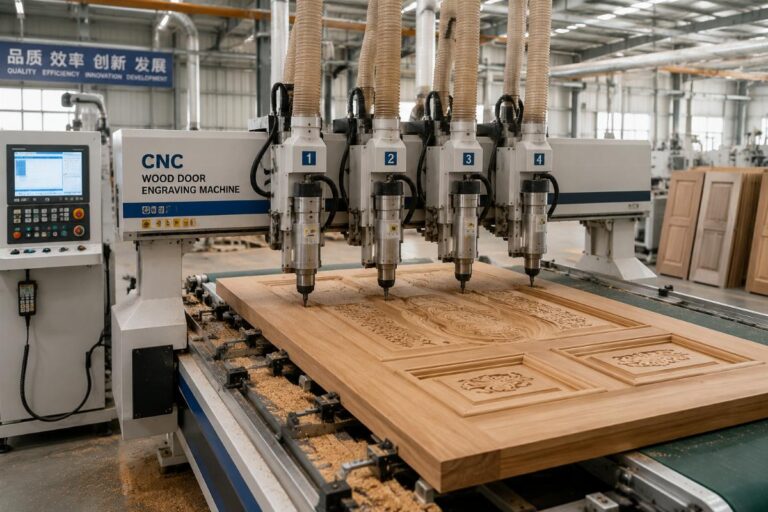
The CNC router cost in Tanzania shifts dramatically depending on whether you choose a basic three-process machine, a mid-range ATC automatic tool changer, or a high-end five-axis machining center. Each tier serves different production volumes and material types, and the price gap between tiers is far wider than most buyers expect.
| Configuration Tier | Typical Working Area | Spindle Range | Tool Change System | Suitable Production Scale | Price Tier Relative to Entry Model |
|---|---|---|---|---|---|
| Entry Three-Process | 1325 | Basic to mid-range | Manual or semi-auto | Small workshops, startup cabinet shops | Baseline |
| Mid-Range ATC | 1325 or 1530 | Mid to high power | Automatic tool magazine | Growing furniture factories, door manufacturers | Substantially higher |
| High-End Five-Axis | 1530 or 2040 | High power | Full ATC with multi-axis | Large-scale production, complex 3D carving | Significantly higher |
A medium-scale panel furniture factory in Mwanza upgraded from a three-process machine to a 1530 ATC model and saw their daily output roughly double, which shortened their equipment payback period considerably despite the higher upfront CNC router cost in Tanzania [NEED_CITE: production efficiency comparison between manual tool change and ATC CNC routers in panel furniture manufacturing]. The ATC system eliminates manual tool swaps between cutting, drilling, and grooving operations, which matters enormously when you are running multiple shifts.
Ruiqi manufactures the full spectrum of these tiers — from the entry-level 1325 three-process routers ideal for startup workshops to the 1530 ATC models designed for growing factories, all built on heavy-duty cast iron frames for extended service life. The 1325 series fits neatly into standard shipping containers, keeping freight costs contained, while the 1530 models offer a larger working area for full-size panel processing without requiring oversized logistics.
The key mistake buyers make is choosing a tier based solely on the machine price without calculating how many panels per hour each tier delivers. A cheaper machine that runs at half the speed of a mid-range model may cost more per panel over its service life, especially when labor costs and delivery deadlines are factored in.
Which Spindle Power Matches Tanzanian Hardwood Without Stalling?
Picking the wrong spindle power is the single most common reason for production stoppages in East African woodworking shops. The CNC router cost in Tanzania means nothing if the machine cannot cut the materials you actually work with.
Tanzanian hardwoods — mvule, mpingo, mnzizi — are substantially denser than the MDF and particleboard that most Chinese manufacturers test their machines with. A spindle that glides through 18mm MDF in a Shandong factory will stall, smoke, and overheat when asked to cut 25mm solid mvule in a Dodoma workshop running at full production speed.
| Material Type | Recommended Spindle Power Range | Risk of Undersizing |
|---|---|---|
| MDF, Particleboard, Plywood | Basic to mid-range | Low risk if properly maintained |
| Melamine-faced Board | Mid-range with sharp tooling | Moderate risk of edge chipping |
| Solid Hardwood (Mvule, Mpingo) | High power with appropriate feed rate | High risk of stalling and overheating |
A custom door workshop in Dodoma purchased a CNC router with a lower-power spindle to save on the initial CNC router cost in Tanzania. Within weeks, the spindle was overheating during hard wood cuts, triggering emergency stops and leaving partially cut doors that had to be discarded. The lost material, idle labor hours, and emergency service call cost far more than the price difference between the two spindle tiers would have been [NEED_CITE: spindle power requirements for hardwood CNC routing based on material density].
Ruiqi offers spindle configurations matched to material profiles, with high-power options specifically suited for dense African hardwoods. The machines are built with heavy-duty cast iron frames that absorb vibration during aggressive cuts, and the spindle mounts are precision-machined to maintain alignment under sustained load — a detail that matters when you are pushing through thick hardwood day after day.
The second mistake is ignoring voltage compatibility. Tanzania operates on a 230V/50Hz system, but voltage fluctuations are common in many industrial areas. Ruiqi machines support wide-voltage adaptation across a broad range, ensuring the inverter and PLC systems remain stable even when local grid quality is inconsistent [NEED_CITE: voltage stability requirements for CNC machinery in Sub-Saharan African industrial zones].
What Are the Import Duties and Clearance Requirements at Dar es Salaam?
Understanding TRA customs procedures before you ship is the difference between a smooth delivery and a machine sitting at the port for weeks, accumulating storage fees. The CNC router cost in Tanzania includes not just the duty rate itself, but the entire clearance process — and mistakes here are expensive.
Woodworking CNC routers fall under specific HS code headings that the Tanzania Revenue Authority uses to determine duty rates. The duty is calculated on the CIF value — cost, insurance, and freight — meaning the ocean freight cost is included in the taxable base before duty is applied. On top of the duty, the standard VAT rate applies to the duty-inclusive value, creating a compounding effect that significantly increases the final amount payable [NEED_CITE: Tanzania Revenue Authority customs valuation methodology for imported machinery].
Required documentation for smooth clearance includes the commercial invoice, packing list, bill of lading, certificate of origin, and — critically — the CE certificate or equivalent conformity documentation. Machines arriving without proper certification can be held at the port for inspection, and in some cases, re-exported at the importer’s expense.
A furniture factory owner once shipped a CNC router to Dar es Salaam without ensuring the CE documentation was included in the shipping packet. The machine sat at the port for an extended period while the clearing agent scrambled to obtain the missing paperwork from the manufacturer, and the accumulated port storage charges added a substantial unexpected cost to the project [NEED_CITE: Dar es Salaam Port storage fee schedule for uncleared cargo].
Ruiqi provides complete export documentation with every shipment — CE certificates, detailed commercial invoices, packing lists, and certificates of origin — formatted specifically to meet TRA requirements. This preparation has allowed their machines to clear smoothly at Dar es Salaam across multiple shipments to Tanzanian buyers, avoiding the documentation-related delays that plague less-prepared importers.
Using an experienced clearing agent who understands machinery imports is equally important. The agent should pre-classify the HS code before the machine ships, confirm the duty rate with TRA, and prepare all paperwork in advance so that clearance begins the moment the vessel docks.
What Hidden Costs Do Most Buyers Overlook?
Voltage incompatibility, climate-driven component degradation, and lack of remote technical support are the three hidden cost drivers that turn a good CNC router deal into an expensive lesson.
Tanzania’s coastal cities like Dar es Salaam experience high humidity and salt-laden air year-round. This environment is harsh on vacuum pumps and electrical components. A vacuum pump that performs reliably in a dry inland factory can develop seal leaks within months in a coastal workshop, causing sheets to shift during cutting and producing ruined panels [NEED_CITE: effects of tropical humidity on vacuum pump seal degradation in woodworking machinery].
The CNC router cost in Tanzania must account for component durability in these conditions. Ruiqi machines use vacuum systems designed for demanding environments, with seals and pump components selected to resist the moisture and heat typical of East African coastal workshops. The cast iron frames are treated to resist corrosion, and electrical cabinets are sealed against dust and humidity ingress.
Remote technical support is another area where costs can spiral. When a machine goes down in Mwanza or Arusha, flying in a service engineer from overseas is expensive and slow. Ruiqi provides multilingual PLC panels with English language options, video-based installation guidance, and remote diagnostics that allow their technical team to troubleshoot many issues without physical travel. For issues that do require on-site attention, their after-sales team can dispatch engineers with full knowledge of the specific machine configuration before arrival [NEED_CITE: importance of remote technical support infrastructure for CNC machinery in Sub-Saharan Africa].
A workshop in a regional town purchased a machine from a supplier with no remote support capability. When a PLC error code appeared, the owner spent days trying to interpret Chinese-language error messages with no technical support available across time zones. The production downtime cost far exceeded what a multilingual control panel and responsive remote support team would have prevented.
Conclusion
The CNC router cost in Tanzania is a layered figure that extends far beyond the machine quotation. From ocean freight and TRA duties to spindle selection for local hardwoods and climate-resilient component design, every layer adds to — or subtracts from — your true investment. Buyers who calculate the full landed cost, match spindle power to actual material density, verify customs documentation before shipping, and confirm remote support availability will avoid the costly surprises that have stalled workshops across East Africa.
Tags

Written by
author
Editor covering global sourcing, supplier verification, and industrial product knowledge. Content is compiled from manufacturer specifications, industry standards, and hands-on experience with international B2B buyers. Every article is fact-checked before publishing to help procurement professionals make informed decisions.
Leave a Reply