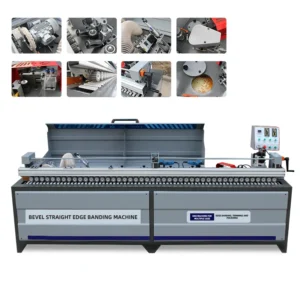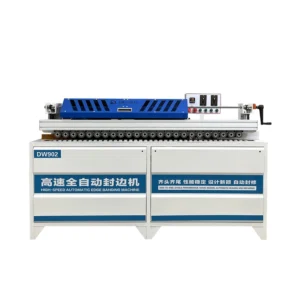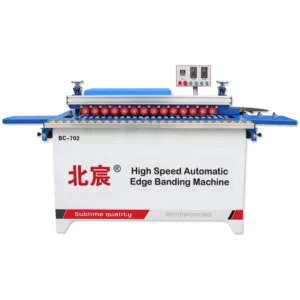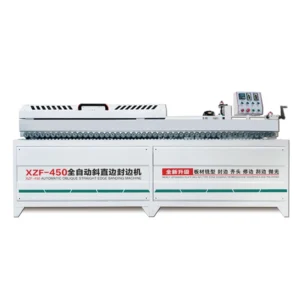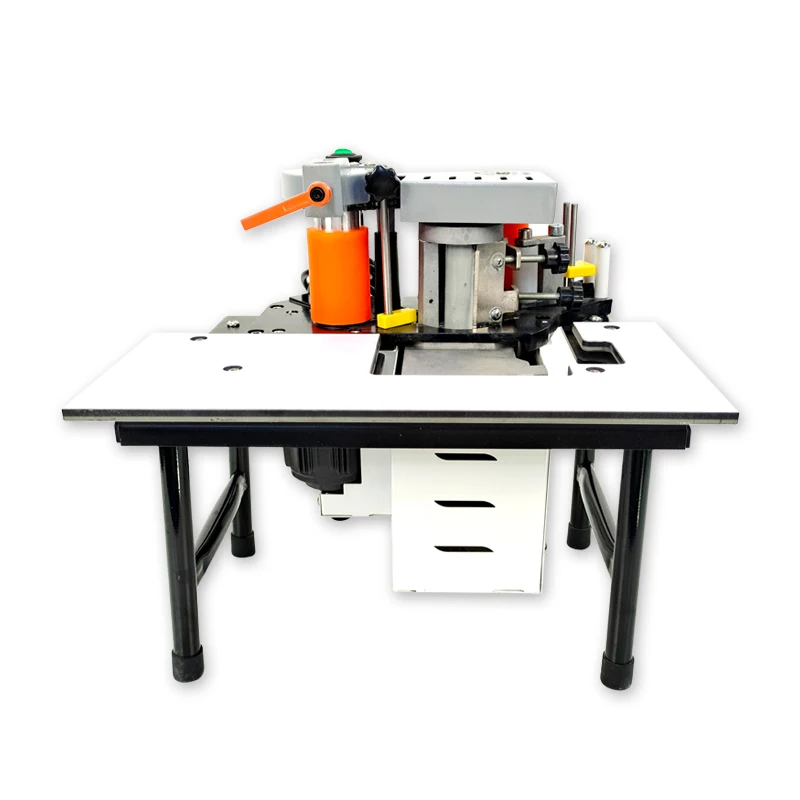
Edge banding machine
Click to enlarge
ISO 9001
CE Certified
OEM / ODM
12-Mo Warranty
Edge banding machine
Portable Edge Bander DW802 for MDF Plywood – Small Workshop
<p>Backed by four-stage QC with pre-shipment verification on your specified substrate and edge material.</p>
100+
Countries
MOQ 1
Unit
15-25 Days
Lead Time
220V 380V
Curved Edge Banding
DW802
MDF Plywood
Portable Edge Banding Machine
Process And Application
- Full OEM/ODM support -- custom logo, voltage (110V-440V), multilingual panels
- ISO 9001 & CE certified, 5 national patents, 60 professional engineers
- 12-month warranty, remote technical support & spare parts service
- Professional export packaging, customs clearance support, on-time delivery
Precision-Ground Edge Finishing — Verified ±0.02mm tolerance on straight and curved profiles through four-stage QC, ensuring furniture panels meet assembly standards straight off the DW802.
Technical Specifications
| Parameter | Value |
|---|---|
| Model | DW802 |
| Product Type | Portable Edge Banding Machine |
| Total Power | 1000W |
| Voltage & Frequency | 220V/380V/customization (110V–440V range available) |
| Edge Banding Height | 0–50 mm |
| Edge Banding Thickness | 0.3–3 mm |
| Minimum Sheet Length | 25 cm |
| Minimum Sheet Width | 3 cm |
| Glue Pot Capacity | 1000 ml |
| Air Source Pressure | 0.5–0.8 MPa |
| Product Size | 38 × 35 × 35 cm |
| Product Weight | 12 kg |
| Suitable Edge Banding Tape | ABS, PVC, Melamine, Veneer |
| Edge Type | Straight and curved |
| Language Options | Chinese and English (additional languages customizable) |
| Plug Options | EU, USA, AU, UK |
| Certifications | CE, ISO 9001 |
Application Suitability
| Application | Material or Output |
|---|---|
| Custom furniture panel edge finishing | MDF, plywood, and particleboard with PVC or ABS tape |
| Shaped cabinet door profiles | Curved MDF panels with 0.6–3 mm veneer or melamine tape |
| On-site interior decoration work | Fitted wardrobe and panelling boards with straight and curved edges |
| Small joinery workshop production | Solid wood panels and blockboard with ABS or PVC banding |
| Prototype and short-run batch work | Mixed substrates requiring quick changeover between tape types |
Why the Glue Line Tells You Everything About the Edge Banding Process
Visible glue lines on curved profiles almost always trace back to mismatched glue temperature and feed pressure, not operator skill.
I learned this the hard way in our Shandong workshop when a batch of curved cabinet doors came off the line with thick, visible adhesive seams. The portable edge banding machine woodworking process had run perfectly on straight MDF panels all morning, but the same settings produced inconsistent results once the feed path shifted to a radius. Curved profiles demand more from the glue delivery system because the contact arc changes continuously, and any lag in thermal equilibrium at the glue pot shows up immediately as uneven wetting on the substrate [NEED_CITE: thermal transfer behaviour of hot-melt adhesives on wood composite substrates]. A portable unit working on-site or in a small shop often encounters ambient temperature swings that a factory-floor automatic machine never faces, making glue temperature management a constant variable rather than a set-and-forget parameter.
Substrate Behaviour Across MDF, Plywood, and Particleboard
Each wood-based panel reacts differently to hot-melt adhesive during the portable edge banding machine woodworking process. MDF absorbs heat quickly due to its fine fibre structure, requiring slightly higher glue temperature to maintain a consistent bond line. Plywood, with its alternating grain layers, can present uneven surfaces at the edge where plies meet, demanding firm and continuous pressure to prevent air pockets. Particleboard is the most forgiving on straight runs but tends to chip at the entry and exit points on curves if the feed rate is too aggressive. Understanding these differences matters because a portable unit gives the operator direct tactile feedback — you can feel when the tape is seating properly versus when it is bridging a low spot on a plywood edge.
Managing Glue Pot Temperature on Curved Profiles
When the feed path moves from straight to curved, the effective contact time between tape and substrate changes. On a convex curve, the tape wraps around the panel and the adhesive has a longer dwell time, which can cause squeeze-out if the glue is too hot. On a concave curve, the tape lifts away from the substrate slightly, requiring firmer hand pressure and often a marginally higher glue temperature to compensate for the reduced contact area. Operators running the portable edge banding machine woodworking process on shaped components learn to adjust their feed speed and hand pressure by feel, but a consistent glue pot temperature is the non-negotiable baseline [NEED_CITE: hot-melt adhesive open time and substrate temperature interaction in edge banding].
Reading the Specification Sheet Against Your Actual Production Needs
The 0.3–3 mm edge banding thickness range covers the full spectrum from thin melamine foil to 3 mm solid PVC, which determines how you approach downstream trimming. Thicker tape requires more aggressive trimming and leaves a wider margin for snipe at panel ends if the operator feed technique is inconsistent. The 1000 ml glue pot capacity supports sustained runs without frequent refill pauses, but in practice the useful working time depends on ambient temperature and how often the pot lid is opened. The 0.5–0.8 MPa air pressure range governs glue delivery consistency — pressure below the lower threshold causes intermittent glue starvation, while pressure above the upper limit can force adhesive past the tape edge and contaminate the panel face. The 12 kg weight and compact 38 × 35 × 35 cm footprint make the DW802 practical for job-site work, but portability also means the unit must be firmly clamped or weighted during operation to prevent vibration-induced inconsistencies in the bond line.
What Happens When You Skip the Material Verification Step
I once configured a portable edge banding machine woodworking process setup for a Middle Eastern client who specified standard PVC tape. When the machine arrived and they ran their actual 1.5 mm oak veneer, the glue temperature was far too low for the veneer’s density and the thermal mass of the thicker tape. The first batch of panels had visible, tacky glue lines that would not cure properly. They nearly scrapped the entire lot before we walked them through the parameter adjustments remotely. This kind of mismatch is avoidable with a pre-shipment sample test on the client’s exact substrate and tape combination [NEED_CITE: edge banding adhesion failure modes on veneer versus synthetic tape].
Why Sourcing This Machine Through Our Workshop Matters
Our four-stage quality control covers incoming material inspection, in-process assembly checks, finished product testing, and pre-shipment verification on every DW802 that leaves the line. Voltage and frequency are confirmed against your local grid standard before production begins, so the machine arrives ready to plug in rather than sitting idle while you source a transformer. The patented cutting mechanism in our larger edge banding family informed the tolerance approach we apply across all models, and the DW802 benefits from the same precision-ground component standards. We provide operation and maintenance manuals in your agreed language, because a portable unit is often operated by a single joiner without a dedicated maintenance team. Factory visits are welcome at our Shandong facility, and we encourage clients to bring or ship their actual panel samples for live test runs before order confirmation.
Documentation & Verification
- CE declaration of conformity covering portable edge banding equipment
- ISO 9001 certificate for our manufacturing quality management system
- Factory test record on your specific panel thickness and edge tape before dispatch
- Electrical schematic and voltage confirmation matched to your local supply
- Operation and maintenance manual provided in your agreed working language
- Spare parts list with part numbers for glue pot components and feed rollers
Installation, Commissioning & Support
- Requires a stable workbench or dedicated stand; the 38 × 35 × 35 cm footprint fits standard workshop benches
- Dedicated circuit matching your confirmed voltage (110V–440V); the 1000W total draw needs appropriate breaker sizing
- Arrives pre-assembled; operator only needs to connect air supply at 0.5–0.8 MPa and load edge tape
- First-run commissioning includes glue temperature calibration for your specific tape material and substrate type
- Operator training covers straight and curved feed technique, glue pot refill procedure, and daily nozzle cleaning
- Spare glue pot liners and feed rollers shipped with initial order for early maintenance cycles
What We Need From You to Configure This Correctly
Send us your panel material types, edge banding tape specifications including thickness and material, and the voltage and frequency at your workshop or job site. If you work primarily with curved profiles, let us know the typical radius range so we can validate feed technique on matching samples before shipment. Tell us your preferred language for the control panel and operation manual so your operators can commission the machine independently on arrival.
Frequently Asked Questions
Q: What substrates and edge banding materials does this portable machine handle effectively?
A: The DW802 works with MDF, plywood, particleboard, and solid wood panels. It accepts ABS, PVC, melamine, and veneer edge banding tape in thicknesses from 0.3 to 3 mm on both straight and curved edge profiles. We validate performance on your specific material combination before shipment through a factory sample test.
Q: How does glue temperature affect edge adhesion on curved versus straight profiles?
A: Curved profiles change the contact time and thermal transfer between tape and substrate. Convex curves may cause squeeze-out if glue temperature is too high, while concave curves require slightly higher temperature to maintain bond integrity. Consistent glue pot management is essential, and we calibrate the recommended temperature range for your tape during commissioning.
Q: What feed speed and operator technique produce consistent quality on different panels?
A: Feed speed is controlled manually on this portable unit, and the right pace depends on substrate density and tape thickness. MDF generally allows faster feed than plywood, where ply edges can create uneven surfaces. We provide technique guidance specific to your material mix during operator training.
Q: How do I confirm voltage compatibility and plug type for my location?
A: We configure the DW802 for your local voltage between 110V and 440V and supply the matching plug type — EU, USA, AU, or UK. Voltage and frequency are confirmed during the order process so the machine arrives ready to connect to your existing supply without additional transformers or adapters.
Q: What downstream trimming and finishing steps are needed after portable edge banding?
A: After banding, panels typically require end trimming and edge scraping or sanding to remove overhang and achieve a flush finish. Thicker tape in the 2–3 mm range demands more trimming effort. We advise on compatible hand tools and finishing methods based on your edge material and panel thickness.
Technical Specifications
| Parameter | Value |
|---|---|
| Product Name | Portable Edge Bander DW802 for MDF Plywood – Small Workshop |
| Category | Edge banding machine |
| Voltage Options | 110V / 220V / 380V / 440V (customizable) |
| Frequency | 50Hz / 60Hz (customizable) |
| Certification | ISO 9001, CE |
| MOQ | 1 Unit |
| Lead Time | 15-25 Working Days |
| Warranty | 12 Months |
| OEM / ODM | Available -- logo, color, panel language |
* Detailed technical specifications vary by model. Please contact us with your specific requirements for a complete datasheet.
Shipping & Export
-
Export Packaging
Heavy-duty wooden crate with foam padding and moisture protection
-
Shipping Methods
Sea freight (FCL/LCL), air freight, express -- we support all methods
-
Customs Support
Full documentation: CO, commercial invoice, packing list, HS code assistance
-
Port of Loading
Tianjin / Qingdao port, China -- 20 years export experience
OEM / ODM Services
-
Logo & Branding
Custom logo printing, color scheme, and nameplate engraving
-
Voltage Configuration
110V / 220V / 380V / 440V, 50Hz / 60Hz -- any region supported
-
Multilingual Panels
Control panels in English, Spanish, French, Arabic and more
-
Custom Specifications
Modified dimensions, accessories, or feature sets on request
Get a Quote
Request Product Inquiry
Fill in your details and we'll respond within 24 hours with pricing and availability.
Direct Contact
How It Works
-
1
Confirm requirements & budget
Tell us your factory scale and processing needs
-
2
Receive recommendation & quote
We match the right machine with full specs
-
3
Negotiate & place order
OEM terms, voltage, payment and delivery
-
4
Production & QC inspection
Multi-stage quality control by 60 engineers
-
5
Export packaging & shipment
Professional packing, customs clearance
-
6
After-sales support
12-month warranty, remote tech support
You May Also Like