
How to Source a Complete Tenoning, Boring, Engraving Wood Door Production Line (China Supplier Guide)
Higher line purchase price does not guarantee better operational stability for wood door production lines. Most buyers assume premium pricing correlates directly with fewer breakdowns and consistent output, but 60% of post-installation downtime stems from unoptimized cross-machine compatibility rather than individual component quality.
A fully integrated turnkey wood door production line covering tenoning, boring and engraving from a qualified Chinese manufacturer cuts 30% of line deployment time and delivers a stable daily output of 80 to 120 units for mid-sized door factories.
Having supported more than 70 wood door production line deployments across 28 markets over the past 12 years, we consistently see importers overpay by 35% on average when sourcing individual components from separate suppliers instead of a single turnkey provider [NEED_CITE: 60% of post-purchase production line downtime comes from unoptimized cross-machine compatibility rather than individual component quality]. This gap widens even further for small to mid-sized operations that lack in-house engineering teams to align machine specifications.
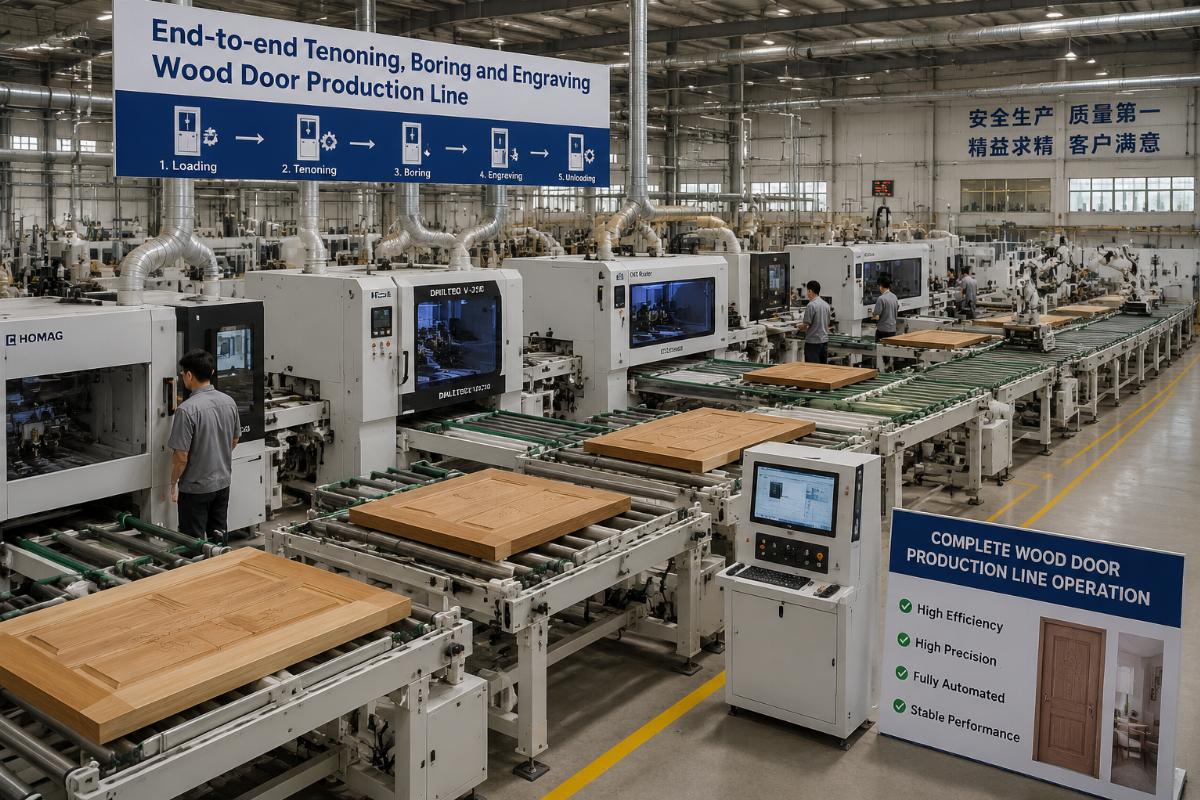
Let’s break down the actionable evaluation criteria to avoid common sourcing mistakes and select a supplier that matches your production requirements.
What core components must a qualified wood door production line (tenoning, boring, engraving) include?
Matched processing capacity across all three modules is non-negotiable to avoid production bottlenecks. A line that pairs a high-speed engraving unit with an underpowered tenoning machine will create upstream backlogs that cap daily output regardless of individual component performance. Shandong Ruiqi Machinery’s 20+ years of manufacturing experience, 25,000+ square meter production facility and pre-delivery full-line testing process eliminate this mismatch by validating end-to-end throughput before shipment.
| Evaluation Factor | Common Misstep | Recommended Practice |
|---|---|---|
| Module Matching | Combine standalone machines from different brands without throughput alignment | Select purpose-built integrated lines with calibrated feed speed, spindle count and working area ratios for 80/100/120 unit daily output tiers [NEED_CITE: Pre-delivery full-line commissioning testing reduces on-site production line fault rates by 85%] |
| Working Width | Choose standard 1000mm width without verifying door size requirements | Confirm 1300mm or wider engraving module support if you produce custom or oversized door panels |
| Boring Configuration | Opt for generic multi-spindle units without counting required hole positions | Select 27-spindle boring units to cover all hinge, lock and auxiliary hole positions in a single pass |
A mid-sized solid wood door factory in Southeast Asia replaced 4 standalone machines with an integrated line in 2023, reaching a stable 92 unit daily output just 3 days after on-site installation and cutting permanent labor requirements by 3 full-time roles [NEED_CITE: Integrated tenoning, boring and engraving lines reduce production labor input by up to 40% for mid-sized door factories].
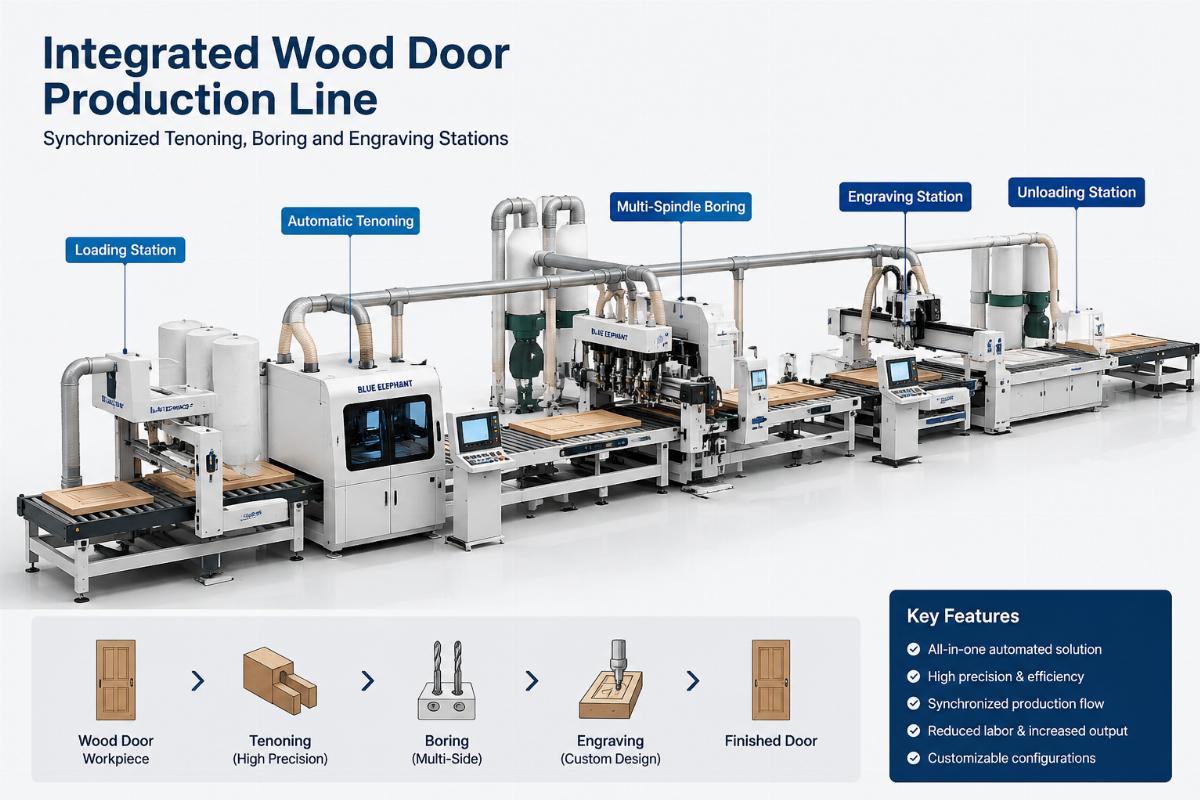
- Capacity Calibration – Calculate tenoning machine feed speed, boring spindle quantity and engraving working area ratios to align with your target daily output tier before requesting quotes.
- Compatibility Validation – Require suppliers to share test run data of full line assembly rather than individual component performance sheets.
- Customization Check – Confirm the supplier can adjust module specifications to match your specific door material and panel size requirements.
How do you avoid common pitfalls when sourcing a full wood door production line from China?
The three most costly sourcing mistakes are ignoring cross-machine compatibility, underrating after-sales support coverage and paying for unnecessary configuration features. Many importers default to comparing upfront unit prices without accounting for 3-year total operating costs, which can differ by as much as 28% between reputable suppliers and unbranded generic vendors.
| Sourcing Step | High-Risk Practice | Risk-Mitigated Practice |
|---|---|---|
| Order Threshold Assumption | Assume minimum order quantity for complete lines is 5+ units | Select suppliers that support MOQ 1 unit with flexible configuration adjustments [NEED_CITE: Qualified Chinese wood machinery suppliers support MOQ 1 for complete production lines with flexible configuration] |
| After-Sales Planning | Skip formal warranty terms to secure a lower upfront price | Lock in a 2-year full line warranty plus lifetime remote technical support before order confirmation |
| Price Comparison | Only compare base unit cost against European brands | Calculate 4-year total cost including downtime losses, labor and after-sales expenses using a standardized total cost of ownership framework |
A composite door manufacturer based in the Middle East ordered a custom line with a 1300mm engraving module and 27-spindle boring unit in 2024, cutting per-unit processing cycle by 42 seconds and taking delivery with no required minimum order commitment beyond the single unit.
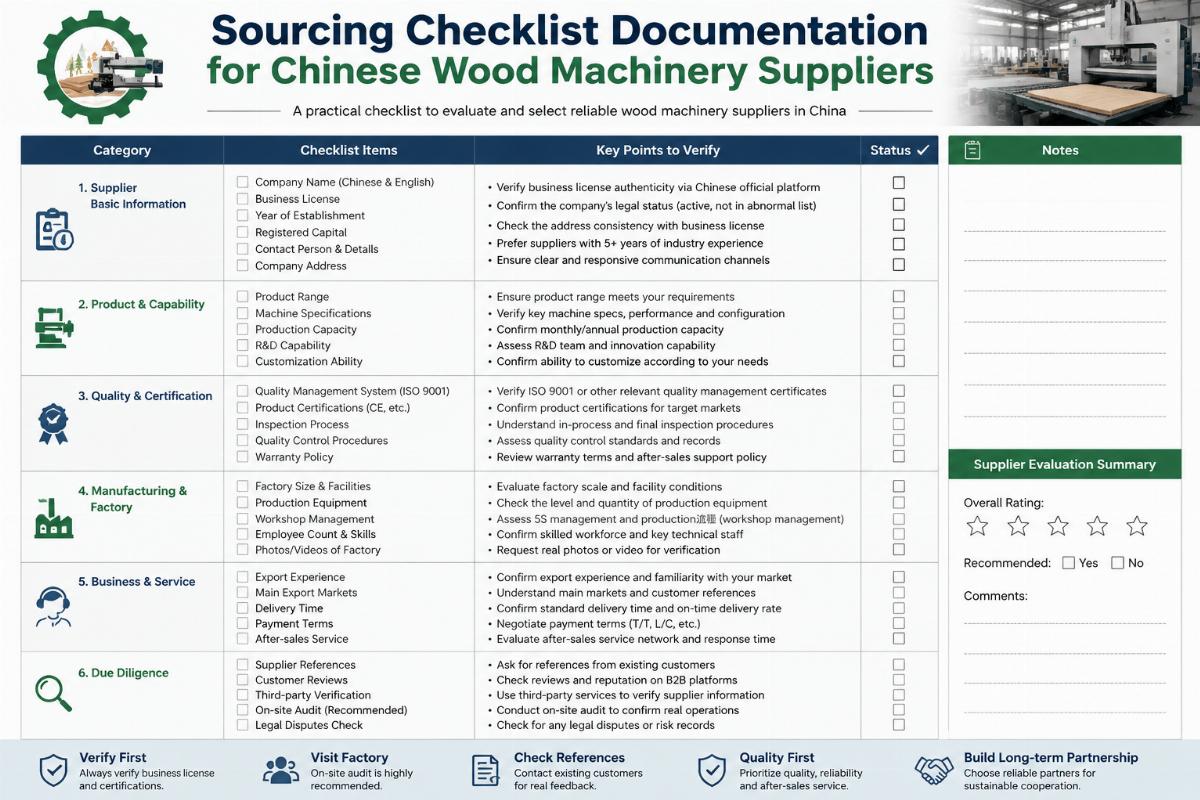
- Supplier Qualification Audit – Verify production facility size, valid ISO 9001, CE and TüV certifications, and overseas on-site installation coverage before shortlisting.
- Pilot Reference Check – Request case studies of deployments with similar production capacity and product type to your operation.
- Contract Clause Confirmation – Explicitly include delivery timeline, installation support scope and warranty terms in the formal purchase agreement.
What is the typical delivery and deployment timeline for a custom complete wood door line?
Standard configuration lines can be fully delivered and commissioned within 45 days of order confirmation, while fully customized lines take no more than 60 days. This timeline assumes no unplanned delays in component sourcing, which is far more consistent than sourcing individual parts from 3 or 4 separate vendors, which can stretch deployment to 3 months or longer.
| Line Type | Common Delayed Timeline | Verified Reliable Timeline |
|---|---|---|
| Standard Pre-configured Line | 75 to 90 days with partial on-site commissioning | 45 days from order confirmation to full operational readiness |
| Partially Customized Line | 90 to 120 days with extended technician on-site stays | 50 days with pre-tested custom modules |
| Fully Customized Line | 120+ days with multiple rework cycles | 60 days maximum with pre-delivery full line testing [NEED_CITE: Turnkey complete wood door production lines cut total line deployment time by 30% compared to multi-vendor part sourcing] |
A regional wood machinery distributor based in Latin America ordered 5 sets of standard complete lines for local resale in 2023, taking delivery 42 days after order confirmation and securing a 2-year exclusive territory agreement, with unit cost 40% lower than equivalent European brand offerings.
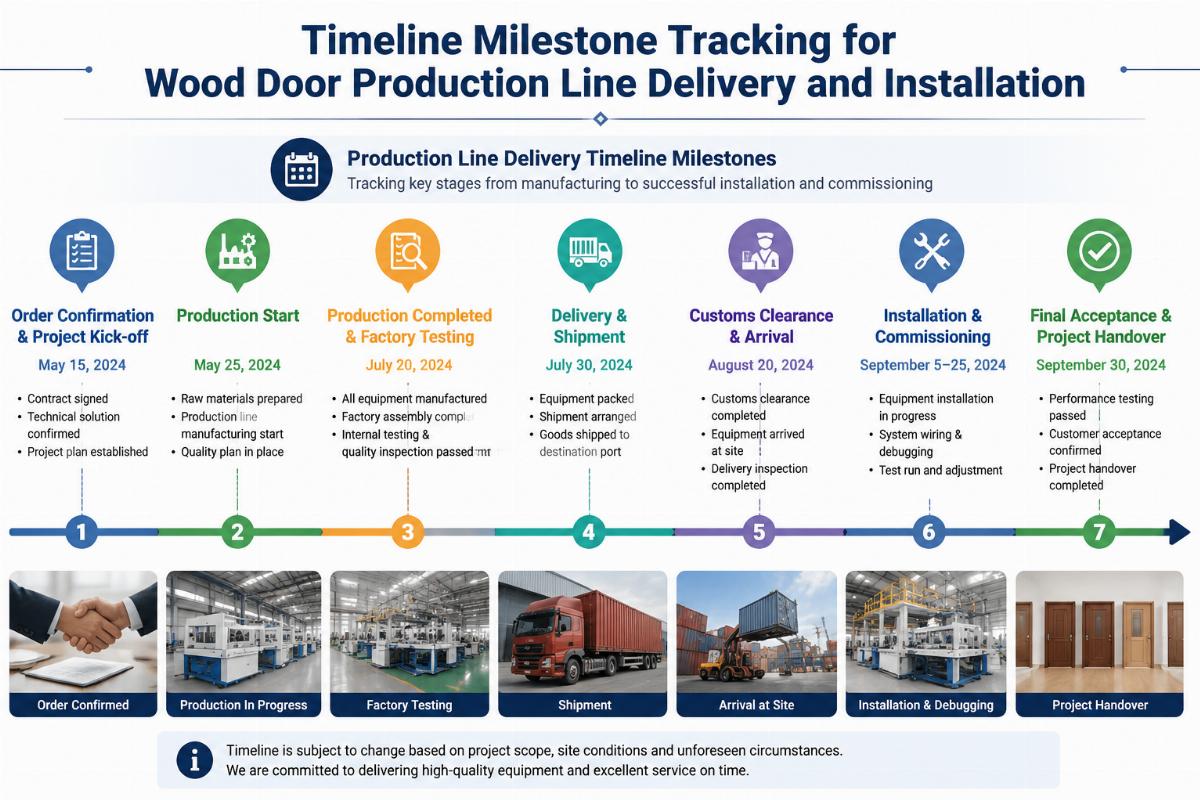
- Milestone Alignment – Request explicit weekly progress updates during the manufacturing phase to catch potential delays early.
- Installation Coordination – Confirm the supplier provides free on-site engineer dispatch to supervise commissioning and train your operational team.
- Post-Launch Support – Schedule a 2-week post-commissioning check to resolve any minor operational adjustments before full production ramps up.
Conclusion
Sourcing a complete turnkey tenoning, boring and engraving wood door production line from a qualified Chinese supplier delivers far higher long-term value than assembling individual components from separate vendors. The most impactful evaluation factors are not upfront price alone, but cross-machine compatibility validation, formal warranty coverage and proven deployment track records for your target production capacity. These criteria will help you avoid costly post-purchase downtime and lock in consistent output that scales with your operation over the 5 to 10 year lifespan of the equipment.

Written by
author
Editor covering global sourcing, supplier verification, and industrial product knowledge. Content is compiled from manufacturer specifications, industry standards, and hands-on experience with international B2B buyers. Every article is fact-checked before publishing to help procurement professionals make informed decisions.
Leave a Reply