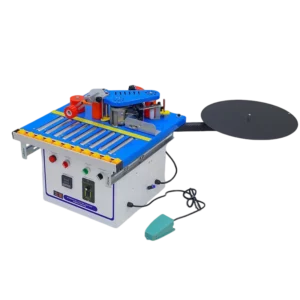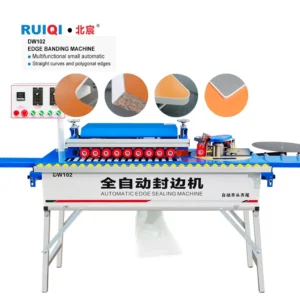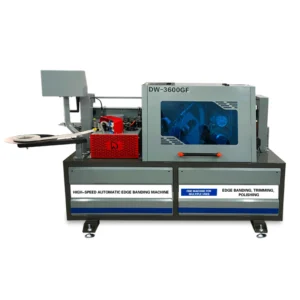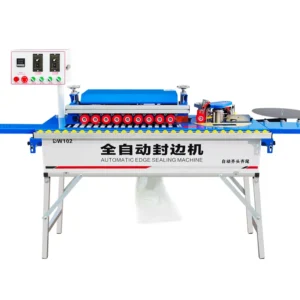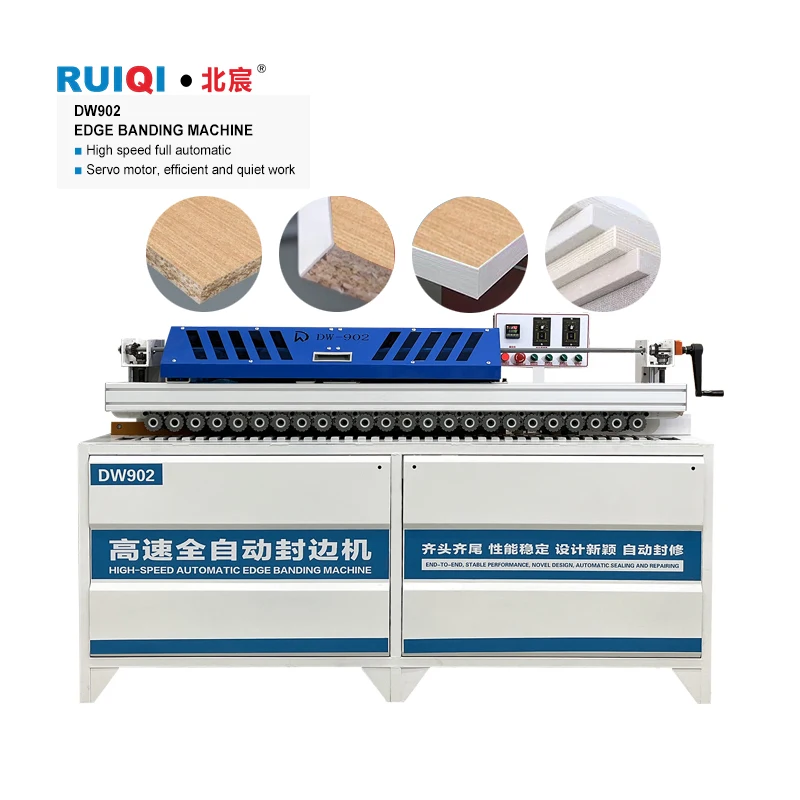
Edge banding machine
Click to enlarge
ISO 9001
CE Certified
OEM / ODM
12-Mo Warranty
Edge banding machine
DW902 Automatic PVC Edge Banding Machine for MDF Plywood – Process Guide
<p><strong>DW902 Automatic Edge Banding Machine</strong>, 4000W, 0.3–3mm banding thickness, PLC control — delivers consistent edge finishing across MDF, particleboard and plywood substrates.</p> <ul> <li>Dual-purpose oblique and straight banding with four pressure wheel groups ensures stable adhesion on varying board densities</li> <li>24000 r/min trimming stations followed by polishing and scraping produce clean, glue-line-free edges ready for assembly</li> <li>Integrated 550W vacuum extraction keeps the work area clear during continuous trimming operations</li> </ul> <p>Backed by four-stage quality verification from incoming material through pre-shipment inspection, with 99.8% pass rate.</p>
100+
Countries
MOQ 1
Unit
15-25 Days
Lead Time
DW902
Edge Banding Machine
MDF Panel
PLC Control
Plywood Panel
Process Guide
PVC Edge Banding
- Full OEM/ODM support -- custom logo, voltage (110V-440V), multilingual panels
- ISO 9001 & CE certified, 5 national patents, 60 professional engineers
- 12-month warranty, remote technical support & spare parts service
- Professional export packaging, customs clearance support, on-time delivery
DW902 Automatic PVC Edge Banding Machine for MDF Plywood – Process Guide
Verified Tolerance Control — the DW902 achieves consistent edge adhesion and trimming finish across MDF, particleboard and plywood through calibrated station alignment and thermal management tested before dispatch.
Technical Specifications
| Parameter | Value |
|---|---|
| Model | DW902 |
| Product Type | Automatic PVC Edge Banding Machine |
| Total Power | 4000W |
| Voltage Options | 220V / 380V / customization available |
| Control System | PLC |
| Overall Dimensions (L×W×H) | 175 × 87 × 112 cm |
| Net Weight | 240 kg |
| Minimum Sheet Length | 25 cm |
| Minimum Sheet Width | 10 cm |
| Edge Banding Height | 5 cm |
| Edge Banding Thickness Range | 0.3 – 3 mm |
| Feed Power | 140W |
| Feed Speed | (basis to be confirmed) |
| Trimming Station | 800W × 2, 24000 r/min |
| Polishing Station | 380W × 2 |
| Vacuum Power | 550W |
| Air Source Pressure | 0.5 – 0.8 MPa |
| Glue Pot Capacity | 4000 ml |
| Panel Thickness Range | (basis to be confirmed) |
| Tolerance | (basis to be confirmed) |
| Standard Functions | Edge banding, trimming, polishing, automatic trimming, scraping, vacuuming |
| Dual-Purpose Capability | Oblique and straight edge banding |
| Language Options | Chinese, English; Spanish and others on request |
| Plug Options | EU, USA, AU, UK |
| Assembly State | Fully assembled |
| Standards | (basis to be confirmed — CE / ISO 9001) |
Application Suitability
| Application | Material or Output |
|---|---|
| Custom cabinet panel finishing | MDF and particleboard with PVC edge banding |
| Furniture production lines | Melamine-faced board with ABS or PVC edging |
| Home decoration panel processing | Ecological board and plywood with veneer or PVC |
| Joinery workshop automation | Solid wood panels requiring straight-line edge finishing |
| Medium-volume batch production | Panel substrates from 10 cm minimum width upward |
Why Substrate Choice Changes Everything About Edge Quality
The edge banding machine process and application outcome depends more on material compatibility than on motor ratings or feed speed alone.
I have watched a cabinet factory run trial samples perfectly on MDF with PVC edging, only to switch to melamine particleboard with ABS banding for production and see adhesion fail completely. Pieces were peeling off the line within the first hour. The machine was not at fault — the glue temperature, feed rate and pressure wheel configuration simply needed adjustment for the new substrate density and surface chemistry [NEED_CITE: substrate density variation between MDF and particleboard]. When operators understand how their specific board material interacts with the glue and banding, the difference in edge quality is immediately visible.
Glue Temperature and Banding Adhesion Across Substrates
The DW902 uses a double hot air design to maintain stable glue temperature throughout the glue pot cycle. This matters because MDF absorbs heat differently from particleboard — MDF’s denser fiber structure pulls thermal energy from the glue film faster, requiring slightly higher pot temperatures for the same open time. With a 4000 ml glue pot capacity, operators processing large batches maintain consistent thermal mass without frequent refills that cause temperature fluctuation. The edge banding machine process and application results shift noticeably when the glue cools even a few degrees below the optimal window for a given substrate.
Pressure Wheel Configuration and Banding Contact
Four groups of oblique pressure wheels press the banding material against the panel edge during the critical adhesion window. On plywood, where the edge surface is uneven due to alternating grain layers, consistent pressure across the full banding height determines whether the bond holds at the top and bottom edges or only in the center. The oblique and straight dual-purpose design means the same machine handles both 90-degree straight edges and beveled profiles without reconfiguration, which matters for workshops producing mixed cabinet and furniture orders [NEED_CITE: edge profiling requirements in custom furniture production].
Trimming and Polishing Sequence for Clean Finished Edges
The trimming stations run at 24000 r/min driven by twin 800W motors, followed by twin 380W polishing wheels and a scraping station. This sequence removes excess banding material, smooths the transition between banding and panel surface, and eliminates the tactile roughness that end users notice on cabinet doors and drawer fronts. The integrated 550W vacuum system extracts chips and dust at the trimming point rather than letting debris settle on freshly glued surfaces — a detail that prevents secondary contamination on the edge before the polishing stage completes. Understanding the edge banding machine process and application at each station level is what separates a functional edge from a visually clean one.
What Happens When Configuration Does Not Match the Workshop
Machines configured without confirming local voltage and frequency arrive unusable — a 380V machine connected to a 220V supply will not start, and a 50 Hz motor running on 60 Hz power will overspeed and fail prematurely. Control panels in a language the operator cannot read stall commissioning entirely, sometimes for days while translated documentation is sourced. Edge banding thickness ranges that do not cover the PVC or veneer materials in actual production force workshops to buy a second machine or compromise on material choice. These are not manufacturing defects; they are specification mismatches that occur before the machine is even ordered [NEED_CITE: common specification mismatches in international machinery procurement].
Why Buyers Choose This Configuration for Process-Critical Work
In-house manufacturing with verified tolerance control means the DW902 is tested on the buyer’s panel thickness range before dispatch, not assumed to work from a generic test. Voltage, language and specification customization is available as standard rather than as an afterthought, so the machine arrives ready for the local electrical supply and operator skill level. The full product family — from entry-level to full-function — means a workshop can scale production volume without changing suppliers or relearning controls. A four-stage QC process covering incoming material, in-process checks, finished product verification and pre-shipment testing provides documented evidence rather than verbal assurances.
Documentation & Verification
- Electrical schematic and voltage confirmation matched to your local supply standard
- Factory test record on your specific panel thickness range and banding material before dispatch
- Operation and maintenance manual in the operator’s agreed language
- Spare parts list with part numbers matching your machine’s actual configuration
- Packing photographs documenting condition at point of shipment
Installation, Commissioning & Support
- Dedicated circuit required for 4000W total power draw; confirm breaker rating with your electrician
- Machine arrives fully assembled at 175 × 87 × 112 cm — plan floor space and doorway clearance accordingly
- Air compressor must deliver 0.5 – 0.8 MPa consistently; undersized compressors cause pressure wheel inconsistency
- First-run calibration includes glue temperature adjustment for your specific banding material and substrate combination
- Trimming and polishing station alignment verified on your panel samples during commissioning
What to Share When Requesting a Configuration Proposal
To receive an accurate configuration and quotation, provide the panel substrates and thickness range you process most frequently, the PVC or veneer banding thickness you use, your workshop’s available voltage and frequency, and the control panel language your operators need. If you are running existing upstream saws or downstream boring equipment, note their feed height and throughput so the line can be matched. Request a sample processing test on your actual materials before confirming the order.
Frequently Asked Questions
Q: Which substrate produces the best edge quality on this machine?
A: MDF typically delivers the most consistent edge quality because its uniform fiber density allows even glue absorption and clean trimming. Particleboard requires careful glue temperature control due to its porous surface, while plywood’s alternating grain layers demand consistent pressure wheel contact. Testing your actual material with the chosen banding thickness before production is the most reliable way to confirm edge finish quality.
Q: How do I choose the right PVC banding thickness for different panels?
A: Thinner banding in the 0.3 – 1 mm range works well on MDF for cabinet interiors where edge durability requirements are moderate. Thicker banding up to 3 mm is suited to particleboard and plywood used in high-wear furniture applications where impact resistance matters. The glue type must match both the banding material and substrate surface chemistry for reliable adhesion.
Q: What compressor capacity does this machine require?
A: The DW902 requires an air source delivering 0.5 – 0.8 MPa consistently across the operating cycle. A compressor that cannot maintain minimum pressure under continuous use will cause pressure wheel inconsistency and uneven banding adhesion. Factor in other pneumatic equipment in your workshop when sizing the compressor to avoid pressure drops during simultaneous operation.
Q: Can the control panel be set to a language other than Chinese?
A: Chinese and English are standard, with Spanish and other languages available on request at the time of order. Specifying the operator’s preferred language before production ensures the machine arrives with readable controls, avoiding commissioning delays that occur when translated documentation must be sourced after delivery.
Q: What station sequence is needed to eliminate visible glue lines?
A: The sequence runs glue application, pressure wheel bonding, trimming at 24000 r/min, polishing, and scraping. Each station must be correctly aligned for your panel thickness and banding material. If visible glue lines persist after trimming, the issue is typically glue temperature or pressure wheel contact rather than the trimming station itself.
Technical Specifications
| Parameter | Value |
|---|---|
| Product Name | DW902 Automatic PVC Edge Banding Machine for MDF Plywood – Process Guide |
| Category | Edge banding machine |
| Voltage Options | 110V / 220V / 380V / 440V (customizable) |
| Frequency | 50Hz / 60Hz (customizable) |
| Certification | ISO 9001, CE |
| MOQ | 1 Unit |
| Lead Time | 15-25 Working Days |
| Warranty | 12 Months |
| OEM / ODM | Available -- logo, color, panel language |
* Detailed technical specifications vary by model. Please contact us with your specific requirements for a complete datasheet.
Shipping & Export
-
Export Packaging
Heavy-duty wooden crate with foam padding and moisture protection
-
Shipping Methods
Sea freight (FCL/LCL), air freight, express -- we support all methods
-
Customs Support
Full documentation: CO, commercial invoice, packing list, HS code assistance
-
Port of Loading
Tianjin / Qingdao port, China -- 20 years export experience
OEM / ODM Services
-
Logo & Branding
Custom logo printing, color scheme, and nameplate engraving
-
Voltage Configuration
110V / 220V / 380V / 440V, 50Hz / 60Hz -- any region supported
-
Multilingual Panels
Control panels in English, Spanish, French, Arabic and more
-
Custom Specifications
Modified dimensions, accessories, or feature sets on request
Get a Quote
Request Product Inquiry
Fill in your details and we'll respond within 24 hours with pricing and availability.
Direct Contact
How It Works
-
1
Confirm requirements & budget
Tell us your factory scale and processing needs
-
2
Receive recommendation & quote
We match the right machine with full specs
-
3
Negotiate & place order
OEM terms, voltage, payment and delivery
-
4
Production & QC inspection
Multi-stage quality control by 60 engineers
-
5
Export packaging & shipment
Professional packing, customs clearance
-
6
After-sales support
12-month warranty, remote tech support
You May Also Like