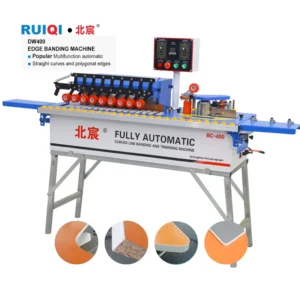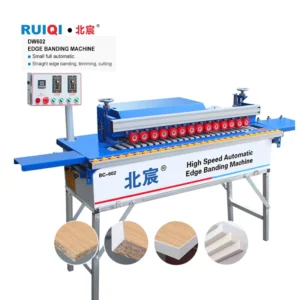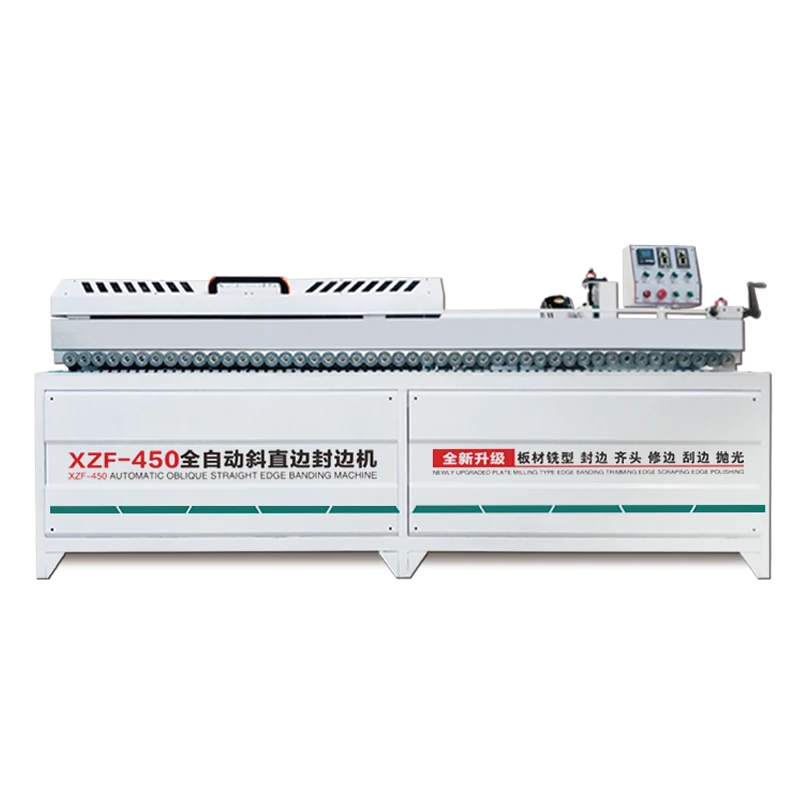
Edge banding machine
Click to enlarge
ISO 9001
CE Certified
OEM / ODM
12-Mo Warranty
Edge banding machine
Edgebanding for MDF and PVC Panel – Process and Application Guide
<p>Backed by a four-stage QC protocol with pre-shipment verification and engineer-led configuration support tailored to your substrate and production requirements.</p>
100+
Countries
MOQ 1
Unit
15-25 Days
Lead Time
380V
45 Degree Edge Banding
Edge Banding Machine
MDF Panel
Pre-Milling Station
Process And Application
PVC Edge Banding
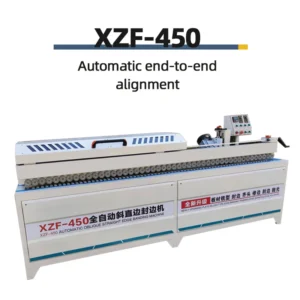
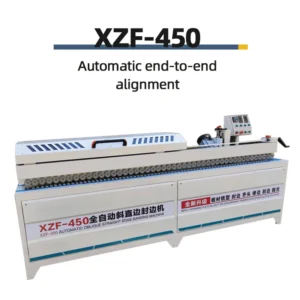
XZF450
- Full OEM/ODM support -- custom logo, voltage (110V-440V), multilingual panels
- ISO 9001 & CE certified, 5 national patents, 60 professional engineers
- 12-month warranty, remote technical support & spare parts service
- Professional export packaging, customs clearance support, on-time delivery
Verified Tolerance Control — Every XZF450 leaves the factory with a documented test record showing ±0.02mm edge accuracy on your specified panel material and thickness, not just a brochure claim.
Technical Specifications
| Parameter | Value |
|---|---|
| Model | XZF-450 |
| Product Type | 45 Degree Full-Automatic Edge Banding Machine |
| Total Power | 9.5 kW |
| Voltage | 380V / 415V |
| Pre-milling Motor | 4 kW |
| Feed Speed | 0–12 m/min |
| Edge Banding Height | 0–50 mm |
| Edge Banding Thickness | 0.3–3 mm |
| Minimum Sheet Length | 30 cm |
| Minimum Sheet Width | 15 cm |
| Trimming Power | 2.2 kW × 2 |
| Vacuum Power | 550 W |
| Polishing Power | 0.4 kW × 2 |
| Glue Pot Capacity | 4000 ml |
| Air Source Pressure | 0.5–0.7 MPa |
| Edge Banding Angles | 30°, 45°, 60° |
| Standard Features | Pre-milling, trimming, scraping, polishing, high-power vacuuming |
| Control Panel Language | Chinese and English (configurable to Spanish or other languages) |
| Plug Options | EU, USA, AU, UK |
| Overall Dimensions | 300 × 65 × 135 cm |
| Net Weight | 430 kg |
Application Suitability
| Application | Material or Output |
|---|---|
| Custom cabinet door and carcass edge finishing | Melamine-faced particleboard with PVC edge banding |
| Mixed-batch furniture panel production | MDF, plywood, and blockboard with 0.3–3 mm banding |
| Polymer door frameless joinery | 45° bevel edge banding on polymer and composite panels |
| Wardrobe and shelving visible edge treatment | Solid wood veneer banding on MDF substrates |
Why Glue Lines Still Show on Perfectly Cut Panels — and What the Edge Banding Machine Process and Application Actually Does About It
The edge you see after assembly was decided before the glue ever touched the panel. A board that looks flat to the eye can carry surface undulations of fractions of a millimetre — enough to produce a visible glue line once PVC or ABS banding is applied and trimmed. Pre-milling removes that inconsistency at the source.
I once watched a batch of melamine particleboard come off a panel saw looking flawless. After banding, every third panel showed a faint shadow line along the top edge. The substrate had a slight concave bow from storage stacking, invisible until the trimming station exposed the gap. A dedicated pre-milling station on the XZF-450 addresses exactly this problem by re-squaring the panel edge before the glue roller makes contact. [NEED_CITE: substrate flatness tolerance standards for laminated panel processing]
How Pre-Milling Changes the Edge Banding Machine Process and Application Outcome
The 4 kW pre-milling motor on the XZF-450 removes a controlled layer from the panel edge before any adhesive is applied. This is not about correcting gross cutting errors — it is about eliminating the micro-irregularities that panel saws and beam saws inevitably leave on MDF and melamine-faced boards. The result is a mating surface that allows the glue film to maintain consistent thickness across the entire edge height.
Multi-Angle Banding Beyond Standard 90° Edges
Most edge banding discussions focus on straight 90° applications, but the XZF-450 supports 30°, 45°, and 60° banding angles within the same pass sequence. This matters for frameless cabinet construction and polymer door profiles where beveled edges must receive banding that follows the contour without lifting at the transition point. The dual trimming stations at 2.2 kW each handle the additional cutting load that angled banding imposes. [NEED_CITE: bevel edge banding adhesion requirements on angled polymer substrates]
Reading the Spec Sheet Against Your Actual Production Needs
Feed speed on this machine ranges from 0 to 12 m/min, but the usable speed depends directly on banding thickness and substrate type. Running 0.3 mm PVC on MDF allows higher feed rates because trimming load is minimal. Switching to 3 mm solid wood veneer on plywood demands slower feed to maintain trimming accuracy and avoid chipping at the exit point. The edge banding machine process and application outcome shifts noticeably when operators understand this relationship rather than running a single speed for all materials.
Glue pot capacity at 4000 ml determines how long the machine runs between refills during continuous production. EVA hot-melt adhesive behaves differently across temperature ranges, and the pot must maintain stable heat across its full volume to avoid viscosity variation that directly shows up as uneven glue lines. Air source pressure between 0.5 and 0.7 MPa drives the pneumatic actuators on the trimming and scraping stations — pressure drops below this range cause inconsistent scraper engagement, leaving ridges that the polishing station cannot fully remove.
What Happens When Configuration Does Not Match the Workshop
Machines arrive with control panels the operator cannot read, and commissioning stalls for days while someone finds a translator. I have seen this happen more than once in Southeast Asian furniture factories where the default language was never changed before shipping. The XZF-450 control panel ships in Chinese and English as standard, with configuration available for Spanish and other languages — but this must be confirmed before production, not discovered on the factory floor.
Voltage mismatches cause a different kind of delay. A machine rated for 380V/415V connected to a 220V three-phase supply without a proper transformer will not start at all, and attempting to force it can damage the 4 kW pre-milling motor winding. [NEED_CITE: voltage and frequency standards by export market]
Why Sourcing This Machine Through Ruiqi Woodwork
Every XZF-450 undergoes four-stage quality verification covering incoming components, in-process assembly, finished product testing, and pre-shipment run-off with documented results. The pre-milling station is tested under actual cutting load, not just idle rotation.
Voltage, plug type, and control panel language are confirmed with each buyer before the machine enters final assembly. Plug options cover EU, USA, AU, and UK standards, and the electrical schematic is provided so local electricians can verify circuit requirements before delivery.
The full product family from entry-level to full-function edge banders allows a workshop to scale capacity within one supplier relationship, keeping spare parts inventory and operator training consistent across machines.
Documentation & Verification
- Factory test record on your specific panel material and banding thickness before dispatch
- Electrical schematic confirming voltage and plug type matched to your facility supply
- Operation and maintenance manual in the language you specify at order confirmation
- CE declaration of conformity for machinery directive compliance
- Spare parts list with cross-referenced component numbers for local sourcing
Installation, Commissioning & Support
- Requires a dedicated 380V/415V three-phase circuit rated for the 9.5 kW total draw
- 300 cm length footprint needs minimum 50 cm clearance on the infeed and outfeed sides
- Pneumatic line must deliver 0.5–0.7 MPa at the machine inlet with a dedicated air filter regulator
- First-run commissioning includes glue pot temperature calibration for your adhesive type and ambient conditions
- Scraping and polishing station adjustment verified on your actual panel samples during setup
- Pre-milling cutter replacement interval confirmed based on your substrate abrasiveness
Before You Request a Quote
To configure the XZF-450 correctly for your line, we need to know the substrates you run most frequently — MDF, particleboard, plywood, or a mix — along with the banding materials and thicknesses in your standard production. Share your facility voltage and frequency, preferred control panel language, and whether your current panel saws produce edges that need pre-milling correction. If you are replacing an existing edge bander, tell us which functions were missing so the configuration addresses those gaps directly.
Frequently Asked Questions
Q: How does pre-milling affect edge quality on MDF versus particleboard?
A: MDF tends to have a slightly fuzzy edge after sawing that pre-milling cleans into a smooth surface, improving glue contact. Particleboard is more prone to surface undulation from storage and handling, so pre-milling re-squares the edge to eliminate gaps that would show as visible glue lines after trimming. Both substrates benefit, but for different reasons tied to their internal structure.
Q: What glue types work with the 4000 ml glue pot?
A: The pot is designed for EVA hot-melt adhesives commonly used in furniture edge banding. Temperature stability across the full pot volume is critical for consistent viscosity. If your production environment has significant temperature variation between seasons, confirm the adhesive manufacturer’s recommended range and we will verify the pot heating system maintains that window before shipping.
Q: How does 45° edge banding differ from 90° in setup and material selection?
A: Angled banding requires the trimming cutters to follow the bevel contour, which increases cutting load compared to straight 90° work. Thinner PVC or ABS banding conforms to angled profiles more readily than rigid veneer. The dual 2.2 kW trimming motors on the XZF-450 handle this additional load, but feed speed should be reduced on 45° and 60° passes to maintain clean trimming without edge chipping.
Q: What feed speed works best for thin PVC versus thick solid wood banding?
A: Thin 0.3 mm PVC on MDF allows feed speeds toward the upper end of the 0–12 m/min range because trimming load is low. Solid wood banding at 3 mm thickness requires slower feed to prevent chipping at the trimming exit point and to allow the scraping station to remove the full adhesive residue. Optimal speed depends on your specific substrate and banding combination, which is why sample testing matters.
Q: When should the scraping and polishing stations be engaged or bypassed?
A: Scraping removes the thin adhesive film left beside the banding after trimming and is necessary for nearly all production runs to achieve a clean edge. Polishing follows scraping to remove micro-scratches and produce a finished surface. On matte-finish banding or when downstream processes include additional surface treatment, polishing can be bypassed. Both stations use pneumatic actuators, so engagement is controlled through the panel rather than manual setup.
Technical Specifications
| Parameter | Value |
|---|---|
| Product Name | Edgebanding for MDF and PVC Panel – Process and Application Guide |
| Category | Edge banding machine |
| Voltage Options | 110V / 220V / 380V / 440V (customizable) |
| Frequency | 50Hz / 60Hz (customizable) |
| Certification | ISO 9001, CE |
| MOQ | 1 Unit |
| Lead Time | 15-25 Working Days |
| Warranty | 12 Months |
| OEM / ODM | Available -- logo, color, panel language |
* Detailed technical specifications vary by model. Please contact us with your specific requirements for a complete datasheet.
Shipping & Export
-
Export Packaging
Heavy-duty wooden crate with foam padding and moisture protection
-
Shipping Methods
Sea freight (FCL/LCL), air freight, express -- we support all methods
-
Customs Support
Full documentation: CO, commercial invoice, packing list, HS code assistance
-
Port of Loading
Tianjin / Qingdao port, China -- 20 years export experience
OEM / ODM Services
-
Logo & Branding
Custom logo printing, color scheme, and nameplate engraving
-
Voltage Configuration
110V / 220V / 380V / 440V, 50Hz / 60Hz -- any region supported
-
Multilingual Panels
Control panels in English, Spanish, French, Arabic and more
-
Custom Specifications
Modified dimensions, accessories, or feature sets on request
Get a Quote
Request Product Inquiry
Fill in your details and we'll respond within 24 hours with pricing and availability.
Direct Contact
How It Works
-
1
Confirm requirements & budget
Tell us your factory scale and processing needs
-
2
Receive recommendation & quote
We match the right machine with full specs
-
3
Negotiate & place order
OEM terms, voltage, payment and delivery
-
4
Production & QC inspection
Multi-stage quality control by 60 engineers
-
5
Export packaging & shipment
Professional packing, customs clearance
-
6
After-sales support
12-month warranty, remote tech support
You May Also Like