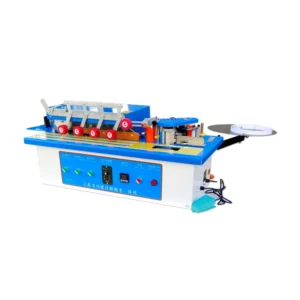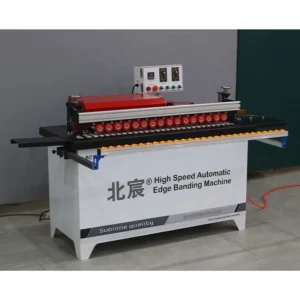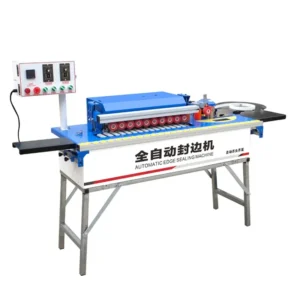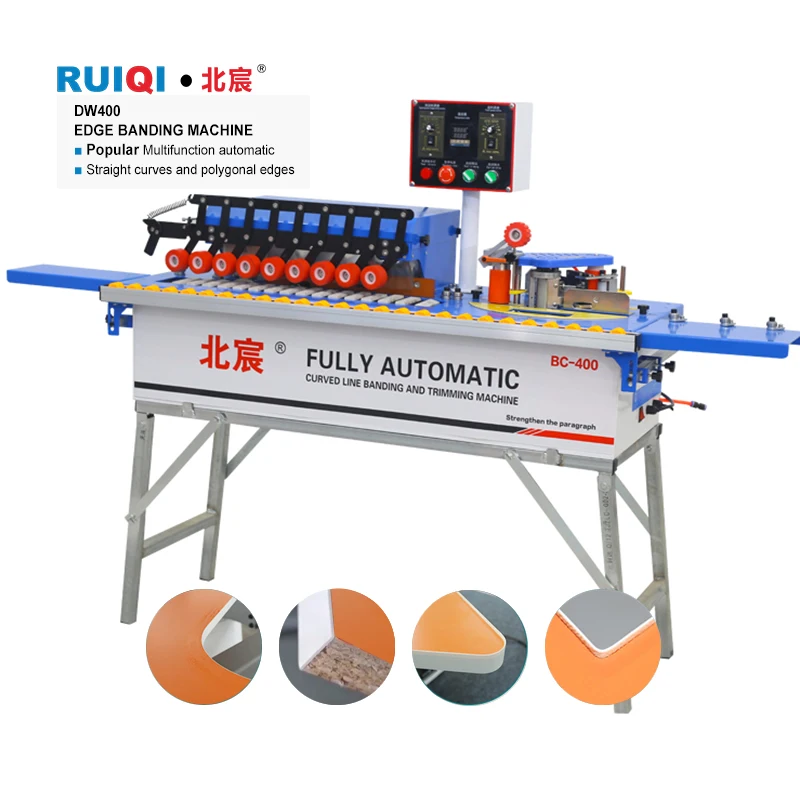
Edge banding machine
Click to enlarge
ISO 9001
CE Certified
OEM / ODM
12-Mo Warranty
Edge banding machine
Desktop PVC Automatic Edge Banding Machine – Process Application
<p><strong>DW400 Automatic Edge Banding Machine, 220V/380V, 650W×2 Trimming, 0.3-3mm Banding Thickness</strong> — processes MDF, particleboard and plywood with consistent glue application and dual trimming stations for clean edge finishing. The 1000ml glue pot supports stable temperature across runs, reducing visible glue lines on panel substrates. Four-stage QC with pre-shipment verification and factory test records available for edge quality validation.</p> <ul> <li>Minimum workpiece: 25cm × 10cm, edge height 0-50mm</li> <li>Polishing stations (180W×2) for smooth surface finish</li> <li>Multilingual control panel and plug options included</li> </ul>
100+
Countries
MOQ 1
Unit
15-25 Days
Lead Time
220V 380V
Automatic Edge Banding
Desktop Edge Bander
DW400
Edge Banding Machine
MDF Panel
Process Application
PVC Edge Banding
- Full OEM/ODM support -- custom logo, voltage (110V-440V), multilingual panels
- ISO 9001 & CE certified, 5 national patents, 60 professional engineers
- 12-month warranty, remote technical support & spare parts service
- Professional export packaging, customs clearance support, on-time delivery
Voltage-flexible configuration — every DW400 unit ships with confirmed electrical schematics matching your workshop’s local supply, preventing the all-too-common arrival of an unusable machine.
Technical Specifications
| Parameter | Value |
|---|---|
| Model | DW400 |
| Product Type | Automatic Edge Banding Machine |
| Total Power | 3800W |
| Voltage & Frequency | 220V / 380V / customization available |
| Edge Banding Thickness Range | 0.3 – 3 mm |
| Edge Banding Height Range | 0 – 50 mm |
| Minimum Sheet Length | 25 cm |
| Minimum Sheet Width | 10 cm |
| Trimming Power | 650W × 2 stations |
| Polishing Power | 180W × 2 stations |
| Vacuum Power | 1200W |
| Edge Feed Power | 20W |
| Transmission Power | 60W |
| Air Source Pressure | 0.5 – 0.8 MPa |
| Glue Pot Capacity | 1000 ml |
| Machine Dimensions | 116 × 47 × 69 cm |
| Machine Weight | 70 kg |
| Control Panel Languages | Chinese, English, Spanish, or customized |
| Plug Options | EU, USA, AU, UK |
Application Suitability
| Application | Material or Output |
|---|---|
| Cabinet carcass edge banding | MDF and particleboard panels for kitchen and wardrobes |
| Custom furniture straight-edge finishing | Plywood and blockboard with PVC or melamine banding |
| Polymer door profile banding | Polymer substrates with compatible hot-melt adhesive |
| Small-batch workshop production | Mixed board types in job-shop environments |
Why Glue Lines Show Up on Some Substrates and Not Others
Substrate moisture and surface porosity determine whether the adhesive bonds cleanly or leaves a visible seam.
In my years running edge banders across Southeast Asian furniture factories, the most frustrating calls come from plants that tested perfectly on standard MDF, then switched to locally sourced recycled particleboard. The higher moisture content in that material causes the hot-melt adhesive to cool unevenly, producing whitish glue lines that fail visual inspection. The woodworking edge banding machine process and application depends as much on board condition as on the machine itself [NEED_CITE: substrate moisture content standards for panel processing]. A 1000 ml glue pot on the DW400 helps maintain thermal stability during continuous runs, but operators still need to verify that incoming boards fall within acceptable moisture limits before the first panel enters the feed zone.
How Trim and Polish Stations Shape the Final Edge
The dual 650W trimming stations remove excess banding material from the top and bottom of the panel in one pass. Consistent trim quality means the downstream assembly team does not have to hand-scrape edges before drilling hinge bores or inserting shelf pins. When trimming power is insufficient for the banding thickness, operators see chipping at the cut exit point, especially on 2 mm or 3 mm PVC stock.
The two 180W polishing wheels follow immediately, smoothing the trimmed edge to a uniform finish. On visible cabinet fronts and open-shelf units, the difference between a polished and an unpolished edge is immediately apparent to the end customer. For the woodworking edge banding machine process and application, these four finishing stations together define the tactile and visual quality that reaches the showroom floor.
Glue Temperature Stability and Banded Material Selection
Hot-melt adhesives used in edge banding require a stable temperature window. EVA-based glue, the most common type in furniture production, softens around 180 °C and degrades if held too long at high temperature. The 1000 ml glue pot on this unit provides enough volume to buffer temperature fluctuations during a batch run, reducing the risk of cold glue application on thicker panels [NEED_CITE: EVA hot-melt adhesive processing temperature ranges].
Thinner banding materials such as 0.3 mm melamine demand precise glue film thickness, while 3 mm PVC requires a heavier coat and longer open time. Matching glue temperature to banding type is a core part of the woodworking edge banding machine process and application, and misalignment here shows up as peeling within weeks of delivery.
Reading the Specification Sheet Against Your Production Reality
The 0 – 50 mm edge banding height range covers standard panel thicknesses from thin shelf stock to thick countertop cores. However, the minimum sheet dimensions of 25 cm length and 10 cm width mean that very small offcuts or narrow drawer fronts may not feed reliably through the pressure rollers. Production managers planning a cut list should flag any components below these thresholds and route them to a manual or semi-automatic station instead.
The 3800W total power draw is distributed across trimming, polishing, vacuum, and feed motors. In workshops running on single-phase 220V supply, confirming that the local circuit can sustain the combined load without voltage drop is essential before commissioning. The woodworking edge banding machine process and application is only as reliable as the electrical infrastructure supporting it [NEED_CITE: voltage and frequency standards by export market]. The dual trimming motors at 650W each represent the largest single load block, so any undersized breaker will trip during the trim cycle first.
The Hidden Cost of Skipping Substrate Verification
Factories that purchase an edge bander based solely on price and advertised features often discover the real expense after installation. Boards with inconsistent density cause the pressure rollers to apply uneven force, resulting in banding that lifts at the trailing edge. Recycled particleboard with resin pockets can foul the glue pot, requiring unplanned cleaning downtime that disrupts the entire line schedule.
When the control panel language does not match the operator’s fluency, parameter adjustments for glue temperature and feed speed become guesswork. Incorrect settings compound over a production run, turning a small calibration error into hundreds of defective panels before anyone notices [NEED_CITE: operator error rates linked to untranslated control interfaces]. These are not machine defects — they are configuration oversights that surface only under real production conditions.
What Sets This Purchase Path Apart
Every quotation includes an engineer-led configuration review based on your actual board types, banding materials, and daily volume, not a generic catalog price. Voltage and plug type are confirmed in writing before production begins, so the machine that arrives matches your workshop’s electrical supply exactly.
A factory test record using your specified panel material and edge banding stock is completed before dispatch, documenting trim quality and glue line appearance under controlled conditions. Control panel language is set to your operator’s preference, whether that is English, Spanish, or another agreed language, removing the commissioning delay that untranslated interfaces cause. The four-stage quality check — incoming material, in-process, finished product, and pre-shipment — catches tolerance drift before the crate is sealed.
Documentation & Verification
- CE declaration of conformity covering the DW400 edge banding machine assembly
- Electrical schematic with confirmed voltage and frequency for your facility
- Factory test record using your specified panel thickness and banding material
- Operation and maintenance manual in the agreed operator language
- Spare parts list identifying trim blades, polishing wheels, and glue pot components
Installation, Commissioning & Support
- Requires a dedicated circuit matching the confirmed 220V or 380V supply for the 3800W total load
- Compressed air supply at 0.5 – 0.8 MPa must be connected before first startup
- Machine footprint of 116 × 47 cm needs clear access on the feed and exit sides for panel handling
- First-run parameter setting covers glue temperature, feed speed, and trim depth for your board type
- Trim blades and polishing wheels included in the initial spare parts kit for early replacement cycles
- Daily glue pot cleaning procedure documented in the maintenance manual to prevent adhesive buildup
Before You Request a Quote
Share the specific board materials you run most often — MDF, particleboard, plywood, or a mix — along with the edge banding types and thicknesses in your current specification. Confirm your workshop’s voltage, frequency, and available plug type so the electrical configuration is locked in before production. If you have panels below 25 cm in length or 10 cm in width, let us know so we can advise on whether this woodworking edge banding machine process and application suits your smallest components or if a supplementary station is needed.
Frequently Asked Questions
Q: Can we send our own board samples for a test run before ordering?
A: Yes. Send a batch of your actual MDF, particleboard, or plywood along with the edge banding stock you use. A full test cycle is run on the DW400, and the factory test record documents glue line visibility, trim accuracy, and polish finish. Results are shared before you commit to the order.
Q: How does PVC banding differ from thin wood veneer in glue settings?
A: PVC at 1 – 3 mm thickness needs a heavier glue coat and slightly higher pot temperature to maintain open time. Wood veneer at 0.3 – 0.6 mm requires a thinner film to prevent bleed-through. Both fall within the DW400’s 0.3 – 3 mm range, but glue temperature and roller pressure must be adjusted per material.
Q: Will the control panel be in a language my operators can read?
A: The DW400 control panel is configured to your chosen language before dispatch — Chinese, English, Spanish, or another customized option. This ensures operators can adjust feed speed, glue temperature, and trimming parameters without translation delays during commissioning and daily production.
Q: How do the minimum sheet dimensions affect our cut list planning?
A: The DW400 requires panels at least 25 cm long and 10 cm wide for reliable feeding through the pressure rollers. Components smaller than these dimensions should be identified during nesting and routed to a manual banding station. Sharing your typical cut list helps us confirm coverage.
Q: How does this machine fit between our panel saw and boring machine?
A: The DW400 handles straight-edge banding on panels cut to size upstream. Throughput depends on panel dimensions and banding thickness, so matching feed cycles with your panel saw output and boring machine intake prevents bottlenecks. Providing your daily panel count and shift schedule allows us to assess line balance.
Technical Specifications
| Parameter | Value |
|---|---|
| Product Name | Desktop PVC Automatic Edge Banding Machine – Process Application |
| Category | Edge banding machine |
| Voltage Options | 110V / 220V / 380V / 440V (customizable) |
| Frequency | 50Hz / 60Hz (customizable) |
| Certification | ISO 9001, CE |
| MOQ | 1 Unit |
| Lead Time | 15-25 Working Days |
| Warranty | 12 Months |
| OEM / ODM | Available -- logo, color, panel language |
* Detailed technical specifications vary by model. Please contact us with your specific requirements for a complete datasheet.
Shipping & Export
-
Export Packaging
Heavy-duty wooden crate with foam padding and moisture protection
-
Shipping Methods
Sea freight (FCL/LCL), air freight, express -- we support all methods
-
Customs Support
Full documentation: CO, commercial invoice, packing list, HS code assistance
-
Port of Loading
Tianjin / Qingdao port, China -- 20 years export experience
OEM / ODM Services
-
Logo & Branding
Custom logo printing, color scheme, and nameplate engraving
-
Voltage Configuration
110V / 220V / 380V / 440V, 50Hz / 60Hz -- any region supported
-
Multilingual Panels
Control panels in English, Spanish, French, Arabic and more
-
Custom Specifications
Modified dimensions, accessories, or feature sets on request
Get a Quote
Request Product Inquiry
Fill in your details and we'll respond within 24 hours with pricing and availability.
Direct Contact
How It Works
-
1
Confirm requirements & budget
Tell us your factory scale and processing needs
-
2
Receive recommendation & quote
We match the right machine with full specs
-
3
Negotiate & place order
OEM terms, voltage, payment and delivery
-
4
Production & QC inspection
Multi-stage quality control by 60 engineers
-
5
Export packaging & shipment
Professional packing, customs clearance
-
6
After-sales support
12-month warranty, remote tech support
You May Also Like