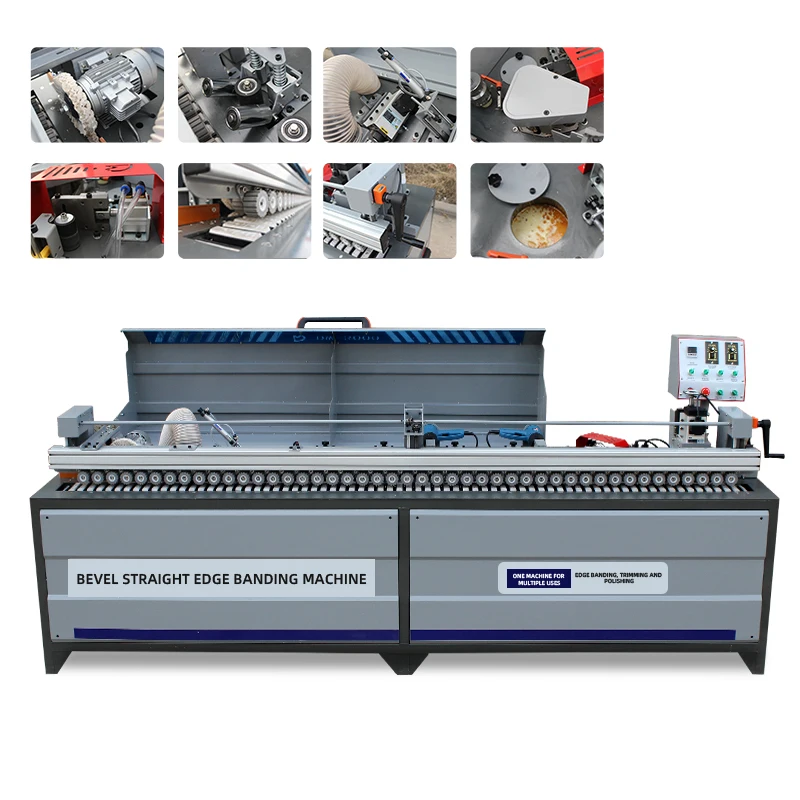
Edge banding machine
Click to enlarge
ISO 9001
CE Certified
OEM / ODM
12-Mo Warranty
Edge banding machine
DW3000 Edge Banding Machine for Cabinet Door – Process Guide
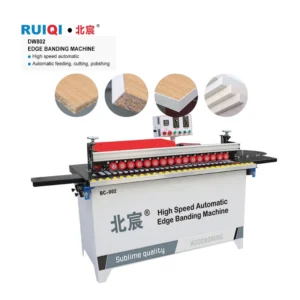
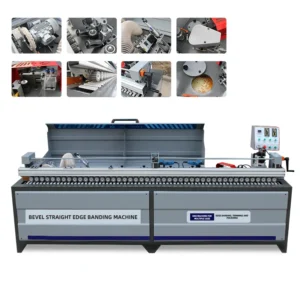
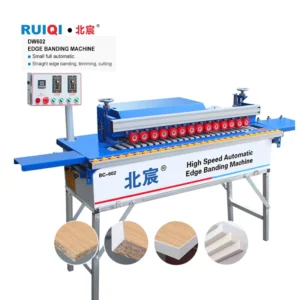
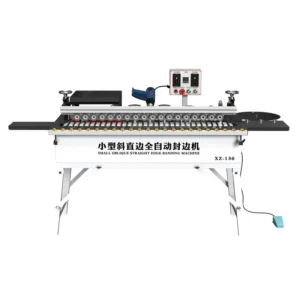
<p><strong>DW3000 Edge Banding Machine</strong>, 11KW total power, 0-12M/min feed speed, 0.3-3MM edge thickness — built for cabinet door production with both straight and 30-90° bevel profiles. Dual 2.2KW heat guns ensure thorough glue activation across substrates, while 8 adjustable oblique pressure wheels maintain consistent banding compliance on angled cuts. The 3-spindle trimming station and flexible edge scraper deliver clean glue lines for accurate downstream assembly.</p> <ul> <li>Pre-shipment test records with sample panels available for edge quality verification, with 24-hour engineer-led configuration proposals.</li> </ul>
100+
Countries
MOQ 1
Unit
15-25 Days
Lead Time
- Full OEM/ODM support -- custom logo, voltage (110V-440V), multilingual panels
- ISO 9001 & CE certified, 5 national patents, 60 professional engineers
- 12-month warranty, remote technical support & spare parts service
- Professional export packaging, customs clearance support, on-time delivery
Voltage, language and specification customization as standard — the DW3000 edge banding machine ships with confirmed 380V/415V settings, bilingual controls, and plug format matched to your facility before it leaves the factory floor.
Technical Specifications
| Parameter | Value |
|---|---|
| Model | DW3000 |
| Product Type | Fully Automatic Edge Banding Machine for Bevel and Straight Edge |
| Total Power | 11 kW |
| Voltage | 380V / 415V |
| Edge Feed Speed | 0–12 m/min |
| Transmission Speed | 0–12 m/min |
| Pre-milling Motor | 2.2 kW |
| Heating Power | 2.2 kW × 2 (dual heat gun) |
| Trimming Motor | 2.2 kW × 2 (3 spindle motors total) |
| Polishing Motor | 0.4 kW × 2 |
| Trimming Feed Motor | 800 W (silent type) |
| Vacuum Power | 550 W |
| Edge Feed Power | 160 W |
| Transmission Power | 180 W |
| Glue Pot Capacity | 4000 ml |
| Air Source Pressure | 0.5–0.7 MPa |
| Minimum Sheet Length | 30 cm |
| Minimum Sheet Width | 15 cm |
| Edge Banding Height | 0–50 mm |
| Edge Banding Thickness | 0.3–3 mm |
| Bevel Angle Range | 30–90° (8 sets adjustable oblique pressure wheels) |
| Product Size | 299 × 65 × 130 cm |
| Product Weight | 430 kg |
| Key Features | Pre-milling, 30–90° bevel banding, trimming, scraping, polishing, high-power vacuuming, adjustable slotting device, double cylinder feeding belt, flexible edge scraper |
| Language Options | Chinese and English standard; Spanish and other languages available |
| Plug Options | EU, USA, AU, UK |
| Certification | CE, ISO 9001 |
Application Suitability
| Application | Material or Output |
|---|---|
| Cabinet door panel edge banding | MDF and particleboard with PVC or wood veneer banding |
| Bevel-edge furniture components | Plywood and MDF at 30–90° angles with 0.3–3 mm banding |
| Mixed straight and angled panel runs | Custom furniture panels requiring both profiles in one workflow |
| Small-batch custom joinery | Solid wood panels and substrate boards with veneer edge treatment |
Why Glue Lines Show Up on Bevel Edges First
Thermal coverage and pressure distribution behave differently on angled profiles than on flat edges, and most visible glue lines start there.
When a cabinet door workshop runs straight-edge panels all morning and then switches to 45-degree bevels after lunch, the edge banding machine process and application demands shift without the operator always noticing. The glue film that bonded cleanly on a flat MDF edge now meets a sloped surface where gravity pulls it downward before the pressure roller makes full contact. I have watched this happen on production floors — the first few bevel panels come off with a faint ridge along the top edge, and by the time someone adjusts the temperature, a stack of door blanks is already headed for rework [NEED_CITE: common edge banding defects on bevel profiles in panel furniture]. The dual heat gun arrangement on this unit exists precisely because a single heating element rarely maintains uniform glue viscosity across both straight and angled geometry within the same feed pass.
How Dual Heating Changes Glue Behavior on Angled Cuts
The two 2.2 kW heat guns work in sequence along the glue application zone. On a straight 90-degree edge, the first gun brings the adhesive to working temperature and the second maintains it through the pressure zone. On a 45-degree bevel, the contact surface is longer and the glue film spreads across a wider area, demanding sustained thermal input to prevent premature cooling before the banding meets the substrate.
This matters most when switching between 0.3 mm PVC and 2 mm veneer banding in the same shift, as each material draws heat from the glue film at a different rate.
Pressure Wheel Geometry and Bevel Compliance
The 8 sets of oblique pressure wheels adjust independently across a 30 to 90-degree range, which is where the edge banding machine process and application outcome gets decided on angled cuts. On a flat edge, a single pressure zone is usually enough. On a bevel, the banding must conform to two planes simultaneously — the face of the board and the angled cut — and each wheel set addresses a different section of that transition.
I once visited a workshop where the operator had locked all eight wheels to the same angle for a 45-degree cabinet door run. The banding adhered well at the top of the profile but lifted slightly at the bottom edge where the wheel pressure was too aggressive, compressing the PVC and squeezing out excess glue. Separating the wheel angles by just a few degrees across the set corrected the issue [NEED_CITE: pressure wheel adjustment practice for bevel edge banding].
What the Specs Mean for Your Panel Output
The 0–12 m/min feed speed range covers both careful single-panel runs and sustained batch processing, though the practical speed for clean bevel work tends to sit below the maximum. At higher feed rates, the glue has less dwell time under the pressure wheels, which can leave incomplete adhesion on angled profiles where the bonding surface is already longer than on straight edges.
The 4000 ml glue pot capacity supports extended runs without frequent refills, reducing thermal cycling that occurs when cold adhesive is added to a hot pot mid-shift. The pre-milling motor at 2.2 kW removes a thin layer from the panel edge before glue application — this is particularly important for particleboard and MDF where the cut surface may have loose fibers or slight unevenness from the panel saw. A clean milled edge gives the adhesive a consistent surface to bond to, which becomes even more critical on bevel cuts where any substrate irregularity is magnified by the angle.
The 550 W vacuum system pulls trimming debris away from the work zone continuously. On bevel cuts, the trimming waste tends to curl and lodge in the angle if extraction is weak, potentially scratching the next panel in line.
When One Machine Cannot Handle Both Profiles
A workshop that buys a straight-edge-only bander and later takes on bevel cabinet door orders faces an uncomfortable choice: send the bevel panels out for processing, losing control over lead time and finish consistency, or attempt a manual workaround that compromises the edge quality the straight-edge work established. The 30 to 90-degree range with eight independently adjustable wheel sets means the edge banding machine process and application scope covers the full bevel spectrum without requiring a second machine or a separate production step.
The silent 800 W trimming feed motor and flexible edge scraper handle the cleanup that follows the pressure zone. On bevel edges, glue squeeze-out collects differently than on straight edges — it pools in the angle rather than running off the face — and the scraper must follow that contour to leave a clean joint line visible to the end customer.
Why Specification Confirmation Matters Before Shipment
Sending a machine without confirming local voltage and frequency is a recurring problem in equipment export. The DW3000 is configured for 380V/415V as standard, but if the receiving facility runs on a different supply — or if the frequency is 60 Hz rather than 50 Hz — motor speeds shift, heating elements draw different power, and the glue pot may not reach the temperature the process requires. I have seen machines arrive on site and sit idle for weeks while transformers are sourced [NEED_CITE: voltage mismatch issues in imported industrial machinery].
The language on the control panel is another point that gets overlooked until the machine is powered on and the operator cannot read the menu. Chinese and English are standard, but Spanish and other languages are available if the production floor requires it.
Sourcing From a Manufacturer That Tests Before Dispatch
The DW3000 goes through pre-milling verification, bevel angle testing, and straight-edge trimming checks before crating. Each unit has its voltage, plug format (EU, USA, AU, UK), and control language confirmed against the purchase specification before the pre-shipment test runs.
The four-stage quality check covers incoming component inspection, in-process assembly verification, finished unit testing, and final pre-shipment validation. Patented cutting mechanisms in the trimming and pre-milling stations are built in-house, which means replacement parts match the original specification without aftermarket variance.
Engineer-led configuration means the machine is recommended based on your actual panel dimensions, substrate types, and daily volume rather than a catalog default. Factory visits are welcomed so you can run your own material through the machine before it ships.
Documentation & Verification
- CE declaration of conformity covering machinery directive requirements for this edge bander class
- Factory test record with your panel thickness and bevel angle settings documented before dispatch
- Electrical schematic confirming voltage, frequency, and circuit protection ratings for your facility
- Operation and maintenance manual in the agreed language with bevel adjustment procedures
- Spare parts list with part numbers for pressure wheels, trimming cutters, and scraper blades
- Packing photographs showing crating condition before container loading
Installation, Commissioning & Support
- Requires a level concrete floor capable of supporting 430 kg static load across the 299 cm footprint
- Dedicated 380V/415V three-phase circuit with appropriate breaker rating for 11 kW total draw
- Arrives as a single unit; air supply connection at 0.5–0.7 MPa must be ready at commissioning
- First-run parameter setting includes glue temperature calibration for your specific banding material
- Operator training covers oblique pressure wheel adjustment for each bevel angle in your product range
- Trimming cutter and scraper blade replacement schedule based on your daily panel volume
What to Include in Your Inquiry
To configure the DW3000 for your production line, share the panel substrates you run most often (MDF, particleboard, plywood), the edge banding materials and thickness range, and the bevel angles your cabinet door designs require. Confirm your local voltage and frequency, the preferred control panel language, and whether you need sample panels processed on your own material before placing the order.
Frequently Asked Questions
Q: How does bevel edge banding affect glue temperature and pressure settings compared to straight edge?
A: On a bevel, the bonding surface is longer and the glue film spreads across an angled plane, requiring sustained heat to maintain adhesive viscosity through the pressure zone. The dual 2.2 kW heat guns address this by providing continuous thermal coverage, while the 8 oblique pressure wheels distribute force across the angled profile rather than concentrating it at a single point as a straight-edge setup would.
Q: What substrate and edge band material combinations work best with the dual heat gun system?
A: MDF and particleboard with PVC banding between 0.3 mm and 3 mm respond well because the pre-milling stage cleans the substrate surface before the dual guns bring the adhesive to working temperature. Wood veneer banding on plywood also benefits from the sustained heat, as veneer absorbs thermal energy from the glue film faster than PVC and needs the second gun to maintain bond integrity across the full contact area.
Q: How to adjust the 8 oblique pressure wheels for different bevel angles in cabinet door production?
A: Each wheel set adjusts independently across the 30 to 90-degree range. For a 45-degree bevel, operators typically stagger the angles slightly across the set so that pressure transitions gradually along the profile rather than hitting the banding at one uniform angle. The operation manual provided in your chosen language documents the recommended starting positions for common bevel angles.
Q: What is the effect of feed speed on edge finish quality for different panel materials?
A: At feed rates closer to the upper end of the 0–12 m/min range, glue dwell time under the pressure wheels decreases, which can affect adhesion on bevel cuts where the bonding surface is already extended. For MDF and particleboard with thicker veneer banding, a moderate feed speed allows full glue activation and pressure contact. Lighter PVC on straight edges tolerates higher speeds without finish compromise.
Technical Specifications
| Parameter | Value |
|---|---|
| Product Name | DW3000 Edge Banding Machine for Cabinet Door – Process Guide |
| Category | Edge banding machine |
| Voltage Options | 110V / 220V / 380V / 440V (customizable) |
| Frequency | 50Hz / 60Hz (customizable) |
| Certification | ISO 9001, CE |
| MOQ | 1 Unit |
| Lead Time | 15-25 Working Days |
| Warranty | 12 Months |
| OEM / ODM | Available -- logo, color, panel language |
* Detailed technical specifications vary by model. Please contact us with your specific requirements for a complete datasheet.
Shipping & Export
-
Export Packaging
Heavy-duty wooden crate with foam padding and moisture protection
-
Shipping Methods
Sea freight (FCL/LCL), air freight, express -- we support all methods
-
Customs Support
Full documentation: CO, commercial invoice, packing list, HS code assistance
-
Port of Loading
Tianjin / Qingdao port, China -- 20 years export experience
OEM / ODM Services
-
Logo & Branding
Custom logo printing, color scheme, and nameplate engraving
-
Voltage Configuration
110V / 220V / 380V / 440V, 50Hz / 60Hz -- any region supported
-
Multilingual Panels
Control panels in English, Spanish, French, Arabic and more
-
Custom Specifications
Modified dimensions, accessories, or feature sets on request
Get a Quote
Request Product Inquiry
Fill in your details and we'll respond within 24 hours with pricing and availability.
Direct Contact
How It Works
-
1
Confirm requirements & budget
Tell us your factory scale and processing needs
-
2
Receive recommendation & quote
We match the right machine with full specs
-
3
Negotiate & place order
OEM terms, voltage, payment and delivery
-
4
Production & QC inspection
Multi-stage quality control by 60 engineers
-
5
Export packaging & shipment
Professional packing, customs clearance
-
6
After-sales support
12-month warranty, remote tech support
You May Also Like