
How to Choose Between Single and Double End Tenoning Machines for Door Production: A Guide for Global Buyers
Double end tenoning machines are not always the more efficient choice for every door production scenario. For most global door manufacturers and woodworking workshop owners, the choice between these two core pieces of equipment directly determines both short-term operating costs and long-term production capacity scalability, but the common assumption that higher speed always equals better value often leads to overspending on mismatched equipment that fails to fit actual order structures.
There is no universally superior option between single and double end tenoning machines, and the correct selection only depends on three measurable core indicators: your daily production output, average order batch size, and the type of door materials you process.
As a team that has supported more than 120 door production projects across 37 countries over 20 years in the woodworking machinery industry, we have seen first-hand how even small miscalculations in equipment matching can cut profit margins by 20% or more over a 12-month operating cycle [NEED_CITE: 20-year Chinese woodworking machinery manufacturer verified selection criteria for door tenoning equipment]. We have compiled all tested, field-proven rules into this guide to help you avoid the costly mistakes we see repeated by importers and production managers every quarter.

We will break down the core differences between the two models, walk through a clear matching framework, and share actionable steps to source reliable equipment without overpaying.
What Are the Core Differences Between Single and Double End Tenoning Machines?
| The two machine types are built for fundamentally different production rhythms, not just different speed levels. Single end tenoning machines process one end of a door component at a time, requiring manual repositioning between steps, while double end models process both ends simultaneously in a single pass, with fixed alignment guides to eliminate manual adjustment error. | Evaluation Factor | Common Misaligned Choice | Verified Best Practice |
|---|---|---|---|
| Average daily output threshold | Select double end models for any output over 50 units per day | Match single end for output under 100 units, single station double end for 100-300 units, multi-station double end for over 300 units [NEED_CITE: Standard output-based matching formula for selecting door tenoning machine type] | |
| Order batch suitability | Choose the same model for both large bulk orders and small custom runs | Use single end machines for batches under 50 units, double end machines for repeated bulk production runs | |
| Unit processing cost | Assume double end models always deliver lower per-part cost | Single end machines have 30% lower total operating cost for small batch custom door orders |
A mid-scale solid wood door factory in Southeast Asia that previously used fully manual tenoning processes replaced 3 sets of single end tenoning machines in 2023, raising their daily output from 80 pieces to 220 pieces while cutting total labor costs by 65% with no change to their core order structure [NEED_CITE: Southeast Asian solid wood door factory case study on single end tenoning machine deployment]. For their order mix of 150 to 250 units per day with frequent small custom runs, this configuration delivered a 18-month payback period, 7 months faster than if they had selected a double end machine line.
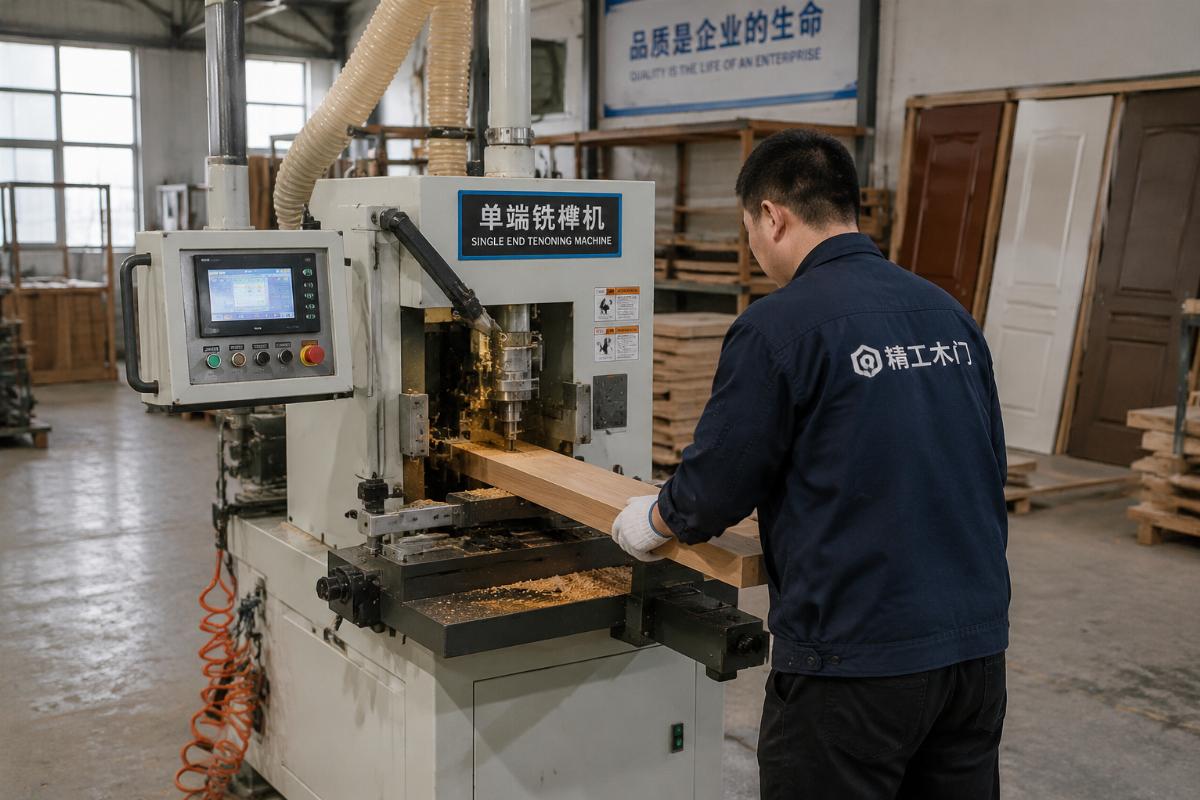
- Output Calculation – Tally your average daily output over the past 3 months, excluding one-off peak order spikes, to get your baseline capacity requirement.
- Batch Audit – Count the share of your orders with less than 50 units per run, as this directly determines the total operating cost efficiency of each machine type.
- Material Check – Confirm the primary door material you process, as tenoning accuracy requirements vary for solid wood, MDF, hollow core and composite door substrates.
How to Avoid Common Costly Mistakes When Purchasing Door Tenoning Machines
| The most frequent purchasing error is prioritizing raw speed over compatibility with your existing production line. Even the highest precision double end tenoning machine will deliver no efficiency gains if it cannot sync with your upstream cutting equipment or downstream assembly stations, leading to constant bottlenecks and unplanned downtime. | Mistake Category | Common Unoptimized Practice | Recommended Operating Rule |
|---|---|---|---|
| Configuration selection | Blindly purchase the highest speed model available on the market | Match machine specifications to your existing line speed, rather than chasing unneeded extra capacity | |
| After-sales planning | Ignore post-purchase support coverage to save 5-10% on upfront purchase price | Require a minimum 2-year full machine warranty and lifetime technical support for all equipment orders | |
| Supplier selection | Only compare upfront unit price across quotes | Include total 3-year operating cost including labor, maintenance and scrap rate in your evaluation |
A large-scale composite door production line project for a European and American market deployed 2 sets of double end tenoning machines in 2024, perfectly aligning with their 2500-piece daily output requirement while holding alignment error within 0.02mm across all production runs. When they first compared quotes, they initially considered a lower cost model from a local regional supplier, but the lack of guaranteed on-site installation support and 12-month only warranty would have added 30% to their expected maintenance costs over 3 years.
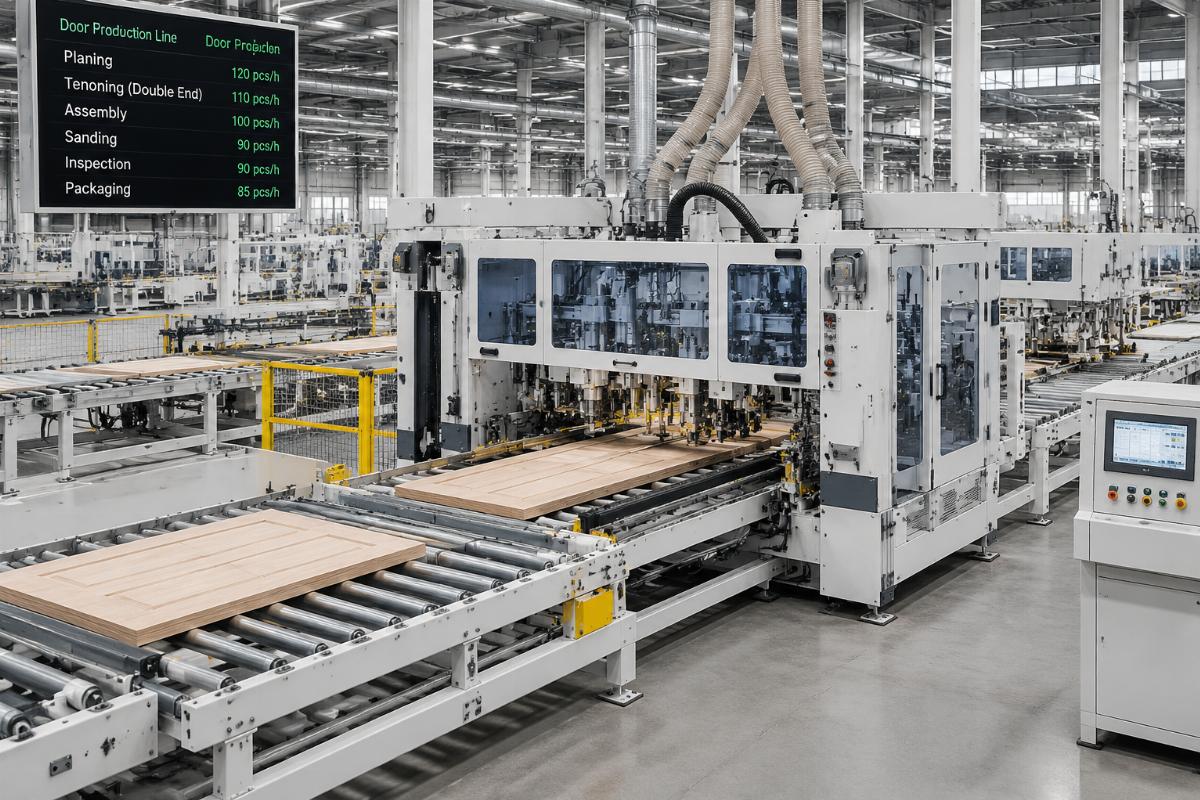
- Line Compatibility Check – Share full specifications of your existing upstream and downstream equipment with potential suppliers to confirm seamless integration.
- Warranty Verification – Require written confirmation of warranty coverage and support response time before finalizing any purchase agreement.
- Total Cost Calculation – Calculate combined purchase, labor, maintenance and scrap costs for each potential machine option over a 3-year operating window.
How to Source Cost-Effective Reliable Tenoning Machines From Chinese Suppliers
| Chinese tenoning machine suppliers with proper certification deliver the same quality standard as European brands at 40-50% lower cost. The common misconception that Chinese woodworking machinery has lower build quality only applies to uncertified low-end suppliers, while compliant manufacturers with CE and TüV certification meet all international performance standards. | Sourcing Step | Common Misstep | Proven Correct Approach |
|---|---|---|---|
| Supplier screening | Only review supplier website product pages | Prioritize suppliers with at least 10 years of dedicated production experience in tenoning equipment | |
| Price comparison | Select the lowest quoted unit price | Compare total delivered cost including shipping, installation and support to get a true value comparison | |
| Customization policy | Assume all suppliers offer the same level of configuration flexibility | Confirm suppliers can adjust working dimensions, control systems and safety features to match your specific requirements |
A regional wood machinery distributor based in the Middle East ordered 12 sets of mixed single and double end tenoning machines for their local market supply in 2023, and the total delivered price was 40% lower than competing quotes from European brands, while still meeting all CE certification requirements for their regional market. The supplier also provided full training and dedicated after-sales contacts for their local reseller network, cutting their average support response time for end customers by 70%. Shandong Ruiqi Machinery is a 20-year specialized woodworking machinery manufacturer that provides single and double end tenoning machines meeting CE and TüV standards, with support for flexible customization, 2-year full machine warranty and overseas on-site installation services.
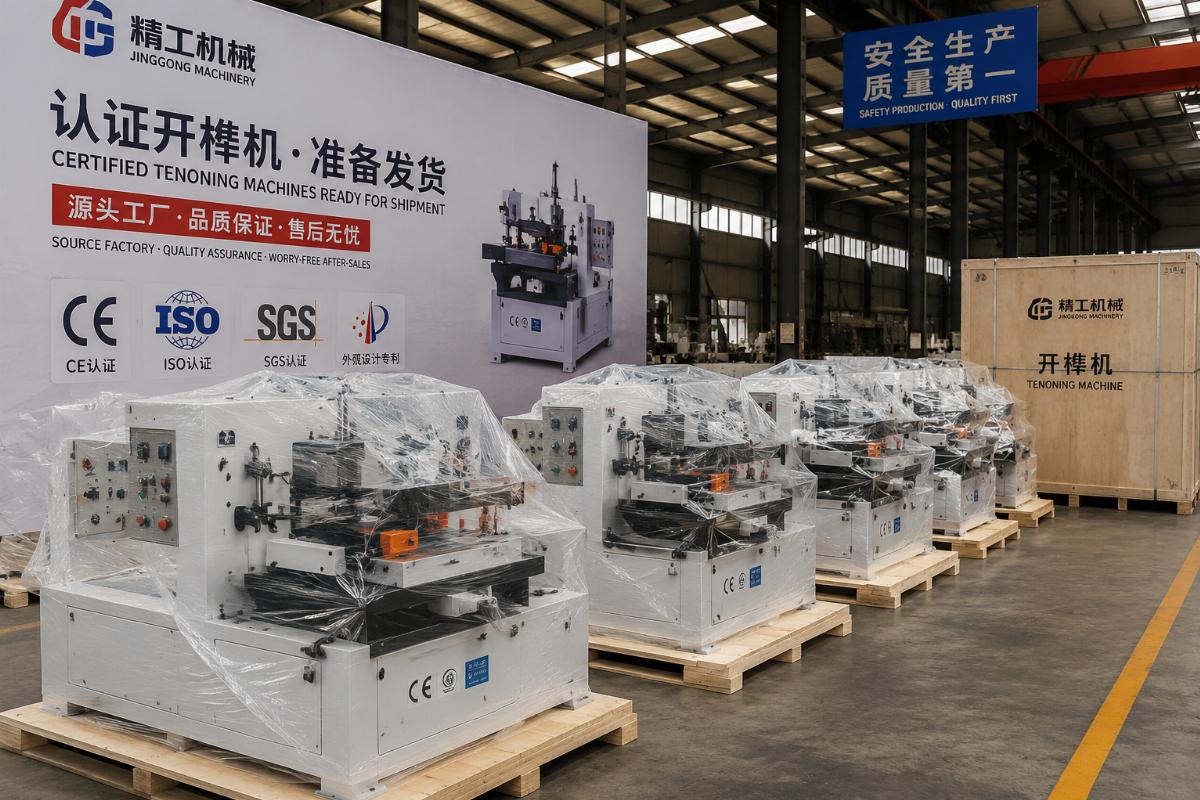
- Certification Confirmation – Verify official copies of CE and TüV certification for the exact machine models you are ordering, not just general company certification.
- Reference Request – Ask for contact details of 2 existing customers in your region who have deployed the same machine model you are evaluating.
- Support Agreement – Lock in terms for on-site installation and operator training as a written part of your purchase contract.
Conclusion
The right tenoning machine choice has nothing to do with which model is more popular, and everything to do with matching your exact production parameters. For small workshops running frequent custom batches, single end machines will almost always deliver lower total operating costs, while high volume bulk production lines will see clear returns from properly integrated double end models. You do not need to spend extra for unneeded high speed, and you do not need to pay premium prices for European brands to get reliable, certified equipment. Following this tested matching framework will let you lock in a configuration that fits your current capacity and leaves room for future growth without overspending.

Written by
author
Editor covering global sourcing, supplier verification, and industrial product knowledge. Content is compiled from manufacturer specifications, industry standards, and hands-on experience with international B2B buyers. Every article is fact-checked before publishing to help procurement professionals make informed decisions.
Leave a Reply