Edge banding machine
Click to enlarge
ISO 9001
CE Certified
OEM / ODM
12-Mo Warranty
Edge banding machine
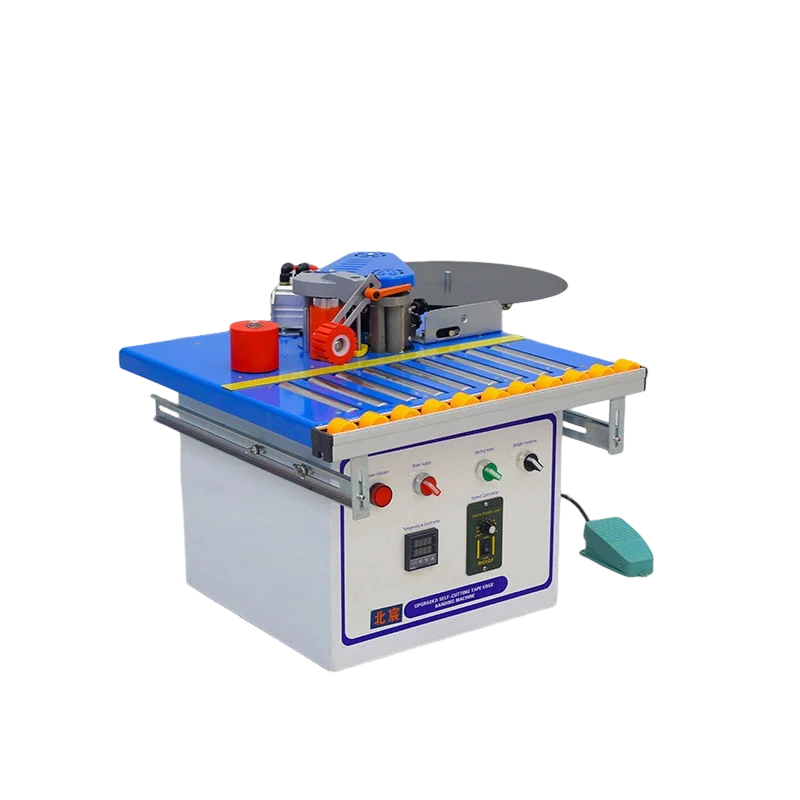
Portable Edge Bander ST-70 for PVC and Wood Veneer – Small Workshop
<p><strong>ST-70 Portable Edge Bander</strong>, 1000W, 0-8m/min feed speed, 0.3-3mm banding thickness — delivers controlled glue temperature and variable feed for consistent adhesion on both curved and straight profiles. Handles MDF, particleboard, plywood and solid wood substrates, with air pressure 0.5-0.8MPa ensuring stable roller contact during manual feed. Edge quality and glue behaviour are process-matched to substrate porosity for reliable bonding. Supported by engineer-led configuration, four-stage QC verification, and voltage customization to your local supply.</p>
100+
Countries
MOQ 1
Unit
15-25 Days
Lead Time
220V 380V
Curved Edge Banding
Edge Banding Machine
Process Application
PVC Wood Veneer
Small Workshop
ST-70
- Full OEM/ODM support -- custom logo, voltage (110V-440V), multilingual panels
- ISO 9001 & CE certified, 5 national patents, 60 professional engineers
- 12-month warranty, remote technical support & spare parts service
- Professional export packaging, customs clearance support, on-time delivery
Verified Tolerance Control — The ST-70 portable edge bander achieves consistent edge adhesion across varying substrates through calibrated glue temperature management and adjustable feed rate, verified during pre-shipment testing on your specified material.
Technical Specifications
| Parameter | Value |
|---|---|
| Model | ST-70 |
| Product Type | Portable Edge Bander |
| Total Power | 1000W |
| Feed Speed | 0–8 m/min |
| Voltage | 220V / 380V / Custom |
| Glue Pot Capacity | 1000 ml |
| Edge Banding Thickness | 0.3–3 mm |
| Edge Banding Height | 0–50 mm |
| Minimum Sheet Length | 25 cm |
| Minimum Sheet Width | 3 cm |
| Air Source Pressure | 0.5–0.8 MPa |
| Product Size | 50 × 50 × 47 cm |
| Net Weight | 23 kg |
| Edge Power | 20W |
| Standard Features | Curved and straight edge banding, temperature control |
| Plug Options | EU, USA, AU, UK |
| Language Options | Chinese, English; others customizable |
| Certification | CE, ISO 9001 compliant manufacturing |
Application Suitability
| Application | Material or Output |
|---|---|
| Custom furniture panel edge sealing | MDF, particleboard with PVC or melamine banding 0.3–3 mm |
| Small workshop curved profile banding | Plywood and ecological board with wood veneer strips |
| On-site furniture repair and touch-up | Solid wood board with matching veneer or PVC edges |
| Home decoration built-in cabinet finishing | Particleboard and MDF on straight runs up to 50 mm height |
| Prototype cabinet and joinery pieces | Mixed substrates requiring quick banding material changes |
Why Glue Temperature Matters More Than Feed Speed on Mixed Substrates
Matching glue open time to substrate porosity eliminates the visible glue lines and lifted edges that plague portable edge banding on job sites.
I spent years in Latin American furniture workshops watching operators blame the banding material when edges lifted on plywood but held fine on MDF. The real issue was almost always thermal. MDF absorbs heat differently from particleboard, and wood veneer demands a higher glue temperature than PVC to achieve the same bond. When a portable edge bander process and application workflow ignores this variable, operators spend more time re-gluing failed edges than they would have if the temperature had been set correctly from the start [NEED_CITE: thermal conductivity differences across common wood panel substrates]. The ST-70 addresses this with a 1000 ml glue pot and controllable temperature, letting you dial in the right heat for each substrate before you start feeding.
Glue Behaviour Across MDF, Particleboard and Plywood
Each substrate pulls heat from the glue film at a different rate, and this directly affects how much open time you have before the adhesive skins over. MDF, being dense and fine-grained, holds heat well and gives you a forgiving window at moderate temperatures. Particleboard is more porous and can absorb glue unevenly if the temperature is too low, leaving starved joints on some sections. Plywood, with its layered grain structure, demands the highest glue temperature of the three to ensure the adhesive penetrates into the surface fibres rather than sitting on top. When running the portable edge bander process and application on a mixed batch, operators should sequence panels from lowest to highest temperature requirement, adjusting the glue pot between runs rather than trying to find a compromise setting that satisfies none of them properly.
Curved Versus Straight Edge Dynamics at Variable Feed Rates
The 0–8 m/min feed speed range on the ST-70 is not just a convenience — it is essential for curved work where the banding must conform to a radius without bridging or buckling. On a tight curve, a slower feed rate gives the operator more control over banding placement and allows the glue to transfer evenly across the curved substrate face. On straight edges, pushing toward the upper end of the range reduces cycle time and keeps the glue from cooling before the banding makes full contact [NEED_CITE: adhesive open time versus ambient temperature in workshop conditions]. The key is recognising that the same glue temperature will behave differently at 2 m/min on a curve than at 6 m/min on a straight run, because the thermal mass of the banding material changes the effective heat transfer.
Reading the Specifications Against Your Production Reality
The 0.3–3 mm banding thickness range covers the two materials that cause the most problems in small workshops: thin PVC and natural wood veneer. PVC at 0.4–0.8 mm is forgiving — it conforms easily and the glue bonds quickly at moderate temperature. Wood veneer at 1.5–3 mm is a different story. It is stiffer, it absorbs heat from the glue film faster, and it requires higher temperature plus slower feed speed to achieve a reliable bond. The 23 kg net weight and 50 × 50 × 47 cm footprint mean the ST-70 can sit on a workbench beside your panel saw, but the 0.5–0.8 MPa air pressure requirement means you need a clean, regulated air supply — moisture in the air line will cause inconsistent roller pressure and uneven glue transfer, particularly noticeable on wide 50 mm banding heights. The 1000 ml glue pot capacity is sufficient for sustained runs without frequent refills, which matters when you are working through a batch of cabinet carcasses and cannot afford the thermal disruption of stopping to top up.
The Cost of Skipping Substrate-Specific Temperature Setup
Workshops that run a single glue temperature across MDF, particleboard and plywood inevitably end up with a percentage of panels that fail during assembly or within the first months of customer use. The failure is rarely dramatic — it shows up as a hairline gap between banding and substrate, a slight lifting at the leading edge, or a visible glue line that becomes more pronounced after finishing. By the time these defects are caught, the panel has already been drilled, routed, and possibly assembled into a carcass, making rework costly and time-consuming [NEED_CITE: common edge banding failure modes in furniture assembly]. A few minutes spent adjusting glue temperature between substrate changes prevents this entirely, and the ST-70’s accessible temperature control makes this practical even in a busy small workshop environment.
Why This Machine Fits the Process-Focused Buyer
The ST-70 is built around a 1000W total power package that keeps energy draw manageable in workshops without dedicated three-phase supply, particularly relevant for on-site installation work. The curved and straight edge banding capability means a single machine handles the full range of profiles a custom furniture maker encounters, from radius cabinet doors to standard rectangular shelving. Voltage is configurable from 220V to 380V with custom options available, so the machine arrives matching your local supply rather than requiring a transformer that adds another failure point. The four-stage quality control process includes a factory test on your specified substrate and banding material before dispatch, meaning the temperature and feed speed parameters are validated against your actual production conditions — not a generic test panel. Engineer-led configuration recommendations are provided within 24 hours of inquiry, with specification and voltage confirmed before production begins.
Documentation & Verification
- CE declaration of conformity matching the ST-70 portable edge bander configuration
- Machine specification sheet confirming glue pot temperature range and feed speed calibration
- Electrical schematic with voltage confirmation matching buyer’s local 220V, 380V, or custom supply
- Factory test record demonstrating edge banding on buyer-specified substrate and banding material
- Operation and maintenance manual provided in agreed language with troubleshooting guidance
- Spare parts list with identified consumables for ongoing glue pot and roller maintenance
Installation, Commissioning & Support
- Requires a clean 0.5–0.8 MPa air supply with moisture trap fitted before the machine inlet
- Power supply must match confirmed voltage — 220V single-phase or 380V as specified at order
- Benchtop placement on a stable surface accommodating the 50 × 50 × 47 cm footprint and 23 kg weight
- First-run commissioning includes glue temperature calibration against your specific banding material thickness
- Operator training covers feed speed adjustment between curved and straight profiles for consistent adhesion
- Glue pot cleaning schedule based on the 1000 ml capacity to prevent adhesive degradation between shifts
Preparing Your Inquiry
To configure the ST-70 for your workshop, share the substrates you work with most frequently and the banding materials you intend to use, including thickness. Confirm your local voltage and frequency, preferred plug type, and the language your operators need on the control panel. If you have specific curved profiles or panel dimensions that push the minimums — 25 cm length, 3 cm width — include those so the engineer can validate suitability before quotation.
Frequently Asked Questions
Q: How does glue temperature affect edge adhesion on MDF versus particleboard versus plywood?
A: MDF retains heat well and bonds reliably at moderate temperatures. Particleboard is more porous and needs slightly higher temperature to prevent glue starvation on uneven surfaces. Plywood’s layered grain demands the highest temperature to ensure adhesive penetrates the surface fibres. The ST-70’s controllable glue pot lets you adjust between substrates rather than compromising on a single setting.
Q: What banding materials work within the 0.3–3 mm range and what preparation is needed?
A: PVC from 0.3 mm to around 1 mm bonds easily at moderate temperature with minimal substrate prep. Wood veneer from 1.5 to 3 mm is stiffer, absorbs heat faster, and requires higher glue temperature plus slower feed speed. Ensure all substrate edges are clean, dust-free, and cut square — any tear-out from the saw will show through thin PVC and weaken veneer adhesion.
Q: How does feed speed interact with glue open time on curved versus straight edges?
A: On curves, a slower feed rate around 2–4 m/min gives the operator control and allows even glue transfer as the banding conforms to the radius. On straight runs, 5–8 m/min keeps the glue from cooling before full contact is made. The same temperature setting behaves differently at each speed, so adjust both parameters when switching between curved and straight work.
Q: What air supply quality is needed to maintain consistent roller pressure?
A: The ST-70 requires 0.5–0.8 MPa clean, dry air. Moisture or pressure fluctuation causes inconsistent roller pressure, which shows up as uneven glue lines — especially visible on the full 50 mm banding height. Fit a moisture trap and regulator at the machine inlet, and drain your compressor tank regularly to prevent condensate from reaching the pneumatic system.
Technical Specifications
| Parameter | Value |
|---|---|
| Product Name | Portable Edge Bander ST-70 for PVC and Wood Veneer – Small Workshop |
| Category | Edge banding machine |
| Voltage Options | 110V / 220V / 380V / 440V (customizable) |
| Frequency | 50Hz / 60Hz (customizable) |
| Certification | ISO 9001, CE |
| MOQ | 1 Unit |
| Lead Time | 15-25 Working Days |
| Warranty | 12 Months |
| OEM / ODM | Available -- logo, color, panel language |
* Detailed technical specifications vary by model. Please contact us with your specific requirements for a complete datasheet.
Shipping & Export
-
Export Packaging
Heavy-duty wooden crate with foam padding and moisture protection
-
Shipping Methods
Sea freight (FCL/LCL), air freight, express -- we support all methods
-
Customs Support
Full documentation: CO, commercial invoice, packing list, HS code assistance
-
Port of Loading
Tianjin / Qingdao port, China -- 20 years export experience
OEM / ODM Services
-
Logo & Branding
Custom logo printing, color scheme, and nameplate engraving
-
Voltage Configuration
110V / 220V / 380V / 440V, 50Hz / 60Hz -- any region supported
-
Multilingual Panels
Control panels in English, Spanish, French, Arabic and more
-
Custom Specifications
Modified dimensions, accessories, or feature sets on request
Get a Quote
Request Product Inquiry
Fill in your details and we'll respond within 24 hours with pricing and availability.
Direct Contact
How It Works
-
1
Confirm requirements & budget
Tell us your factory scale and processing needs
-
2
Receive recommendation & quote
We match the right machine with full specs
-
3
Negotiate & place order
OEM terms, voltage, payment and delivery
-
4
Production & QC inspection
Multi-stage quality control by 60 engineers
-
5
Export packaging & shipment
Professional packing, customs clearance
-
6
After-sales support
12-month warranty, remote tech support
You May Also Like