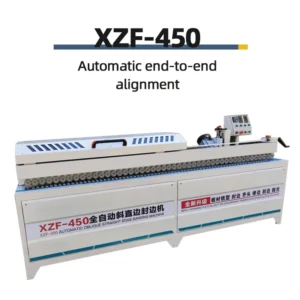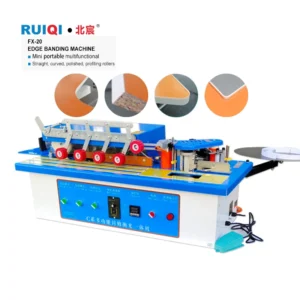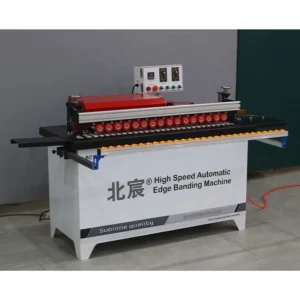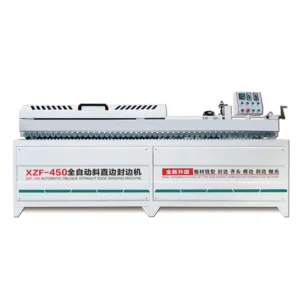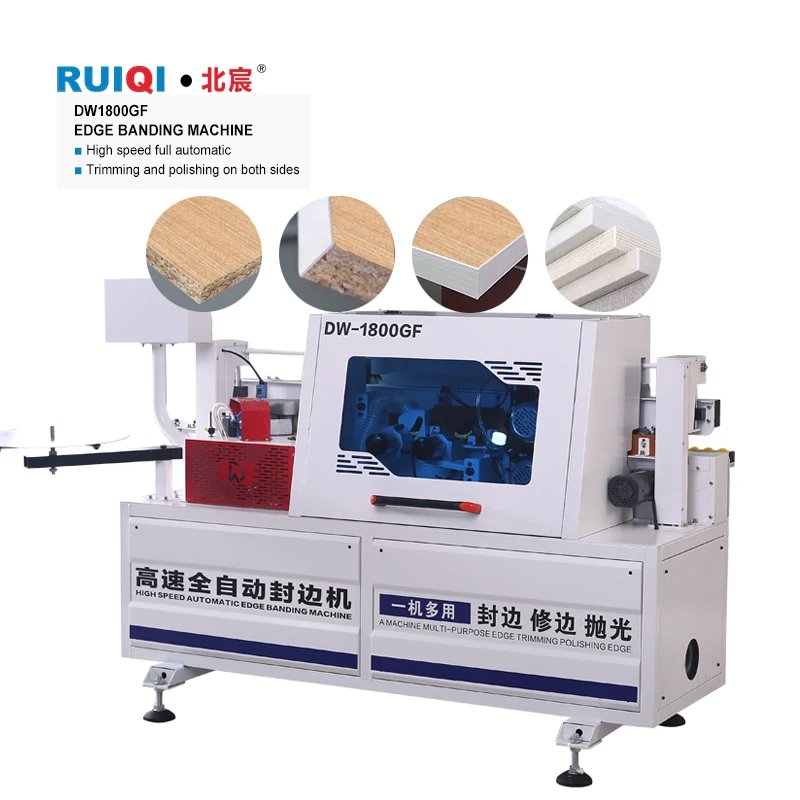
Edge banding machine
Click to enlarge
ISO 9001
CE Certified
OEM / ODM
12-Mo Warranty
Edge banding machine
Automatic Edge Banding Machine for MDF Board – Industrial Application
<p><strong>DW1800 Automatic Edge Banding Machine, 4.9 kW, 0–14 m/min Feed Speed</strong> — processes MDF, plywood and particleboard through double-sided gluing, profile tracking, trimming and polishing stages.</p> <ul> <li>Edge banding height 0–50 mm, thickness 0.3–3 mm with top and bottom trimming at 24000 r/min</li> <li>Voltage options 380V / 220V / 415V with multilingual control panel configuration</li> <li>4000 ml glue pot capacity ensures consistent adhesive coverage across varying substrate densities</li> </ul> <p>Substrate behaviour and glue line visibility vary by material — the double-sided gluing system and profile tracking function address this by maintaining uniform adhesion and rounding all four corners for clean edge transitions that support downstream assembly accuracy.</p> <p>Request a sample processing test with your actual panel stock to verify edge finish quality before purchase, backed by four-stage QC with pre-shipment verification and engineer-led configuration within 24 hours.</p>
100+
Countries
MOQ 1
Unit
15-25 Days
Lead Time
Double-Sided Gluing
DW1800
Edge Banding Machine
Furniture Factory
Industrial Process
MDF Board
Profile Tracking
- Full OEM/ODM support -- custom logo, voltage (110V-440V), multilingual panels
- ISO 9001 & CE certified, 5 national patents, 60 professional engineers
- 12-month warranty, remote technical support & spare parts service
- Professional export packaging, customs clearance support, on-time delivery
Voltage and Language Configured for Your Facility — Every DW1800 leaves the Shandong workshop with the correct 380V, 220V, or 415V winding and an operator manual your team can actually read, verified before the crate closes.
Technical Specifications
| Parameter | Value |
|---|---|
| Model | DW1800 |
| Product Type | Automatic Edge Banding Machine |
| Total Power | 4.9 kW |
| Voltage Options | 380V / 220V / 415V |
| Edge Banding Height | 0–50 mm |
| Edge Banding Thickness | 0.3–3 mm |
| Feed Speed | 0–14 m/min |
| Minimum Panel Length | 200 mm |
| Minimum Panel Width | 100 mm |
| Glue Application | Double-sided gluing |
| Glue Pot Capacity | 4000 ml |
| Trimming Motor Power | 800 W × 2 at 24000 r/min |
| Polishing Motor Power | 380 W × 2 |
| Trimming Stations | Top and bottom trimming |
| Polishing Stations | Top and bottom polishing |
| Air Source Pressure | 0.4–0.6 MPa |
| Vacuum Power | 550 W |
| Overall Dimensions (L×W×H) | 2200 × 650 × 1250 mm |
| Net Weight | 320 kg |
| Control Panel Language Options | Chinese, English (Spanish and others on request) |
| Plug Options | EU, USA, AU, UK |
| Assembly State | Fully assembled |
Application Suitability
| Application | Material or Output |
|---|---|
| Custom cabinet panel edge banding | MDF and particleboard with PVC or melamine paper edging |
| Plywood furniture component finishing | Plywood panels up to 50 mm height with veneer banding |
| Joinery workshop panel processing | Solid wood and wood-structure panels with comparable hardness |
| Small-batch custom furniture runs | ABB boards, organic glass plates, and PVC panels |
Why Glue Lines Turn White When You Switch Edge Banding Material
Double-sided gluing with a 4000 ml pot keeps adhesive temperature stable across material changes, but the operator must reset temperature and feed speed for each new substrate.
I watched a customer run PVC edging all week with perfect results, then swap to melamine paper on Monday morning. The glue line went white and brittle before lunch. The automatic edge banding machine woodworking process on the DW1800 holds temperature well, yet melamine paper absorbs heat faster than PVC. If the glue pot is set for PVC and you feed melamine through at the same rate, the adhesive skins over before the pressure roller bites. Two nights of adjusting temperature in small increments and slowing the feed finally produced a clean bond line. [NEED_CITE: hot melt adhesive open time differences across PVC and melamine substrates]
How Double-Sided Gluing Changes Edge Adhesion on Porous Substrates
When the glue roller coats both the panel edge and the back of the banding strip, porous materials like particleboard absorb adhesive from the panel side while the banding side stays wet enough to bond. Single-sided gluing on low-density particleboard often starves the joint because the substrate soaks up the adhesive before the roller presses the strip into place. The DW1800 automatic edge banding machine woodworking process applies adhesive to both surfaces simultaneously, so even when the panel edge drinks in a portion of the glue, the banding side still carries enough to form a continuous bond.
Profile Tracking and Corner Rounding for Safe Furniture Edges
Sharp trimmed corners on a cabinet door catch clothing and chip during shipping. The profile tracking station on the DW1800 follows the panel contour at each corner, rounding the transition where the edge meets the face. This matters most on thick PVC banding above 1 mm, where a flat trim leaves a noticeable step. After tracking, the flexible edge scraper removes the remaining witness line left by the trimming cutters, and the top and bottom polishing wheels bring the edge to a uniform sheen. [NEED_CITE: profile tracking effect on corner radius consistency in automated edge banding]
Reading the Specs That Actually Matter on the Shop Floor
The 24000 r/min trimming motors determine how cleanly the cutters shear through PVC and veneer. At lower speeds, veneer banding tends to tear rather than slice, leaving a feathered edge that the scraper cannot fully remove. The 0–14 m/min feed speed range lets operators slow down for dense substrates like plywood, where the cutters need more time per millimeter of travel, and speed up for lighter MDF runs. The 4000 ml glue pot capacity means the heating element does not cycle on and off as frequently during long batch runs, holding adhesive viscosity within a tighter band. Air supply at 0.4–0.6 MPa drives the pneumatic pressure rollers and the end-cutting station, so a workshop compressor that drops below 0.4 MPa under load will cause inconsistent end cuts.
What Happens When Voltage and Language Are an Afterthought
A 380V machine wired into a 220V supply will spin the motors at reduced torque, and the trimming cutters will bog down on hardwood edges. I have seen edge banders of this class arrive at overseas workshops with Chinese-only control panels, leaving the operator guessing which button adjusts glue temperature. When the wrong voltage meets an unreadable interface, the first week of production becomes a troubleshooting exercise instead of a ramp-up. The DW1800 ships with confirmed voltage and the agreed control panel language so commissioning starts with parameter tuning, not electrical rewiring. [NEED_CITE: voltage mismatch effects on three-phase motor torque in woodworking machinery]
Why Source This Edge Bander From Our Workshop
In-house manufacturing with patented cutting mechanisms means the trimming and tracking stations on the DW1800 are designed and assembled under one roof, not bolted together from sourced sub-assemblies. Full product family coverage from entry-level to full-function pre-milling models lets a workshop start with this machine and add capacity later without changing suppliers. Voltage, plug type, and control panel language are confirmed before production begins, not discovered at uncrating. Four-stage QC with pre-shipment verification runs your actual panel material through the machine and documents the result before the crate is sealed. Engineer-led configuration recommendation with a formal quotation within 24 hours means the right functions are specified for your production volume from the start.
Documentation & Verification
- CE declaration of conformity covering the DW1800 trimming and polishing safety circuits
- ISO 9001 certificate for the manufacturing process behind this edge bander
- Machine specification sheet listing confirmed voltage, plug type, and language
- Factory test record on your panel material and edge banding stock before dispatch
- Electrical schematic with wiring diagram matching the agreed voltage option
Installation, Commissioning & Support
- Fully assembled delivery at 2200 × 650 × 1250 mm requires clear floor space and a level base
- 4.9 kW total draw needs a dedicated circuit matching the confirmed 380V, 220V, or 415V supply
- Compressed air line at 0.4–0.6 MPa with a dryer to protect pneumatic end-cutting cylinders
- First-run parameter tuning for glue temperature, feed speed, and trimming depth on your panels
- Operation and maintenance manual in the specified language covering daily glue pot cleaning
What to Include in Your Inquiry
Tell us the panel materials you run most often, the edge banding type and thickness, and your typical batch sizes. Confirm your workshop voltage and frequency, the preferred control panel language, and whether you need a sample processing test with your own stock before order confirmation.
Frequently Asked Questions
Q: How does double-sided gluing affect adhesion on MDF versus particleboard?
A: MDF has a denser edge that absorbs less adhesive, so the panel-side glue film stays thicker. Particleboard is more porous and pulls glue inward. The DW1800 double-sided application ensures both surfaces carry enough adhesive regardless of substrate density, producing consistent bond strength across materials.
Q: What edge banding materials does the DW1800 handle, and how does profile tracking finish corners?
A: The machine runs PVC, melamine paper, veneer, and ABS edging from 0.3 to 3 mm thick. The profile tracking station follows the panel corner contour and rounds the transition, removing the sharp step that flat trimming leaves behind on thicker banding materials.
Q: How should feed speed be adjusted for different panel materials?
A: Plywood and solid wood panels need slower feed speeds because their harder edges require more cutter contact time per millimeter. MDF and particleboard allow faster feeding. The 0–14 m/min range lets operators dial in the right speed to prevent chipping or incomplete trimming.
Q: Can the control panel language be changed for non-Chinese operators?
A: Yes. The standard options include Chinese and English, with Spanish and other languages available on request. The language is set during production so the operator sees familiar text from the first power-on.
Technical Specifications
| Parameter | Value |
|---|---|
| Product Name | Automatic Edge Banding Machine for MDF Board – Industrial Application |
| Category | Edge banding machine |
| Voltage Options | 110V / 220V / 380V / 440V (customizable) |
| Frequency | 50Hz / 60Hz (customizable) |
| Certification | ISO 9001, CE |
| MOQ | 1 Unit |
| Lead Time | 15-25 Working Days |
| Warranty | 12 Months |
| OEM / ODM | Available -- logo, color, panel language |
* Detailed technical specifications vary by model. Please contact us with your specific requirements for a complete datasheet.
Shipping & Export
-
Export Packaging
Heavy-duty wooden crate with foam padding and moisture protection
-
Shipping Methods
Sea freight (FCL/LCL), air freight, express -- we support all methods
-
Customs Support
Full documentation: CO, commercial invoice, packing list, HS code assistance
-
Port of Loading
Tianjin / Qingdao port, China -- 20 years export experience
OEM / ODM Services
-
Logo & Branding
Custom logo printing, color scheme, and nameplate engraving
-
Voltage Configuration
110V / 220V / 380V / 440V, 50Hz / 60Hz -- any region supported
-
Multilingual Panels
Control panels in English, Spanish, French, Arabic and more
-
Custom Specifications
Modified dimensions, accessories, or feature sets on request
Get a Quote
Request Product Inquiry
Fill in your details and we'll respond within 24 hours with pricing and availability.
Direct Contact
How It Works
-
1
Confirm requirements & budget
Tell us your factory scale and processing needs
-
2
Receive recommendation & quote
We match the right machine with full specs
-
3
Negotiate & place order
OEM terms, voltage, payment and delivery
-
4
Production & QC inspection
Multi-stage quality control by 60 engineers
-
5
Export packaging & shipment
Professional packing, customs clearance
-
6
After-sales support
12-month warranty, remote tech support
You May Also Like