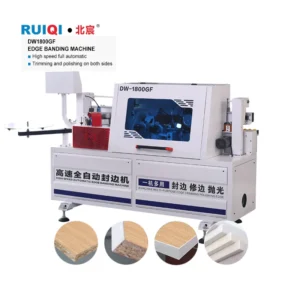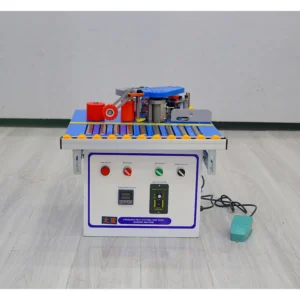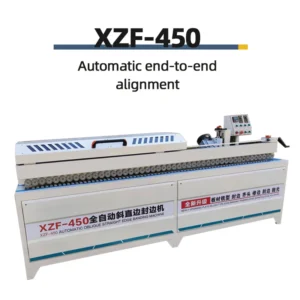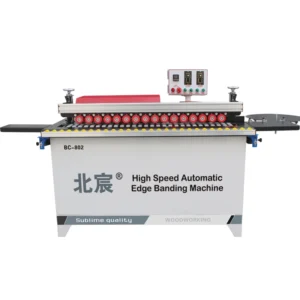
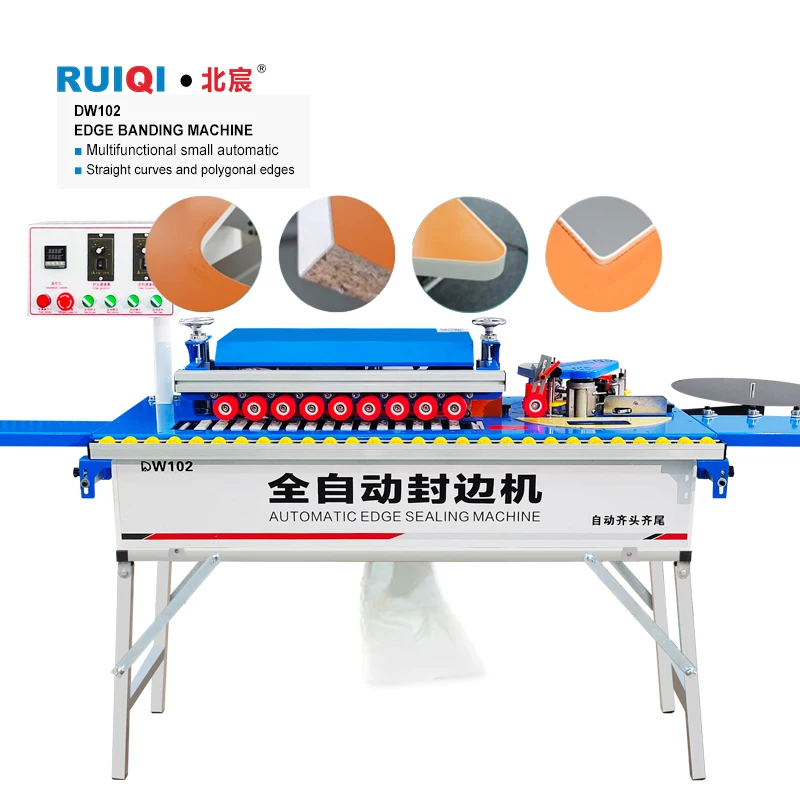
Edge banding machine
Click to enlarge
ISO 9001
CE Certified
OEM / ODM
12-Mo Warranty
Edge banding machine
H1: DW102 Automatic Edge Banding Machine for Plywood and MDF Processing
<p><strong>DW102 Automatic Edge Banding Machine, 3800W, 220V/380V, 0.3-3MM Edge Thickness</strong> — engineered for plywood, MDF, and particleboard edge finishing.</p> <ul> <li>Handles both curved and straight edges with automatic head and tail cutting</li> <li>Dual 650W trimming stations ensure consistent profiling across substrates</li> <li>1200W vacuum system keeps the work area clean during operation</li> <li>Glue pot capacity 1000ml supports extended production runs</li> </ul> <p>Woodworking shops evaluating edge quality know that substrate behavior, adhesive compatibility, and trimming precision directly affect downstream assembly fit. This unit addresses visible glue lines and uneven finishes common when switching between PVC and veneer materials.</p> <p>Backed by four-stage quality control with pre-shipment verification and engineer-led configuration support for your specific panel materials.</p>
100+
Countries
MOQ 1
Unit
15-25 Days
Lead Time
380V
Automatic Edge Banding Machine
Curved And Straight Edge Banding
DW102
Furniture Factory
Plywood And MDF
Process Application
- Full OEM/ODM support -- custom logo, voltage (110V-440V), multilingual panels
- ISO 9001 & CE certified, 5 national patents, 60 professional engineers
- 12-month warranty, remote technical support & spare parts service
- Professional export packaging, customs clearance support, on-time delivery
Precision Edge Finishing — dual trimming stations and substrate-specific glue control deliver consistent banding results across plywood, MDF, and particleboard on the DW102.
Technical Specifications
| Parameter | Value |
|---|---|
| Model | DW102 |
| Product Type | Automatic Edge Banding Machine |
| Total Power | 3800W |
| Voltage | 220V / 380V / Customization |
| Edge Banding Height | 0–50mm |
| Edge Banding Thickness | 0.3–3mm |
| Minimum Sheet Length | 250mm |
| Minimum Sheet Width | 50mm |
| Trimming Power | 650W × 2 |
| Polishing Power | 180W × 2 |
| Vacuum Power | 1200W |
| Edge Feed Power | 20W |
| Transmission Power | 60W |
| Glue Pot Capacity | 1000ml |
| Air Source Pressure | 0.5–0.8 MPa |
| Product Size | 1280 × 470 × 690mm |
| Product Weight | 75kg |
| Assembly State | Fully assembled |
| Control Panel Language | Chinese, English, Spanish, or customized |
| Plug Options | EU, USA, AU, UK |
| Standard Features | Curved and straight edge banding, edge trimming, polishing, automatic head and tail cutting, vacuum system |
Application Suitability
| Application | Material or Output |
|---|---|
| Cabinet door and drawer front edge finishing | MDF and melamine-faced particleboard |
| Plywood shelving edge sealing | Plywood panels with PVC or veneer banding |
| Custom furniture component edging | Blockboard and medium density fiberboard |
| Polymer door profile banding | Polymer substrates with compatible adhesive |
| Workshop-scale casework production | Mixed panel runs requiring both straight and curved edge banding |
Why Visible Glue Lines Still Appear After Edge Banding
Substrate and adhesive mismatch causes more visible glue lines than machine settings alone.
When panels move from MDF to particleboard within the same production run, the adhesive behavior shifts. Particleboard absorbs glue differently than MDF, and if the glue pot temperature or feed rate stays constant, you end up with white streaks along the joint or incomplete bonding on curved sections. I once saw an entire batch of cabinet doors reworked because the operator switched from PVC to melamine strips without adjusting the edge banding machine process application parameters. The DW102 addresses this with a 1000ml glue pot and dual 650W trimming stations, but the operator still needs to match adhesive chemistry to the substrate in play [NEED_CITE: adhesive compatibility charts for wood panel substrates].
Matching Glue Temperature to Edge Banding Material
PVC edge banding and natural wood veneer respond to very different thermal profiles. PVC tolerates higher glue temperatures and bonds well with standard EVA hot melt, while veneer can scorch or lift if the pot runs too hot. The 1000ml glue pot on this automatic edge banding machine allows sufficient thermal mass for stable temperature across a production batch, but the edge banding machine process application only delivers clean results when the operator verifies the adhesive manufacturer’s recommended range before the first panel feeds through.
Curved and Straight Edges in a Single Setup
Many workshops separate curved and straight edge banding into two machines or two passes. The DW102 handles both geometries with automatic head and tail cutting, meaning the operator loads a curved cabinet side and a straight shelf panel in the same run without manual trimming between them. The vacuum system at 1200W keeps trimmed chips off the workpiece surface, preventing debris from embedding in fresh adhesive during curved sections where contact pressure varies [NEED_CITE: edge banding quality standards for curved panel components].
Reading the Specs That Actually Matter for Edge Quality
The 0.3–3mm edge banding thickness range covers most PVC, ABS, and veneer stocks used in furniture production. Thinner banding at 0.3mm requires precise trimming pressure — too aggressive and the trimmer cuts into the panel face; too light and you leave a visible lip. The dual 650W trimming stations provide enough torque for consistent profiling across this range. The 0–50mm edge banding height accommodates standard 18mm panels as well as thicker blockboard used in worktops. Air source pressure at 0.5–0.8 MPa drives the pneumatic actuators for head and tail cutting; running below this range causes incomplete cuts on thicker banding material, while excessive pressure can crush thin PVC strips during the cutting stroke.
What Happens When Voltage and Language Are an Afterthought
A machine specified without confirming local electrical supply arrives as dead weight. Facilities running 220V single-phase will not power a 380V three-phase motor configuration, and rewiring after delivery delays commissioning by weeks. Similarly, a control panel in a language the operator cannot read means the glue temperature and feed speed settings are guessed rather than set. The DW102 is configurable for 220V or 380V and offers control panel language options including English, Spanish, or custom languages, but these must be locked in before production — not discovered when the crate opens [NEED_CITE: industrial equipment voltage and frequency standards by region].
Why This Machine Fits a Process-Focused Workflow
The in-house manufacturing process includes a proprietary cutting mechanism that maintains edge trimming consistency across long production runs. The four-stage quality control — incoming material, in-process, finished product, and pre-shipment verification — means the DW102 is tested on actual panel stock before dispatch, not just dry-cycled. Engineer-led configuration ensures the voltage, plug type, and language match your facility before the machine ships. Factory sample processing tests on your specific substrate and edge banding material are available before order confirmation. The product family spans entry-level to full-function models, so a workshop can add capacity later without switching suppliers or retraining operators on a different interface.
Documentation & Verification
- CE declaration of conformity covering the DW102 automatic edge banding machine
- ISO 9001 certificate for the manufacturing quality management system
- Electrical schematic confirming your specified voltage and plug configuration
- Factory test record on your panel thickness and edge banding material before dispatch
- Operation and maintenance manual in your agreed language with spare parts list
Installation, Commissioning & Support
- Requires a level floor with clearance around the 1280 × 470 × 690mm footprint for panel infeed and outfeed
- Dedicated electrical circuit matching the specified 220V or 380V supply with correct breaker rating for the 3800W total load
- Arrives fully assembled — connect power, air supply at 0.5–0.8 MPa, and load glue before first run
- Initial commissioning includes glue pot temperature calibration and trimming station alignment on your panel stock
- Operator training covers curved and straight edge banding setup, automatic head and tail cutting adjustment, and daily vacuum filter cleaning
Planning Your Edge Banding Inquiry
To get a configuration that runs correctly from day one, share the panel materials you process most often, the edge banding type and thickness you stock, and your facility voltage and frequency. Let us know your preferred control panel language and whether you need a sample processing test on your substrate before committing to the order. If you are integrating the DW102 into an existing line, provide the upstream saw or router model so feed height and throughput can be matched.
Frequently Asked Questions
Q: How does edge banding thickness affect adhesive selection and bonding quality on different substrates?
A: Thicker banding at 2–3mm requires more adhesive volume and longer open time to achieve full contact, especially on porous particleboard. Thinner PVC at 0.3mm needs less glue but demands precise trimming. Matching the adhesive to both the banding material and the substrate density prevents white glue lines and delamination during assembly.
Q: What glue temperature range works best for PVC versus wood veneer edge banding materials?
A: PVC typically bonds well with EVA hot melt between 180–200°C, while wood veneer often requires lower temperatures to prevent scorching or adhesive bleed-through. Always confirm the adhesive manufacturer’s specified range and run test pieces on your actual substrate before starting a full production batch on the DW102.
Q: How do I verify edge smoothness and sealing quality before assembly operations?
A: Run sample panels through the edge banding machine process application and inspect the trimmed edge under consistent lighting. Check for visible glue lines, uneven trimming, or lifting at the head and tail cut points. A fingernail drag test along the polished edge reveals any roughness that would show through finished surfaces.
Q: Can this machine handle both straight and curved panel edges in the same production run?
A: Yes. The DW102 processes both straight and curved edges with automatic head and tail cutting, so operators can alternate panel geometries without stopping to reconfigure. Maintain consistent glue pot temperature and verify that the vacuum system is clearing chips effectively on curved sections where debris tends to accumulate.
Technical Specifications
| Parameter | Value |
|---|---|
| Product Name | H1: DW102 Automatic Edge Banding Machine for Plywood and MDF Processing |
| Category | Edge banding machine |
| Voltage Options | 110V / 220V / 380V / 440V (customizable) |
| Frequency | 50Hz / 60Hz (customizable) |
| Certification | ISO 9001, CE |
| MOQ | 1 Unit |
| Lead Time | 15-25 Working Days |
| Warranty | 12 Months |
| OEM / ODM | Available -- logo, color, panel language |
* Detailed technical specifications vary by model. Please contact us with your specific requirements for a complete datasheet.
Shipping & Export
-
Export Packaging
Heavy-duty wooden crate with foam padding and moisture protection
-
Shipping Methods
Sea freight (FCL/LCL), air freight, express -- we support all methods
-
Customs Support
Full documentation: CO, commercial invoice, packing list, HS code assistance
-
Port of Loading
Tianjin / Qingdao port, China -- 20 years export experience
OEM / ODM Services
-
Logo & Branding
Custom logo printing, color scheme, and nameplate engraving
-
Voltage Configuration
110V / 220V / 380V / 440V, 50Hz / 60Hz -- any region supported
-
Multilingual Panels
Control panels in English, Spanish, French, Arabic and more
-
Custom Specifications
Modified dimensions, accessories, or feature sets on request
Get a Quote
Request Product Inquiry
Fill in your details and we'll respond within 24 hours with pricing and availability.
Direct Contact
How It Works
-
1
Confirm requirements & budget
Tell us your factory scale and processing needs
-
2
Receive recommendation & quote
We match the right machine with full specs
-
3
Negotiate & place order
OEM terms, voltage, payment and delivery
-
4
Production & QC inspection
Multi-stage quality control by 60 engineers
-
5
Export packaging & shipment
Professional packing, customs clearance
-
6
After-sales support
12-month warranty, remote tech support
You May Also Like